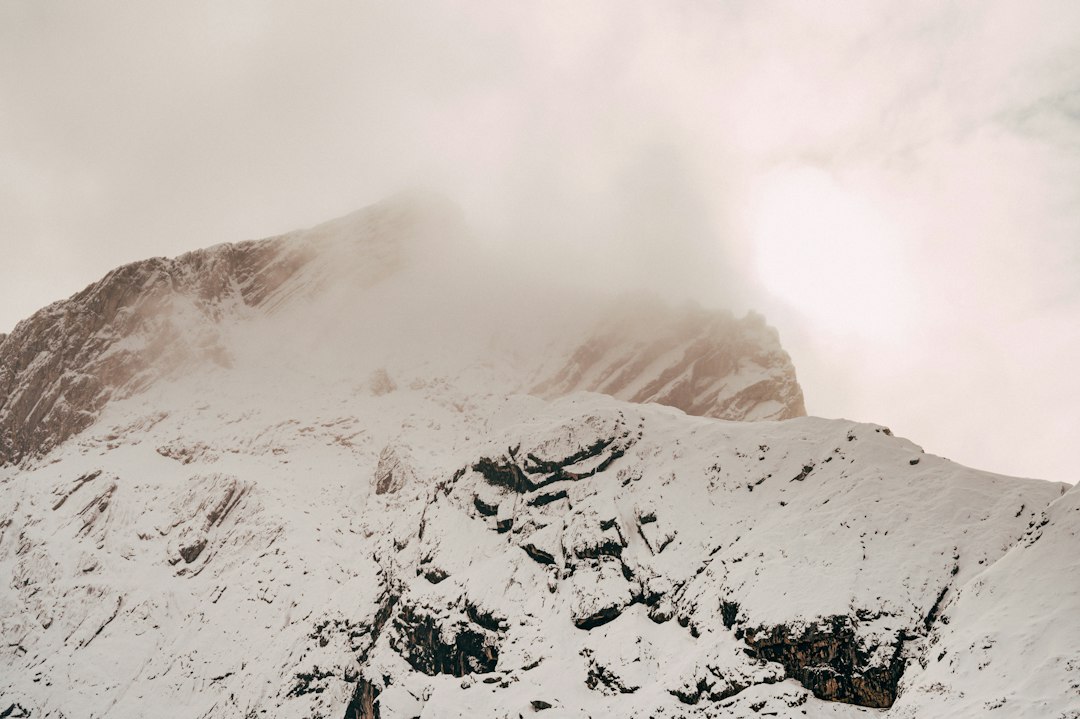
The year 1970 is etched into the collective memory of Peru, not just for the seismic event that shook the nation, but for the catastrophic secondary disaster it unleashed. Nestled in the Callejon de Huaylas valley, the picturesque town of Yungay stood as a vibrant hub, its inhabitants proud of their fertile lands and the majestic backdrop of the Cordillera Blanca. However, on May 31st, a day that began like any other, a series of events unfolded that would transform this idyllic setting into a scene of unimaginable devastation. The Yungay avalanche, a monumental snow and ice slide originating from the towering peak of Huascarán, descended with terrifying speed and force, burying the town and its people beneath a torrent of debris, forever altering the landscape and leaving behind a legacy of tragedy and resilience.
The Mountain’s Fury: An Earthquake Triggers the Catastrophe
The chain of events that led to the Yungay avalanche began with a powerful earthquake, registering a magnitude of 7.9 on the Richter scale. This seismic shockwave, the strongest ever recorded in Peru, ripped through the Andes Mountains, causing widespread destruction across the Callejon de Huaylas. While the earthquake itself was devastating, its most immediate and terrifying consequence for Yungay was the destabilization of the enormous snow and ice masses clinging to the slopes of Huascarán, Peru’s highest peak. The mountain, a seemingly immutable sentinel, was about to unleash its fury.
The Genesis of the Avalanche: A Collapsing Ice Mass
Huascarán, a majestic massif of glacial ice and rock, had long been a source of both beauty and potential danger. The constant cycle of freezing and thawing, combined with the immense weight of accumulated snow and ice, created inherent instability. The May 31st earthquake acted as the ultimate trigger. A massive section of the summit ice and rock, estimated to be millions of cubic meters, detached itself from the mountain’s face. This initial collapse was not merely a minor landslide; it was the genesis of a colossal entombing force. The sheer volume of material, combined with the steep gradient of the mountain, meant that the detached mass would accelerate rapidly, gathering momentum as it descended. The immense kinetic energy generated by this fall was unlike anything the unsuspecting town below could comprehend.
The Deadly Descent: A Flow of Debris
As the ice and rock plunged down the mountain, it encountered softer snow and glacial debris, which it pulverized and incorporated into its deadly flow. This created an avalanche of immense proportions, a viscous, fast-moving river of mud, ice, rock, and snow. The material transformed into a hyperconcentrated debris flow, a phenomenon characterized by its high density and astonishing speed. The avalanche carved a destructive path down the mountain, stripping away vegetation, obliterating smaller villages in its path, and gathering more material as it surged forward. The sound of its approach was described by survivors as a deafening roar, a primal scream of destruction that foreshadowed the unimaginable destruction to come. The terrifying speed of this flow meant there was virtually no time for warning or escape for those in its path. The very ground trembled not just from the earthquake, but from the earth-shattering impact of the descending mass.
The recent avalanche that reached Yungay has raised concerns about the increasing frequency of such natural disasters in the region. For a deeper understanding of the factors contributing to this phenomenon, you can read the article titled “Understanding the Causes of Avalanches in the Andes” available at MyGeoQuest. This article explores the geological and climatic conditions that make areas like Yungay susceptible to avalanches, providing valuable insights into the risks faced by local communities.
Yungay’s Fate: A Town Engulfed
Yungay, situated at an elevation of approximately 2,500 meters in the Callejon de Huaylas valley, was directly in the path of this monstrous debris flow. The town, known for its charming plazas, colonial architecture, and agricultural prosperity, was a vibrant community of over 20,000 people. Its location, while beautiful, proved to be its tragic undoing. The avalanche, traveling at an estimated speed of 100 to 200 kilometers per hour, descended the western flank of Huascarán, its trajectory tragically aimed at the heart of Yungay.
The First Signs of Doom: A Distant Roar
For many in Yungay, the first indication of the impending disaster was the sound. A low rumble, growing rapidly into a deafening roar, filled the air. Some initially mistook it for the continued aftershocks of the earthquake. However, the sustained and intensifying noise, coupled with the sight of a dark, churning cloud rapidly approaching from the mountainside, sent a wave of panic through the town. There was a chilling realization that this was no mere tremor, but an unstoppable force of nature. Many recall looking up at Huascarán, the familiar, snow-capped peak, now spewing forth a terrifying, dark wave. The sheer visual spectacle of the approaching avalanche was a terrifying prelude to its destructive power.
The Impact: A Violent Burial
The avalanche struck Yungay with unimaginable force. The immense volume of debris, estimated to be around 50 million cubic meters, engulfed the town in a matter of minutes. The debris flow acted like a giant bulldozer, flattening buildings, uprooting trees, and sweeping away everything in its path. Houses, churches, and public buildings were instantly demolished, their structures no match for the crushing weight and abrasive force of the moving mass. The main square, a focal point of town life, was completely obliterated. The sheer power of the impact was immense; the debris flow was so dense and fast that it created a terrifying wave, tossing vehicles and people alike with brutal force. The town was not merely damaged; it was effectively buried, transformed into a landscape of mud, rocks, and ice.
The Grim Aftermath: A Town Vanished
When the torrent finally subsided, the once-familiar landscape of Yungay was unrecognizable. A thick layer of mud and debris, in some places several meters deep, covered the entire town. The only discernible remnants were the tops of church steeples, the roofs of some houses that had been built on higher ground, and a few scattered trees. The vibrant community had been silenced, its buildings and infrastructure erased. The silence that followed the roar was as profound as the destruction itself. The sheer scale of the burial meant that most of the town and its inhabitants were entombed, their lives abruptly extinguished. The transformation from a bustling town to a silent, buried landscape was a stark and devastating testament to the power of nature.
The Human Cost: A Valley of Sorrow
The Yungay avalanche was not just a geological event; it was a profound human tragedy. The speed and ferocity of the debris flow left little opportunity for escape, and the vast majority of Yungay’s inhabitants were caught in the disaster. The sheer scale of the loss of life was staggering, and the stories of survival, though few, are etched with harrowing experiences. The aftermath was a landscape of grief, where the living searched for loved ones amidst the ruins.
Survivors’ Accounts: Tales of Terror and Resilience
The stories of the few who survived are harrowing testaments to the chaotic and terrifying nature of the avalanche. Many recounted being swept away by the initial surge, their lives seemingly over, only to be miraculously spat out by the turbulent flow or find themselves clinging to debris. Others managed to reach higher ground just moments before the impact, witnessing the town’s destruction from a horrifying vantage point. These survivors spoke of the deafening roar, the suffocating dust and mud, and the chilling cries of those trapped. They described the desperate struggle for survival, the instinct to push forward, to cling to anything that offered even a sliver of hope. The emotional scars left by these experiences are deep and enduring, a constant reminder of the day their lives were irrevocably changed.
The Search for Loved Ones: A Desperate and Heartbreaking Task
In the days and weeks following the avalanche, a massive and heartbreaking search for survivors and the deceased began. Rescue efforts were hampered by the sheer volume of debris, the unstable ground, and the lack of infrastructure. Families desperately sifted through the mud and rubble, their hopes dwindling with each passing hour. The task was overwhelming, a grim testament to the magnitude of the tragedy. The landscape of destruction made it incredibly difficult to locate any bodies, let alone survivors. The sheer difficulty of the task underscored the finality of the loss for many families. The emotional toll on those involved in the search was immense, as they faced the constant grim reality of what lay beneath the surface.
The Unanswered Questions: A Community Lost
The devastating loss of life in Yungay left a void that would never truly be filled. Over 20,000 people perished in the avalanche, a significant portion of the region’s population. The tragedy left countless families shattered, their entire lineages potentially wiped out. The sheer number of lost lives meant that many unique stories, traditions, and the very essence of the community were lost forever. The avalanche had not just destroyed buildings; it had erased a living, breathing community from existence, leaving behind a profound sense of loss and unanswered questions about the fate of those buried.
The Landscape Transformed: A Scar on the Earth
The Yungay avalanche dramatically reshaped the physical landscape of the Callejon de Huaylas. The once fertile plains were buried under tons of rock, ice, and mud, and the very course of rivers was altered. The memory of the town, however, persisted, not just in the stories of survivors, but in the stark and silent monument that remained. The avalanche’s impact was not temporary; it was a permanent alteration of the geological and ecological systems of the region.
The New Topography: A Valley of Mud and Debris
The avalanche created a vast deposit of debris that stretched for miles, burying the former town of Yungay under an average depth of several meters. This massive accumulation of material fundamentally altered the topography of the valley. The natural contours of the land were erased, replaced by a rugged, undulating surface of compacted mud and rock. The fertile agricultural lands that had sustained the community were now rendered unusable, entombed beneath the destructive mass. The impact on the local ecosystem was profound, with vegetation struggling to re-establish itself on the heavily altered terrain. The once familiar landscape was now a testament to nature’s destructive power.
The Remnants of a Lost Town: A Memorial in Stone and Mud
Despite the overwhelming destruction, certain remnants of Yungay endured, serving as poignant reminders of what once was. The most prominent of these was the statue of Christ the Redeemer, which stood on a small hill overlooking the town. Miraculously, the statue remained standing, its outstretched arms a silent sentinel over the buried town. Other surviving structures, like the tops of church steeples, also became stark markers of the former buildings. The debris itself, hardened and compacted over time, became a landscape of its own, a silent memorial to the thousands lost. These remnants, though few, offered a focal point for remembrance and a tangible link to the lost community.
Ecological and Geological Changes: A Long-Term Impact
The Yungay avalanche left a lasting impact on the region’s ecology and geology. The immense volume of debris deposited altered water flow patterns, creating new microclimates and impacting the growth of vegetation. The highly compacted debris also affected soil composition, making it challenging for native plant species to recolonize the area. Geologically, the avalanche served as a stark reminder of the dynamic and often volatile nature of the Andes Mountains. The event prompted further study and monitoring of glacial and seismic activity in the region, with the aim of better understanding and mitigating future risks. The mountain had indeed left an indelible mark.
The recent avalanche that reached Yungay has raised concerns about the increasing frequency of such natural disasters in the region. Factors such as climate change, deforestation, and geological instability have been identified as contributing elements to this phenomenon. For a deeper understanding of the causes and implications of these events, you can read a related article that explores the environmental challenges faced by mountainous areas. This insightful piece can be found here, providing valuable context to the situation in Yungay.
Lessons Learned: Preparedness and Resilience
| Factor | Description | Impact on Avalanche Reaching Yungay |
|---|---|---|
| Volcanic Eruption | Initial eruption of Mount Huascarán triggered massive ice and rock fall | Primary cause of avalanche initiation |
| Glacial Ice Mass | Large volume of glacial ice on the mountain slopes | Provided material for the avalanche, increasing its size and speed |
| Steep Mountain Slopes | Steep gradient of slopes leading down to Yungay | Allowed rapid acceleration of debris flow towards the town |
| Heavy Snow and Ice Accumulation | Seasonal accumulation of snow and ice prior to eruption | Increased volume and weight of avalanche material |
| Geological Instability | Unstable rock formations and fault lines in the area | Facilitated collapse and movement of debris |
| Proximity of Yungay | Town located directly in the avalanche path | Resulted in the avalanche reaching and devastating the town |
| Weather Conditions | Possible warm temperatures accelerating ice melt | Contributed to increased flow and speed of avalanche |
The Yungay avalanche was a devastating lesson in the raw power of nature and the importance of understanding and respecting its forces. The tragedy spurred significant advancements in disaster preparedness, geological monitoring, and early warning systems in Peru and across the globe. While the scars of Yungay remain, the spirit of its people, and the lessons learned from their tragedy, continue to shape efforts to protect communities from similar calamities. The event served as a grim but crucial catalyst for change.
Advancements in Disaster Mitigation: Monitoring and Warning Systems
In the wake of the Yungay avalanche, Peru invested heavily in improving its disaster mitigation strategies. This included the establishment of more sophisticated seismic monitoring networks to detect earthquakes and their potential to trigger landslides and avalanches. Glaciologists and geologists worked to map and assess the stability of glacial ice masses on high-altitude peaks like Huascarán. Early warning systems, incorporating real-time data from these monitoring networks, were developed to provide crucial time for evacuations in the event of impending danger. The understanding of debris flow dynamics also improved, leading to better hazard mapping and land-use planning in vulnerable areas. The scientific community learned a great deal from the catastrophic failure, leading to proactive measures.
The Spirit of Resilience: Rebuilding and Remembrance
Despite the immense loss, the people of the Callejon de Huaylas demonstrated remarkable resilience. While Yungay itself was not rebuilt on its original site, a new town, also named Yungay, was established nearby, a testament to the enduring spirit of its people. Remembrance became an integral part of the community’s identity. Annual commemorations are held to honor the victims, and the site of the old town, now a memorial park, serves as a place for reflection and education. The tragedy of 1970, while deeply sorrowful, also highlighted the strength of human spirit in the face of overwhelming adversity, fostering a renewed sense of community and determination. The memory of the lost lives fuels the drive for continued safety and preparedness.
Global Implications: A Precedent for Understanding Natural Hazards
The Yungay avalanche served as a global precedent for understanding the complex interplay of geological hazards. It underscored the fact that a single event, like an earthquake, could trigger a cascade of secondary disasters. The scale of the destruction also prompted increased international cooperation in disaster relief and research into natural phenomena. The lessons learned from Yungay have been applied to disaster preparedness efforts worldwide, particularly in mountainous regions prone to seismic activity and glacial hazards. The tragic loss of Yungay contributed significantly to a more comprehensive global understanding of natural disaster risks and the vital importance of proactive mitigation strategies. The echoes of the mountain’s fury continue to inform efforts to protect vulnerable populations.

The Social Security Mistake At 62 That Could Ruin Your Spouse’s Retirement
FAQs
What caused the avalanche to reach Yungay?
The avalanche that reached Yungay was triggered by a massive earthquake measuring 7.7 on the Richter scale that struck the region on May 31, 1970.
How many people were killed in the avalanche that reached Yungay?
Tragically, approximately 20,000 people lost their lives in the avalanche that reached Yungay, making it one of the deadliest avalanches in history.
Was there any warning before the avalanche hit Yungay?
Unfortunately, there was no warning before the avalanche struck Yungay. The earthquake that triggered the avalanche happened suddenly, giving residents little to no time to evacuate.
What was the impact of the avalanche on the town of Yungay?
The avalanche completely destroyed the town of Yungay, burying it under massive amounts of ice, snow, and debris. The town was wiped out, and very few structures remained standing after the disaster.
How did the avalanche that reached Yungay affect the surrounding areas?
The avalanche not only devastated Yungay but also caused significant damage to the surrounding areas. Villages and towns nearby were also affected, with many people losing their homes and livelihoods due to the disaster.