
The North Sea, a vast expanse of churning, often unforgiving waters, has long been a crucible for maritime endeavors. From ancient Viking longships to modern supertankers, countless vessels have navigated its depths. Yet, amidst the predictable rhythms of tides and currents, a far more sinister and perplexing phenomenon lurks: the rogue wave. These monstrous walls of water, appearing seemingly out of nowhere and dwarbing surrounding swells, have earned their name and instilled a deep-seated respect, bordering on fear, among those who brave the North Sea. For centuries, they remained the stuff of sailor’s tales, dismissed by some as exaggeration or hallucination. However, an increasing body of evidence, from eyewitness accounts to advanced scientific measurement, has solidified their existence and spurred a dedicated quest to unravel their mysteries.
The North Sea, with its unique confluence of geographical and meteorological factors, presents a particularly fertile ground for the formation of these maritime behemoths. Understanding their genesis is not merely an academic pursuit; it holds profound implications for the safety of offshore industries, commercial shipping, and the very livelihoods of those who depend on the sea. The challenge lies in their inherent unpredictability. Unlike predictable storm surges, rogue waves are ephemeral, appearing as isolated, towering anomalies that defy conventional wave forecasting. This article delves into the current scientific understanding, historical context, and ongoing research surrounding these enigmatic giants of the North Sea.
Recent studies have highlighted the phenomenon of rogue waves in the North Sea, which pose significant risks to maritime activities. For a deeper understanding of this topic, you can explore a related article that delves into the science behind these massive waves and their impact on shipping routes. To read more, visit this article.
The Terrifying Reality of Rogue Waves
Defining the Undefinable: What Constitutes a Rogue Wave?
The term “rogue wave” itself is somewhat colloquial, lacking a single, universally agreed-upon scientific definition. However, a general consensus has emerged within the oceanographic community. At its core, a rogue wave is defined by its extreme height relative to the surrounding sea state.
The “Twice the Height” Rule
A widely accepted criterion for identifying a rogue wave is that its height is at least twice the significant wave height of the surrounding sea. The significant wave height, often denoted as Hs, is the average height of the highest one-third of waves in a given area. Therefore, in a sea with a significant wave height of, say, 5 meters, a rogue wave would be at least 10 meters tall. This stark contrast in size is what makes them so visually dramatic and potentially devastating.
Beyond Height: Steepness and Wave Shape
While height is a primary characteristic, rogue waves are also often described as exceptionally steep and narrow, resembling a “wall of water” rather than a typical, more rounded wave crest. This steepness can increase their destructive potential, as the impact force is concentrated over a smaller area. The shape can also be peculiar, sometimes appearing as a single, massive crest with deep troughs on either side, or as a series of smaller waves that suddenly coalesce into a single, gargantuan peak.
The Illusion of Calm Seas
Perhaps one of the most perplexing aspects of rogue waves is their occasional appearance in otherwise moderate or even calm seas. This phenomenon, often referred to as “freak waves” or “killer waves,” defies the intuition that such extreme conditions would only arise during powerful storms. This aspect has contributed significantly to the initial skepticism surrounding their existence, as sailors might have found it difficult to reconcile the sudden appearance of a colossal wave with the relatively benign conditions they were experiencing moments before.
Documented Encounters and Historical Accounts
The history of maritime exploration is punctuated by harrowing tales of ships being overwhelmed by impossibly large waves. For centuries, these accounts were often dismissed as exaggeration or the product of fear and delirium. However, as ships became larger and more sophisticated, and as more accurate recording instruments were deployed, the reality of these extreme events began to be corroborated.
The Loss of the USS Cyclops and Other Maritime Disasters
Numerous maritime disasters, particularly in the early 20th century, have been attributed, at least in part, to rogue waves. The unexplained disappearance of the USS Cyclops in 1918, a massive naval collier, remains a mystery, but theories often include the possibility of encountering a rogue wave that capsized or broke the ship apart. While definitive proof is scarce for many historical incidents, the sheer number of accounts of ships being swamped or destroyed by inexplicably massive waves, often in conditions not considered severe enough for such an event, has lent credence to the notion of rogue waves playing a significant role.
The Draupner Wave: The First Scientific Proof
A pivotal moment in the scientific understanding of rogue waves occurred on January 1, 1995. The Draupner platform, an oil and gas production platform in the North Sea, recorded a wave with a height of 25.6 meters (approximately 84 feet). This was astonishing because the significant wave height at the time was only around 12 meters. The Draupner wave provided the first irrefutable instrumental evidence of the existence of rogue waves, transforming them from folklore into a tangible scientific phenomenon. This event spurred significant investment and interest in understanding the mechanisms behind their formation.
Modern Eyewitness Testimonies and Data
Since the Draupner incident, numerous other documented encounters have been recorded by research vessels, offshore platforms, and even satellite imagery. These modern accounts, often accompanied by photographic or video evidence, paint a consistent picture of terrifying, sudden, and disproportionately large waves that pose a grave threat to maritime safety. The availability of advanced sensors and data collection systems has been crucial in moving beyond anecdotal evidence and building a robust scientific case for the prevalence and impact of rogue waves.
The Foreboding Waters of the North Sea: A Breeding Ground for Chaos

The North Sea, due to its unique geographical and meteorological characteristics, is an environment where the conditions for rogue wave formation are particularly conducive. Its relatively shallow depths, complex seabed topography, and its position in a region of intense weather systems all contribute to its notorious reputation.
Geographical Factors Influencing Wave Dynamics
The physical shape and characteristics of the North Sea basin play a significant role in how waves propagate and interact, creating opportunities for the amplification of wave energy.
Shallow Waters and Wave Shoaling
Unlike the deep ocean, the North Sea is characterized by relatively shallow waters, particularly in its southern regions. As waves approach shallower depths, their speed decreases, and their height increases due to a process called shoaling. This compression of wave energy can lead to steeper and more powerful waves, even if the initial wave generation was not exceptionally intense. In areas with complex bathymetry, this shoaling effect can be further amplified and modified.
Complex Seabed Topography and Current Interactions
The seabed of the North Sea is not uniform. It features sandbanks, ridges, and troughs, creating a complex underwater landscape. As waves encounter these variations in depth and terrain, they can be refracted, diffracted, and reflected. These interactions can lead to constructive interference, where wave crests align and combine their energy, potentially leading to the formation of exceptionally large waves. Furthermore, strong tidal currents, prevalent in the North Sea, can interact with waves, further altering their behavior and potentially contributing to their amplification.
Meteorological Conditions: The Fuel for Destructive Waves
The North Sea is situated in a region frequently impacted by powerful storm systems moving in from the Atlantic Ocean. The combination of strong winds and prevailing weather patterns creates the ideal conditions for the generation of large and complex wave fields.
Persistent and Strong Winds
The North Sea is known for its persistent and often strong winds. These winds are the primary drivers of wave generation, transferring energy from the atmosphere to the ocean surface. The fetch, the distance over which the wind blows unimpeded, is also a significant factor. While the North Sea is not as vast as some ocean basins, the prolonged periods of strong winds can still generate substantial wave energy.
Extratropical Cyclones and Storm Surges
The region is a common track for extratropical cyclones, also known as mid-latitude cyclones or depressions. These powerful storm systems are characterized by low atmospheric pressure and strong winds, capable of generating enormous waves and storm surges. The interaction of these storm systems with the North Sea’s geography can create a complex and turbulent wave environment, a crucial ingredient for rogue wave formation.
The Role of Wave Interactions: Constructive Interference
One of the leading theories for rogue wave formation involves the constructive interference of multiple smaller waves. In a chaotic sea state, waves travel in different directions and at different speeds. Occasionally, through random chance, several of these waves can align their crests and troughs in such a way that they constructively interfere, combining their energy to form a single, exceptionally large and steep wave. This process can occur even in the absence of a single, dominant storm, and is thought to be a key mechanism for rogue wave genesis in the North Sea.
The Science Behind the Monster: Theories of Rogue Wave Formation
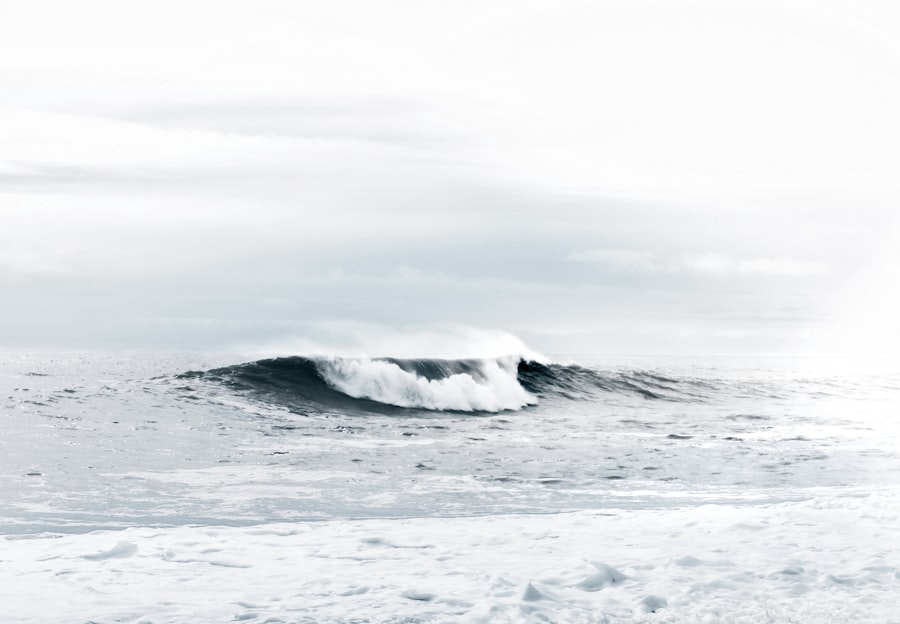
Scientists have proposed several theoretical models to explain how rogue waves, particularly those observed in the North Sea, come into being. While no single theory universally explains every instance, a combination of these mechanisms likely contributes to their formation.
Linear and Non-Linear Wave Dynamics
The behavior of waves can be broadly categorized as linear or non-linear. Understanding this distinction is crucial to grasping how rogue waves form.
Linear Wave Theory and Its Limitations
Linear wave theory, a foundational concept in oceanography, assumes that waves are small in amplitude relative to their wavelength and that their interactions are minimal. This theory is useful for describing the behavior of typical waves in a moderate sea state. However, it fails to adequately explain the occurrence of exceptionally large and steep waves, as it does not account for the significant energy exchange and amplification that occurs in non-linear wave dynamics.
Non-Linear Effects: The Key to Extreme Waves
The formation of rogue waves is intrinsically linked to non-linear wave dynamics. In essence, when waves become sufficiently large and steep, their interactions become more significant and complex. They can transfer energy amongst themselves, leading to the amplification of a few waves at the expense of others. This non-linear energy transfer is a critical component of most rogue wave theories.
Specific Mechanisms for Rogue Wave Generation
Several distinct mechanisms are believed to contribute to the formation of rogue waves.
Benjamin-Feir Instability (Modulational Instability)
This theory, named after the mathematicians T. Brooke Benjamin and J.E. Feir, suggests that in a finite-amplitude wave train, small perturbations can grow exponentially, leading to the formation of a few exceptionally large waves. This instability arises from the non-linear interaction between waves, where longer wavelengths can draw energy from shorter wavelengths. It’s a mechanism that can lead to the spontaneous emergence of rogue waves even in a seemingly uniform wave field.
Three-Wave and Four-Wave Interactions
More advanced theories consider the complex interactions involving three or four waves. In these scenarios, smaller waves can coalesce and transfer energy to a dominant wave, causing it to grow significantly in height and steepness. These interactions are highly dependent on the specific wave period and direction, contributing to the seemingly random and unpredictable nature of rogue waves.
Current-Wave Interactions and Focusing Effects
As mentioned earlier, strong currents in the North Sea can play a crucial role. When waves encounter currents flowing in the opposite direction, they can be compressed, leading to an increase in their height and steepness. Conversely, currents flowing in the same direction as the waves can lead to their stretching. Furthermore, interactions with complex seabed topography can also focus wave energy, similar to how a lens focuses light, creating localized areas of extreme wave heights.
Focusing by Remnant Swells
Another theory suggests that rogue waves can be formed by the focusing of a moderate swell by preceding, larger waves. Imagine a series of moderate waves that, by chance, align and focus their energy into a single, colossal wave. This can happen even if the overall sea state is not particularly severe.
Recent studies have shed light on the phenomenon of North Sea rogue waves, which pose significant risks to maritime activities in the region. These massive waves can emerge unexpectedly, leading to dangerous conditions for vessels. For those interested in exploring this topic further, a related article provides in-depth insights into the science behind these waves and their impact on shipping routes. You can read more about it in this informative piece on rogue waves. Understanding these natural occurrences is crucial for improving safety measures in the North Sea.
The Perilous Impact: Consequences of North Sea Rogue Waves
| Year | Location | Wave Height (m) | Damage |
|---|---|---|---|
| 1995 | Draupner platform | 25 | Minor structural damage |
| 2000 | North Sea | 30 | Damage to oil platforms |
| 2013 | North Sea | 19 | No significant damage reported |
The sheer size and unexpected nature of rogue waves make them a formidable threat to maritime activities in the North Sea. Their impact can range from minor damage to catastrophic loss.
Threats to Offshore Installations
The North Sea is a hub for offshore oil and gas exploration and production, with numerous platforms and infrastructure dotting its waters. Rogue waves pose a significant danger to these installations.
Structural Damage and Integrity
A rogue wave striking an offshore platform can exert immense forces, potentially causing structural damage. While platforms are designed to withstand harsh weather, the extreme, concentrated impact of a rogue wave can exceed design limits, leading to buckling, deformation, or even catastrophic failure. The integrity of supporting structures, pipelines, and accommodation modules can all be compromised.
Worker Safety and Evacuation Challenges
The safety of personnel working on offshore installations is paramount. A rogue wave can pose direct threats to workers, particularly those on exposed decks or during transfer operations. Furthermore, the unpredictable nature of these waves can complicate emergency response and evacuation procedures, making it difficult to safely move personnel away from danger.
Disruption to Operations and Economic Losses
Beyond immediate structural damage, rogue waves can lead to significant disruptions in offshore operations. Production can be halted, maintenance work postponed, and supply lines interrupted. The economic consequences of such disruptions can be substantial, involving lost production, repair costs, and potential insurance claims.
The Dangers to Shipping and Navigation
Commercial shipping is the lifeblood of many economies, and the North Sea is a vital artery for global trade. Rogue waves represent a constant and insidious threat to vessels of all sizes.
Capsizing and Breaking Waves
The most devastating consequence of a rogue wave encounter for a ship is the risk of capsizing. If a sufficiently large and steep wave strikes a vessel broadside, the immense forces can overwhelm its stability, leading to it rolling over. Alternatively, a rogue wave can break over the deck, inundating the vessel and causing it to founder. Even if a ship does not capsize, it can suffer severe structural damage, with masts, superstructures, and cargo being swept away.
Loss of Control and Maneuverability
Even if a rogue wave does not cause immediate structural failure, it can result in a complete loss of control. The sudden and violent impact can disable propulsion systems, steering mechanisms, and communications equipment. A damaged vessel adrift in rough seas becomes even more vulnerable to subsequent waves.
Impact on smaller vessels and recreational craft
While large cargo ships and tankers are built to withstand significant wave action, smaller vessels, including fishing boats and recreational craft, are far more vulnerable. A rogue wave can easily swamp or capsize these smaller craft, leading to tragic loss of life. Many of these incidents occur in conditions that might not appear overtly dangerous, highlighting the deceptive nature of rogue waves.
The Path Forward: Mitigation, Prediction, and Future Research
While the mystery of rogue waves is far from fully unraveled, significant progress is being made in understanding and mitigating their threat. A multi-pronged approach involving improved forecasting, enhanced structural design, and continued scientific research is crucial.
Improving Forecasting and Warning Systems
Accurate prediction of rogue waves remains a significant challenge due to their spontaneous and localized nature. However, advancements in modeling and data assimilation are showing promise.
Advanced Wave Modeling and Simulation
Sophisticated numerical models are being developed that can simulate the complex non-linear interactions of waves in a realistic sea state. These models aim to identify regions and conditions where rogue wave formation is more likely. By continuously running these simulations with real-time metocean data, forecasters can potentially issue localized warnings for areas of increased risk.
Real-time Data Assimilation from Satellites and Buoys
Integrating data from satellite altimetry, which measures wave heights across vast ocean areas, and from networks of oceanographic buoys, which provide in-situ measurements, is crucial for improving the accuracy of wave models. Real-time assimilation of this data allows models to be updated dynamically, providing a more accurate representation of the current sea state and potential for rogue wave formation.
Developing Early Warning Systems
The ultimate goal is to develop robust early warning systems that can alert vessels and offshore installations to imminent rogue wave threats. This would involve combining predictive models with real-time observational data to provide timely and actionable information, allowing for evasive maneuvers or heightened preparedness.
Enhancing Structural Design and Resilience
Given the current limitations in precise prediction, a crucial aspect of mitigation involves designing structures and vessels that are more resilient to extreme wave forces.
Robust Engineering Standards for Offshore Structures
The design standards for offshore platforms and other maritime infrastructure are continuously being reviewed and updated based on the latest research and data on rogue wave events. This includes incorporating higher safety factors and designing for increased wave loads, particularly in areas known for higher rogue wave activity.
Improving Ship Hull Design and Stability
Shipbuilders are increasingly incorporating advanced computational fluid dynamics (CFD) simulations to better understand how different hull shapes interact with extreme waves. This research aims to develop hull designs that are inherently more stable and less susceptible to capsizing or severe damage from rogue waves. Enhancing freeboard and deck strength are also critical considerations.
The Role of Advanced Materials
The development and application of advanced, high-strength materials could also play a role in building more resilient maritime structures and vessels, capable of withstanding greater impact forces.
Ongoing Research and Future Frontiers
The quest to fully understand rogue waves is an ongoing scientific endeavor. Future research will likely focus on refining existing theories, exploring new phenomena, and leveraging emerging technologies.
Investigating Extreme Sea States with New Technologies
The deployment of advanced sensor technologies, including novel wave measurement devices, underwater acoustic systems, and unmanned aerial vehicles (UAVs), will provide new avenues for observing and understanding rogue wave events in unprecedented detail.
Understanding the Role of Climate Change
The potential impact of climate change on rogue wave frequency and intensity is an area of growing concern. Changes in storm patterns, ocean temperatures, and sea levels could influence the conditions that lead to their formation. Further research is needed to establish any definitive links.
Collaborative International Research Efforts
The global nature of maritime threats necessitates international collaboration. Sharing data, research findings, and best practices among oceanographic institutions, maritime agencies, and industry stakeholders worldwide is essential for accelerating progress in unraveling the mystery of rogue waves.
The North Sea, with its challenging environment and history of enigmatic maritime events, continues to be a focal point for understanding rogue waves. While these “walls of water” may never be entirely predictable, a concerted global effort in research, engineering, and technological advancement is steadily chipping away at their mystery, aiming to transform these terrifying anomalies into manageable risks for the mariners who navigate their waters. The journey to fully comprehend and ultimately conquer the threat of rogue waves is far from over, but each new insight brings us closer to ensuring the safety and security of our vital maritime connections.

The Dangerous Sea Europe Can’t Live Without
FAQs
What are North Sea rogue waves?
North Sea rogue waves are unusually large and unexpected waves that occur in the North Sea. These waves are significantly larger than the surrounding waves and can pose a danger to ships and offshore structures.
How big can North Sea rogue waves get?
North Sea rogue waves can reach heights of up to 30 meters (98 feet), making them a significant hazard for maritime activities in the region.
What causes North Sea rogue waves?
The exact cause of North Sea rogue waves is not fully understood, but they are believed to be the result of a combination of factors such as strong winds, ocean currents, and the interaction of different wave systems.
How common are North Sea rogue waves?
North Sea rogue waves are relatively rare, but they have been documented and studied by researchers and have been known to occur in the region.
What impact do North Sea rogue waves have on maritime activities?
North Sea rogue waves can pose a significant threat to ships, offshore platforms, and other maritime infrastructure. They can cause damage, injury, and even loss of life if proper precautions are not taken.