
Water, H₂O, is a fundamental molecule essential for life as we know it. Its unique properties, stemming from its polarity and hydrogen bonding capabilities, make it an exceptional solvent and a vital component of countless biological and chemical processes. However, the term “water derivative” suggests a broader scope, encompassing substances that are either directly derived from water through chemical modification or share significant structural or functional similarities with water. This article aims to provide a comprehensive explanation of these water derivatives, exploring their formation, properties, and diverse applications.
The Building Blocks: Understanding Water’s Core Chemistry
Before delving into derivatives, it is crucial to revisit the fundamental chemistry of water itself. This foundational understanding will illuminate why and how modifications to water lead to the diverse array of substances we will explore.
The Polarity of Water: A Foundation for Reactivity
Water’s polarity is the cornerstone of its unique behavior. The oxygen atom in a water molecule is more electronegative than the hydrogen atoms. This means it attracts the shared electrons in the covalent bonds more strongly, creating a partial negative charge on the oxygen and partial positive charges on the hydrogen atoms. This uneven distribution of charge results in a dipole moment, making the water molecule polar.
Electronegativity and Covalent Bonds: The Origin of Polarity
The concept of electronegativity, the measure of an atom’s ability to attract electrons in a chemical bond, is central to understanding water’s polarity. Oxygen’s high electronegativity pulls electron density away from the less electronegative hydrogen atoms, creating the polar covalent bonds.
The Dipole Moment: A Measure of Polarity
The dipole moment quantifies the degree of polarity in a molecule. In water, the vector sum of the bond dipoles results in a significant net dipole moment, making it a highly polar molecule. This polarity is responsible for its exceptional ability to dissolve ionic and polar compounds.
Hydrogen Bonding: The Intermolecular Glue
The partial positive charges on the hydrogen atoms of one water molecule are attracted to the partial negative charge on the oxygen atom of another water molecule. This attraction is known as hydrogen bonding, a relatively strong intermolecular force.
Strength and Significance of Hydrogen Bonds
While weaker than covalent or ionic bonds, hydrogen bonds are significantly stronger than other intermolecular forces like van der Waals forces. These bonds are responsible for many of water’s unusual properties, including its high boiling point, surface tension, and specific heat capacity.
Impact on Physical Properties: From Ice to Steam
Hydrogen bonding dictates how water molecules interact with each other. This directly influences its physical state at different temperatures, leading to phenomena like the lower density of ice compared to liquid water and the considerable energy required to transition from liquid to gas.
For a deeper understanding of water derivatives and their implications in various sectors, you can explore the article titled “The Future of Water Derivatives: Opportunities and Challenges.” This article provides insights into how water derivatives are being utilized in financial markets and their potential impact on water resource management. To read more about this topic, visit here.
Direct Chemical Modifications of Water: Creating the Simplest Derivatives
The most direct form of water derivative involves chemical reactions where water itself participates as a reactant, leading to the formation of new compounds and often the release or incorporation of hydrogen or oxygen atoms.
Hydrolysis Reactions: Splitting with Water
Hydrolysis, meaning “water splitting,” is a fundamental chemical reaction where a water molecule is used to break a chemical bond. This process is ubiquitous in both biological and industrial settings.
Acid and Base Catalyzed Hydrolysis: Accelerating the Process
While hydrolysis can occur spontaneously, it is often catalyzed by acids or bases. Acids protonate the bond to be broken, making it more susceptible to nucleophilic attack by water. Bases, conversely, can generate hydroxide ions, which are stronger nucleophiles.
Ester Hydrolysis: Breaking Down Esters
Esters, formed from the reaction of an acid and an alcohol, can be hydrolyzed back into their constituent acid and alcohol. This reaction is crucial in the breakdown of fats and oils in biological systems and in industrial processes like saponification.
Amide Hydrolysis: The Formation of Amines and Carboxylic Acids
Amides, formed from the reaction of a carboxylic acid and an amine, can also be hydrolyzed to produce their original components. This is a key process in protein digestion.
Hydrolysis in Biological Systems: Metabolism and Digestion
Many vital biological processes rely on hydrolysis. For instance, the digestion of carbohydrates, proteins, and fats involves hydrolysis reactions that break down complex molecules into simpler ones that can be absorbed by the body.
Hydration Reactions: Adding Water to Molecules
Hydration involves the addition of a water molecule across a double or triple bond in another molecule, or the incorporation of water molecules into a crystal lattice.
Addition Across Unsaturated Bonds: Forming Alcohols and Other Compounds
In organic chemistry, hydration of alkenes and alkynes, often catalyzed by acids, leads to the formation of alcohols. This is a key step in many industrial synthesis pathways.
Markovnikov’s Rule: Predicting Hydration Products
Markovnikov’s rule, an empirical rule, predicts the regiochemistry of hydration reactions of unsymmetrical alkenes, stating that the hydrogen atom adds to the carbon atom with the greater number of hydrogen atoms.
Hydrates: Water Molecules in Crystalline Structures
Many inorganic salts can form hydrates, where water molecules are incorporated into their crystal structure. Examples include copper(II) sulfate pentahydrate (CuSO₄·5H₂O) and gypsum (CaSO₄·2H₂O). The presence of water of hydration can significantly affect the properties of the salt.
Oxidation and Reduction of Water: Oxygen and Hydrogen Production
Water can participate in redox reactions, leading to the production of elemental oxygen and hydrogen.
Electrolysis of Water: Producing Hydrogen and Oxygen
Electrolysis is a process that uses electrical energy to drive a non-spontaneous chemical reaction. In the electrolysis of water, an electric current is passed through water (often with an electrolyte added to improve conductivity), splitting it into hydrogen gas (H₂) at the cathode and oxygen gas (O₂) at the anode. This is a significant method for producing high-purity hydrogen fuel.
Photosynthesis: Water as an Electron Donor
In photosynthesis, water acts as an electron donor, providing the electrons necessary for the reduction of carbon dioxide to glucose. This process releases oxygen as a byproduct and is fundamental to life on Earth.
Water Analogs and Isosteres: Molecules with Similar Structures and Properties
Beyond direct chemical transformations, the concept of water derivatives extends to molecules that, while not directly made from water, exhibit similar structural features or chemical properties, often due to mimicking water’s ability to participate in hydrogen bonding or its polarity.
Hydrides: Compounds with Hydrogen
Hydrides are chemical compounds that contain hydrogen. While a broad category, some hydrides are considered water analogs due to their structural similarity to water or their role in hydrogen transfer.
Group 16 Hydrides: A Trend in Properties
Hydrides of Group 16 elements (oxygen, sulfur, selenium, tellurium) show a fascinating trend. Water (H₂O) is followed by hydrogen sulfide (H₂S), hydrogen selenide (H₂Se), and hydrogen telluride (H₂Te). As the central atom becomes larger and less electronegative, the polarity and hydrogen bonding strength decrease, leading to significant differences in physical properties like boiling point and acidity.
Hydrogen Sulfide (H₂S): A Less Polar Analogue
Hydrogen sulfide is a gas at room temperature with a characteristic rotten egg smell. It is less polar than water and its hydrogen bonds are weaker, resulting in a much lower boiling point. Despite these differences, it exhibits some similar chemical behaviors.
Ammonia (NH₃): A Hydrogen Bonding Analog
Ammonia, the hydride of nitrogen, is also a polar molecule capable of hydrogen bonding. While its structure is different (trigonal pyramidal vs. bent), its ability to form strong intermolecular forces makes it comparable to water in certain aspects, particularly in its solvent properties for some compounds.
Alcohols: Hydroxyl Group as a Water Mimic
Alcohols are organic compounds containing one or more hydroxyl (-OH) functional groups attached to a saturated carbon atom. The hydroxyl group is structurally analogous to the hydroxyl portion of a water molecule.
Methanol and Ethanol: Simple Alcohols
Methanol (CH₃OH) and ethanol (C₂H₅OH) are the simplest alcohols. The presence of the polar -OH group allows them to form hydrogen bonds, making them soluble in water and capable of acting as solvents for a range of substances.
Solvent Properties of Alcohols: Mimicking Water’s Versatility
Like water, alcohols can dissolve both polar and some nonpolar compounds, although their solvency profile differs. The longer the alkyl chain in an alcohol, the more nonpolar it becomes, affecting its solubility.
Biological Roles of Alcohols: Beyond Simple Solvents
While not as central as water, alcohols play roles in biological systems, and their interactions with biomolecules are significant. For example, ethanol is a common byproduct of fermentation.
Other Polar Molecules with Hydrogen Bonding Capabilities
Many other molecules possess polar functional groups that enable them to participate in hydrogen bonding, allowing them to interact with water and other polar substances in ways that can be considered analogous to water’s behavior.
Amines and Carboxylic Acids: Intermolecular Forces at Play
Amines contain nitrogen atoms with lone pairs, and carboxylic acids contain hydroxyl groups. Both functional groups can participate in hydrogen bonding, influencing the solubility and reactivity of these compounds.
Solvation and Interactions: Mimicking Water’s Role
These molecules can act as solvents themselves or influence the solvent properties of water by forming hydrogen bonds with water molecules. This ability to engage in similar intermolecular interactions makes them functionally analogous to water in specific contexts.
Water Derivatives in Industry and Technology: Harnessing Unique Properties
The direct derivatives and water analogs discussed above find extensive applications in various industries, driven by their unique chemical and physical properties.
Solvents: Dissolving the World Around Us
Many water derivatives serve as excellent solvents, either as alternatives to water or to dissolve substances that water cannot effectively dissolve.
Organic Solvents: From Laboratories to Manufacturing
Ethanol, methanol, and various other alcohols and ethers are widely used as solvents in laboratories for synthesis and analysis, and in industries for cleaning, degreasing, and as carriers for paints, inks, and adhesives.
Acetone and Other Ketones: Powerful Solvents
Acetone, a simple ketone, is a highly effective solvent for many organic compounds, including plastics and resins.
Specialized Solvents: Tailoring for Specific Needs
In pharmaceuticals, specialized solvents are chosen based on their ability to dissolve active pharmaceutical ingredients and their compatibility with biological systems.
Reagents in Chemical Synthesis: Building Blocks and Catalysts
Water and its derivatives are indispensable reagents in chemical synthesis, participating in reactions or facilitating them.
Hydrolysis and Hydration in Manufacturing: Producing Essential Chemicals
Many industrial processes rely on hydrolysis or hydration reactions to produce key chemicals. For example, the production of plastics and polymers often involves these fundamental reactions.
Production of Acids and Esters: Key Industrial Intermediates
Hydrolysis of esters is a critical step in the production of fatty acids and glycerol, which have numerous applications.
Water as a Reaction Medium: The Green Chemistry Perspective
In the context of green chemistry, water is increasingly being explored as a reaction medium due to its low toxicity, non-flammability, and abundance, replacing more hazardous organic solvents.
Fuel Production: Hydrogen as a Clean Energy Source
The electrolysis of water is a leading method for producing hydrogen, a clean and versatile fuel source with the potential to decarbonize transportation and industry.
Hydrogen Fuel Cells: Powering the Future
Hydrogen fuel cells convert chemical energy stored in hydrogen into electrical energy through electrochemical reactions, with water as the only byproduct. This technology offers a sustainable alternative to fossil fuels.
Challenges in Hydrogen Production and Storage: Overcoming Hurdles
Despite its promise, widespread adoption of hydrogen as a fuel faces challenges related to the energy cost of production, efficient storage, and infrastructure development.
Biological Applications: From Cellular Processes to Medical Treatments
Water derivatives and molecules mimicking water’s behavior play crucial roles in biological systems and medical applications.
Role of Water in Biological Systems: The Universal Solvent
Water’s unparalleled solvent properties are essential for nearly all biochemical reactions occurring within cells.
Enzyme Activity: Water’s Influence on Protein Function
The hydration of enzymes is critical for their proper folding and catalytic activity.
Therapeutic Uses of Water-Based Compounds: Medicines and Treatments
Many pharmaceuticals are formulated in aqueous solutions or involve water derivatives in their synthesis and delivery. For instance, saline solutions are fundamental in medicine.
Water derivatives are an intriguing aspect of environmental economics, and understanding their implications can be quite complex. For those looking to delve deeper into this topic, a related article that provides valuable insights can be found at My Geo Quest. This resource explores various facets of water derivatives, including their market dynamics and potential impact on sustainability efforts. By examining such articles, readers can gain a clearer perspective on how water resources are being valued and traded in today’s economy.
Challenges and Future Directions: Innovations in Water Derivative Research
The study and application of water derivatives are continuously evolving, with ongoing research focused on improving efficiency, sustainability, and exploring new functionalities.
Sustainable Production Methods: Minimizing Environmental Impact
Efforts are underway to develop more energy-efficient and environmentally friendly methods for producing water derivatives, particularly hydrogen.
Advancements in Catalysis: Enhancing Reaction Efficiency
Developing novel catalysts can significantly improve the efficiency and selectivity of hydrolysis, hydration, and electrolysis reactions, reducing energy consumption and waste.
Photocatalysis and Electrocatalysis: Harnessing Renewable Energy
Research into photocatalysis and electrocatalysis aims to use renewable energy sources like sunlight and electricity to drive these reactions.
Novel Water-Based Materials: Creating New Functionalities
The exploration of new materials that interact with water in unique ways or are derived from water is a growing area of research.
Hydrogels: Water-Absorbing Polymers
Hydrogels are cross-linked polymer networks that can absorb and retain large amounts of water. They have diverse applications in medicine, agriculture, and consumer products.
Biomedical Applications of Hydrogels: Drug Delivery and Tissue Engineering
Hydrogels are widely used for controlled drug delivery, wound healing, and as scaffolds for tissue engineering due to their biocompatibility and tunable properties.
Expanding the Role of Water as a Green Solvent: Towards a Sustainable Future
The push towards green chemistry is driving increased research into using water as a primary solvent in chemical processes, replacing hazardous organic solvents.
Overcoming Limitations of Water as a Solvent: Addressing Solubility Issues
While water is a versatile solvent, it has limitations in dissolving nonpolar compounds. Strategies to overcome this include the use of co-solvents or the development of novel water-compatible catalysts.
Supercritical Water: A Powerful Reaction Medium
Supercritical water, water heated above its critical temperature and pressure, exhibits unique solvent properties, bridging the gap between liquid water and gases, and enabling efficient degradation of organic pollutants.
Conclusion: The Enduring Significance of Water and Its Derivatives
Water, in its elemental form and through its diverse derivatives, remains a molecule of profound importance. From the fundamental processes of life to cutting-edge technological advancements, its influence is pervasive. Understanding the chemistry of water and the nature of its derivatives provides a deeper appreciation for the intricate molecular world and unlocks pathways for innovation across numerous scientific and industrial domains. As research continues to unravel new properties and applications, the significance of water and its derivatives is only poised to grow, shaping a more sustainable and technologically advanced future.
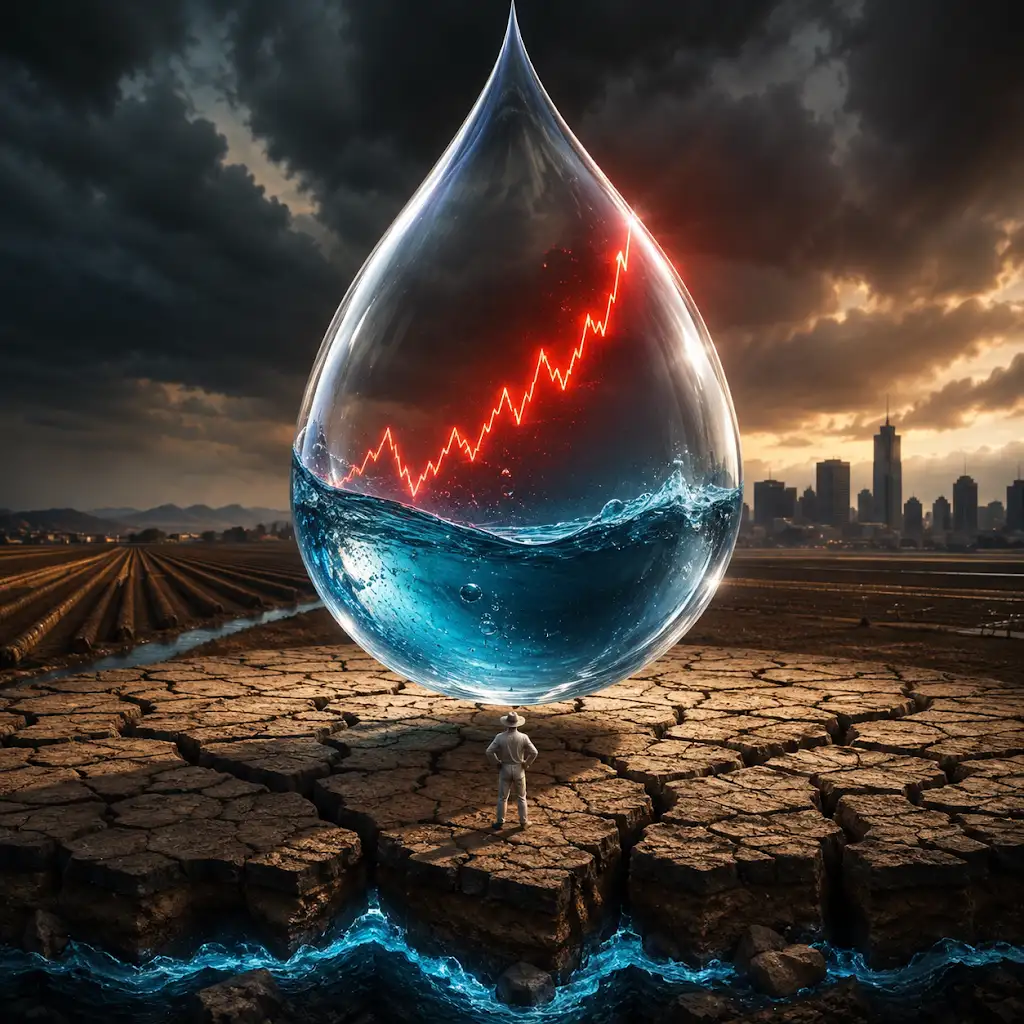
Wall Street Is Betting on the Water America Depends On
FAQs

What are water derivatives?
Water derivatives are financial instruments whose value is derived from the price of water or water-related assets, such as water rights, water futures, or water options.
How are water derivatives traded?
Water derivatives are typically traded on commodity exchanges, similar to other commodities such as oil or gold. Investors can buy and sell water derivatives through futures contracts or options, allowing them to speculate on the future price of water.
What are the reasons for trading water derivatives?
Trading water derivatives can provide a way for investors to hedge against the risk of water scarcity or price fluctuations. It can also allow for price discovery and provide a means for water users and suppliers to manage their exposure to water price volatility.
What are the potential benefits of water derivatives?
Water derivatives can help to allocate water resources more efficiently by allowing for the transfer of water rights and the pricing of water as a tradable asset. They can also provide a mechanism for managing water-related risks and incentivizing water conservation.
What are the concerns surrounding water derivatives?
Some concerns about water derivatives include the potential for speculation to drive up water prices, the impact on water access for marginalized communities, and the ethical implications of treating water as a purely financial asset. Regulatory and governance issues also need to be addressed to ensure the responsible and sustainable trading of water derivatives.