The intricate web that powers our modern world is a complex system of interconnected components working in concert. Understanding these power transmission networks is crucial to appreciating the reliability and sophistication of the electricity we use every day. These networks are not simply wires strung across fields; they are meticulously designed and managed systems that ensure electricity generated at distant power plants reaches our homes and businesses with minimal loss and maximum efficiency. This article delves into the fundamental principles and essential elements of these vital infrastructures.
Before electricity can be transmitted across vast distances, it must first be generated. This typically occurs at large-scale power plants, which harness various energy sources to produce alternating current (AC) electricity. The methods of generation are diverse, ranging from the combustion of fossil fuels like coal, natural gas, and oil, to the renewable forces of hydro, wind, and solar power, and the controlled fission of nuclear materials. Regardless of the source, the output from most generators is at relatively low voltages (typically a few thousand volts).
Types of Power Generation
The choice of generation method often depends on geographical location, fuel availability, environmental regulations, and economic factors.
- Fossil Fuel Power Plants: These traditional plants have long been the backbone of electricity generation. They involve burning fuels to heat water, producing steam that drives turbines connected to generators. While reliable, they are a significant source of greenhouse gas emissions.
- Hydroelectric Power Plants: Utilizing the potential energy of water stored in reservoirs, hydroelectric dams generate electricity by releasing water flow through turbines. These are a clean and renewable source, but their deployment is limited by suitable water resources and environmental impact on river ecosystems.
- Wind Turbines: Harnessing the kinetic energy of wind, turbines convert rotational motion into electrical energy. Wind power is a rapidly growing renewable source, but its intermittent nature and geographical dependence require careful integration with the grid.
- Solar Power Plants: Solar photovoltaic (PV) panels convert sunlight directly into electricity. Solar power is also a renewable and increasingly cost-effective option, though its output is dependent on sunlight availability and weather conditions.
- Nuclear Power Plants: These plants use nuclear fission to generate heat, which produces steam to drive turbines. Nuclear power offers a low-carbon electricity source with high reliability, but raises concerns about safety, waste disposal, and proliferation.
- Geothermal Power Plants: Tapping into the Earth’s internal heat, geothermal plants use steam or hot water to drive turbines. This is a consistent and renewable energy source, but its availability is geographically limited to areas with significant geothermal activity.
The Necessity of Voltage Transformation
The electricity generated by power plants is at a voltage that is too low for efficient long-distance transmission. Transmitting electricity at low voltages over long distances would result in significant energy losses due to resistance in the conductors, a phenomenon governed by Joule’s Law ($P_{loss} = I^2R$). To overcome this, the voltage must be dramatically increased before it enters the transmission network. This process of voltage increase is accomplished using step-up transformers. Conversely, as electricity approaches its destination, its voltage needs to be reduced in stages to be safe and usable by consumers. This is achieved using step-down transformers.
The Role of Transformers in Voltage Conversion
Transformers are static electrical devices that transfer electrical energy between circuits through electromagnetic induction. They are fundamental to power transmission due to their ability to efficiently change voltage levels.
- Step-Up Transformers: Connected to the output of the generators, these transformers increase the voltage to very high levels (hundreds of kilovolts) for transmission.
- Step-Down Transformers: Used at substations along the transmission route and near consumer areas, these transformers progressively reduce the voltage to levels suitable for distribution and finally for end-use.
The efficiency of transformers is remarkably high, often exceeding 99%, meaning very little energy is lost during the voltage conversion process. This efficiency is a critical factor in making long-distance power transmission economically viable.
For a deeper understanding of power transmission networks and their significance in modern energy systems, you can explore the article available at My Geo Quest. This resource provides valuable insights into the components, challenges, and advancements in power transmission, making it an excellent complement to your knowledge on the subject.
The Backbone of the Grid: Transmission Lines
The arteries of the power transmission network are the transmission lines. These are the high-voltage conductors that carry electricity from generation sites to distribution substations, often spanning hundreds or even thousands of kilometers. The design and construction of these lines are critical for ensuring reliable and efficient power delivery.
Understanding Transmission Line Components
Transmission lines are comprised of several key components, each playing a vital role in the safe and effective transport of electricity.
- Conductors: These are the primary pathways for electricity. Typically made of aluminum or copper, often reinforced with steel for strength (ACSR – Aluminum Conductor Steel Reinforced), they are designed to minimize resistance and maximize current carrying capacity.
- Insulators: Essential for preventing electricity from flowing to the supporting towers or the ground, insulators are made of materials like porcelain or composite plastics. They must withstand high voltages and environmental stresses such as rain, pollution, and temperature fluctuations.
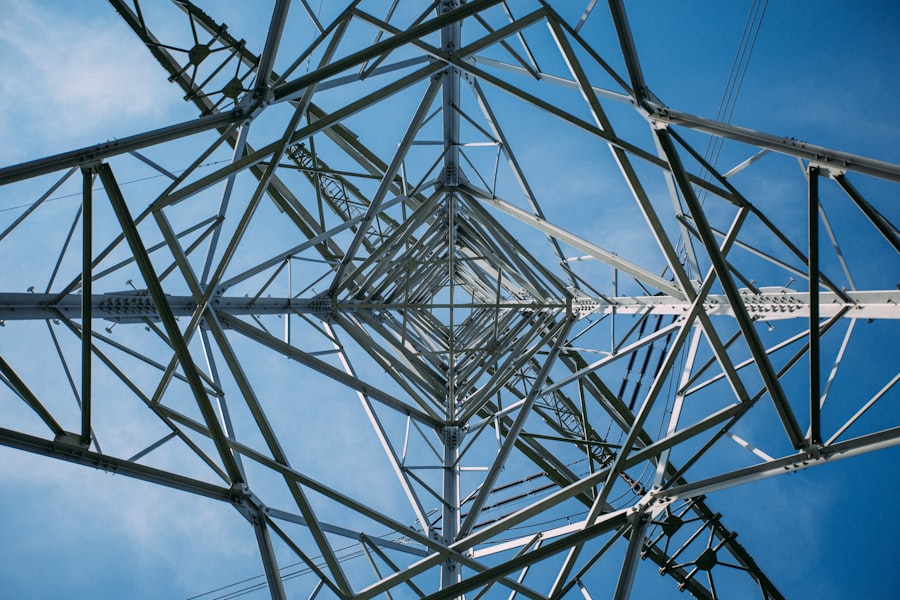
- Towers: These lattice-like structures, usually made of steel or concrete, support the conductors at significant heights above the ground. Their design must account for the weight of the conductors, wind loads, ice accumulation, and seismic activity.
- Ground Wires: Typically strung above the phase conductors, these wires serve to protect the transmission lines from lightning strikes. They provide a lower impedance path for lightning currents to be safely discharged to the ground.
Voltage Classifications in Transmission
Transmission lines are categorized based on their operating voltage levels. Higher voltage levels are generally used for longer distances and heavier power loads.
- High Voltage (HV): Typically ranges from 33 kV to 69 kV. Used for transmitting power over moderate distances or connecting generating plants to the main transmission network.
- Extra-High Voltage (EHV): Ranges from 138 kV to 345 kV. Common for transmitting power across larger regions and connecting major substations.
- Ultra-High Voltage (UHV): Voltages above 765 kV, with some lines operating at even higher levels. Used for transmitting massive amounts of power over very long distances, often between continents or to serve densely populated areas.
The choice of voltage is a complex engineering decision influenced by factors such as transmission distance, power capacity requirements, right-of-way availability, and economic considerations related to conductor size and tower height.
The Importance of Right-of-Way
Securing the land over which transmission lines are built, known as the “right-of-way” (ROW), is a crucial and often contentious aspect of network development. This land must allow for safe clearances between conductors and the ground, as well as between conductors themselves, to prevent potential hazards like arcing and ensure public safety. Maintaining vegetation control within the ROW is also critical to prevent tree branches from interfering with the lines, which can lead to outages.
The Nervous System: Grid Control and Protection

Power transmission networks are not passive conduits; they are actively managed and protected systems. The intricate dance of electricity flow is constantly monitored and controlled to maintain stability, prevent overloads, and quickly isolate faults.
Load Balancing and Frequency Control
The demand for electricity fluctuates constantly throughout the day and across seasons. Maintaining a stable grid requires matching electricity generation precisely with this demand. This is known as load balancing. The frequency of the AC power (typically 50 or 60 Hz) is a critical indicator of this balance. If demand exceeds generation, the frequency drops, and if generation exceeds demand, the frequency rises.
Mechanisms for Maintaining Grid Stability
Grid operators employ sophisticated systems and control strategies to ensure frequency remains within acceptable limits.
- Real-time Monitoring: Grid operators continuously monitor generation output, transmission line loads, and grid frequency from control centers.
- Dispatching Generation: When demand rises, operators can ramp up the output of generating plants. Conversely, if demand falls, they can reduce generation.
- Interconnections: The interconnected nature of power grids allows for the import and export of electricity between different regions, helping to balance local supply and demand.
- Automatic Generation Control (AGC): This automated system continuously adjusts the output of power plants to maintain grid frequency and tie-line flows.
Fault Detection and Protection Systems
Despite best efforts, faults such as short circuits or line breaks can occur on the transmission network. These faults can cause significant damage and widespread outages if not dealt with swiftly.
The Role of Relays and Circuit Breakers
A sophisticated array of devices is employed to detect and mitigate the impact of faults.
- Protective Relays: These electronic or electromechanical devices constantly monitor electrical parameters like current, voltage, and frequency. When they detect abnormal conditions indicative of a fault, they send a signal to open a circuit breaker.
- Circuit Breakers: These are the “switches” of the power grid. When triggered by a relay, they rapidly interrupt the flow of electricity in a faulty section of the network. They are designed to operate very quickly, minimizing the duration of the fault and its potential for damage.
- Fuses: Though less common on high-voltage transmission lines, fuses are a simpler form of overcurrent protection found in lower voltage distribution systems.
Substations: The Junctions of the Network
Substations are critical nodes within the power transmission network. They serve as transfer points where electricity is transformed, switched, and controlled.
Key Functions of Substations
- Voltage Transformation: As mentioned, transformers within substations change voltage levels up or down.
- Switching: Disconnect switches and circuit breakers allow operators to isolate sections of the network for maintenance, repair, or to reroute power.
- Protection and Metering: Equipment in substations monitors power flow, records energy usage, and protects the network from faults.
- Synchronization: Substations play a role in synchronizing different parts of the grid, ensuring that voltage and phase angles match before interconnecting them.
Challenges and Innovations in Power Transmission
The power transmission network is a dynamic entity, constantly facing new challenges and undergoing continuous innovation to improve its performance, reliability, and sustainability.
Aging Infrastructure and the Need for Modernization
Many transmission lines and associated equipment were built decades ago and are nearing the end of their expected lifespan. This aging infrastructure poses risks of failure and can limit the capacity of the grid to accommodate new energy sources.
Upgrading and Replacing Old Assets
Modernization efforts involve replacing old conductors with higher capacity ones, installing more robust insulators, and upgrading protection systems.
- Reconductoring: Replacing existing conductors with newer, larger, or more efficient ones to increase power carrying capacity.
- Tower Rehabilitation: Strengthening or replacing aging transmission towers to ensure structural integrity.
- Digitalization of Control Systems: Replacing older mechanical and analog control systems with modern digital ones offers enhanced monitoring, control, and diagnostic capabilities.
Integrating Renewable Energy Sources
The increasing reliance on intermittent renewable energy sources like solar and wind presents significant challenges for power transmission. Their unpredictable output can make grid stability more difficult to manage.
Smart Grid Technologies for Renewables
The “smart grid” concept aims to address these challenges through advanced digital technologies.
- Advanced Metering Infrastructure (AMI): Providing real-time data on energy consumption to both utilities and consumers, enabling better demand-side management.
- Energy Storage Systems: Batteries and other storage technologies can store excess renewable energy when available and release it when needed, smoothing out intermittency.
- Demand Response Programs: Incentivizing consumers to reduce their electricity usage during peak demand periods, helping to balance the grid.
- Advanced Forecasting: Utilizing sophisticated weather and load forecasting tools to predict renewable energy generation and electricity demand.
Enhancing Resilience and Security
Power transmission networks are vulnerable to natural disasters, physical attacks, and cyber threats. Enhancing their resilience and security is a critical ongoing effort.
Strategies for Improved Resilience
- Hardening Infrastructure: Designing and constructing transmission lines and substations to withstand extreme weather events and physical threats.
- Redundancy: Building in backup pathways and equipment to ensure power can be rerouted in case of failure.
- Cybersecurity Measures: Implementing robust cybersecurity protocols to protect control systems and data from malicious attacks.
- Emergency Response Planning: Developing comprehensive plans to restore power quickly and efficiently after major disruptions.
Understanding the intricacies of power transmission networks is essential for grasping how electricity is delivered from generation sites to consumers. For a deeper dive into this topic, you can explore a related article that provides valuable insights into the various components and technologies involved in power transmission systems. This resource can enhance your knowledge and help you appreciate the complexities of energy distribution. To read more, visit this informative article.
The Future of Power Transmission
| Aspect | Explanation |
|---|---|
| Power Transmission Network | The system of interconnected power lines and substations used to transmit electricity from power plants to distribution systems or directly to large industrial consumers. |
| Transmission Lines | High-voltage lines that carry electricity over long distances, typically from power plants to substations. |
| Substations | Facilities that transform voltage levels and regulate the flow of electricity, allowing for the transfer of power between different transmission lines. |
| Grid Reliability | The ability of the power transmission network to deliver electricity consistently and without interruptions, ensuring a reliable power supply. |
| Capacity Expansion | The process of adding new transmission lines and substations to the network to accommodate growing electricity demand and improve system reliability. |
The evolution of power transmission networks is inextricably linked to the future of energy. As the world transitions towards a lower-carbon future, the demands placed upon these networks will continue to evolve.
The Role of High-Voltage Direct Current (HVDC) Technology
While AC has been the standard for long-distance transmission for over a century, High-Voltage Direct Current (HVDC) technology is gaining prominence, especially for very long distances and interconnecting asynchronous AC grids.
Advantages of HVDC
- Lower Losses: For very long distances, HVDC can offer lower transmission losses compared to AC.
- Asynchronous Interconnection: HVDC lines can connect AC grids that are not synchronized, allowing for greater flexibility in power trading and grid management.
- Controllability: HVDC systems offer precise control over power flow, which can be beneficial for grid stability.
Advanced Technologies for the Future Grid
The future power transmission network will be characterized by greater intelligence, automation, and integration.
- Superconductors: Research into superconducting transmission lines, which offer zero electrical resistance, holds the potential for dramatically reducing transmission losses, though practical implementation faces significant technological and economic hurdles.
- Dynamic Line Rating (DLR): This technology allows for real-time assessment of the actual capacity of transmission lines, accounting for factors like ambient temperature and wind speed, thereby optimizing their utilization.
- Blockchain for Grid Management: Exploration into blockchain technology for secure and transparent energy trading and grid management.
In conclusion, the power transmission network is a marvel of engineering and logistical coordination. It is the silent, yet indispensable, facilitator of our modern electrified lives. Understanding its components, operational principles, and the challenges it faces is key to appreciating its vital role and the ongoing efforts to ensure a reliable, efficient, and sustainable energy future for all.

The Hidden Weakness in America’s Power Grid
FAQs
What is a power transmission network?
A power transmission network is a system of interconnected power lines and substations that transmit electricity from power plants to distribution networks and ultimately to consumers.
How does a power transmission network work?
Electricity is generated at power plants and then transmitted at high voltages through the power transmission network. The electricity is then stepped down to lower voltages at substations before being distributed to homes and businesses.
What are the components of a power transmission network?
The main components of a power transmission network include power lines, substations, transformers, and switchgear. These components work together to transmit and distribute electricity efficiently and safely.
Why is a power transmission network important?
A power transmission network is important because it allows electricity to be transmitted over long distances from power plants to areas where it is needed. This helps to ensure a reliable and stable supply of electricity for consumers.
What are the challenges facing power transmission networks?
Challenges facing power transmission networks include aging infrastructure, increasing demand for electricity, and the integration of renewable energy sources. These challenges require ongoing investment and modernization of the power transmission network.