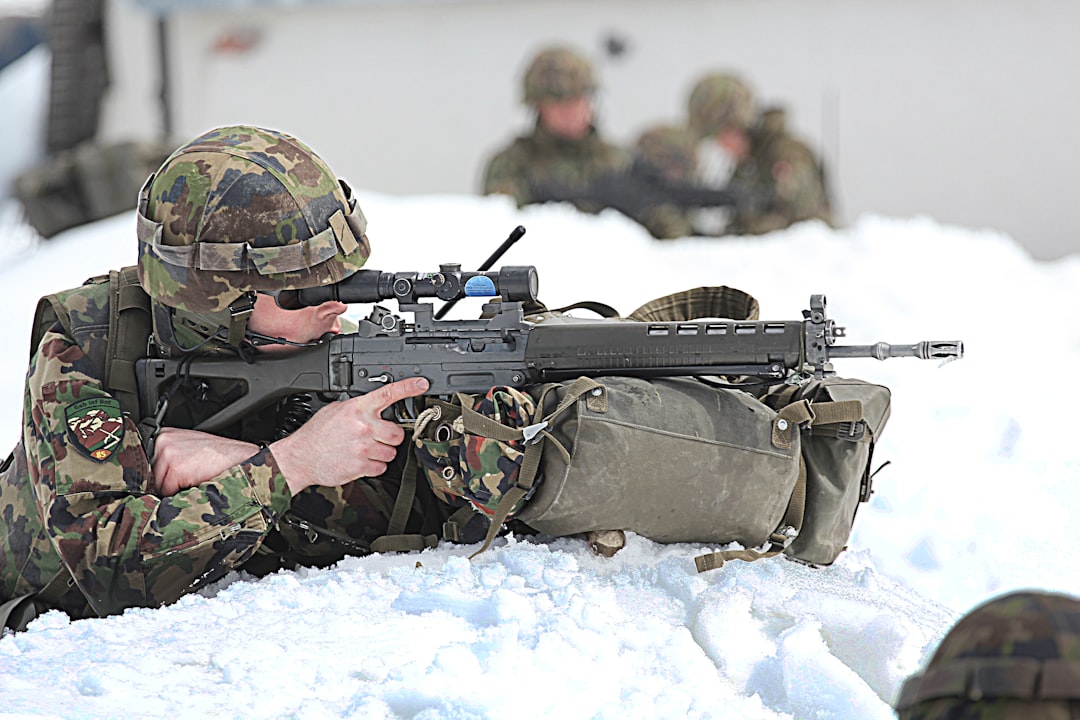
You stand on the precipice of a new era of conflict, one that doesn’t explode with the thunder of artillery but seeps in like a creeping fog. This is the realm of gray zone warfare, a theater of operations that defies traditional definitions and challenges your understanding of war itself. It’s a battlefield where the lines between peace and war are perpetually blurred, and where your adversaries employ a symphony of unconventional tactics designed to erode your strength and destabilize your world without sparking outright hostilities.
To truly grasp gray zone warfare, you must first liberate yourself from rigid, binary definitions of conflict. You’re accustomed to thinking in terms of “war” and “peace,” clear-cut states with distinct characteristics. Gray zone warfare shatters this dichotomy. It exists in that ambiguous space where overt warfare is avoided, yet hostile actions are demonstrably occurring.
Where War Meets Peace, or Neither
Imagine a continuous spectrum of international relations. At one end, you have genuine peace, characterized by cooperation, diplomacy, and shared interests. At the other, you have conventional warfare, a declared state of armed conflict with identifiable combatants and territorial objectives. Gray zone warfare occupies the vast, murky territory in between. It’s not peace because it’s infused with aggression and coercion. It’s not war because it’s largely devoid of overt, kinetic violence that would trigger your nation’s formal declaration of war or invoke mutual defense treaties. Your adversary is meticulously calculating their moves, ensuring they remain below the threshold that would invite a full-blown military response.
The Strategic Imperative: Deniability and Escalation Control
The core strategic imperative for your adversary in gray zone warfare is deniability. They seek to inflict damage, gain advantages, and achieve objectives while maintaining a plausible distance from direct responsibility. This allows them to avoid the international condemnation, sanctions, and potential military retaliation that would accompany overt acts of aggression. Furthermore, they are masters of escalation control. Every action is calibrated to be just enough to achieve a desired effect without crossing a perceived red line that would compel you to respond with overwhelming force. This creates a frustrating paralysis for you, where you recognize the threat but lack the clear justification for a decisive counter-attack.
Beyond the Battlefield: A Multi-Dimensional Threat
Gray zone warfare is not confined to physical borders or traditional military engagements. It infiltrates every facet of your society, impacting your economy, your information environment, your political systems, and even the collective psyche of your populace. Your adversary understands that to truly destabilize you, they must attack your foundations, not just your defenses. They are waging a war on multiple fronts simultaneously, weaving a complex web of influence and disruption.
Gray zone warfare, a term that describes the ambiguous tactics used by state and non-state actors to achieve their objectives without crossing the threshold of conventional warfare, is further explored in the article found at this link. This article delves into the various strategies employed in gray zone conflicts, including cyber operations, disinformation campaigns, and economic coercion, highlighting the challenges they pose to traditional security frameworks. Understanding these tactics is crucial for policymakers and military strategists as they navigate the complexities of modern conflict.
Tactics and Techniques: The Gray Zone Arsenal
Your adversary’s toolkit for gray zone warfare is diverse and constantly evolving. They leverage a range of sophisticated and often insidious methods to achieve their objectives. Understanding these tactics is crucial for you to identify and counter them.
Information Warfare and Disinformation Campaigns
Perhaps the most pervasive and potent weapon in the gray zone arsenal is the manipulation of information. Your adversary excels at flooding your information ecosystem with propaganda, misinformation, and disinformation. They aim to sow discord, erode trust in your institutions, and polarize your society.
Amplifying Division and Distrust
You’ll see them exploit existing societal fault lines, exacerbating debates about political issues, social policies, or historical grievances. They use social media bots, troll farms, and strategically funded media outlets to amplify fringe voices and create the illusion of widespread dissent. Their goal is to create an environment where you question what is real, who to trust, and whether your own government is acting in your best interest.
Undermining Democratic Processes
Direct attacks on your electoral processes are also common. This can range from sophisticated cyber operations aimed at disrupting voter registration and tabulation to widespread disinformation campaigns designed to delegitimise election results and cast doubt on the integrity of your democratic system. They want you to lose faith in your ability to govern yourselves.
Cyber Operations: The Silent Saboteurs
The digital realm is a prime hunting ground for gray zone actors. Their cyber operations are often designed to be discreet, leaving minimal traces and evading immediate detection.
Espionage and Data Theft
Your sensitive government data, your intellectual property, and the personal information of your citizens are all targets. Espionage operations aim to gather intelligence that can be used to your disadvantage, whether it’s for economic gain, political leverage, or to inform future attacks.
Infrastructure Disruption
Imagine the cascade of problems if essential services were disrupted. Gray zone actors may target your critical infrastructure – power grids, communication networks, financial systems – not for outright destruction, but for disruption. A few hours of power outage in a major city can have significant economic and social consequences, all achieved with minimal overt force.
Supply Chain Vulnerabilities
They might also target your supply chains, introducing malware into software or hardware that is then distributed to your businesses and government agencies. This creates a persistent, undetectable threat that can be activated at a later date for maximum impact.
Economic Coercion and Undermining
Economic levers are frequently employed in gray zone warfare. Your adversary seeks to gain economic advantages or inflict economic pain without resorting to traditional trade wars or sanctions that would be clearly attributable.
Strategic Resource Control
They might seek to gain control or significant influence over key global resources or supply chains that are vital to your economy. This gives them leverage to exert pressure and dictate terms.
Financial Manipulation
Sophisticated financial operations, including currency manipulation or the exploitation of financial markets, can be used to destabilize your economy or weaken your financial institutions.
Predatory Investment
Investment practices that appear legitimate on the surface can be used to acquire strategic assets, gain influence, or extract valuable economic data. This is often done through shell corporations and complex financial structures to obscure the true beneficiary.
Espionage, Influence Operations, and Agent Provocateurs
Beyond the digital realm, your adversary employs traditional espionage and more subtle methods of influence.
Human Intelligence and Infiltration
Your adversary will invest heavily in cultivating human intelligence sources within your government, military, and key industries. These individuals can provide valuable information or, more insidiously, act as agents of influence, subtly shaping policies and decisions.
Support for Proxies and Non-State Actors
They may covertly support political groups, activist organizations, or even extremist factions within your borders or in neighboring regions. This support can be financial, logistical, or in the form of propaganda, all designed to create instability and achieve their objectives indirectly.
Election Interference Through Covert Means
Beyond direct cyber attacks, they might use funding of political campaigns through untraceable channels or leverage individuals with access to manipulate public discourse and sow discord during election periods.
The Cognitive Dimension: War on Your Mind

Gray zone warfare’s ultimate aim is often to win not on the battlefield, but within your own minds. It’s a war for your perceptions, your beliefs, and your will to resist.
Eroding Societal Cohesion
The relentless barrage of disinformation and polarization tactics is designed to break down the shared understanding and trust that binds your society together. When you are deeply divided, you are weaker and more susceptible to external manipulation.
Undermining Trust in Institutions
If you no longer trust your government, your media, or even your fellow citizens, the adversary has achieved a significant victory. This erosion of trust creates a vacuum that they can then seek to fill with their own narratives and influence.
Creating a Sense of Helplessness and Apathy
When faced with an enemy that is everywhere and nowhere, that operates in the shadows and defies easy attribution, it’s easy to feel overwhelmed and powerless. This sense of helplessness can breed apathy, making you less likely to engage and resist. Your adversary wants you to feel that resistance is futile.
Shaping Perceptions of Reality
Ultimately, the goal is to shape your perception of reality itself. If you believe that your adversaries’ narrative is the truth, or that your own nation’s actions are inherently flawed, then they have effectively won the war for your minds, even if no shots are fired.
Your Response: Navigating the Gray Zone

Confronting gray zone warfare requires a fundamental shift in your strategic thinking and your operational approach. You cannot fight this war with the tools and doctrines of the past.
Building Resilience: The First Line of Defense
Your primary objective must be to build resilience across all aspects of your society. This means strengthening your democratic institutions, fostering media literacy, and promoting critical thinking skills among your population.
Strengthening Democratic Institutions
Robust and transparent democratic processes are your best defense against external interference. Ensuring fair elections, upholding the rule of law, and fostering accountability are paramount.
Enhancing Media Literacy and Critical Thinking
Educating your citizens to critically evaluate information, identify propaganda, and distinguish between credible and suspect sources is vital. This empowers individuals to resist manipulation.
Strengthening National Cohesion
Focus on addressing legitimate societal grievances and fostering a sense of shared identity and purpose. A united nation is a more resilient nation.
Enhancing Situational Awareness and Intelligence
You need to be able to see the fog before it engulfs you. This requires enhanced intelligence gathering and analysis capabilities.
Proactive Threat Identification
You must move beyond reactive responses. This means developing the capacity to identify emerging gray zone threats before they gain traction and inflict significant damage.
Multi-Domain Intelligence Fusion
Your intelligence agencies must be able to fuse information from diverse sources – human intelligence, signals intelligence, open-source intelligence, cyber intelligence – to create a comprehensive picture of gray zone activities.
Understanding Adversarial Intent
It’s not enough to know what your adversary is doing; you must understand why. Delving into their motivations, strategic objectives, and intended effects is crucial for developing effective countermeasures.
Developing a Coordinated and Integrated Strategy
Gray zone warfare is a whole-of-nation problem and requires a whole-of-nation solution.
Interagency Cooperation
Your government agencies – defense, intelligence, law enforcement, diplomatic corps, economic departments – must work in seamless coordination. Siloed approaches will fail.
Public-Private Partnerships
Many of the targets of gray zone warfare are in the private sector, such as critical infrastructure and communication networks. Effective collaboration with private industry is essential for both defense and attribution.
International Cooperation
Gray zone tactics often transcend national borders. Forming alliances and sharing intelligence with like-minded nations is crucial for collective defense and deterrence.
Strategic Communication: Reclaiming the Narrative
You cannot allow your adversaries to solely control the narrative. You must actively communicate your own values, your resilience, and your resolve.
Transparent and Truthful Messaging
Authenticity and honesty are your greatest assets. Avoid spin and focus on delivering clear, factual information.
Countering Disinformation Effectively
Develop rapid response capabilities to debunk false narratives and expose the tactics of your adversaries.
Highlighting Adversarial Actions
While deniability is your adversary’s strength, transparency about their actions can be your tool to rally domestic and international support.
Gray zone warfare involves tactics that operate between conventional warfare and peace, often utilizing subversion, disinformation, and cyber operations. For a deeper understanding of this complex topic, you might find the article on geopolitical strategies insightful. It explores various aspects of modern conflicts and can be accessed through this link: geopolitical strategies. This resource provides valuable context and examples that illustrate how nations navigate the gray zone to achieve their objectives without triggering full-scale war.
The Future of Conflict: A Persistent Challenge
| Aspect | Explanation |
|---|---|
| Definition | Gray zone warfare refers to the use of unconventional tactics to achieve strategic objectives without triggering a full-scale military response. |
| Tactics | Includes cyber attacks, disinformation campaigns, economic coercion, proxy warfare, and political subversion. |
| Targets | Targets the political, economic, and social systems of adversary countries, as well as their alliances and partnerships. |
| Challenges | Challenges traditional notions of warfare and requires new strategies for deterrence and response. |
Gray zone warfare is not a fleeting phenomenon; it is likely the future of conflict. Your adversaries have discovered a highly effective and relatively low-cost method of achieving their strategic goals.
A New Paradigm for National Security
You must accept that the traditional understanding of security is no longer sufficient. National security in the 21st century must encompass not only military defense but also the resilience of your information ecosystem, the integrity of your democratic processes, and the stability of your society.
The Constant Need for Adaptation
As your adversary evolves their tactics, you must do the same. This requires a culture of continuous learning, experimentation, and adaptation within your defense and security apparatus. Flexibility and agility will be your most valuable assets.
The Importance of “Whole-of-Society” Defense
The fight against gray zone warfare cannot be confined to government ministries and military installations. It requires the engagement and vigilance of every citizen, every community, and every sector of your society. You are all on the front lines.
You are facing a subtle, insidious, and pervasive threat. Understanding gray zone warfare isn’t about learning to fight a new kind of war; it’s about understanding a new way that conflict is waged, and preparing your entire nation to withstand it, not with brute force, but with resilience, intelligence, and an unwavering commitment to your own values. The challenge is immense, but by understanding the nature of this threat, you can begin to build the defenses necessary to protect your future.

The Taiwan Strait: The Most Dangerous Place in the Global Economy
FAQs
What is gray zone warfare?
Gray zone warfare refers to the use of unconventional tactics by state and non-state actors to achieve strategic objectives while remaining below the threshold of traditional military conflict. This can include activities such as cyber attacks, disinformation campaigns, economic coercion, and proxy warfare.
What are some examples of gray zone warfare tactics?
Examples of gray zone warfare tactics include cyber attacks on critical infrastructure, spreading disinformation and propaganda through social media, conducting economic coercion through trade and investment, and using proxy forces to destabilize a region without direct military intervention.
How does gray zone warfare differ from traditional warfare?
Gray zone warfare differs from traditional warfare in that it operates in the space between peace and war, making it difficult to attribute responsibility and respond effectively. It also blurs the lines between military and non-military activities, making it challenging for traditional military forces to counter.
What are the implications of gray zone warfare for national security?
Gray zone warfare poses significant challenges for national security as it can undermine democratic institutions, create instability in regions, and erode trust in government and media. It also requires a more holistic and integrated approach to security that goes beyond traditional military capabilities.
How can countries defend against gray zone warfare?
Defending against gray zone warfare requires a combination of diplomatic, economic, and military measures. This can include strengthening cybersecurity defenses, countering disinformation and propaganda, building alliances and partnerships, and developing the ability to respond to unconventional threats effectively.