
Uncovering Political Geography’s Mysteries
Political geography, a discipline that often resides in the shadows of more widely recognized fields like international relations or political science, quietly unravels the intricate connections between power, space, and territory. It is a field that moves beyond abstract notions of governance to grapple with the tangible realities of borders, states, cities, and the uneven distribution of resources and influence across the globe. To truly understand the complexities of the modern world, one must delve into the mysteries that political geography illuminates, revealing how the very fabric of our political landscapes is shaped by spatial dynamics.
Borders, those seemingly simple lines drawn on maps, are far more than just cartographic conveniences. They are potent symbols of sovereignty, delineating the territorial extent of states and acting as crucial mechanisms for controlling movement, trade, and identity. Uncovering the mysteries of political geography begins with understanding the genesis and evolution of these borders, recognizing that they are not static entities but rather the product of historical struggles, geopolitical calculations, and ongoing negotiations.
The Genesis of the Modern State and its Borders
The concept of the modern sovereign state, with its clearly defined territorial boundaries, emerged most prominently in Europe following the Peace of Westphalia in 1648. This pivotal moment marked a shift from a fragmented feudal system to a system of independent states, each asserting exclusive authority within its territory. The subsequent centuries saw a relentless drive to define and solidify these borders, often through conquest, diplomacy, and the imposition of colonial rule. European powers, in particular, carved up vast swathes of the globe, drawing arbitrary lines across diverse landscapes and peoples, the legacy of which continues to shape political realities today.
The Social Construction of Borderlands
Beyond the formal legal definitions, borders also exist as social and cultural constructs. Borderlands, the transitional zones between two or more states, are not simply empty spaces but vibrant, often complex, regions where different legal systems, economic activities, and cultural norms intersect and sometimes clash. Political geographers examine how these borderlands develop their unique characteristics, influenced by factors such as migration flows, cross-border trade, smuggling networks, and the varying levels of state control. The perception of a border as a barrier or a bridge can profoundly impact the lives of those who live in its vicinity.
The Contested Nature of Territorial Claims
While many borders appear settled on maps, a significant number remain contested. Territorial disputes, often rooted in historical grievances or the discovery of valuable resources, can fuel international tensions and even lead to conflict. Political geography provides the tools to analyze the spatial dimensions of these disputes, examining the geographical arguments employed by states, the strategic importance of contested territories, and the potential for geographical features to either exacerbate or mitigate conflict. The exploration of these contested zones reveals how the physical environment is interwoven with the political aspirations of nations.
Political geography often unveils intriguing mysteries that shape our understanding of global dynamics. For a deeper exploration of these complexities, you can read the article titled “Unraveling the Mysteries of Political Geography” at this link: Unraveling the Mysteries of Political Geography. This article delves into the intricate relationships between geography, politics, and power, offering insights into how borders, resources, and cultural identities influence political landscapes around the world.
The City as a Political Arena: Power, Planning, and People
Cities are not merely agglomerations of people and buildings; they are dynamic hubs of political activity, sites where power is exercised, contested, and transformed. Uncovering the mysteries of political geography within urban environments means understanding how spatial organization, urban planning, and the distribution of resources shape political outcomes and influence the lives of city dwellers.
The Evolution of Urban Governance and Spatial Control
From the ancient city-states to the sprawling metropolises of today, the way cities are governed has always been intimately linked to their spatial form. Political geographers explore how different models of urban governance have emerged and evolved, and how they utilize spatial strategies to maintain order, manage resources, and exert control. This includes examining the historical development of municipal boundaries, the zoning laws that dictate land use, and the infrastructure projects that shape movement and access within the city.
The Role of Urban Planning in Shaping Political Landscapes
Urban planning, often presented as a neutral technical exercise, is inherently a political process. Decisions about where to build housing, locate public services, and develop transportation networks have profound implications for social equity, economic opportunity, and political participation. Political geographers analyze how urban planning initiatives can reinforce existing power structures, create new forms of segregation, or foster more inclusive and democratic urban spaces. The planning of public spaces, for example, can determine who has access to them and how they are used for political expression.
The Politics of Urban Inequality and Segregation
Urban areas are often characterized by stark inequalities in wealth, access to services, and political influence. Political geography sheds light on how these inequalities are spatially organized, leading to patterns of residential segregation based on race, class, or ethnicity. The concentration of poverty in certain neighborhoods, for instance, can limit access to quality education and healthcare, hindering social mobility and perpetuating cycles of disadvantage. Understanding these spatial dimensions of inequality is crucial for developing effective strategies for urban regeneration and social justice.
Geopolitics and the Global Stage: Understanding International Power Dynamics

At the global level, political geography provides a crucial lens through which to understand the complex interplay of states, international organizations, and non-state actors. The distribution of power, resources, and strategic advantage across the planet is a central concern of geopolitics, a subfield that relies heavily on geographical insights.
The Classical Geopolitical Theories and their Enduring Relevance
The study of geopolitics has a rich intellectual history, with classical theorists like Halford Mackinder, Alfred Mahan, and Nicholas Spykman offering influential frameworks for understanding global power. Mackinder’s “Heartland” theory, for example, posited that control of Eastern Europe and Asia was key to global dominance. While these theories were developed in a different era, their underlying geographical logic continues to inform contemporary analyses of international relations, highlighting the enduring importance of geography in shaping geopolitical strategies.
The Impact of Resource Distribution on International Relations
The uneven distribution of natural resources – oil, water, minerals, arable land – is a fundamental driver of international relations. Political geographers examine how access to and control over these resources shape economic development, foster alliances, and fuel conflicts. The scramble for resources in strategically important regions can lead to geopolitical competition and shape the foreign policy objectives of states. Understanding the geographical patterns of resource endowment and consumption is vital for comprehending global power dynamics.
The Rise of New Global Powers and Shifting Geopolitical Landscapes
The global geopolitical landscape is in constant flux, with the rise of new economic and military powers challenging established hierarchies. Political geography helps to explain these shifts by analyzing the geographical factors that contribute to a state’s rise, such as its population size, economic potential, strategic location, and access to key trade routes. The emergence of China as a global superpower, for instance, is deeply intertwined with its vast territory, growing economy, and strategic position in Asia.
The Geography of Conflict and Cooperation: Spatial Dimensions of Peace and War
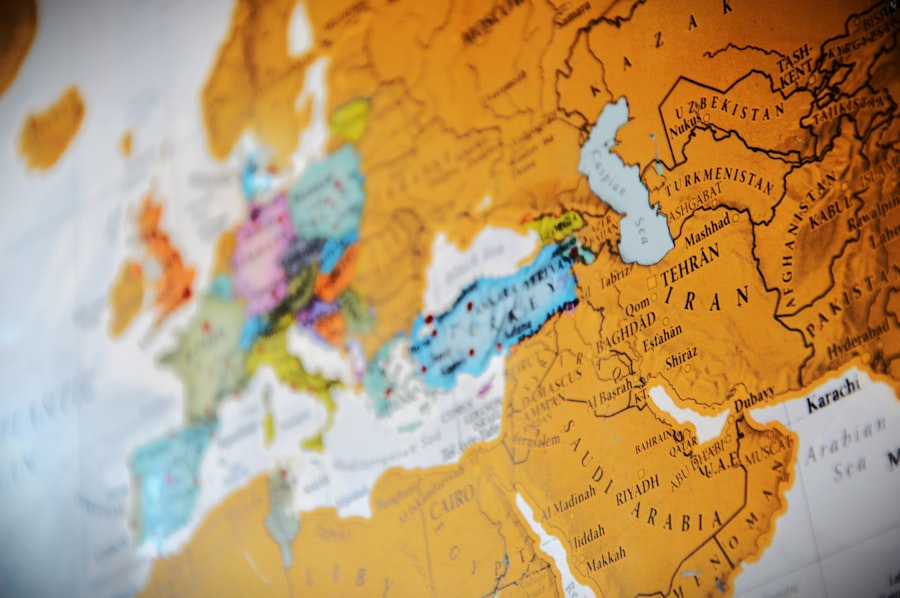
Conflict and cooperation are inherent aspects of human societies, and their spatial dimensions are a core focus of political geography. Understanding why conflicts erupt in certain places, how they unfold spatially, and what factors contribute to peace is a critical endeavor.
The Spatial Determinants of Conflict: Resource Scarcity and Territorial Disputes
Many conflicts have clear geographical roots. Resource scarcity, particularly in arid or densely populated regions, can exacerbate tensions and lead to competition over water, food, or land. Territorial disputes, as mentioned earlier, can also be potent drivers of conflict, often fueled by historical narratives and claims to strategically important areas. Political geographers analyze the spatial distribution of these conflict triggers and their impact on the outbreak and escalation of violence.
The Role of Geography in Military Strategy and Operations
Military strategists have long recognized the importance of geography in warfare. Terrain, climate, and access to vital transportation networks can significantly influence the effectiveness of military operations. Political geographers examine how these geographical factors shape military planning, the deployment of forces, and the conduct of battles. The study of historical military campaigns often reveals the crucial role of geographical considerations in determining victory or defeat.
The Geography of Peacebuilding and International Cooperation
Conversely, geography also plays a role in fostering peace and cooperation. Shared borders can facilitate trade and cultural exchange, leading to interdependence and mutual understanding. The development of international institutions and agreements often takes into account geographical realities, such as the need for transboundary cooperation on issues like environmental protection or disaster management. Political geographers explore how spatial proximity and shared environmental challenges can act as catalysts for cooperation.
Political geography often unveils intriguing mysteries that shape our understanding of global dynamics. For those interested in exploring these complexities further, a fascinating article can be found at My Geo Quest, where the interplay between geography and politics is examined in depth. This resource delves into how borders, resources, and cultural identities influence political landscapes, offering insights that can enhance our comprehension of current events and historical contexts.
The Future of Political Geography: Emerging Challenges and New Frontiers
“`html
| Country | Mystery | Description |
|---|---|---|
| China | The Nine-Dash Line | Ambiguous territorial claim in the South China Sea |
| Bermuda | The Bermuda Triangle | Area in the western part of the North Atlantic Ocean where ships and airplanes have disappeared under mysterious circumstances |
| Antarctica | The Antarctic Treaty System | Regime for the management of Antarctica, with some mysteries surrounding its future and potential resource exploitation |
“`
As the world continues to evolve, political geography faces new and pressing challenges. The rise of non-state actors, the impacts of climate change, and the increasing interconnectedness of the globe all present complex spatial puzzles that require innovative analytical approaches.
The Transnational Nature of Power and the Erosion of State Sovereignty
In an era of globalization, power is no longer solely concentrated within the territorial boundaries of states. Transnational corporations, international organizations, and global social movements exert significant influence, blurring the lines of traditional political geography. Political geographers are increasingly examining how power operates across borders and how the concept of state sovereignty is being challenged and redefined.
The Spatial Impacts of Climate Change and Environmental Degradation
Climate change is a profoundly geographical phenomenon, with its impacts varying significantly across different regions. Rising sea levels threaten coastal communities, changing weather patterns disrupt agricultural production, and increased frequency of extreme weather events create new vulnerabilities. Political geography is essential for understanding the differential impacts of climate change, the spatial distribution of climate refugees, and the political challenges of adaptation and mitigation.
The Digital Revolution and the Reordering of Political Space
The digital revolution has dramatically altered how we communicate, interact, and organize ourselves, creating new forms of political engagement and potentially reordering political space. Online communities, virtual worlds, and the flow of information across the internet challenge traditional notions of territoriality and governance. Political geographers are grappling with the spatial implications of these digital transformations, exploring concepts like cyber-geography and the politics of digital borders.
In conclusion, political geography offers a vital framework for understanding the complex, interconnected, and ever-changing world we inhabit. By revealing the spatial dimensions of power, conflict, cooperation, and governance, it equips us with the knowledge to navigate the mysteries of our political landscapes and to contribute to the creation of a more just and equitable future. The ongoing exploration of its mysteries is not merely an academic pursuit but a crucial endeavor for informed citizenship and effective global stewardship.
What Happens When No Country Owns a Place?
FAQs
What is political geography?
Political geography is the study of the spatial distribution of political processes and the impact of political processes on the earth’s surface. It examines the relationship between politics and geography, including the influence of borders, territories, and resources on political behavior and decision-making.
What are some examples of political geography mysteries?
Some examples of political geography mysteries include the origins and evolution of political borders, the impact of geographical features on political power, the distribution of political power within a country, and the geopolitical implications of resource distribution.
How does political geography impact international relations?
Political geography plays a crucial role in shaping international relations by influencing the behavior of states, the formation of alliances, and the resolution of conflicts. It also affects the distribution of resources, trade patterns, and the exercise of political power on the global stage.
What are some key concepts in political geography?
Key concepts in political geography include territoriality, sovereignty, geopolitics, and the study of borders and boundaries. These concepts help to understand the spatial dimensions of political processes and the ways in which geography shapes political behavior and decision-making.
Why is political geography important?
Political geography is important because it helps to understand the spatial dimensions of political processes, the impact of geography on political behavior, and the ways in which political decisions shape the earth’s surface. It also provides insights into the distribution of power, resources, and conflicts within and between states.