The shimmering mirage of Las Vegas, a city carved from the unforgiving Mojave Desert, stands as a testament to human ingenuity and an almost audacious defiance of nature. Yet, beneath its dazzling façade lies a complex and often precarious relationship with its most vital resource: water. The very existence of this sprawling metropolis, a beacon of entertainment and a hub of sprawling development, hinges on a constant, meticulously managed flow of water, a story far removed from the easy abundance suggested by its endless fountains and lush golf courses. Uncovering Las Vegas’ water source is not just an exercise in geographical discovery; it is an exploration of engineering marvels, interstate cooperation, political maneuvering, and the ever-present specter of scarcity.
The narrative of Las Vegas’ water supply is inextricably linked to the mighty Colorado River, a force that carves through seven U.S. states and Mexico, its waters a precious commodity for millions. For Las Vegas, it is more than just a river; it is the lifeblood of a city that would otherwise be unsustainable. The river’s journey, from its headwaters in the Rocky Mountains to its delta in the Gulf of California, is a tale of immense power harnessed and distributed, with Las Vegas receiving a significant portion of its allocation through a remarkable feat of engineering.
The Colorado River Compact and Western Water Law
Understanding Las Vegas’ access to the Colorado River requires delving into the foundational principles of Western water law, primarily embodied by the Colorado River Compact of 1922. This seminal agreement, born out of a desire to manage and equitably distribute the river’s flow, divided the basin into two main regions: the Upper Basin (Wyoming, Colorado, Utah, New Mexico) and the Lower Basin (California, Arizona, Nevada). Each basin was allocated 7.5 million acre-feet of water per year, with further allocations to Mexico. This compact, while establishing a framework, has been a source of contention and legal battles for decades, particularly as the river’s flow has proven to be less abundant than initially estimated during wetter periods. Las Vegas, as part of the Lower Basin, draws its water under the terms of this agreement, a system that has been tested by drought and increasing demand.
Hoover Dam: The Sentinel of the Colorado
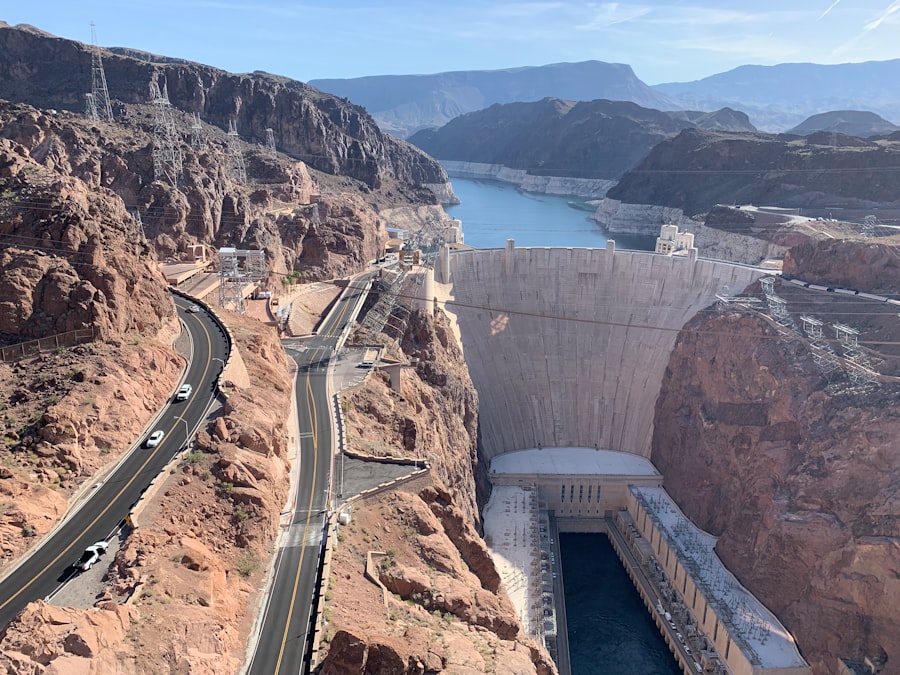
No discussion of Las Vegas’ water source is complete without acknowledging the monumental presence of the Hoover Dam. Completed in 1936, this colossal concrete structure, straddling the Arizona-Nevada border, is more than just an architectural marvel; it is the gatekeeper of the Lower Basin’s water supply for millions. The dam’s primary purpose was to control the Colorado River’s destructive floods, provide irrigation for arid lands, and generate hydroelectric power. Crucially for Las Vegas, it created Lake Mead, a vast reservoir that acts as the primary storage facility for the river’s water. Without Hoover Dam and the subsequent creation of Lake Mead, Las Vegas would simply not exist in its current form, a testament to the power of engineering to reshape arid landscapes.
Lake Mead: The Fading Reservoir
Lake Mead, formed by the impoundment of water behind Hoover Dam, has historically been the undisputed king of Southern Nevada’s water supply. At its full capacity, it is the largest reservoir in the United States, holding an immense volume of water. Las Vegas and its surrounding communities draw a substantial portion of their water directly from Lake Mead. However, the story of Lake Mead in recent decades has taken a cautionary turn. Declining rainfall, coupled with the ever-increasing demand from the seven Colorado River Basin states and Mexico, has led to unprecedented levels of depletion. The iconic “bathtub rings” that encircle the reservoir serve as a stark visual reminder of its shrinking water levels, a tangible manifestation of the region’s ongoing water crisis. This shrinking reservoir presents the most significant challenge to the continued growth and sustainability of Las Vegas.
The Southern Nevada Water Authority (SNWA) and Water Management
The operational reality of Las Vegas’ water supply lies in the hands of the Southern Nevada Water Authority (SNWA). This regional agency, formed in 1991, is responsible for managing and treating water for the greater Las Vegas metropolitan area. The SNWA plays a critical role in securing, treating, distributing, and conserving water for its member agencies. Its mandate includes not only ensuring a consistent supply from the Colorado River but also developing and implementing innovative strategies to maximize water efficiency and explore alternative sources. The SNWA’s proactive approach to water management has been crucial in buffering Las Vegas against the worst impacts of drought, demonstrating a commitment to long-term sustainability.
Las Vegas, a city known for its vibrant entertainment and nightlife, faces unique challenges when it comes to water supply due to its desert location. The article on MyGeoQuest titled “How Las Vegas Gets Its Water” explores the intricate systems and sources that sustain this bustling metropolis. It delves into the importance of the Colorado River, water conservation efforts, and innovative technologies that help manage the city’s water resources effectively. For more insights, you can read the article here: How Las Vegas Gets Its Water.
The Central Arizona Project and Inter-Agency Agreements
While the Colorado River is the primary source, the infrastructure and agreements that deliver this water to Las Vegas are complex and involve significant inter-agency collaboration. The journey of water from the Colorado River to Las Vegas’ taps is a carefully orchestrated process, built upon decades of agreements and sophisticated infrastructure.
Las Vegas, a city known for its vibrant nightlife and entertainment, faces unique challenges when it comes to securing its water supply. The region relies heavily on the Colorado River, and ongoing drought conditions have raised concerns about water sustainability. For a deeper understanding of how Las Vegas manages its water resources, you can read a related article that explores the city’s innovative strategies and conservation efforts. To learn more, visit this article for insights into the complexities of water management in this desert oasis.
The Central Arizona Project (CAP) Canal
For much of the water destined for Southern Nevada, the Central Arizona Project (CAP) canal plays a vital role. This 336-mile aqueduct is a massive engineering undertaking that delivers Colorado River water from Lake Havasu to central and southern Arizona. Crucially for Las Vegas, certain allocations of Colorado River water that are legally designated for Nevada are delivered through the CAP system via pumping stations and connecting canals. This partnership with Arizona highlights the shared reliance on the Colorado River and the intricate web of infrastructure that binds these water-dependent communities. Without the CAP, a significant portion of the water allocated to Nevada would not be physically accessible.
Water Entitlements and Allocations
Nevada’s entitlement to Colorado River water is defined by federal law and interstate agreements. Under the terms of the Colorado River Compact, Nevada is allocated 300,000 acre-feet per year, a relatively small portion compared to California and Arizona. However, the SNWA has been exceptionally adept at maximizing the use of this allocation through stringent conservation measures and aggressive water banking strategies. The authority has also secured additional temporary and permanent water rights outside of its direct Colorado River entitlement, demonstrating a strategic approach to ensuring future supply. Understanding these complex entitlements is crucial to grasping the precarious balance of water availability for the region.
Exploring Alternative and Future Water Sources
The dwindling levels of Lake Mead have spurred significant investment and innovation in exploring and securing alternative water sources for Las Vegas. Recognizing the finite nature of its primary supply, the SNWA has been at the forefront of developing strategies that move beyond traditional reliance on the Colorado River.
Groundwater: A Limited and Carefully Managed Resource
While the Colorado River is paramount, groundwater has historically played a role in Southern Nevada’s water landscape, though its contribution is now carefully managed. The Las Vegas Valley has significant underground aquifers, but these are finite and rechargeable at a much slower rate than they are depleted. Over-extraction of groundwater carries the risk of land subsidence and long-term ecological damage. Consequently, the SNWA has implemented strict regulations and monitoring programs to ensure that any groundwater usage is sustainable and complements, rather than competes with, its primary surface water supply. The focus is on “banking” water in these aquifers during periods of abundance from the Colorado River for use during times of scarcity.
Water Reuse and Recycling: The Closed-Loop Strategy
One of the most successful and innovative strategies employed by Las Vegas is its comprehensive water reuse and recycling program. The SNWA has invested heavily in advanced wastewater treatment facilities that allow for the reclamation of nearly all the water used by its residents. This treated wastewater is then reused for a variety of purposes, including landscape irrigation for golf courses and parks, industrial processes, and even for environmental enhancement projects. This “closed-loop” system significantly reduces the demand for potable water from the Colorado River, effectively stretching the available supply. It’s a testament to the city’s ability to create value from a resource that would otherwise be discarded.
Desalination: A Controversial but Growing Option
In recent years, Las Vegas has explored the controversial but increasingly viable option of desalination. The SNWA has invested in a pilot project involving a desalination plant in Yuma, Arizona, which would treat brackish groundwater from the Colorado River. The purified water would then be blended with Colorado River water and delivered to Southern Nevada. While desalination is a water-intensive and energy-hungry process, it offers the potential to tap into new water sources that are not directly affected by the drought conditions impacting the Colorado River. However, the high cost and potential environmental impacts of large-scale desalination remain significant considerations.
Water Banking and Inter-State Agreements for Future Security
To bolster its long-term water security, the SNWA has actively engaged in water banking and has fostered agreements with other states and entities. Water banking involves storing surplus water in underground aquifers or other designated locations for future use. The SNWA has established water storage agreements with entities in Arizona and the Navajo Nation, allowing them to store water outside of Nevada when it is available, and then withdraw it when needed. These innovative agreements, while complex to negotiate and manage, are crucial for building resilience in the face of an uncertain water future and demonstrate a forward-thinking approach to resource management.
Challenges and the Future of Las Vegas’ Water Supply
The glittering optimism of Las Vegas is increasingly tempered by the harsh realities of a changing climate and escalating demand. The city’s water story is a dynamic one, constantly evolving as new challenges emerge and innovative solutions are sought.
Climate Change and Declining River Flows
The most significant overarching challenge to Las Vegas’ water supply is the undeniable impact of climate change. Rising global temperatures are leading to reduced snowpack in the Rocky Mountains, the primary source of the Colorado River. This translates directly into diminished river flows and prolonged periods of drought. Projections indicate a continued decline in the Colorado River’s water availability, placing even greater pressure on all its users, including Las Vegas. The city’s continued growth must be carefully balanced against the diminishing natural supply.
Population Growth and Increasing Demand
Las Vegas has been a city of remarkable and often rapid population growth. As more people call Southern Nevada home, the demand for water for residential, commercial, and recreational purposes inevitably rises. The SNWA’s efforts in conservation and reuse have been instrumental in mitigating this growth, but the fundamental equation of supply and demand remains a critical concern. Sustaining this growth without jeopardizing the water security of current and future generations requires ongoing innovation and a commitment to responsible development.
Inter-State Cooperation and Potential Conflicts
The Colorado River is a shared resource, and the competition for its waters can be intense. While inter-state cooperation has been a hallmark of its management for decades, the increasing scarcity of water inevitably raises the potential for conflict. Las Vegas, by necessity, must maintain strong working relationships with Arizona, California, and other basin states, as well as with Mexico, to ensure its water allocations are secured and disputes are resolved amicably. The SNWA’s proactive engagement in regional water discussions is vital for maintaining this delicate balance.
The Long Road Ahead: Innovation and Conservation
The future of Las Vegas’ water supply hinges on a continued commitment to innovation and conservation. The city has a proven track record of adapting and overcoming challenges, and its water management strategies exemplify this spirit. From investing in cutting-edge treatment technologies to implementing aggressive public outreach campaigns on water-wise living, Las Vegas is actively working to secure its future. However, the challenges are significant, and the city’s ability to thrive will ultimately depend on its capacity to adapt to a drier planet and to embrace a future where water is treated as the most precious of commodities. The story of Las Vegas’ water source is not a static one; it is a continuing saga of human ingenuity battling against the constraints of nature, a testament to the resourcefulness needed to build a life in the heart of the desert.

Why Las Vegas Shouldn’t Exist
FAQs
1. Where does Las Vegas get its water from?
Las Vegas gets its water from the Colorado River, which is supplied through the Southern Nevada Water Authority’s intake and treatment facilities.
2. How is the water treated before it reaches Las Vegas residents and businesses?
The water from the Colorado River goes through a rigorous treatment process, including filtration, disinfection, and testing to ensure it meets all federal and state drinking water standards.
3. What measures does Las Vegas take to conserve water in such a dry climate?
Las Vegas has implemented various water conservation measures, including strict watering schedules, water-efficient landscaping, and incentives for residents and businesses to upgrade to water-saving fixtures and appliances.
4. Is the water supply in Las Vegas sustainable for the future?
The Southern Nevada Water Authority has implemented long-term water resource plans to ensure a sustainable water supply for the future, including water recycling, groundwater management, and continued conservation efforts.
5. What challenges does Las Vegas face in maintaining its water supply?
Las Vegas faces challenges such as population growth, climate change, and potential drought conditions, which require ongoing planning and investment in water resource management and conservation.