Unclaimed Territories: Unowned Lands Around the World
The concept of terra nullius, or “nobody’s land,” has long been a cornerstone of international law, historically used to justify colonial expansion and the acquisition of territory by powerful nations. While the era of rampant colonization has largely passed, the world still harbors pockets of land that remain officially unowned, their status a complex tapestry of geographical, political, and historical factors. These unclaimed territories, often remote and inhospitable, present a fascinating paradox in a world where virtually every square mile is claimed by some sovereign entity. Their existence raises intriguing questions about sovereignty, international law, and the very definition of nationhood.
The term “unclaimed territory” is itself a subject of debate and nuance. In the strictest sense, it refers to land that has not been formally recognized or claimed by any existing state. However, the reality is far more intricate. Many areas that might be considered “unclaimed” are, in fact, subject to overlapping or disputed claims, or lie in a legal grey area where ownership is ambiguous.
Historical Legacies and the Doctrine of Discovery
The historical precedent for claiming uninhabited or sparsely populated lands is deeply rooted in the Doctrine of Discovery, a concept prevalent during the Age of Exploration. European powers used this doctrine to assert sovereignty over newly encountered lands, often disregarding the presence and rights of indigenous populations. This legacy continues to influence the geopolitical landscape, with certain claims stemming from historical assertions of dominion, even if they haven’t been actively administered or recognized by the international community.
The Role of International Law and Treaties
International law, primarily through treaties and conventions, governs the acquisition and recognition of territory. The United Nations Charter, for instance, upholds the principle of territorial integrity of states. However, the absence of a clear international framework for adjudicating and assigning ownership to truly unclaimed land leaves room for ambiguity. Treaties often arise to resolve disputes or to establish boundaries, but they rarely address the hypothetical scenario of completely unowned land emerging in the modern era.
The Practical Impossibility of True “Unownership”
In today’s interconnected world, the idea of a territory being truly unowned is increasingly difficult to maintain. Even the most remote locations are often subject to international agreements regarding maritime boundaries, airspace, or environmental protection. Furthermore, the very act of identifying and describing such territories often implicitly involves a form of claim or assertion by the entity doing the surveying and reporting.
In exploring the intriguing concept of territories that no country officially owns, one can delve into the fascinating details presented in the article found at this link. The article discusses various regions around the world that remain unclaimed, shedding light on their historical significance and the implications of their status. From the enigmatic Bir Tawil to the remote Antarctic regions, these areas challenge our understanding of sovereignty and international law.
Antarctica: The Crown Jewel of Unclaimed (and Claimed) Land
Antarctica stands as the most prominent example of a continent with a unique status regarding territorial claims. While vast and seemingly empty, its sovereignty is a carefully orchestrated dance of scientific cooperation and reserved ambitions.
The Antarctic Treaty System: A Framework for Cooperation
The Antarctic Treaty System, signed in 1959, is a remarkable achievement in international diplomacy. It designates Antarctica as a continent dedicated to peace and scientific research, suspending all territorial claims made by seven nations. These claims, made prior to the treaty, are not renounced but are instead held in abeyance, meaning they are not recognized by other signatory nations.
The Seven Territorial Claims: A Historical Imprint
The seven nations with pre-existing territorial claims in Antarctica are:
Argentina:
Argentina’s claim encompasses the Antarctic Peninsula and parts of Greater Antarctica. This claim is based on geographical proximity and historical presence.
Australia:
Australia has the largest territorial claim in Antarctica, covering a significant portion of the continent’s eastern sector. This claim is largely based on discovery and prior occupation.
Chile:
Chile’s claim overlaps with Argentina’s in the Antarctic Peninsula and extends into Greater Antarctica. Proximity and historical links are central to Chile’s assertion.
France:
France claims Adélie Land on the coast of East Antarctica. This claim is based on exploration and the establishment of research stations.
New Zealand:
New Zealand’s claim, known as the Ross Dependency, covers a significant portion of Ross Island and the adjacent mainland. This claim is linked to historical expeditions.
Norway:
Norway claims Queen Maud Land and Peter I Island. This claim is based on exploration and the assertion of sovereignty by Norwegian explorers.
United Kingdom:
The United Kingdom’s claim encompasses the Falkland Islands Dependencies and a swathe of the Antarctic Peninsula. This claim is rooted in early British exploration and administration.
The Future of Antarctica: Balancing Science and Sovereignty
The Antarctic Treaty System has been remarkably successful in maintaining peace and fostering scientific collaboration. However, as climate change intensifies and resource exploitation becomes a more pressing global concern, the future of the treaty and the underlying territorial claims remain a subject of ongoing discussion and potential future contention. The delicate balance between scientific exploration and the dormant aspirations of territorial ownership is a constant undercurrent in discussions about this frozen continent.
Bir Tawil: The Land That Nobody Wants
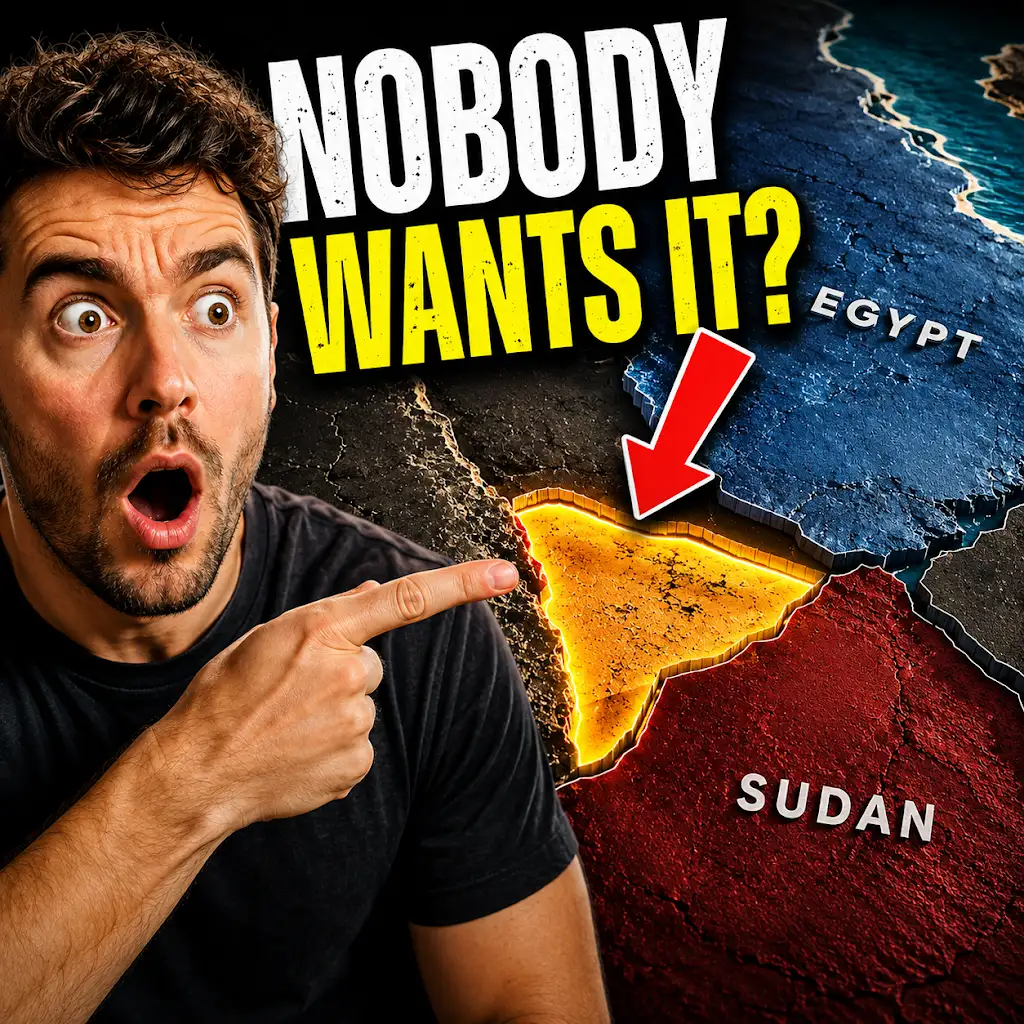
Nestled between Egypt and Sudan, Bir Tawil is a small, arid region that has gained notoriety as perhaps the last truly unclaimed piece of land on Earth. Its unique status stems from a peculiar historical border dispute.
The Unfortunate Border Demarcation: A Colonial Oversight
The 1902 border demarcation between Egypt and Sudan, a British colonial endeavor, created a geopolitical anomaly. The established northern border with Sudan followed the 22nd parallel. However, the southern border of Egypt was drawn along the 24th parallel. This left a narrow strip of land, Bir Tawil, south of the 22nd parallel but north of the 24th, falling into neither country’s claimed territory.
The “Greatest Prize”: A Desert Nobody Covets
While the idea of unclaimed land might seem alluring, Bir Tawil is essentially worthless in practical terms. It is a barren, desert wasteland with no natural resources and no habitable settlements. For any nation to claim it, they would have to formally cede their claim to the Hala’ib Triangle, a more valuable and strategically important region that lies further north and is currently disputed between Egypt and Sudan. This makes Bir Tawil a classic example of a territory that is legally unowned precisely because it is undesirable.
The “Kingdom” of Bir Tawil: A Quixotic Claim
Over the years, several individuals have attempted to claim Bir Tawil as their own, often in a playful or symbolic manner. These attempts, ranging from planting flags to declaring themselves rulers, are not recognized by any sovereign state and remain largely internet curiosities. They highlight the human fascination with the idea of establishing sovereignty over virgin territory, even in the face of insurmountable practical and legal obstacles.
The Unclaimed Islands of the South Pacific: Forgotten Gems or Potential Flashpoints?
The vast expanse of the South Pacific Ocean is dotted with countless islands, some inhabited and sovereign, others mere specks of land. While many of these islands have established claims, a few remain in a peculiar limbo, their ownership a matter of historical oversight or legal ambiguity.
The Sovereign Gap: Islands Unincorporated by Existing Nations
Certain small, uninhabited islands in the Pacific might technically fall outside the recognized territorial waters or exclusive economic zones (EEZs) of any nation. These are not typically the result of intentional unclaimed territories but rather the consequence of historical surveys, changing coastlines, or the sheer scale of the ocean.
The Case of Caroline Atoll (Millennium Island):
While not strictly “unclaimed,” Caroline Atoll, now known as Millennium Island, was famously declared the first place to enter the 21st century due to its position on the International Date Line. Its ownership has been historically complex, with periods of British claim and later incorporation into Kiribati. This highlights how even seemingly minor islands can have interesting geopolitical footnotes.
The Modern Scramble for the Sea: EEZs and Maritime Law
The establishment of Exclusive Economic Zones (EEZs) under the United Nations Convention on the Law of the Sea (UNCLOS) has significantly reduced the number of potentially unclaimed maritime territories. EEZs grant coastal states sovereign rights over the exploration and exploitation of marine resources. However, the precise demarcation of these zones, particularly in areas with overlapping claims or complex archipelagos, can still lead to disputes and the occasional “grey areas.”
The Hypothetical Future: Resource Exploitation and New Claims
As the world’s population grows and the demand for resources, particularly deep-sea minerals, increases, the allure of potentially unclaimed oceanic territories might grow. While UNCLOS provides a framework, the prospect of future territorial claims, especially for resource-rich seamounts or submerged land, cannot be entirely dismissed.
In exploring the intriguing concept of territories that no country officially owns, one can delve into various unclaimed regions around the world. A fascinating article on this topic can be found at My Geo Quest, which discusses the implications and history of these unique areas. These territories often spark curiosity and debate, as they highlight the complexities of international law and sovereignty.
The High Seas: A Realm of Freedom and Emerging Governance
| Territory | Location | Area (sq mi) | Status |
|---|---|---|---|
| Bir Tawil | Between Egypt and Sudan | 2,060 | Unclaimed |
| Marie Byrd Land | Antarctica | 620,000 | Unclaimed |
| Scarborough Shoal | South China Sea | 58 | Disputed |
The high seas, the portion of the ocean beyond national jurisdiction, represent the largest unclaimed territory on Earth. This vast expanse, covering over two-thirds of the planet, is governed by principles of freedom of navigation and exploitation, but its management is increasingly becoming a complex international endeavor.
Freedom of the Seas: A Historical Principle
The concept of “freedom of the seas,” championed by thinkers like Hugo Grotius, historically asserted that the high seas were open to all nations for navigation, fishing, and trade, free from sovereign control. This principle remains fundamental to the current international legal framework.
UNCLOS and the Governance of the High Seas
The United Nations Convention on the Law of the Sea (UNCLOS) provides a comprehensive legal framework for the governance of the world’s oceans. It defines the rights and responsibilities of states in various maritime zones, including the high seas. However, the high seas remain a unique space, characterized by a shared responsibility for their preservation and management.
Emerging Challenges: Resource Management and Environmental Protection
While the high seas are not “owned” by any single nation, their sustainable management is a growing concern. Issues such as overfishing, pollution, and the potential for deep-sea mining are leading to increased international cooperation and the development of new governance mechanisms. The International Seabed Authority (ISA), for example, regulates mining activities in the international seabed area.
The Future of the High Seas: A Global Commons in Flux
The high seas represent a critical global commons, essential for biodiversity, climate regulation, and human livelihoods. As human activities in these areas intensify, the need for robust international cooperation and effective governance will only grow, transforming the concept of “unclaimed” into one of “shared stewardship.”
Unclaimed Territories in Popular Culture and Speculative Fiction
The allure of unclaimed territories extends far beyond the realm of geopolitics and international law; it has captured the imagination of storytellers and artists for centuries. These “nobody’s lands” serve as potent metaphors for freedom, opportunity, danger, and the unknown.
The Frontier Myth: Uncharted Lands and New Beginnings
From the American West to the unexplored corners of space, the idea of a frontier – a vast, unclaimed territory ripe for settlement and discovery – has been a recurring theme in literature and film. These narratives often celebrate the spirit of adventure, self-reliance, and the chance to forge a new destiny.
Dystopian Visions: Lawless Zones and Post-Apocalyptic Wastelands
Conversely, unclaimed territories can also be depicted as lawless zones, dangerous places where societal norms break down and survival depends on brute force. Post-apocalyptic fiction frequently features such landscapes, where remnants of humanity struggle to survive in a world devoid of established authority.
Science Fiction and Extraterrestrial Frontiers:
In science fiction, the concept of unclaimed territory often extends to alien planets, moons, and uncharted regions of space. These speculative frontiers offer endless possibilities for exploration, conflict, and the encounter with the unknown, pushing the boundaries of human imagination.
The Psychological Resonance of Unclaimed Space:
The enduring fascination with unclaimed territories speaks to a deep-seated human desire for exploration, autonomy, and the potential for something new. Whether it’s a remote island, a vast desert, or the depths of space, these unowned lands continue to spark our curiosity and fuel our dreams of the undiscovered. Their very existence, however paradoxical in our mapped and claimed world, serves as a reminder of the vastness that still exists and the enduring spirit of exploration that drives humanity forward.
What Happens When No Country Owns a Place?
FAQs
What are territories no country owns?
Territories no country owns are areas of land or water that are not claimed or controlled by any sovereign state. These territories may be uninhabited, disputed, or simply unclaimed by any nation.
What are some examples of territories no country owns?
Some examples of territories no country owns include Bir Tawil, a 2,060 square kilometer area between Egypt and Sudan, and Marie Byrd Land, a portion of Antarctica that is unclaimed by any nation.
Why are there territories no country owns?
There are territories no country owns for a variety of reasons, including historical disputes, unclear boundaries, and the presence of valuable resources. In some cases, these territories may be intentionally left unclaimed due to their remote or inhospitable nature.
Can territories no country owns be claimed by a country?
Yes, territories no country owns can potentially be claimed by a country through various means, such as diplomatic negotiations, treaties, or international law. However, the process of claiming unclaimed territories can be complex and may involve competing claims from multiple nations.
What are the implications of territories no country owns?
The implications of territories no country owns can include geopolitical tensions, potential for resource exploitation, and legal disputes. These unclaimed territories may also present opportunities for scientific research and environmental conservation efforts.