The world map, a seemingly definitive tapestry of national borders, often presents a picture of almost complete ownership. Every continent, every island, every accessible landmass appears to be neatly divided and assigned to a sovereign state. Yet, beneath this veneer of universal dominion lies a fascinating reality: there exist places on Earth that, by law or by circumstance, belong to no nation. These are the unclaimed territories, enigmas in a world that prides itself on order and possession. They are desolate expanses, remote outposts, and frozen frontiers, each with its own story of why it has escaped the clutches of national ambition. Understanding these territories offers a unique lens through which to examine international law, the ethics of territorial acquisition, and the enduring allure of the unknown.
In exploring the intriguing concept of territories that no country can claim, one can find a wealth of information in the article titled “The Unclaimed Lands of the Earth.” This article delves into various regions around the globe that remain unrecognized by any nation, highlighting their unique histories and the reasons behind their status. For a deeper understanding of this fascinating topic, you can read the full article here: The Unclaimed Lands of the Earth.
The Legal Framework of Unclaimed Territories
The concept of unclaimed territory is not merely a geographical curiosity; it is deeply embedded in international law. For a territory to be considered “owned” by a nation, certain legal principles must be met. These principles have evolved over centuries, shaped by colonial expansion, international treaties, and the ever-changing geopolitical landscape. The absence of these conditions is precisely what leaves certain areas in a legal vacuum.
Criteria for National Sovereignty
Historically, the acquisition of territory by a state has relied on several key principles. The most prominent among these is discovery and effective occupation. Discovery, in itself, was often sufficient during the age of exploration, but to solidify a claim, the discovering nation would need to demonstrate a degree of control over the territory. This could involve establishing a settlement, flying a flag, or asserting administrative authority. Without such “effective occupation,” a claim could be considered purely nominal and easily challenged.
Another significant principle is cession, where one state formally transfers sovereignty over a territory to another through a treaty. This is a consensual transfer, often occurring after conflicts or as part of diplomatic negotiations. Accretion, the gradual addition of land by natural processes like river deposition or the formation of new islands, also falls under this purview, with the land generally belonging to the adjacent sovereign state. Lastly, prescription allows for a state to acquire territory through long-term, uninterrupted, and peaceful exercise of sovereignty, provided no other state objects.
The Absence of These Criteria
Unclaimed territories often fail to meet these criteria for a multitude of reasons. Many are so remote, inhospitable, or geologically unstable that neither discovery nor effective occupation has ever been feasible. Others might have been discovered, but no nation possessed the resources or the political will to assert and maintain a claim. The vastness of the oceans and the poles, for instance, present immense challenges to any form of continuous governance.
Furthermore, the very nature of some territories can complicate claims. For example, artificial islands or structures created in international waters, while potentially owned by the entity that built them, do not automatically fall under any national jurisdiction unless specific treaties or agreements are in place. The principle of res communis – things common to all – also plays a role, suggesting that certain areas, like the high seas or Antarctica, are intended for the benefit of all humanity and not for exclusive national appropriation.
The Antarctic Treaty System and Beyond
The most prominent example of a jointly managed or “unclaimed” region is Antarctica. While various nations had made territorial claims in Antarctica prior to 1959, these claims were largely put on hold by the Antarctic Treaty. This landmark treaty, signed by twelve countries, declared that Antarctica would be used for peaceful purposes only, with freedom of scientific investigation and international cooperation. It froze territorial claims, prohibiting the establishment of new claims and the assertion of sovereignty over areas already claimed. While not strictly “unclaimed” in the sense that no nation has ever asserted a claim, the treaty effectively renders these claims dormant and the continent a territory of scientific endeavor rather than national possession.
This model of international cooperation, while unique to Antarctica, highlights a potential pathway for managing other unclaimed or disputed territories, suggesting that shared stewardship can be a viable alternative to exclusive national control.
The Frozen Frontier: Antarctica

Antarctica, the Earth’s southernmost continent, is a starkly beautiful and scientifically invaluable landmass that stands as a testament to human cooperation and a unique exception in the world of territorial claims. While several nations had made claims to portions of Antarctica prior to the mid-20th century, the modern reality of its governance is governed by a groundbreaking international agreement that effectively shelves these assertions.
A Continent of Science and Peace
The Antarctic Treaty System, signed in 1959 and now with over 50 signatory nations, fundamentally altered the continent’s status. The treaty’s core provisions established Antarctica as a continent dedicated to peace and science. It explicitly forbids any military activity, nuclear explosions, or the disposal of nuclear waste. Perhaps most significantly for its territorial status, the treaty froze all existing territorial claims, preventing any new claims from being made. This means that while some nations historically claimed sectors of Antarctica, these claims are not recognized by other treaty parties and remain in abeyant status. The continent is thus managed by a consensus-based approach among the treaty nations, with a focus on environmental protection and scientific research.
Historical Claims and Modern Realities
Prior to the treaty, the allure of Antarctica – its potential resources and strategic location – led to a patchwork of claims. Argentina, Australia, Chile, France, New Zealand, Norway, and the United Kingdom all asserted sovereignty over different sectors, often overlapping. These claims were primarily based on the principles of discovery and effective occupation, with various expeditions and research stations being established. However, the logistical challenges of maintaining effective occupation across such a vast and harsh environment meant that these claims were always tenuous and subject to dispute. The advent of the Antarctic Treaty provided a much-needed framework to prevent conflict and foster collaboration, effectively transforming Antarctica into a territory governed by international law for the benefit of all.
The Future of Antarctic Governance
While the Antarctic Treaty has been remarkably successful in preserving the continent as a zone of peace and scientific inquiry, questions about its long-term future inevitably arise. As interest in Antarctic resources and potential shipping routes grows, discussions about the treaty’s review and potential modifications will likely intensify. The delicate balance of interests among the signatory nations, coupled with the increasing pressures of climate change, means that the governance of this unique territory will continue to be a complex and evolving issue. The success of the Antarctic model, however, offers valuable insights into how ostensibly “unclaimed” or disputed territories can be managed for the collective good.
The Uncharted Waters: Bir Tawil and the Sudan-Egypt Border Dispute

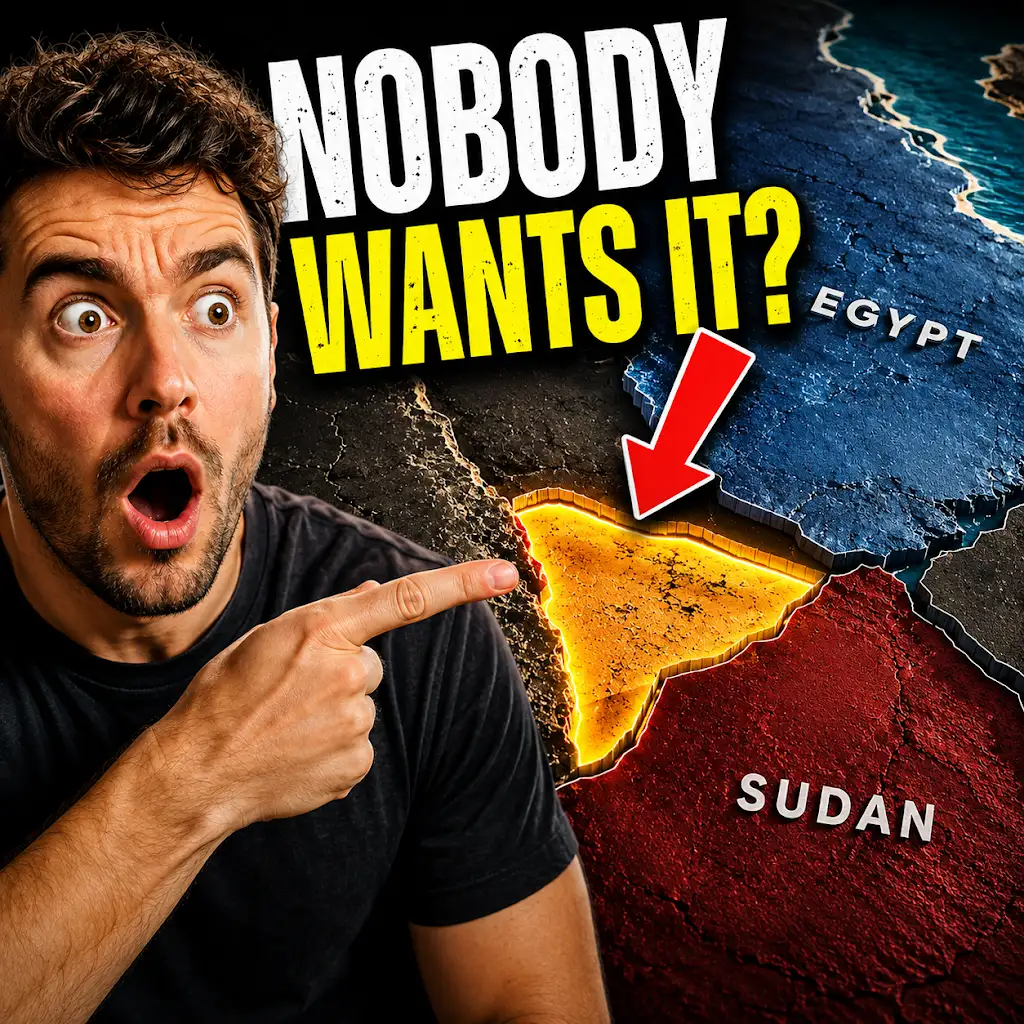
Beyond the frozen south, there are pockets of land on sovereign continents that have, through a quirk of geography and diplomatic impasse, evaded national ownership. Bir Tawil is perhaps the most famous of these, a small, arid region nestled between Egypt and Sudan, a testament to the enduring legacy of colonial cartography and the stubbornness of political boundaries.
The Mystery of Bir Tawil
Bir Tawil is a roughly 2,000-square-kilometer area of desert that is geographically isolated and geographically negligible. It is situated in a region known for its extreme heat and lack of resources. What makes Bir Tawil unique is that it is claimed by neither Egypt nor Sudan. The reason for this curious situation lies in a historical border dispute stemming from treaties established during the British colonial era.
The Treaty of 1899 and its Consequences
In 1899, Britain and Egypt signed an agreement that established the Sudan-Egypt border. The treaty drew a straight line at the 22nd parallel of north latitude. However, this line bisected a tribal area, and the British subsequently established an administrative boundary in 1902 that moved the border south to the 20th parallel, creating a roughly rectangular territory south of the original 1899 line. This administrative boundary effectively created two disputed zones. The larger, more northerly zone, known as the Hala’ib Triangle, was south of the 22nd parallel and thus claimed by Egypt. The smaller, more southerly zone, Bir Tawil, was north of the 20th parallel.
The crux of the problem is that if Egypt were to claim Bir Tawil, it would implicitly have to cede its claim to the Hala’ib Triangle, as Bir Tawil lies north of the original 1899 border that Egypt adheres to for its northern claim. Similarly, if Sudan were to claim Bir Tawil, it would have to acknowledge the 1899 border as its northern frontier, thereby forfeiting its claim to the Hala’ib Triangle, which lies south of that line but north of the 1902 administrative boundary. Given that the Hala’ib Triangle is a significantly larger and more valuable territory (containing a small population and some coastal access), both nations are hesitant to relinquish their claim to it. Consequently, Bir Tawil remains unclaimed, a vacant lot in the geopolitical landscape, as neither nation wishes to gain a worthless territory at the expense of a more desirable one.
The “King of Bir Tawil” Phenomenon
The peculiar status of Bir Tawil has given rise to a curious subculture of individuals who have attempted to establish their own sovereignty over the territory. These self-proclaimed “micronation” founders, often driven by a romanticized notion of claiming unclaimed land, have traveled to Bir Tawil, planted flags, and declared themselves rulers. These acts, however, hold no legal standing under international law and are largely viewed as whimsical or eccentric endeavors. They highlight the enduring human desire to explore and claim, even in the face of modern, defined borders. Bir Tawil, in its legal vacuum, has become a symbolic frontier for such aspirations, a place where one can, at least in spirit, create their own nation.
In the ongoing debate about territories that remain unclaimed by any nation, an intriguing article discusses the fascinating concept of places no country can claim. This topic sheds light on the unique regions around the world that exist outside the jurisdiction of any government. For more insights on this subject, you can read the article here. These areas often spark curiosity and imagination, highlighting the complexities of international law and the nature of sovereignty.
Beyond the Established: Unclaimed Island Territories
| Place | Feature | Description |
|---|---|---|
| Mt. Everest | Highest peak | Located in the Himalayas, it is the highest mountain in the world. |
| Dead Sea | Lowest point | It is the lowest point on the Earth’s surface, located between Jordan and Israel. |
| Antarctica | Coldest continent | It is the coldest, driest, and windiest continent, with no permanent human population. |
While Bir Tawil represents a land-based anomaly, the oceans too harbor territories that, by one means or another, have escaped national appropriation. These often small, uninhabited islands, remnants of geological processes or forgotten colonial ventures, can become points of contention or simply fade into obscurity.
The Case of the Minerva Reefs
The Minerva Reefs, a group of submerged atolls in the South Pacific Ocean, famously became the subject of a brief but intense dispute in the early 1970s. Tonga, a sovereign kingdom, declared sovereignty over the reefs in 1971. This declaration was challenged by the newly formed micronation of the Republic of Minerva, which had been established by a wealthy American millionaire, Michael Oliver, who intended to create a libertarian paradise on the reefs. Oliver began constructing artificial islands on the reefs and declared them independent.
Tonga, however, responded by sending naval ships and troops to the reefs, effectively expelling the Republic of Minerva’s representatives and asserting its own sovereignty. The Tongan claim was ultimately recognized by several nations, and the Republic of Minerva ceased to exist. This incident highlights how even seemingly insignificant landmasses can become focal points for territorial ambition, and how the established international order can reassert itself against unconventional claims.
Remote Outposts and Unclaimed Atolls
Beyond such dramatic disputes, there are numerous small, uninhabited islands scattered across the world’s oceans that may technically fall into a legal gray area. Their remoteness, lack of resources, and minimal strategic value mean that no nation has actively pursued a claim. For instance, some small, unnamed islets in the Pacific or Indian Oceans might not be explicitly part of any nation’s territorial waters or Exclusive Economic Zone. However, the vast majority of these are likely to be considered within the territorial jurisdiction of the nearest continental landmass or established island nation, even if not formally surveyed or documented.
The complexity of maritime law, including the establishment of baselines and territorial waters, can also lead to small gaps or ambiguities. However, the spirit of international law generally favors the recognition of established states and discourages the creation of new, unacknowledged entities. Therefore, while theoretically some micro-islands might exist in a state of unclaimed status, they are unlikely to remain so if any nation decides to assert a claim, especially if they fall within a proximity that allows for reasonable jurisdiction.
The Ethics of Territorial Claims and the Future of Unclaimed Lands
The existence of unclaimed territories, however few and far between, raises profound questions about the ethics of territorial acquisition and the future of our planet’s governance. In an era where the Earth’s surface is largely mapped and divided, these remaining pockets of “no man’s land” challenge our assumptions about ownership and sovereignty.
The Legacy of Colonialism and Imperialism
Many of the historical justifications for territorial claims are rooted in the era of colonialism and imperialism, where powerful nations asserted dominance over lands inhabited by indigenous peoples or deemed “terra nullius” – land belonging to no one. The concept of unclaimed territory can, in some instances, be a hangover from this exploitative past, where lands were overlooked or deemed insignificant by colonial powers, only to be later rediscovered or brought to prominence by circumstance. The ethical imperative today is to consider the historical context of any such territory and to avoid any actions that could be seen as reasserting colonial prerogatives.
The Principle of “Terra Nullius” in Modern Context
While the concept of “terra nullius” is largely discredited in international law when it comes to inhabited lands, it can still, in a very limited and theoretical sense, be applied to truly uninhabited and unclaimable geographical features. However, the modern approach to international relations emphasizes cooperation and the peaceful resolution of disputes. The desire to claim what is unclaimed, without a legitimate basis or a clear benefit to humanity, can be seen as an anachronistic pursuit in a world facing complex global challenges.
The Potential for International Stewardship
The existence of unclaimed territories also presents an opportunity to rethink how we manage shared resources and spaces. Antarctica, as discussed, serves as a model for international stewardship, where a continent is dedicated to science and peace rather than national competition. In the future, as resources become scarcer and global challenges like climate change become more pressing, the principles of shared responsibility and collaborative governance might become increasingly relevant for any territories that remain outside national jurisdiction.
The allure of the unclaimed will likely persist, fueled by human curiosity and the enduring spirit of exploration. However, as our understanding of global interdependence grows, the focus may shift from exclusive ownership to inclusive stewardship, ensuring that even the most remote and overlooked corners of our planet are managed for the benefit of all. The unclaimed territories, in their silent existence, continue to prompt us to reflect on the very nature of belonging and the evolving landscape of human governance.
What Happens When No Country Owns a Place?
FAQs
What are some examples of places no country can claim?
Some examples of places no country can claim include international waters, the North and South Poles, and outer space.
Why can’t countries claim these places?
International waters, the North and South Poles, and outer space are considered global commons, meaning they are not owned or controlled by any one country. This is often due to international agreements and treaties.
What are the implications of these places being unclaimable?
The fact that these places are unclaimable means that they are open for use by all countries and are subject to international law. This allows for scientific research, exploration, and navigation to occur without the interference of individual countries.
Are there any exceptions to the unclaimable status of these places?
While international waters, the North and South Poles, and outer space are generally unclaimable, there are some exceptions. For example, certain countries have research stations in Antarctica, but these are governed by international agreements.
How do countries cooperate in managing these unclaimable places?
Countries cooperate in managing unclaimable places through international organizations and agreements. For example, the United Nations Convention on the Law of the Sea governs activities in international waters, while the Antarctic Treaty System regulates activities in Antarctica.