The Sediment Cycle Explained: Earth’s Dynamic Process
Earth is a planet in constant motion, a grand stage where geological forces continuously reshape its surface. Among the most fundamental and pervasive of these forces is the sediment cycle. Far from being a static accumulation, sediment represents a dynamic and vital component of Earth’s environmental systems, constantly being created, transported, deposited, and transformed. Understanding this intricate cycle is crucial to comprehending the planet’s ever-changing landscapes, its ecosystems, and even its geological history. The sediment cycle is a testament to the relentless power of erosion, the tireless work of transport agents, and the subtle artistry of deposition, all culminating in the formation of new geological materials. It is a process that operates on timescales ranging from the blink of an eye to millions of years, influencing everything from the clarity of our rivers to the fertility of our soils and the formation of vast mountain ranges.
Sediment, in its simplest definition, is any naturally occurring material that is transported by water, wind, ice, or gravity and is subsequently deposited. The journey of sediment begins with its creation, a process primarily driven by weathering. Weathering is the breakdown of rocks and minerals at or near the Earth’s surface. It is a multifaceted phenomenon, broadly categorized into physical (mechanical) weathering and chemical weathering. These two forces, often working in tandem, reduce the seemingly invincible bedrock into smaller fragments, laying the groundwork for the entire sediment cycle.
Physical Weathering: The Mechanical Assault
Physical weathering involves the fragmentation of rocks without altering their chemical composition. It’s like a hammer striking a stone, breaking it into smaller pieces.
Frost Wedging: The Power of Ice
One of the most potent forms of physical weathering is frost wedging, particularly prevalent in regions experiencing freeze-thaw cycles. Water seeps into cracks and fissures in rocks. When temperatures drop below freezing, this water turns to ice. Ice occupies approximately 9% more volume than liquid water, exerting immense pressure on the surrounding rock. Repeated cycles of freezing and thawing cause these cracks to widen and deepen, eventually leading to the disintegration of the rock. Imagine a hairline crack in a rock being repeatedly exploited by expanding ice – over time, even the strongest rock will yield.
Abrasion: The Grinding and Scouring
Abrasion is the process where rocks are worn down by friction and impact with other rocks or particles. This is a significant contributor to sediment formation, especially in environments with abundant moving material. Wind-blown sand grains can scour rock surfaces in deserts, much like sandpaper on wood. Glaciers, with their immense weight and embedded rock debris, act as powerful grinding machines, pulverizing bedrock beneath them. Even the tumbling of rocks within a fast-flowing river contributes to abrasion, smoothing their edges and reducing them to smaller sizes.
Thermal Expansion and Contraction: The Stress of Temperature Changes
In arid and semi-arid environments, daily temperature fluctuations can lead to significant stress on rocks. Rocks are composed of various minerals, each with a different coefficient of thermal expansion. During the day, as temperatures rise, these minerals expand at different rates, creating internal stresses within the rock. At night, as temperatures cool, the minerals contract. This repeated expansion and contraction weakens the rock, causing it to fracture and peel away in layers, a process known as exfoliation or unloading. Think of it as a rock repeatedly being stretched and squeezed, eventually developing cracks.
Biological Activity: Life’s Unseen Impact
While often overlooked, biological activity also plays a role in physical weathering. Plant roots, as they grow into rock crevices, exert pressure that can widen cracks. Burrowing animals can dislodge rock fragments, exposing them to further weathering. Even the acidic secretions of lichens and mosses can contribute to the initial breakdown of rock surfaces.
Chemical Weathering: The Molecular Transformation
Chemical weathering involves the alteration of the chemical composition of rocks and minerals, transforming them into new substances. This process is facilitated by the presence of water and reactive agents like oxygen and carbon dioxide.
Dissolution: The Vanishing Act
Some minerals are soluble in water, particularly rainwater, which is slightly acidic due to dissolved carbon dioxide. When water comes into contact with these minerals, they can dissolve, essentially disappearing into the solution. Halite (rock salt) is a prime example; it readily dissolves in water, forming saline solutions. Limestone, composed of calcite, is also susceptible to dissolution, albeit at a slower rate. This process is responsible for the formation of caves and karst landscapes.
Oxidation: The Rusting of Rocks
Oxidation is a chemical reaction where a substance loses electrons, typically involving the reaction with oxygen. In the context of rock weathering, this is most prominent with iron-bearing minerals. When these minerals are exposed to oxygen and moisture, they undergo oxidation, forming iron oxides – essentially, rust. This process weakens the rock and gives it a reddish-brown coloration. The classic example is the rusting of iron nails; the same principle applies to iron-rich rocks.
Hydrolysis: The Water’s Chemical Attack
Hydrolysis is a reaction where water molecules break down other molecules. In the weathering of silicate minerals, water molecules react with the mineral’s structure, breaking chemical bonds and forming new compounds, often clays. For instance, the weathering of feldspar, a common mineral in granite, through hydrolysis produces kaolinite clay, a fine-grained sediment. This is a fundamental process that transforms hard igneous rocks into softer, more easily eroded materials.
Carbonation: The Acidic Power of Carbon Dioxide
As mentioned earlier, carbon dioxide from the atmosphere dissolves in rainwater, forming weak carbonic acid. This acid is a potent agent of chemical weathering, particularly effective against carbonate rocks like limestone and marble. The carbonic acid reacts with the calcite in these rocks, converting it into soluble calcium bicarbonate. This process is a major driver of karst topography, characterized by sinkholes, underground rivers, and caverns.
The sediment cycle is a crucial component of Earth’s geological processes, influencing soil formation, nutrient availability, and ecosystem dynamics. For a deeper understanding of this cycle and its implications, you can explore a related article that delves into the intricacies of sediment transport and deposition. To read more, visit this informative article.
The Great Migration: Transport of Sediments
Once rocks have been broken down into smaller fragments and dissolved minerals, they become potential candidates for transport. The movement of sediment from its source to its depositional site is a critical phase of the sediment cycle, driven by various natural agents. The energy of these agents dictates the size and distance that sediment can travel.
Water: The Ubiquitous Transporter
Water is arguably the most significant agent of sediment transport on Earth. Rivers, streams, and ocean currents carry vast quantities of sediment, shaping coastlines, carving canyons, and building deltas.
Traction: The Slow Drag
In rivers and streams, larger and heavier sediment particles, such as pebbles and cobbles, are transported by traction. These materials are rolled and dragged along the riverbed by the force of the water. The speed of the water is a critical factor; faster-flowing water can move larger and heavier particles.
Saltation: The Bouncing Journey
Medium-sized sediment particles, like sand grains, are transported by saltation. These particles are lifted from the bed by the force of the water and then carried downstream in a series of short hops and bounces. Each bounce dislodges more particles, creating a continuous flow of suspended material.
Suspension: The Airy Ride
The finest sediment particles, such as silt and clay, are so small and light that they can be carried in suspension by the water. These particles remain suspended in the water column, often for long distances, contributing to the turbidity of rivers and lakes. The color of a river, especially during heavy rainfall, is often a direct indicator of the amount of sediment being carried in suspension.
Wind: The Desert Sculptor
Wind is a powerful agent of erosion and transport, especially in arid and semi-arid regions where vegetation cover is sparse.
Suspension by Wind: The Dust Storms
Like water, wind can carry fine particles of dust and silt in suspension. During dust storms, these particles can be lifted high into the atmosphere and transported over vast distances, impacting air quality and even influencing global climate. The red dust that occasionally settles in regions far from its origin is a testament to the reach of wind transport.
Saltation by Wind: The Sand Blasts
Sand grains, too heavy to remain in suspension for long periods, are transported by saltation. Wind gusts lift sand grains from the surface, and they travel in a series of bounces and hops, similar to their movement in water. This process can sculpt desert landscapes, forming sand dunes and creating the characteristic “singing sands” phenomenon.
Ice: The Glacial Bulldozer
Glaciers, massive rivers of ice, are incredibly effective at eroding and transporting sediment. Their sheer weight and the immense force of their movement can break down even the hardest bedrock.
Glacial Till: The Unsorted Cargo
Glaciers transport sediment in a variety of ways, often mixing different sizes together. The material deposited directly by a melting glacier is called glacial till, a heterogeneous mixture of boulders, gravel, sand, and clay. This unsorted nature reflects the indiscriminate way glaciers pick up and carry debris.
Erratics: The Wandering Giants
Large boulders that are transported by glaciers and deposited in areas with different bedrock composition are known as erratics. These “wandering giants” serve as clear markers of past glacial activity, demonstrating the immense distances glaciers can transport even the largest rocks.
Gravity: The Downhill Delivery
Gravity is the ultimate driver of all downslope movement, playing a crucial role in sediment transport, especially in mountainous regions and along coastlines.
Mass Wasting: The Slow and Fast Slides
Mass wasting encompasses a variety of downslope movements of rock and soil under the influence of gravity. These can range from slow creep, where soil gradually moves downhill, to rapid landslides and rockfalls. Each of these events contributes to the accumulation of sediment at the base of slopes.
Coastal Erosion: The Ocean’s Edge
Along coastlines, waves and currents work in conjunction with gravity to erode cliffs and transport sediment along the shore. This dynamic interplay constantly reshapes beaches and coastal landforms.
The Final Act: Sediment Deposition

After their arduous journeys, sediments eventually lose their energy and are deposited. This depositional phase is where the sediment accumulates, forming new layers of material that can eventually be transformed into sedimentary rocks or contribute to soil formation. The characteristics of the depositional environment dictate the type of sediment that is laid down and the resulting landforms.
Rivers and Lakes: Building Deltas and Plains
As rivers enter slower-moving water bodies like lakes or oceans, their velocity decreases, causing them to drop their suspended sediment. This leads to the formation of deltas, fan-shaped deposits of sediment at the river’s mouth. Inland, rivers can create vast floodplains through repeated inundation and deposition of fine sediment, contributing to fertile agricultural lands. Lakebeds are also important depositional environments, accumulating fine clays and silts.
Oceans and Seas: The Deep Sediment Basins
The vast oceans are ultimate sinks for much of Earth’s sediment. Rivers discharge enormous volumes of sediment into the sea, where it settles to the seafloor. Ocean currents can further redistribute this material, creating diverse seafloor landscapes. Underwater landslides can also contribute significant sediment to deep-sea basins.
Deserts: The Shifting Sands and Loess Deposits
In arid environments, wind deposition is dominant. Sand dunes, sculpted by wind action, represent vast accumulations of sand. In some regions, wind can transport very fine silt particles over long distances, leading to the formation of thick deposits of loess – a fertile, yellowish soil that is highly valued for agriculture.
Glaciers and Ice Sheets: Moraines and Outwash Plains
As glaciers melt, they deposit the sediment they have carried. These deposits, known as moraines, can form distinctive ridges and mounds. Outwash plains, formed by meltwater streams flowing from glaciers, are characterized by layered deposits of sand and gravel.
Transformation and Preservation: The Path to Sedimentary Rocks

The deposited sediment does not necessarily remain as loose particles forever. Over geological timescales, these accumulated sediments can undergo a process of lithification, transforming them into sedimentary rocks. This is a crucial step in the sediment cycle, as it preserves a record of past environments and life.
Compaction: The Squeeze of Burial
As more sediment accumulates on top of existing layers, the weight of the overlying material compacts the lower layers. This pressure squeezes out water and reduces the pore space between the sediment grains, making the material denser. Imagine layers of freshly fallen snow being compressed into a more solid form.
Cementation: The Binding Agents
The dissolved minerals within the pore water can act as natural cements, binding the sediment grains together. Common cementing agents include silica, calcite, and iron oxides. These minerals precipitate out of the water and fill the spaces between the grains, effectively gluing them into a solid rock.
Recrystallization: The Subtle Rearrangement
In some cases, under increased pressure and temperature, the mineral grains within the sediment may recrystallize. This means that the existing mineral structures can rearrange themselves into more stable forms, further strengthening the rock.
The sediment cycle is a crucial process that plays a significant role in shaping our planet’s landscapes and ecosystems. For a deeper understanding of this intricate cycle, you might find it helpful to explore a related article that delves into the various stages and impacts of sediment transport. This informative piece can be accessed through this link, where you will discover how sediment interacts with natural forces and contributes to soil formation and nutrient distribution.
The Enduring Cycle: A Continuous Flow
| Stage of Sediment Cycle | Description |
|---|---|
| Weathering | The process of rocks and minerals breaking down into smaller particles due to exposure to the atmosphere and environmental factors. |
| Erosion | The transportation of weathered materials by wind, water, or ice to new locations. |
| Deposition | The settling of eroded materials in a new location, often due to a decrease in energy of the transporting agent. |
| Compaction | The process of sediments being pressed together by the weight of overlying materials, leading to the formation of sedimentary rocks. |
| Cementation | The binding together of sediments by minerals, such as calcite or silica, to form solid rock. |
The sediment cycle is not a linear progression with a definitive end. It is a continuous, dynamic process where sediments are constantly being created, moved, and deposited. The very rocks that are weathered to form sediment can, after millions of years, be uplifted and eroded themselves, beginning the cycle anew. This perpetual motion is what drives the geological evolution of our planet.
The formation of mountains, the carving of river valleys, the building of coastlines, and the very existence of fertile soils are all direct consequences of the sediment cycle. It is a testament to the interconnectedness of Earth’s systems, where the slow, relentless forces of nature work in concert to shape the world we inhabit. Understanding this cycle provides us with insights into Earth’s past, its present, and its potential future. It is a fundamental process that underpins much of our planet’s geology, its ecosystems, and the very ground beneath our feet. The continuous ebb and flow of sediment is a constant reminder of Earth’s living, breathing nature.
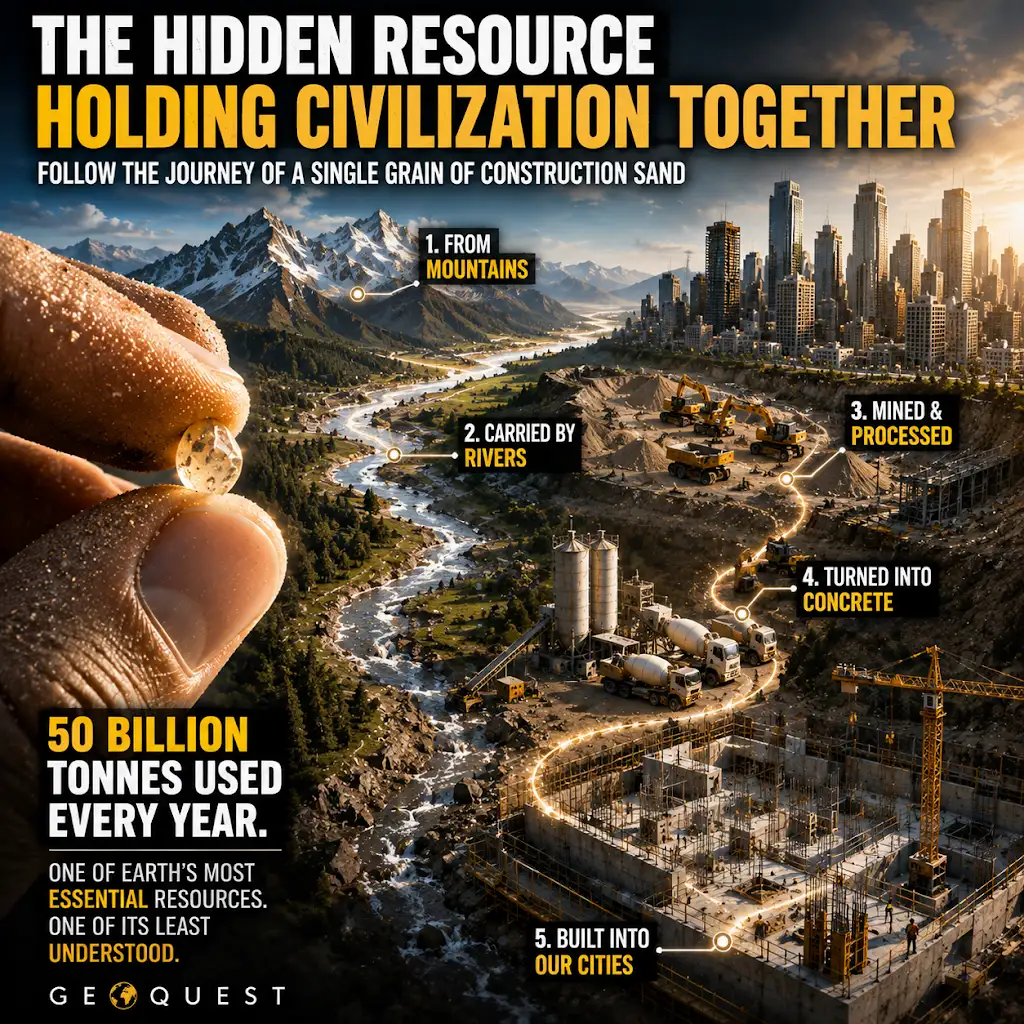
The Hidden Resource Holding Civilization Together
FAQs
What is the sediment cycle?
The sediment cycle is the process by which sediment is transported, deposited, and eroded in the Earth’s crust. It involves the movement of sediment through various geological processes such as weathering, erosion, transportation, and deposition.
What are the main components of the sediment cycle?
The main components of the sediment cycle include weathering, erosion, transportation, deposition, and lithification. Weathering breaks down rocks into sediment, erosion transports the sediment, and deposition and lithification lead to the formation of sedimentary rocks.
How does weathering contribute to the sediment cycle?
Weathering is the process by which rocks are broken down into smaller particles through physical, chemical, and biological processes. This creates sediment that can be transported and deposited in different locations, contributing to the sediment cycle.
What role does erosion play in the sediment cycle?
Erosion is the process by which sediment is transported from one location to another by natural forces such as water, wind, and ice. It plays a crucial role in the sediment cycle by moving sediment from its source to new locations where it can be deposited.
Why is the sediment cycle important for the Earth’s geology?
The sediment cycle is important for the Earth’s geology because it plays a key role in the formation of sedimentary rocks, which are a major component of the Earth’s crust. It also contributes to the shaping of landscapes and the cycling of nutrients and minerals in the environment.