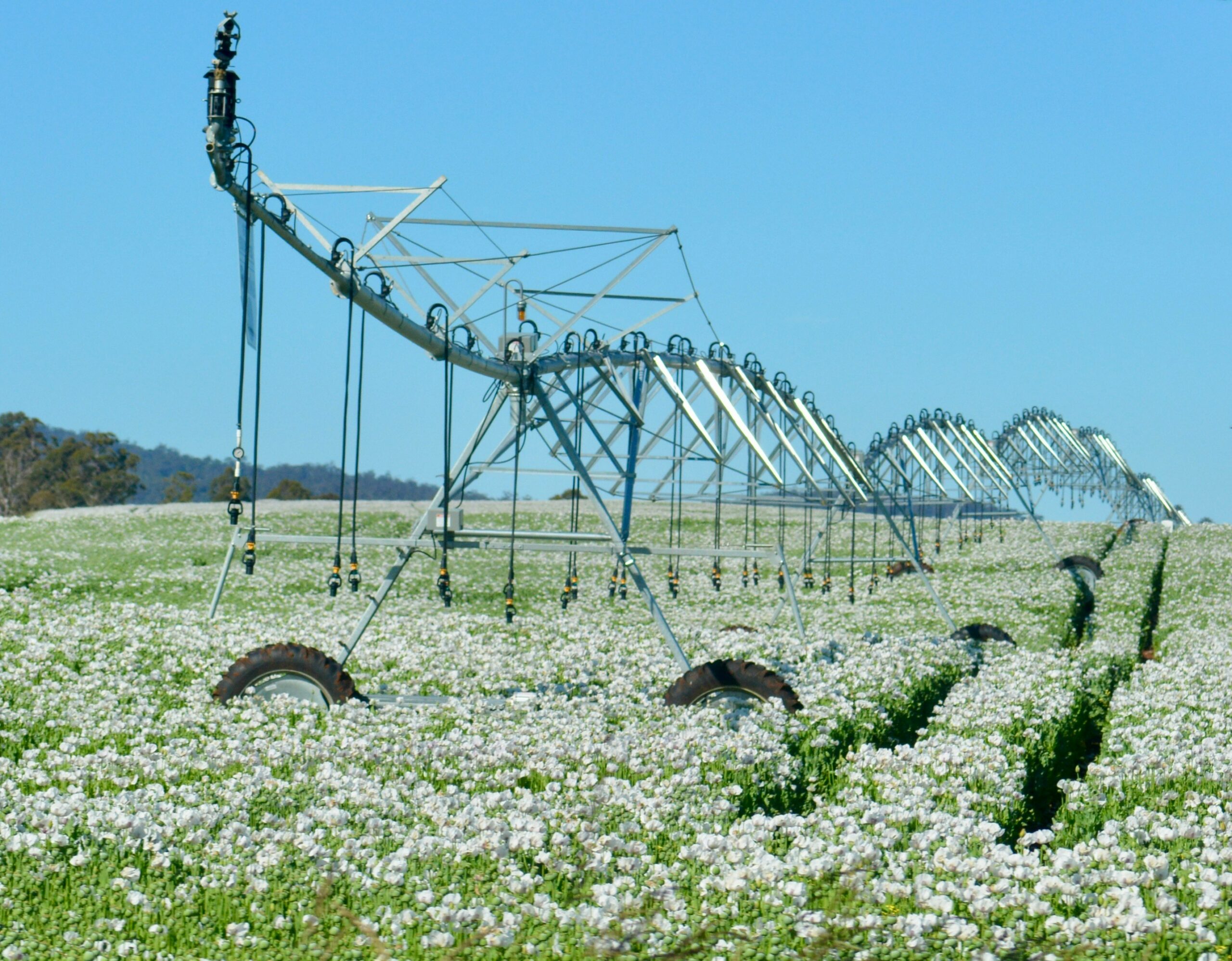
The circular dance of agricultural machinery, a familiar sight across vast tracts of farmland, is more than just an aesthetically pleasing pattern. It’s a testament to elegant engineering, driven by fundamental physics and aiming for the most efficient means of water distribution. These iconic round irrigation circles, often seen from high altitudes as vast green discs against the earth, owe their form to an ingenious design rooted in the principles of mechanics and fluid dynamics.
The very essence of the round irrigation circle lies in its center pivot system. This ingenious mechanism forms the heart of the operation, dictating the shape of the watered area. The system comprises a central rotating tower, which serves as the pivot point and also houses the water source or connection. From this central point, long lateral pipes, often thousands of feet in length, extend outwards. These pipes, supported by a series of smaller, self-propelled towers that move in synchronization, are what create the sweeping circular motion.
The Role of the Central Pivot Point
The central pivot tower is arguably the most critical component of the entire system. It is anchored firmly in the ground, providing a stable base for the extended pipelines. Water is typically pumped from a well, reservoir, or canal and fed into the system at this central point. The design of the pivot head is complex, allowing for the lateral pipes to rotate a full 360 degrees around it. This rotation is powered by a drive system within the tower, which might be electric, hydraulic, or even engine-driven, depending on the scale and age of the system. The smooth and continuous rotation of this central point is what initiates the irrigation process across the field.
The Synchronized Movement of Intermediate Towers
As the central pivot rotates, it pulls along the entire length of the lateral pipes. However, the immense weight of these pipes and the water they carry would cause them to sag significantly if not properly supported. This is where the intermediate towers come into play. These towers are strategically placed at regular intervals along the length of the lateral pipes. Each intermediate tower is equipped with its own drive system, often powered by electric motors or hydraulic cylinders. Crucially, these drive systems are synchronized with the movement of the central pivot.
The Importance of Synchronization
The synchronized movement of the intermediate towers is paramount to the successful operation of a center pivot irrigation system. If the towers moved erratically or at different speeds, the lateral pipes would bend, twist, and potentially break. The synchronization ensures that each tower moves at the precise speed required to maintain the structural integrity of the entire system. This often involves sophisticated control systems that transmit signals from the central pivot to each of the intermediate towers, allowing for near-instantaneous adjustments in their speed and direction. This meticulous coordination is a marvel of mechanical engineering, ensuring the uniform sweep of the water spray.
Drive Systems and Propulsion
The drive systems for the intermediate towers are varied. Older systems might utilize a “drag-line” system, where a series of cables connect the towers, and the movement of one tower influences the others. More modern systems employ individual electric motors or hydraulic systems at each tower. These systems can be controlled remotely, allowing for precise adjustments and automation. The wheels on these towers are designed for off-road use, capable of traversing agricultural terrain without becoming bogged down. The torque and power of these drive systems must be sufficient to overcome the friction of the ground and the resistance of the pipeline.
Irrigation circles are round primarily due to the mechanics of pivot irrigation systems, which allow for efficient water distribution across agricultural fields. This design minimizes water waste and ensures that crops receive an even supply of moisture. For a deeper understanding of the science behind irrigation circles and their benefits, you can read more in this related article on MyGeoQuest: Why Irrigation Circles Are Round.
The Physics of Water Distribution
The circular shape is not merely a consequence of the machinery’s movement; it’s intrinsically linked to the physics of how water is effectively distributed over a large, contiguous area. The goal of any irrigation system is to deliver water uniformly, preventing over-watering in some areas and under-watering in others. The center pivot, with its radial spray pattern, is remarkably adept at achieving this uniformity within its circular domain.
Radial Spray Patterns and Uniformity
As the lateral pipes rotate, they are equipped with sprinklers or spray nozzles. These nozzles are designed to atomize water and spray it outwards. The spray pattern from each nozzle is generally fan-shaped or conical. When the entire lateral pipe is considered, and as it sweeps through its arc, the combined effect of all the nozzles creates a broad band of water application. The sprinkler heads are often spaced strategically, and their discharge rates are calibrated to ensure that as the system moves, the overlapping spray patterns deliver a consistent amount of water across the entire width of the irrigated strip. This overlap is crucial for achieving uniformity.
Overlapping Spray Patterns
The concept of overlapping spray patterns is a cornerstone of uniform water distribution. Imagine a single sprinkler head. It covers a certain area. As the lateral pipe moves, the next sprinkler head begins to cover the area that the previous one has just left. If these coverage areas overlap sufficiently, there are no dry gaps. The design of the sprinkler heads and their spacing along the lateral pipes is calculated to achieve a high degree of overlap, ensuring that every inch of the ground receives the intended amount of water. This is akin to painting a strip with a wide brush, where each subsequent stroke overlaps the previous one to create a solid, continuous coat.
Droplet Size and Application Rate
The size of the water droplets produced by the sprinklers also plays a role in effective water distribution. Smaller droplets can be carried further by the wind but are also more prone to evaporation. Larger droplets can cause soil compaction if they fall too heavily. Irrigation engineers meticulously design the sprinkler systems to produce droplets of an optimal size for the specific crop and soil conditions. The application rate, which is the amount of water applied per unit of time, must also be carefully controlled. This is influenced by the water pressure, the size of the nozzle openings, and the speed of the moving system.
The Law of Conservation of Momentum and Angular Momentum
While not directly dictating the circular shape, the principles of momentum and angular momentum indirectly influence the robustness and efficiency of the moving system. The immense mass of the lateral pipes filled with water possesses significant inertia. Initiating and maintaining the rotation requires considerable force. The design of the drive systems must overcome this inertia. As the system rotates, it also possesses angular momentum. Changes in the speed of rotation or the distribution of mass (e.g., if one section is significantly heavier than another) would require additional torque to maintain the desired motion. The engineering of the center pivot system takes these physical principles into account to ensure smooth and stable operation.
Inertia and Torque Requirements
The inertia of the rotating system is a significant factor. To start the rotation, a substantial amount of torque is required to overcome the stationary inertia of the lateral pipes and water. Once in motion, less torque is needed to maintain the rotation against friction and wind resistance. However, the system’s inherent inertia means that abrupt changes in speed are not feasible. The drive systems are engineered to provide the necessary torque for smooth acceleration and consistent operation, minimizing mechanical stress on the entire structure.
Maintaining Rotational Stability
Once rotating, the system’s angular momentum contributes to its stability. However, external forces such as wind can exert significant pressure on the long lateral pipes, potentially disrupting the rotational stability. The design of the towers and the structural integrity of the pipes are engineered to withstand these forces. The synchronized movement of the intermediate towers also plays a role in distributing any such stresses along the length of the lateral, preventing localized buckling or failure.
Efficient Coverage: Why Circularity is Key
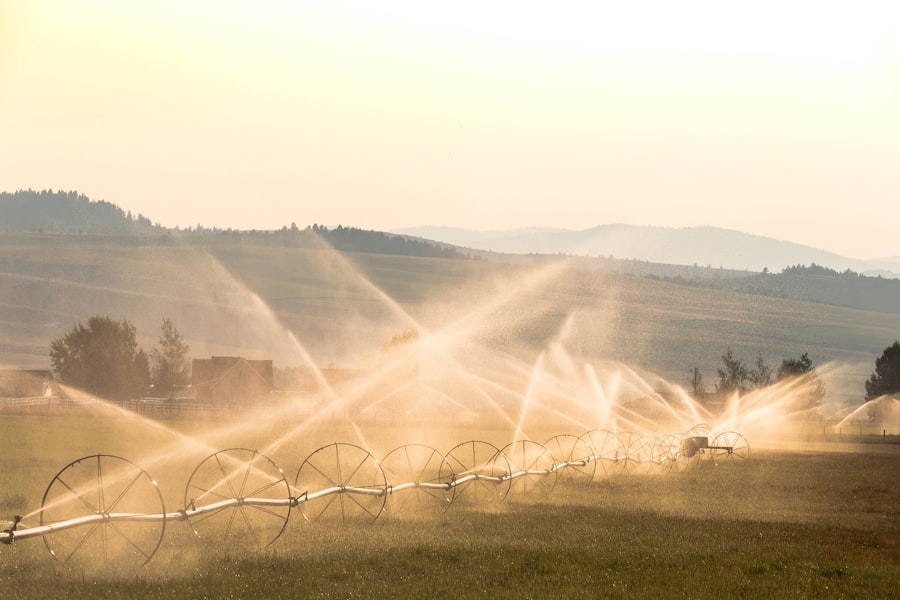
The circular irrigation pattern is not just about a rotating machine; it’s about maximizing water delivery to a defined area while minimizing waste and resource expenditure. Compared to other potential geometrical shapes, the circle, in the context of a single pivot point, offers a remarkable balance of coverage and efficiency for agricultural land.
The Geometry of Coverage
Consider the area covered by a single pivot point. The furthest point from the pivot is at the end of the longest lateral. As this point sweeps out a circle, it defines the outer boundary of the irrigated area. All points within this circle are accessible to the water spray as the system rotates. The area of this circle is calculated as πr², where ‘r’ is the radius (the length of the lateral). This fundamental geometric relationship highlights how the radius directly dictates the total area watered.
Maximizing Area with a Single Pivot
For a given length of lateral pipe, a circular pattern inherently maximizes the enclosed area compared to other shapes that might be generated by a single rotating arm. Imagine trying to irrigate land with a linear sprinkler that moves back and forth. To cover a similar area, you would need multiple parallel lines, each with its own irrigation system. The center pivot, with its single rotating hub, can cover a vast circular area with one continuous mechanism. This geometric advantage is a primary driver behind its adoption.
Avoiding Overlap Between Systems
When irrigating large fields, multiple center pivot systems are often used. The circular pattern allows these systems to be placed in a way that minimizes overlap between adjacent circles. This prevents the wasteful application of water in common areas and ensures that each system effectively irrigates its designated zone. The spacing of the circles is carefully planned to achieve maximum coverage of a field while preventing excessive overlap.
Minimizing Pivot Points and Infrastructure
The adoption of circular irrigation also represents a significant efficiency in terms of infrastructure. Instead of requiring numerous linear irrigation lines, pumps, and complex pipe networks spread across a field, the center pivot system consolidates the primary water delivery infrastructure at a single central point. This reduces the upfront capital cost and ongoing maintenance associated with extensive plumbing.
Reduced Plumbing and Pumping Costs
A single central pivot requires one primary connection to the water source and one main pump, if the source is not pressurized. As the laterals extend out, the water pressure is maintained by the system’s design and pumping capacity. This contrasts sharply with systems that might require extensive pipe networks running across a field, each needing its own connections and potentially multiple pumps to ensure adequate pressure. The reduction in plumbing and the centralized pumping simplifies installation and maintenance, translating to cost savings for the farmer.
Simplicity of Operation and Automation
The operational simplicity of a center pivot system, especially with modern automation, is another key factor in its efficiency. Once set up, the system can be programmed to run for specific durations, applying a precise amount of water. Remote monitoring and control systems allow farmers to manage their irrigation from anywhere, further optimizing their time and resources. This level of centralized control and automation is facilitated by the inherent design of the rotating circular system.
The Engineering for Uniformity: Beyond the Circle

While the circular pattern dictates the overall shape, intricate engineering ensures that the water is applied uniformly within that circle. This involves careful consideration of sprinkler design, system pressures, and the unique challenges posed by the movement of the irrigated area.
The Design of Sprinkler Heads
The type of sprinkler head used on a center pivot is critical for achieving uniform water distribution. There are various types, each with its advantages and disadvantages:
Impact Sprinklers
These are common and have been used for decades. They work by a spring-loaded hammer that strikes a lever, causing the sprinkler head to rotate and spray water in a pulsating manner. The rotation of the head itself, combined with the sweep of the lateral pipe, contributes to the coverage.
Rotator Sprinklers
These sprinklers use a rotating gear mechanism to distribute water in a more consistent, continuous pattern. They are often designed to produce larger droplets and can be more efficient in windy conditions.
Low-Pressure Drop Nozzles
Modern systems often utilize low-pressure drop nozzles that are designed to maintain a consistent application rate even as the water pressure changes along the length of the lateral. This helps to ensure uniformity across the entire arc.
Spinner Nozzles
These nozzles spin rapidly, distributing water in a fine mist. They are often used at the ends of laterals to ensure coverage of the outer edges.
Maintaining Consistent Water Pressure
One of the biggest challenges in center pivot irrigation is maintaining consistent water pressure along the entire length of the lateral pipes. As water flows from the central pivot outwards, friction within the pipes and the elevation changes can cause pressure to drop. This drop in pressure would lead to lower application rates at the outer ends of the lateral, resulting in non-uniform watering.
Pressure Regulators
To combat this, many modern systems employ pressure regulators at each sprinkler head. These devices ensure that each sprinkler head receives water at a consistent pressure, regardless of the overall pressure in the lateral. This is crucial for uniform application.
Variable Placement of Nozzles
Another engineering solution is the variable placement and sizing of nozzles along the lateral. Nozzles closer to the pivot might be smaller or spaced further apart, while nozzles further out are larger or spaced closer together. This compensation accounts for the increased water flow and potential pressure drop at the outer reaches, aiming for a uniform application rate over the entire radius.
Compensating for Ground Speed and Wind
The speed at which the center pivot system moves across the field is directly related to the application rate. If the system moves faster, less water is applied; if it moves slower, more water is applied. Therefore, precise control over the ground speed is essential for uniform watering.
Variable Rate Irrigation (VRI)
Advanced center pivot systems are capable of Variable Rate Irrigation (VRI). This technology allows the system to adjust the application rate of water in different zones of the field based on data from soil moisture sensors, weather stations, or prescription maps. While VRI primarily dictates the amount of water applied, the underlying circular pattern remains the delivery mechanism.
Wind Compensation
Wind is a significant factor that can disrupt uniform water distribution. Strong winds can blow the water spray off course, leading to uneven watering and increased evaporation. Some sprinkler designs and system configurations aim to mitigate wind effects by producing larger droplets or by operating at lower speeds during windy conditions. The circular sweep, while inherently efficient, is always battling the unpredictable forces of nature.
Irrigation circles are round primarily due to the mechanics of pivot irrigation systems, which allow for efficient water distribution across agricultural fields. This design enables the system to rotate around a central point, ensuring that crops receive an even supply of water. For a deeper understanding of the factors influencing this circular design, you can explore a related article that discusses the various aspects of irrigation technology and its impact on farming practices. Check out this insightful piece here: related article.
The Economic and Environmental Advantages of the Circular Approach
| Reasons why irrigation circles are round |
|---|
| 1. Uniform water distribution |
| 2. Efficient use of water |
| 3. Reduced water waste |
| 4. Simplified irrigation system design |
| 5. Easier maneuverability for irrigation equipment |
Beyond the purely mechanical and physical principles, the adoption of the round irrigation circle is also driven by compelling economic and environmental considerations. The efficiency of this system translates directly into cost savings and improved resource management.
Water Conservation
Water is a precious resource, and efficient application is paramount. The center pivot system, with its ability to deliver water precisely where and when it is needed within its circular footprint, is designed to minimize water loss. Unlike flood irrigation, where vast amounts of water can be lost to evaporation, runoff, and deep percolation, the center pivot directs water directly to the root zone of the plants.
Reduced Evaporation and Runoff
By applying water in a controlled manner and often at times of day when evaporation is minimized (e.g., at night), center pivot systems significantly reduce water loss to the atmosphere. The uniform application also prevents the pooling of water that can lead to runoff, keeping the water within the agricultural field.
Targeted Application to Root Zones
The precise control over application rates and the close proximity of the sprinklers to the crop canopy mean that water can be delivered directly to the root zone. This minimizes water that evaporates from the soil surface or that percolates too deep to be accessible by plant roots, thus maximizing the water use efficiency for crop growth.
Energy Efficiency in Pumping
While pumping water to irrigate is an energy-intensive process, the design of center pivot systems contributes to overall energy efficiency. The centralized pumping station, often utilizing high-efficiency pumps, is designed to provide the necessary pressure to the entire lateral. The synchronized movement of the towers also operates at a relatively low energy consumption rate compared to the benefits of irrigating a large area.
Optimized Pumping Schedules
Modern automation allows for the scheduling of irrigation cycles during off-peak hours when electricity rates are typically lower. This economic advantage, combined with the efficient delivery of water, makes center pivot systems a more cost-effective solution over time.
Reduced Infrastructure for Water Transport
As mentioned earlier, the consolidated infrastructure of a center pivot system means less energy is expended in transporting water over long distances and through complex pipe networks, as might be required by alternative irrigation methods for large-scale operations.
Land Utilization and Flexibility
The circular pattern, while seemingly restrictive, can be surprisingly flexible in how land is utilized. While the machine itself occupies a central fixed point, the irrigated area can be continuously varied by adjusting the radius of the rotation. Furthermore, the ability to precisely control water application allows for the cultivation of a wider range of crops, including those with specific water requirements.
Overlapping Circles for Irregular Fields
For fields that are not perfectly circular or square, multiple center pivot systems can be strategically placed to cover irregular shapes. While there might be some unavoidable overlap or un-irrigated corner areas, this approach often proves more efficient than trying to adapt other irrigation methods to such complex geometries.
Crop Versatility
The ability to precisely control the amount and timing of water application makes center pivot systems suitable for a wide variety of crops. From grains and vegetables to orchards and vineyards, the adaptability of the system to different watering needs contributes to its widespread adoption and economic viability. The science behind the round irrigation circles, therefore, is not just about the shape, but about an integrated system that leverages physics and engineering for optimal resource utilization and agricultural productivity.

The Water Beneath America’s Breadbasket
FAQs
1. Why are irrigation circles round?
Irrigation circles are round because the water from the center pivot irrigation system is distributed in a circular pattern as the system rotates around a central pivot point.
2. What are the advantages of using round irrigation circles?
Round irrigation circles provide uniform water distribution, efficient use of water and energy, and are well-suited for large, flat agricultural fields.
3. How do round irrigation circles compare to other irrigation methods?
Round irrigation circles are more efficient and cost-effective compared to other irrigation methods such as flood irrigation or hand watering. They also require less labor and can cover larger areas.
4. What types of crops are typically irrigated using round irrigation circles?
Round irrigation circles are commonly used to irrigate a variety of crops including corn, soybeans, wheat, and other row crops. They are also used for pasture and hay production.
5. Are there any limitations to using round irrigation circles?
While round irrigation circles are efficient for large, flat fields, they may not be suitable for irregularly shaped fields or areas with obstacles such as trees or buildings. Additionally, they may not be the best option for crops that require precise water application or for areas with limited water resources.