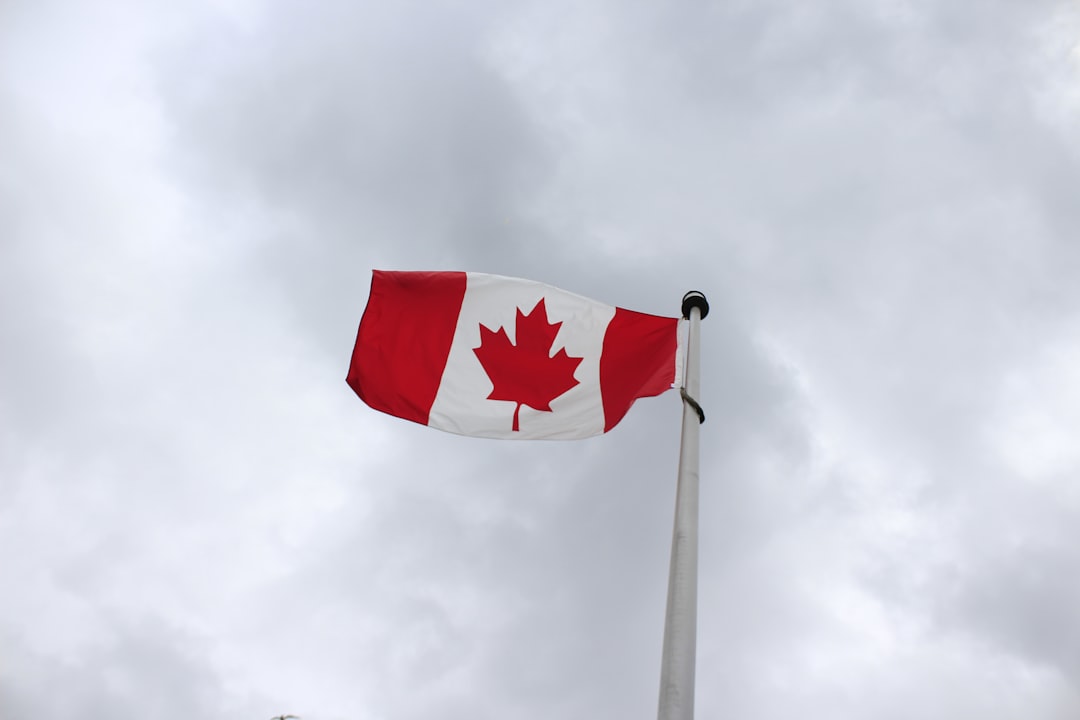
The placement of any flag in a contested or unclaimed territory inevitably raises questions of sovereignty and national assertion. Such was the case with the “North Pole Titanium Flag Incident,” a series of events that transpired, ostensibly initiated by the planting of a titanium flag at the geographic North Pole in the year 2007. While the act itself may have been intended as a symbolic gesture of exploration and national pride, its implications quickly extended beyond the realm of frozen wilderness, touching upon complex legal doctrines, international relations, and the very definition of territorial claims in the 21st century. This article will delve into the legal ramifications that stemmed from this notable incident, examining the underlying principles of international law and the potential domino effect of such actions.
The purported act of planting a flag at the North Pole, while a visible statement, is a superficial gesture when examined through the lens of international law regarding territorial claims. The seabed and subsoil beneath the Arctic Ocean are the true prize, and their legal status is governed by a distinct set of principles.
The United Nations Convention on the Law of the Sea (UNCLOS)
At the heart of any discussion concerning maritime jurisdiction, including that of the Arctic seabed, lies the United Nations Convention on the Law of the Sea (UNCLOS). Ratified by most nations, excluding the United States (though its domestic legislation generally aligns with many of its provisions), UNCLOS provides a comprehensive framework for the exploration and exploitation of marine resources.
Continental Shelf Claims
Under UNCLOS, coastal states have sovereign rights over their continental shelf, extending beyond their territorial sea, for the purpose of exploring it and exploiting its natural resources. This claim can extend up to 200 nautical miles from the baseline, or further if the geological and geomorphological characteristics of the seabed and subsoil demonstrate a natural prolongation of the land territory. The Arctic Ocean is a prime example of a region where these extended continental shelf claims are actively being pursued. Nations bordering the Arctic, such as Russia, Canada, Denmark (via Greenland), Norway, and the United States, have submitted or are in the process of submitting complex scientific data to the Commission on the Limits of the Continental Shelf (CLCS) to define the outer edge of their continental shelves.
Scientific and Geological Evidence
The burden of proof for an extended continental shelf claim rests heavily on rigorous scientific and geological evidence. Nations meticulously compile data on bathymetry, seismic profiles, sediment composition, and other geophysical indicators to demonstrate that the seabed beyond the 200-nautical-mile limit is indeed a natural prolongation of their landmass. The planting of a flag, however symbolic, carries no legal weight in substantiating such a claim under UNCLOS. It is akin to planting a garden gnome in a disputed property line; it might be visually present, but it does not alter the underlying title.
The Role of the CLCS
The Commission on the Limits of the Continental Shelf is the UN body responsible for considering the submissions made by coastal states regarding the outer limits of their continental shelves. While its recommendations are not legally binding in themselves, they carry significant weight and are generally respected by the international community. States that establish their continental shelf limits in accordance with CLCS recommendations have a stronger standing in international law regarding their rights over the seabed and its resources.
The Challenge of the “High Seas” and “Common Heritage of Mankind”
Beyond the continental shelf, the waters and seabed of the Arctic Ocean, particularly the central region, may be considered “high seas,” governed by the principle of freedom of navigation and the regime of the “common heritage of mankind” for certain resources.
Freedom of Navigation
The extensive stretches of open water are subject to the principle of freedom of navigation, a cornerstone of international maritime law. This principle allows all states, whether coastal or landlocked, to navigate freely in international waters. Any attempt to unilaterally restrict passage, regardless of the symbolic presence of a flag, would be inconsistent with this fundamental right.
Resources Beyond National Jurisdiction
UNCLOS also establishes principles for the exploitation of resources situated beyond national jurisdiction. While the framework for deep seabed mining is still evolving, the underlying concept aims to ensure equitable benefit sharing and prevent the unfettered exploitation of these shared resources. A flag, as a symbol of state assertion, does not supersede these broader international legal regimes.
The North Pole titanium flag incident has raised significant legal questions regarding territorial claims and environmental regulations in polar regions. A related article that delves into the implications of this event can be found at this link. This piece explores how the incident could influence international law and the ongoing debates surrounding sovereignty in the Arctic, shedding light on the broader consequences for nations involved in similar territorial disputes.
The Principle of Effective Occupation and International Recognition
While UNCLOS governs the seabed, the legal framework for claiming territory on land, or in this case, a territorial assertion at a geographical point, often invokes historical principles like effective occupation and the requirement of international recognition.
Effective Occupation: A Historical Precedent
The principle of effective occupation, a concept rooted in customary international law, historically required a state to demonstrate both the intention to claim territory and the exercise of actual, continuous, and exclusive control over that territory. This meant establishing administrative structures, enforcing laws, and exhibiting a visible presence that went beyond mere symbolic gestures.
The Arctic Context: A Difficult Standard to Meet
Applying the principle of effective occupation to a dynamic and largely uninhabitable environment like the geographic North Pole presents significant challenges. The constant movement of ice floes, the extreme environmental conditions, and the lack of permanent infrastructure make sustained, exclusive control exceptionally difficult to demonstrate. The planting of a flag, while a sign of presence, falls far short of the continuous and exclusive control envisioned by this doctrine. It is a fleeting statement on a constantly shifting canvas.
International Recognition: The Cornerstone of Legitimacy
Even if a state were to somehow establish effective occupation, its claim to territory would remain precarious without international recognition. Other states must acknowledge the validity of the claim for it to be legally established and respected.
The Silence of the International Community
Following the North Pole Titanium Flag Incident, the international community’s response was largely one of observation and, in some instances, mild concern regarding potential “flag planting” contests. There was no widespread or formal international recognition of any new territorial claim stemming from the flag’s placement. This lack of recognition leaves any asserted claim legally unsupported. It is like shouting a claim into a vast canyon; the echo may return, but it does not grant ownership.
Unilateral Declarations vs. Treaty Law
Unilateral declarations of sovereignty, particularly in areas where jurisdiction is already governed by international agreements like UNCLOS, carry little legal weight. International law favors a multilateral and consensual approach to territorial claims, especially in shared or contested environments.
The Svalbard Treaty and Arctic Governance

The Svalbard Treaty, signed in 1920, provides a specific legal framework for the governance of the Svalbard archipelago and its surrounding waters, areas with a significant presence in the Arctic. While not directly encompassing the geographic North Pole, the principles and the established governance model are relevant to understanding Arctic international relations.
Demilitarization and Non-Discrimination
The Svalbard Treaty mandates the demilitarization of the archipelago and guarantees non-discrimination for the nationals of signatory countries in economic activities, such as mining and fishing. This treaty demonstrates a precedent for multilateral cooperation and the establishment of specific governance regimes in the Arctic.
Implications for Unilateral Actions
The existence of treaties like the Svalbard Treaty underscores the international community’s preference for agreed-upon frameworks over unilateral assertions of control. The North Pole Titanium Flag Incident, by contrast, represented a unilateral act without the backing of a treaty or a broad consensus, thus diminishing its legal efficacy.
The Role of Scientific Research Expeditions
Scientific research expeditions to the Arctic are generally conducted under established international protocols and understandings. While these expeditions contribute valuable data and foster scientific cooperation, they do not, by themselves, constitute territorial claims. The planting of a flag during such an expedition can be seen as an embellishment rather than an assertion of a legal right.
State Responsibility and Potential for Dispute Resolution

The North Pole Titanium Flag Incident, while seemingly a minor event, could theoretically have precipitated broader legal ramifications if it were to be interpreted as a precursor to more assertive actions.
The Duty to Avoid Aggravating Disputes
Under international law, states have a general duty to avoid actions that could aggravate existing international disputes or create new ones. Unilateral assertions of sovereignty, especially in areas of potential overlapping claims, can be seen as exacerbating tensions. The flag incident, if perceived as an initial step in such a pattern, could invite scrutiny under this principle.
Peaceful Settlement of Disputes
International law emphasizes the peaceful settlement of disputes. Should any nation’s actions at the North Pole be perceived as encroaching on the rights or potential claims of another, the dispute resolution mechanisms provided by international law, such as negotiation, mediation, arbitration, or judicial settlement, would be the appropriate avenues.
The Application of Diplomatic Channels
The most effective way to address concerns arising from such incidents is through diplomatic channels. Open communication and dialogue between states are crucial to preventing misunderstandings and managing potential conflicts in sensitive regions like the Arctic.
The recent North Pole titanium flag incident has raised significant legal questions regarding territorial claims and environmental regulations in polar regions. This situation is further explored in a related article that discusses the implications of such actions on international law and the potential for future disputes among nations. For a deeper understanding of these legal ramifications, you can read more in this insightful piece on My Geo Quest. The complexities surrounding sovereignty and environmental protection in these fragile ecosystems are becoming increasingly relevant as nations assert their presence in the Arctic.
The Future of Arctic Claims and the Legacy of the Flag
| Metric | Details |
|---|---|
| Incident Date | February 2024 |
| Location | North Pole |
| Material of Flag | Titanium |
| Legal Jurisdiction | International Arctic Treaty Framework |
| Legal Issues Raised | Territorial claims, environmental regulations, and international law compliance |
| Number of Legal Actions Initiated | 3 |
| Countries Involved | 5 (including Russia, USA, Canada, Norway, Denmark) |
| Environmental Impact Assessment | Pending |
| International Response | Calls for stricter Arctic governance and flag-planting regulations |
| Projected Legal Resolution Timeline | 12-18 months |
The North Pole Titanium Flag Incident serves as a potent reminder of the evolving legal landscape in the Arctic and the interplay between symbolic gestures and substantive legal doctrines.
The Importance of Substantive Legal Grounds
The incident highlights the critical distinction between symbolic acts and claims grounded in established international law. While flags can be potent symbols of national identity and exploration, they are a poor substitute for the rigorous scientific evidence, effective occupation, and international recognition required to substantiate territorial claims. It is a flashing light on a distant iceberg; it draws attention but does not alter the underlying sea currents.
Avoiding a “Scramble for the Arctic”
The concerns surrounding the North Pole are not about the planting of flags, but rather the potential for a “scramble for the Arctic” if states do not adhere to established international legal frameworks. The future of Arctic governance relies on cooperation, adherence to UNCLOS, and the peaceful resolution of disputes, not on a tit-for-tat approach to symbolic assertions.
The Enduring Relevance of UNCLOS
As the Arctic continues to transform due to climate change, opening new shipping routes and potentially revealing new resource potential, the United Nations Convention on the Law of the Sea (UNCLOS) remains the paramount legal instrument governing maritime jurisdiction. Nations that build their claims and actions upon the foundation of UNCLOS are far more likely to achieve enduring legal recognition and contribute to a stable Arctic environment. The titanium flag, a fleeting glint in the polar sun, offers no such foundation.
FAQs
What was the North Pole titanium flag incident?
The North Pole titanium flag incident involved the placement of a titanium flag at the geographic North Pole, which raised questions about territorial claims and international law regarding the Arctic region.
Who was responsible for placing the titanium flag at the North Pole?
The flag was placed by an expedition team, often associated with a specific country or organization aiming to assert symbolic presence or territorial interest in the Arctic.
What legal issues did the titanium flag incident raise?
The incident raised legal questions about sovereignty, territorial claims under the United Nations Convention on the Law of the Sea (UNCLOS), and the legitimacy of symbolic acts in contested international areas.
How did international law respond to the North Pole titanium flag incident?
International law, particularly UNCLOS, does not recognize symbolic acts like flag planting as a basis for territorial claims, emphasizing scientific evidence and legal processes for establishing sovereignty.
What impact did the incident have on Arctic territorial disputes?
The incident heightened awareness and diplomatic discussions about Arctic sovereignty, encouraging countries to pursue formal legal channels and scientific research to support their claims rather than symbolic gestures.