
The Mississippi River, a vein of North America pulsed by gravity, exerts a profound and continuous force on the concrete structures that attempt to harness or coexist with its immense power. From the humble levees protecting farmland to the monumental locks and dams controlling navigation, concrete stands as a testament to human engineering’s struggle and success against the river’s relentless flow. This article delves into the multifaceted ways gravity, acting through the Mississippi, shapes and challenges these concrete marvels.
Gravity, the universal architect of the cosmos, is the primordial force behind the Mississippi River’s very existence and its ceaseless journey towards the Gulf of Mexico. Imagine a colossal, undulating ramp stretching from Minnesota to Louisiana; gravity is the invisible hand that perpetually urges everything on this ramp downwards. This fundamental attraction between masses acts upon every molecule of water, pulling it towards the Earth’s center, and consequently, downstream. The river’s gradient, though seemingly gentle in vast stretches, is a cumulative effect of elevation differences. Even a fall of a few feet per mile, magnified over thousands of miles, translates into a significant potential energy that is converted into kinetic energy as the water flows.
Elevation and the Gravitational Pull
The Mississippi River’s headwaters, nestled in the highlands of northern Minnesota, sit at an imposing elevation relative to sea level. This initial height difference is the fertile ground from which gravity’s work begins. As the river meanders south, it encounters a decrease in elevation, albeit not always a uniform one. This gradual descent is the visual manifestation of gravity’s persistent tug.
- Source Elevation: The source lakes and streams, such as Lake Itasca at 1,475 feet above sea level, represent the starting point of this gravitational journey. Here, gravity’s pull is localized, but the cumulative effect over distance becomes the driving force.
- Gradual Slope: While sections of the Mississippi, particularly in its upper reaches, exhibit a more pronounced drop, the overall gradient is subtle. Nevertheless, this subtle slope, when multiplied by the river’s immense length, generates a powerful, continuous flow.
- Tributary Influence: Numerous tributaries, themselves driven by gravity’s pull on their respective watersheds, feed into the Mississippi, augmenting its volume and momentum. Each drop of water from these feeders adds to the collective downward force.
The Conversion of Potential to Kinetic Energy
As water descends, its stored potential energy, due to its position against gravity, is transformed into kinetic energy – the energy of motion. This conversion is the engine of the river’s flow. The faster the water moves, the greater its kinetic energy, and the more potent its ability to exert force.
- Velocity and Flow Rate: Gravity dictates the fundamental velocity of the river. Higher gradients generally lead to higher velocities, and thus, greater kinetic energy. This kinetic energy is not merely about speed but also about the sheer volume of water moving.
- Momentum and Inertia: Once in motion, the river possesses momentum, a product of its mass and velocity. This momentum, fueled by gravity, allows the river to carve its path, erode banks, and carry sediment downstream. Imagine a freight train – its mass and speed contribute to its unstoppable inertia; the Mississippi, in its watery form, possesses a similar, albeit fluid, inertia driven by gravity.
In exploring the fascinating dynamics of the Mississippi River, a related article that delves into the interplay between gravity and concrete structures along the river can be found at My Geo Quest. This article discusses how the gravitational forces acting on the river’s flow can impact the integrity and design of concrete levees and barriers, highlighting the critical balance engineers must achieve to ensure the safety and stability of these vital infrastructures.
Concrete’s Response: Structures Built Against the Current
Concrete, a material synonymous with durability and strength, forms the backbone of many structures designed to manage, channel, or resist the Mississippi’s gravitational flow. These structures are not merely passive barriers; they are dynamic participants in a perpetual tug-of-war with the river’s force.
Levees: The First Line of Defense
The most ubiquitous concrete structures along the Mississippi are its extensive levee systems. These earthen embankments, often reinforced with concrete or topped with concrete walls, are built to contain the river’s floodwaters, protecting vast tracts of land. Gravity, in this context, operates by pushing voluminous floodwaters towards these barriers.
- Flood Stage and Hydrostatic Pressure: During flood events, the water level rises significantly. Gravity then exerts immense hydrostatic pressure against the levees, a force that increases with depth. This pressure is a direct consequence of the weight of the water column, pulled down by gravity.
- Erosion and Undermining: The force of the flowing water, amplified by gravity, can also lead to erosion. The river constantly nibbles at the riverbed and banks, a process that, if unchecked, can undermine the foundations of levees. Modern levees often incorporate concrete revetments or interlocking concrete mats to combat this relentless erosion, a direct battle against gravity’s erosive power on loose sediment.
- Wave Action: Even at lower water levels, wind can generate waves on the Mississippi. The impact of these waves against the levee face, coupled with the continuous push of the gravity-driven flow, contributes to wear and tear, necessitating ongoing maintenance and reinforcement with concrete.
Lock and Dam Systems: Taming the Flow for Navigation
For centuries, the Mississippi’s unpredictable flow, dictated by gravity’s unhindered descent, made reliable navigation a daunting challenge. The development of lock and dam systems, primarily constructed from concrete, transformed the river into a navigable highway. These structures harness gravity’s force for controlled passage, rather than simply resisting it.
- Controlling Downstream Flow: Dams, built across the river, create reservoirs by impeding the natural downstream flow driven by gravity. This controlled impoundment allows for the management of water levels and flow rates, essential for consistent navigation.
- The Mechanics of the Lock: Locks are ingenious devices that allow vessels to ascend or descend between different water levels. When a vessel enters a lock chamber, gravity’s full downstream pull is momentarily suspended. Water is then strategically released into or drained from the chamber, using gravity to raise or lower the vessel to the desired level. This is gravity working in a controlled, almost theatrical, manner.
- Concrete’s Role in Structural Integrity: The massive concrete walls of the dams and lock chambers are designed to withstand the immense pressure exerted by the impounded water, a pressure directly proportional to the water’s depth and thus, its weight pulled by gravity. The concrete must also resist the erosive forces of the continually flowing water, especially near spillways and lock gates.
The Dynamic Equilibrium: Concrete Under Gravitational Stress
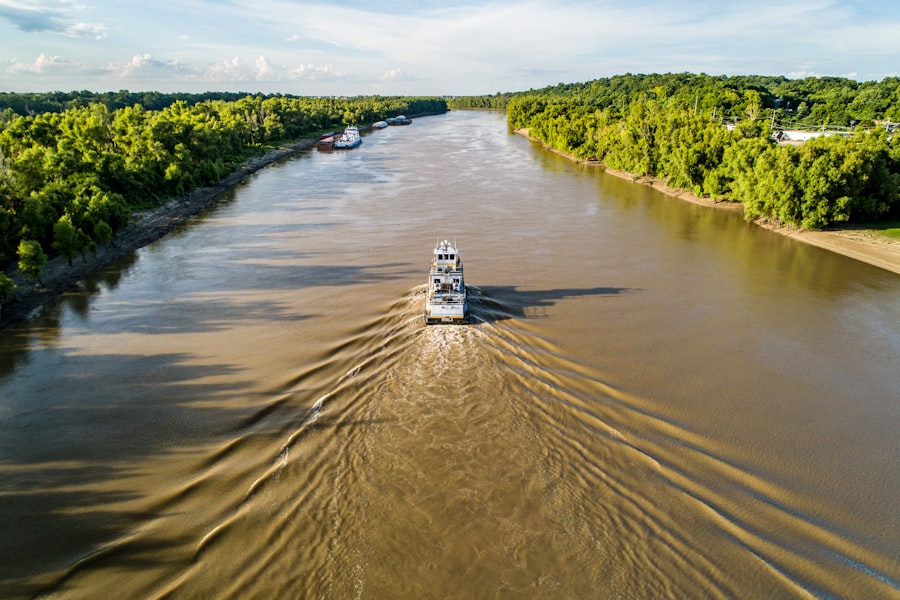
The relationship between the Mississippi River and its concrete infrastructure is not static. It is a continuous interplay of forces, with gravity as the primary driver of the river’s power and concrete as the engineered response. This dynamic equilibrium means that concrete structures are perpetually under stress.
Hydrostatic Pressure: The Constant Squeeze
- Water Weight: The sheer weight of the water impounded behind a dam or contained within a floodway is a constant force pushing outwards on the concrete structure. This hydrostatic pressure is a direct manifestation of gravity pulling the water downwards, and the water, in turn, pushing against its containment.
- Foundation Stability: The immense weight of concrete structures themselves is crucial for their stability against the forces of the river. However, even these massive edifices can be compromised if the underlying soil, subjected to the river’s water table fluctuations amplified by gravity, becomes unstable.
Hydraulic Forces and Erosion
- Flow Velocity and Shear Stress: The kinetic energy of the river, driven by gravity, translates into hydraulic forces that exert shear stress on concrete surfaces. This is particularly true in areas of high velocity, such as near spillways or the bases of dams.
- Cavitation: High-velocity flows can create areas of low pressure. When these low-pressure areas collapse, they can generate micro-explosions that erode concrete over time. This phenomenon, known as cavitation, is an indirect consequence of the energy imparted by gravity.
- Sediment Abrasion: The Mississippi River is a transporter of sediment – sand, silt, and gravel. Gravity pulls this sediment downstream, and as it moves, it can abrade concrete surfaces, much like sandpaper wearing down wood. The continuous flow, powered by gravity, ensures a continuous supply of abrasive material.
Thermal Expansion and Contraction: Nature’s Subtle Punctures
While gravity is the dominant force, it is not the only one that influences the longevity of concrete. Temperature fluctuations also play a significant role, often in conjunction with the forces exerted by the river.
- Expansion Joints: Concrete, like most materials, expands when heated and contracts when cooled. The massive scale of concrete structures along the Mississippi means that these thermal movements can be substantial. Engineers incorporate expansion joints into these structures to accommodate this movement, preventing the buildup of internal stresses that could lead to cracking.
- Freeze-Thaw Cycles: In colder climates, water within the pores of concrete can freeze and expand, exerting significant internal pressure. Repeated freeze-thaw cycles can lead to spalling and the degradation of concrete over time. The presence of water, held in place by structures designed to manage the gravity-driven flow, makes concrete susceptible to these cycles.
Material Science and Concrete Innovation: Building for the Long Haul
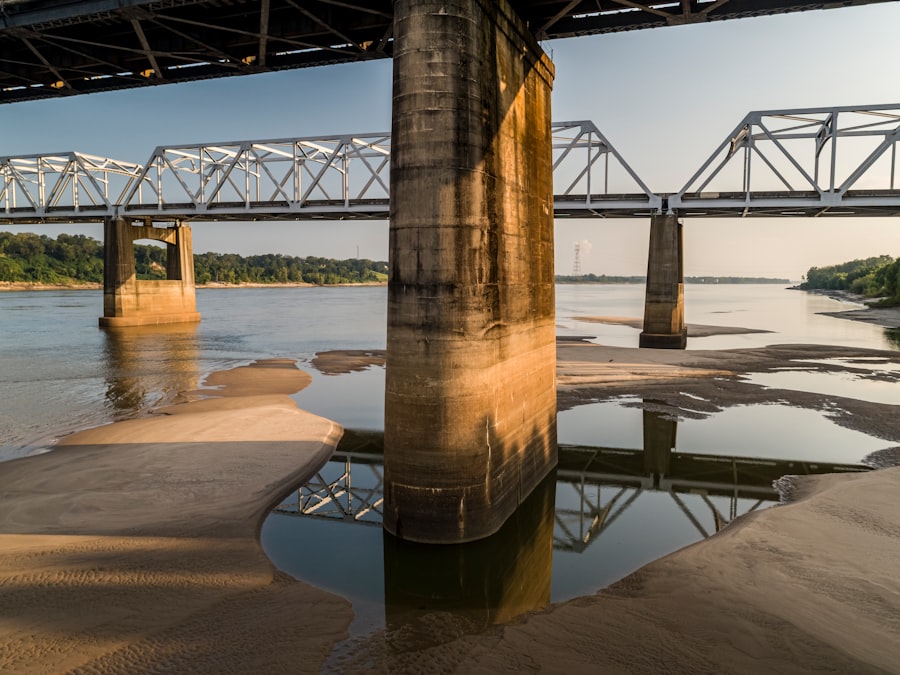
The challenges posed by the Mississippi’s gravity-driven forces have driven innovation in concrete technology. Engineers and material scientists continually seek ways to create concrete that is more resilient, durable, and long-lasting.
High-Performance Concrete: Resisting the River’s Might
Modern construction often utilizes high-performance concrete formulations designed to withstand the harsh conditions of the Mississippi. These concretes are engineered for greater strength, reduced permeability, and improved resistance to chemical attack and abrasion.
- Water-Cement Ratio: A fundamental principle in concrete strength is the water-cement ratio. Lower ratios, achieved with specialized admixtures that improve workability without adding excess water, result in denser, stronger, and less permeable concrete, better equipped to resist the Mississippi’s persistent moisture and the forces it carries.
- Supplementary Cementitious Materials (SCMs): The incorporation of SCMs like fly ash and slag cement enhances concrete’s durability and long-term strength. These materials contribute to a more refined pore structure, reducing permeability and increasing resistance to chemical attack and sulfate damage, which can be exacerbated by riverine environments.
- Aggregates: The selection of durable and well-graded aggregates is crucial. The aggregate, often quarried from riverbeds or nearby sources, provides the structural skeleton of the concrete, and its resistance to abrasion and weathering directly impacts the overall performance of the structure.
Advanced Reinforcement: Steel Cables as Internal Skeletal Support
While concrete offers compressive strength, it is relatively weak in tension. To counter the tensile forces generated by hydrostatic pressure and other riverine stresses, steel reinforcement is essential.
- Rebar and Tendons: Steel reinforcing bars (rebar) are embedded within the concrete, providing tensile strength. In more critical applications, such as in large dams, prestressing or post-tensioning techniques employ high-strength steel tendons to impart a pre-compression into the concrete, greatly enhancing its resistance to tensile stresses.
- Corrosion Resistance: Protecting steel reinforcement from corrosion is paramount. The perpetually moist environment of the Mississippi, coupled with potential chemical influences, necessitates robust protective measures for rebar and tendons, ensuring the structural integrity of the concrete over decades.
The ongoing debate about the effects of gravity on the Mississippi River compared to the structural integrity of concrete has garnered attention in various environmental studies. A related article explores how the river’s natural flow dynamics interact with human-made structures, shedding light on the challenges faced in maintaining these infrastructures. For more insights on this topic, you can read the full article here. This discussion is crucial for understanding the balance between natural forces and engineering solutions in river management.
The Future of Concrete and the Mississippi: Adaptation and Evolution
| Metric | Mississippi River Gravity Dam | Concrete Dam |
|---|---|---|
| Type | Gravity Dam (typically mass concrete or masonry) | Concrete Gravity or Arch Dam |
| Primary Material | Mass concrete or masonry blocks | Reinforced concrete |
| Height Range | 30 to 70 meters (typical for Mississippi River locks and dams) | Up to 200+ meters (varies by design) |
| Length | Several hundred meters (varies by site) | Varies widely, often shorter due to arch design |
| Function | Navigation locks, flood control, water level management | Hydroelectric power, flood control, water storage |
| Structural Principle | Resists water pressure by weight (gravity) | Resists water pressure by weight and/or arch action |
| Typical Construction Time | 2-5 years | 3-7 years |
| Maintenance | Periodic inspection, concrete repair, sediment removal | Regular inspection, crack monitoring, concrete repair |
| Environmental Impact | Alters river flow, affects fish migration | Similar impacts, sometimes greater due to size |
As climate patterns shift and our understanding of river dynamics evolves, the relationship between the Mississippi River and its concrete infrastructure will undoubtedly continue to adapt. Gravity, however, remains a constant, an immutable force that will continue to shape the river and, by extension, the concrete that strives to manage it.
Adapting to Changing Flood Regimes
- Increased Flood Frequencies: Some projections suggest an increase in the frequency and intensity of major flood events on the Mississippi. This will place even greater demands on existing levee systems and necessitate the design of new structures capable of withstanding more extreme gravitational forces.
- Adaptive Management Strategies: Future infrastructure development may focus on more adaptive management strategies, incorporating elements that can be incrementally reinforced or modified in response to changing conditions. This could involve modular concrete components or systems designed for staged upgrades.
Sustainable Construction and Material Choices
- Reduced Carbon Footprint: The production of cement, a key component of concrete, has a significant carbon footprint. The construction industry and researchers are actively exploring more sustainable concrete alternatives, including those utilizing geopolymer cements or recycled materials, to mitigate environmental impact.
- Durability and Longevity: The focus remains on creating concrete structures that are not only strong but also exceptionally durable, minimizing the need for frequent repairs or replacement, thus extending their lifespan and reducing overall resource consumption.
In conclusion, the Mississippi River, driven by the unwavering force of gravity, presents a continuous and formidable challenge to the concrete structures built along its banks. From the subtle but persistent pull that guides its flow to the immense forces unleashed during flood events, gravity orchestrates a perpetual dialogue with engineered materials. Concrete, in its various forms and innovations, stands as a testament to humanity’s ingenuity in responding to this elemental power, a dialogue that will undoubtedly continue to evolve as both river and material adapt to the ever-changing landscape.

WATCH NOW ▶️ SHOCKING: Mississippi: The $12 Trillion Lie Revealed
FAQs
What is the difference between gravity dams and concrete dams on the Mississippi River?
Gravity dams rely on their own weight to resist the force of water, typically made from concrete or masonry. Concrete dams on the Mississippi River can include gravity dams but also other types such as arch or buttress dams, which use concrete in different structural designs to hold back water.
Are there gravity dams made of concrete on the Mississippi River?
Yes, many gravity dams on the Mississippi River are constructed using concrete. Concrete provides the necessary strength and durability for gravity dams to withstand the pressure of the river water.
Why is concrete commonly used in dam construction along the Mississippi River?
Concrete is favored because it is strong, durable, and can be molded into various shapes. It resists water erosion and can support the massive weight needed for gravity dams, making it ideal for controlling the Mississippi River’s flow.
How do gravity dams function to control the Mississippi River?
Gravity dams control the river by using their heavy mass to hold back water, creating reservoirs or controlling flow rates. Their stability depends on the weight of the concrete structure pressing down against the riverbed to resist the water pressure.
What are the advantages of using gravity concrete dams on the Mississippi River compared to other dam types?
Gravity concrete dams are simple in design, highly stable, and require less maintenance. They are effective for the wide and powerful flow of the Mississippi River, providing reliable flood control, navigation support, and water management.