
The future of Russia’s nuclear-powered icebreaker fleet, specifically focusing on its projected capabilities by 2026, represents a significant strategic asset for the nation, particularly in its ambitions for the Northern Sea Route (NSR). This fleet is not merely a collection of scientific and logistical tools; it is a key with which Russia unlocks the economic and geopolitical potential of its expansive Arctic coastline. By 2026, the operational capacity and scope of these vessels will be demonstrably enhanced, allowing for year-round navigation of the NSR and facilitating increased maritime traffic. The development and deployment of these icebreakers are intrinsically linked to Russia’s broader Arctic strategy, which encompasses resource extraction, trade route development, and asserting national sovereignty in a region of growing global interest. This article will delve into the specific enhancements, ongoing and projected, that will define the capabilities of Russia’s nuclear icebreaker fleet by 2026.
The history of icebreaking in Russia is a long and storied one, born out of necessity to navigate the frigid waters bordering its vast northern territories. Early wooden vessels adapted for ice quickly gave way to more robust steel hulls and powerful engines. The advent of nuclear propulsion marked a revolutionary leap, transforming the icebreaker from a seasonal tool into a year-round facilitator of Arctic operations. By 2026, this technological evolution will be further solidified by a fleet that is not only larger but also incorporates advancements in design, propulsion, and operational efficiency. This evolution is driven by the continuous challenge of the Arctic environment, where ice conditions are dynamic and often unpredictable, demanding vessels of unprecedented strength and endurance. The pursuit of greater capability is a relentless arms race against the formidable power of nature itself.
Early Innovations in Icebreaking
The earliest attempts to combat Arctic ice relied on brute force and rudimentary designs. Ships were built with reinforced bows, often with sloping hulls to lift ice over the vessel rather than pushing directly against it. These early designs, while innovative for their time, were limited in their effectiveness and primarily suited for lighter ice conditions. The dawn of the 20th century saw the introduction of steam-powered icebreakers, significantly increasing their power and durability. These vessels were instrumental in opening up northern ports for longer periods, laying the groundwork for future advancements. Each modification and improvement was a hard-won lesson learned from the unforgiving crucible of the Arctic.
The Nuclear Revolution
The development of nuclear-powered icebreakers was a game-changer, fundamentally altering the operational parameters of Arctic navigation. The ability for these vessels to operate independently of refueling for extended periods, coupled with their immense power, allowed for sustained operations in the thickest ice. The first nuclear icebreaker, Lenin, commissioned in 1959, was a harbinger of this new era, proving the concept and paving the way for a dedicated fleet. This innovation was akin to forging a new kind of plow, capable of turning the frozen earth of the Arctic with a power previously unimagined.
Modern Design Principles and Propulsion Systems
By 2026, Russia’s fleet will benefit from a generation of nuclear icebreakers designed with a focus on modularity, energy efficiency, and advanced hull forms. The latest vessels, such as the Project 22220 (LK-60Ya) class, feature a double-draft capability, allowing them to operate in both deep ocean waters and shallower river estuaries. Their propulsion systems are more sophisticated, offering precise control and immense torque, essential for maneuvering through complex ice formations. The integration of advanced automation and navigation systems further reduces the human element in high-stress situations, improving safety and efficiency. These modern designs are not merely bigger; they are smarter, embodying decades of accumulated knowledge and technological progress.
The capabilities of the Russian nuclear icebreaker fleet are expected to significantly enhance maritime operations in the Arctic by 2026, as detailed in a related article. This fleet plays a crucial role in ensuring year-round navigation through ice-covered waters, which is becoming increasingly important due to climate change and the opening of new shipping routes. For more insights into the future of Russia’s nuclear icebreaker capabilities and their implications for global shipping, you can read the full article here: Russian Nuclear Icebreaker Fleet Capabilities 2026.
The Project 22220 (LK-60Ya) Class: The Backbone of the Future Fleet
The Project 22220 icebreakers, often referred to as LK-60Ya, represent the apex of Russia’s current icebreaker development and will form the cornerstone of its capabilities by 2026. These vessels are designed to tackle the most challenging ice conditions, including the multi-year ice of the Arctic Ocean. Their construction and deployment are central to Russia’s strategic vision for the NSR, promising to unlock its full potential as a year-round shipping artery. The sheer scale and power of these ships are designed to be a testament to Russia’s Arctic resolve.
Capabilities and Specifications
The LK-60Ya class icebreakers are colossal vessels, measuring approximately 173 meters in length and 30 meters in beam. They are powered by two RITM-200 pressurized water reactors, generating a combined power output of 175 MW. This immense power allows them to break ice up to 2.8 meters thick with continuous forward progress. Their design incorporates a unique ballast system that enables them to adjust their draft from 10.5 meters to 8.5 meters, facilitating passage through shallower waters previously inaccessible to icebreakers of this size and power class. The reactors are designed for a lifespan of 30-40 years, ensuring long-term operational viability.
Construction and Deployment Timeline
The construction of the LK-60Ya class icebreakers has been a multi-year undertaking. The first vessel, Arktika, was commissioned in 2020. The second, Sibir, was commissioned in 2021. The third, Ural, was launched in 2022 and is expected to be commissioned in 2024. Subsequent vessels, such as Yakutia and Chukotka, are also under construction and are slated for commissioning in the coming years, with a target for the full complement of these vessels to be operational within the specified timeframe. This staggered deployment ensures a consistent increase in fleet capability.
Impact on Northern Sea Route Operations
The presence of a robust fleet of LK-60Ya icebreakers will fundamentally transform operations along the NSR. By 2026, it is projected that these vessels will facilitate year-round navigation, significantly reducing transit times for commercial shipping and increasing the volume of cargo that can be transported. This will make the NSR a more reliable and competitive alternative to traditional shipping routes through the Suez Canal. The economic implications are substantial, potentially boosting trade and resource development in Russia’s Arctic regions. Imagine the NSR as a slumbering giant, now awakened by the persistent, powerful force of these nuclear icebreakers.
Emerging and Future Icebreaker Projects
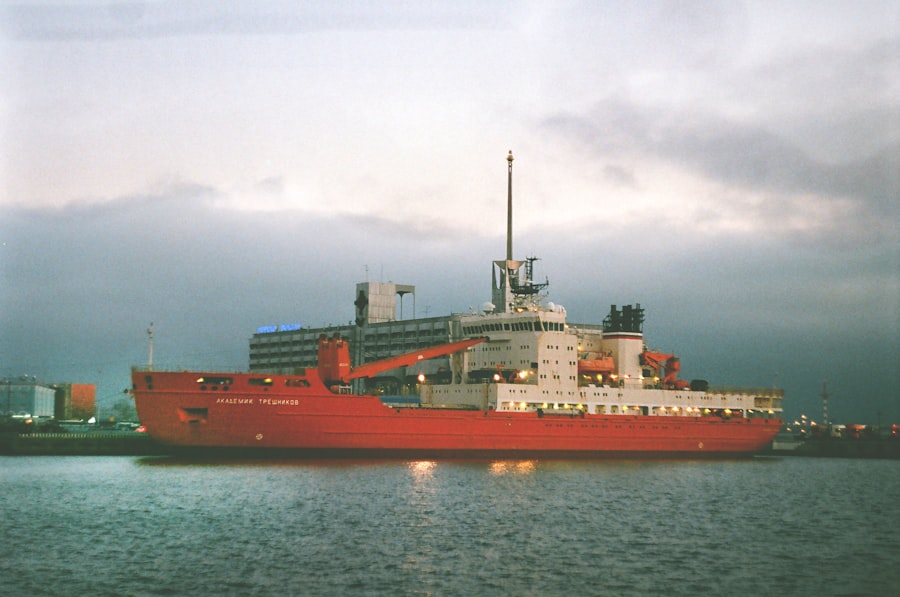
Beyond the established LK-60Ya class, Russia is actively pursuing further advancements in icebreaker technology, with future projects aiming to enhance capacity, explore new operational paradigms, and maintain its technological edge. These future endeavors are not just about increasing the number of ships; they represent a forward-looking strategy to anticipate the evolving challenges and opportunities of the Arctic. By 2026, while the LK-60Ya class will be dominant, early stages of these new projects may also be visible, signaling the next wave of innovation.
The Project 10510 (LK-110Ya) “Lider” Class
The “Lider” class, designated Project 10510, represents the next generation of super-heavy nuclear icebreakers. These vessels are envisioned to be even larger and more powerful than the LK-60Ya class, designed to break through exceptionally thick multi-year ice, often exceeding 4 meters. Their primary purpose will be to ensure year-round, unimpeded passage along the entire length of the NSR, even in the most severe ice conditions. The construction of the first “Lider” class icebreaker is already underway, with the aim of having it operational in the coming years, thus extending Russia’s dominance into the future. This is the leap from a powerful sledgehammer to an even more refined, technologically advanced cutting instrument for the Arctic.
Design and Power Considerations
The “Lider” class is expected to be significantly larger, possibly exceeding 200 meters in length, with a beam of around 40 meters. Their propulsion will likely involve two new generation reactors, potentially with higher power outputs than the RITM-200 series, designed for even greater efficiency and endurance. The hull design will be optimized for maximum ice-breaking capability, incorporating advanced materials and construction techniques to withstand extreme pressures.
Strategic Significance of “Lider” Class
The “Lider” class icebreakers are not just about increased icebreaking capacity; they are a symbol of Russia’s long-term commitment to Arctic development and its ambition to maintain unimpeded access to its northern resources and trade routes. Their ability to operate in the most challenging ice conditions will allow for greater flexibility in shipping schedules and the opening of previously inaccessible areas for resource exploration and extraction.
Other Potential Icebreaker Development Programs
While the LK-60Ya and “Lider” classes are the most prominent, Russia’s United Shipbuilding Corporation (USC) has indicated potential for other icebreaker development programs, possibly including smaller, specialized vessels for specific operational roles. These could range from research and survey icebreakers to those designed for escorting and support missions. The continuous innovation pipeline ensures that Russia is prepared for a variety of future Arctic scenarios.
Operational Enhancements and Technological Integration
By 2026, the capabilities of Russia’s nuclear icebreaker fleet will not solely be defined by the physical attributes of the vessels themselves, but also by the advanced technologies and operational strategies integrated into their deployment. This includes improvements in navigation, communication, safety, and environmental monitoring, all contributing to a more efficient and secure Arctic presence. The interplay of advanced hardware and sophisticated software will be the symphony that conducts the fleet’s operations.
Advanced Navigation and Communication Systems
The modern icebreakers are equipped with state-of-the-art navigation systems, including highly accurate GPS and GLONASS receivers, advanced radar, and sophisticated sonar for underwater obstacle detection. Communication systems will be robust, utilizing satellite links to ensure continuous connectivity even in the remotest Arctic regions. This allows for real-time weather updates, ice condition reports, and coordination with other vessels and shore-based facilities.
Environmental Monitoring and Safety Protocols
Operating in the sensitive Arctic environment demands stringent environmental protection measures. Russia’s nuclear icebreakers are equipped with advanced systems for monitoring emissions, waste management, and spill prevention. Safety protocols are paramount, with comprehensive emergency response plans and redundant safety systems built into each vessel. The focus by 2026 will be on further refining these protocols and integrating them with broader Arctic environmental protection initiatives.
Automation and AI Integration
The trend towards increased automation and the potential integration of artificial intelligence (AI) in ship operation will likely be a key area of development. AI could assist in route optimization, ice prediction, and even automated maneuvering in complex ice situations, thereby enhancing efficiency and safety. By 2026, while full AI autonomy might still be nascent, its supportive roles in decision-making and operational control will be increasingly evident.
The advancements in Russia’s nuclear icebreaker fleet capabilities by 2026 are crucial for maintaining its dominance in Arctic navigation and resource exploration. As the melting ice opens new shipping routes, the enhanced performance and increased number of icebreakers will play a significant role in securing Russia’s interests in the region. For a deeper understanding of these developments and their implications, you can read a related article that provides insights into the strategic importance of this fleet at My Geo Quest.
Geopolitical and Economic Implications
| Icebreaker Name | Type | Year of Commission | Power Output (MW) | Icebreaking Capability (m) | Operational Range | Primary Use |
|---|---|---|---|---|---|---|
| Arktika (Project 22220) | Nuclear-powered icebreaker | 2020 | 60 | 3.0 | Unlimited (nuclear fuel) | Year-round Arctic navigation |
| Sibir (Project 22220) | Nuclear-powered icebreaker | 2021 | 60 | 3.0 | Unlimited (nuclear fuel) | Arctic convoy escort |
| Ural (Project 22220) | Nuclear-powered icebreaker | 2022 | 60 | 3.0 | Unlimited (nuclear fuel) | Icebreaking and research |
| Yakutia (Project 22220) | Nuclear-powered icebreaker | Expected 2024 | 60 | 3.0 | Unlimited (nuclear fuel) | Arctic logistics support |
| Chukotka (Project 10510) | Superheavy nuclear icebreaker | Expected 2026 | 120 | 4.3 | Unlimited (nuclear fuel) | Deep Arctic icebreaking |
| Leader-class (Project 10510) | Superheavy nuclear icebreaker | Planned post-2026 | 120 | 4.5+ | Unlimited (nuclear fuel) | Year-round Arctic navigation |
The enhanced capabilities of Russia’s nuclear icebreaker fleet by 2026 carry significant geopolitical and economic weight. As the Arctic becomes increasingly accessible, it is poised to become a major thoroughfare for global trade and a significant region for resource extraction. Russia’s control over a decisive icebreaking capacity positions it as a key player in shaping the future of this critical region. The icebreaker fleet is a tangible representation of Russia’s strategic foresight and its determination to capitalize on the opportunities presented by a changing Arctic.
The Northern Sea Route as a Global Trade Artery
The NSR, once a seasonal and hazardous passage, is projected to become a viable, year-round global trade artery by 2026, largely due to the capabilities of Russia’s nuclear icebreakers. This route offers a considerable shortcut for East-West trade compared to the Suez Canal, potentially reducing shipping times and costs. The increased traffic will necessitate robust escort and navigation services, which the expanded icebreaker fleet will provide. This is akin to Russia forging a new global highway through the previously impassable frozen north.
Resource Development and Arctic Sovereignty
The Arctic is rich in natural resources, including oil, gas, and minerals. The ability to navigate the region year-round is crucial for the efficient extraction and transportation of these resources. Russia’s icebreaker fleet serves as a critical enabler for its ambitions in Arctic resource development, simultaneously reinforcing its claims to sovereignty over these vast territories. The presence of these powerful vessels is a clear signal of Russia’s intent to manage and leverage its Arctic domain.
International Cooperation and Competition
The growing importance of the Arctic will undoubtedly lead to increased international interest and potential cooperation, as well as competition. Russia’s advanced icebreaker capabilities will position it at the forefront of Arctic governance and maritime operations. However, it will also necessitate engagement with other Arctic nations and international bodies to establish clear rules and regulations for Arctic navigation and resource utilization. The icebreakers are thus not just tools of national ambition, but also catalysts for international dialogue and potential friction.
FAQs
What is the current size of the Russian nuclear icebreaker fleet?
As of recent data, Russia operates a fleet of several nuclear-powered icebreakers, including both Soviet-era vessels and newer models, making it the largest nuclear icebreaker fleet in the world.
What capabilities will the Russian nuclear icebreaker fleet have by 2026?
By 2026, the Russian nuclear icebreaker fleet is expected to include advanced vessels like the Project 22220 icebreakers, which offer enhanced icebreaking power, greater operational range, and improved environmental standards, enabling year-round navigation in the Arctic.
What are the primary functions of Russia’s nuclear icebreakers?
Russian nuclear icebreakers are primarily used to escort commercial ships through the Northern Sea Route, support Arctic exploration and resource extraction, conduct scientific research, and maintain year-round maritime access in ice-covered waters.
How does the nuclear propulsion system benefit Russian icebreakers?
Nuclear propulsion provides Russian icebreakers with high power output, long endurance without refueling, and the ability to operate continuously in harsh Arctic conditions, which is essential for breaking thick ice and supporting extended missions.
Are there any new nuclear icebreaker projects planned for completion by 2026?
Yes, Russia is actively developing new nuclear icebreakers, including additional Project 22220 vessels and the upcoming Project 10510 “Leader” class icebreakers, which are expected to significantly enhance the fleet’s icebreaking capabilities by 2026.