
The story of American infrastructure is a narrative of ambition, innovation, and constant adaptation. From its humble beginnings, the nation’s foundational systems have mirrored its growth, its challenges, and its aspirations. Understanding this evolution is crucial to appreciating the country’s present and charting its future course. This historical overview explores the transformative phases of American infrastructure, highlighting the key drivers and enduring legacies of each era.
Colonial Foundations and Early Expansion
The earliest American infrastructure was shaped by the needs of a nascent nation grappling with vast distances and limited resources. The colonial period saw the development of rudimentary transportation and communication networks, primarily driven by commerce and settlement. The focus was on establishing connections between burgeoning towns and facilitating trade, both domestically and with Europe.
The Imperative of Waterways
Water was the highway of the colonial era. Rivers, bays, and the Atlantic coastline served as the primary arteries for movement of goods and people. Early infrastructure efforts focused on making these natural pathways more navigable. This included clearing obstructions, dredging shallow areas, and building rudimentary docks and wharves. The Delaware River, the Hudson River, and the Chesapeake Bay were vital to the economic survival of the colonies. The reliance on water transport dictated settlement patterns, with most early towns and cities located on or near navigable waterways.
The Dawn of Roads and Trails
While waterways dominated, the need for overland transport gradually emerged. Trails and dirt paths, often widening existing Native American routes, began to connect inland settlements. These were largely unpaved and poorly maintained, making travel slow, arduous, and often impassable during inclement weather. However, their existence was critical for westward expansion and the development of agriculture in areas not directly accessible by water. The creation of the first toll roads, often privately funded or by local initiatives, marked an early step towards formalizing and improving overland routes, though their reach and impact were initially limited.
Early Communication Networks
Communication was as vital as transportation. The postal service, established early in the colonial period, relied on riders and post roads to carry mail. This formed the backbone of a nascent information network, facilitating correspondence and news dissemination. While rudimentary, these early systems laid the groundwork for more sophisticated communication technologies to come.
American infrastructure has a rich and complex history that reflects the nation’s growth and development over the centuries. A related article that delves into the evolution of transportation systems in the United States can be found at this link. This article explores how roads, railroads, and bridges have shaped the economic and social landscape of the country, highlighting key milestones and challenges faced along the way.
The Canal Era and the First Transportation Revolution

The early 19th century witnessed a dramatic transformation in American transportation with the advent of canals. Driven by a desire to connect the burgeoning West with the East Coast markets and spurred by technological advancements, canal building became a national obsession. This period, often referred to as the “canal era,” fundamentally reshaped the American economic landscape and ushered in the first transportation revolution.
The Erie Canal: A Monumental Achievement
The Erie Canal, completed in 1825, stands as the quintessential example of this era’s ambition and success. Stretching 363 miles from Buffalo to Albany, it provided a direct water route connecting the Great Lakes to the Atlantic Ocean via the Hudson River. The impact was immediate and profound. Freight costs plummeted, and travel times were drastically reduced. Cities along the canal, like Rochester and Syracuse, experienced explosive growth. The Erie Canal not only facilitated westward expansion but also solidified New York City’s position as the nation’s premier port and financial center. Its success inspired a wave of canal construction across the country.
A Network of Waterways
Following the Erie Canal’s triumph, numerous other canals were conceived and built, creating a complex network of waterways. The Pennsylvania Main Line Canal, the Chesapeake and Ohio Canal, and the Miami and Erie Canal were significant projects that linked major river systems and agricultural regions to ports and industrial centers. This interconnected system significantly boosted internal trade, encouraged agricultural development in the Midwest, and fueled industrial growth by providing efficient and affordable transport for raw materials and finished goods.
Engineering Challenges and Innovations
The construction of these canals presented formidable engineering challenges. Builders had to contend with varying terrain, build locks to overcome elevation changes, and manage water flow. The success of these projects spurred innovation in surveying, excavation, and hydraulic engineering. While labor-intensive and often reliant on manual labor, including that of immigrants, these undertakings demonstrated a growing capacity for large-scale public works.
The Railroad Age and the Second Transportation Revolution
As the canal era waned, a new technological marvel emerged to redefine American transportation: the railroad. The latter half of the 19th century and the early 20th century were dominated by the construction and expansion of a vast railway network, marking the second transportation revolution. Railroads offered greater speed, flexibility, and year-round reliability compared to canals, fundamentally altering the nation’s geography and economy.
Connecting a Continent
The dream of a transcontinental railroad, connecting the East Coast with the burgeoning West, became a reality with the completion of the First Transcontinental Railroad in 1869. This monumental undertaking, built by the Union Pacific and Central Pacific railroads, slashed travel times from months to mere days and opened up the American West for settlement and economic development on an unprecedented scale. It facilitated the movement of settlers, soldiers, and supplies, profoundly impacting Native American populations and ushering in the era of large-scale ranching and mining.
Industrial Growth and Urbanization
The railroad was the engine of industrialization. It provided efficient and cost-effective transportation for raw materials like coal, iron ore, and timber to factories, and for finished goods to markets across the nation. This interconnectedness fueled the growth of heavy industry and manufacturing. Furthermore, railroads spurred the growth of new towns and cities along their routes, while existing urban centers boomed as transportation hubs and industrial centers. The standardized gauge of railroad tracks and the development of robust rail networks created a truly national market.
Technological Advancements and Challenges
The railroad era saw continuous technological innovation. Improvements in locomotive design, track construction, and signaling systems increased speed, safety, and efficiency. However, this rapid expansion also brought challenges. Issues of monopolies, rate discrimination, and labor unrest became prominent. The government eventually stepped in with regulations, such as the Interstate Commerce Act of 1887, to address these concerns and ensure fairer practices within the burgeoning industry.
The Rise of the Automobile and the Road Network
The 20th century brought another paradigm shift with the rise of the automobile. The mass production of affordable cars, spearheaded by Henry Ford’s assembly line, put personal transportation within reach of millions of Americans. This led to a growing demand for better roads and the subsequent development of a national highway system, ushering in the third transportation revolution and fundamentally reshaping American life, settlement patterns, and the economy.
From Dirt Roads to Paved Highways
Initially, automobiles struggled on the poorly maintained dirt roads and unpaved tracks that characterized much of rural America. The demand for smoother, more durable surfaces grew alongside car ownership. Early efforts involved local and state initiatives to pave roads, but the true transformation came with federal investment. The Federal Aid Highway Act of 1921 marked a pivotal moment, establishing a framework for federal matching funds to states for highway construction, prioritizing major interstate routes.
The Interstate Highway System: A National Backbone
The most significant infrastructure undertaking of the automobile age was the Interstate Highway System, authorized by the Federal-Aid Highway Act of 1956. Driven by national defense considerations (facilitating troop and equipment movement) and the desire to connect burgeoning suburbs with urban centers and foster economic growth, this ambitious project created a network of high-speed, limited-access highways stretching across the country. The Interstates dramatically reduced travel times, facilitated the growth of suburbs, and enabled the expansion of trucking as a dominant mode of freight transport.
Impact on Society and Economy
The automobile and the accompanying road network had a profound impact on American society and economy. It fueled the growth of suburbs, leading to a more dispersed settlement pattern. It transformed vacationing and tourism, opening up the country to wider exploration. The automotive industry itself became a cornerstone of the American economy, driving innovation and employment. However, this shift also came with consequences, including increased air pollution, urban sprawl, and a decline in public transportation usage in many areas. The decline of inner cities as a result of suburbanization and the rise of car-dependent lifestyles became significant social and economic challenges.
American infrastructure has evolved significantly over the centuries, reflecting the nation’s growth and technological advancements. A fascinating exploration of this topic can be found in the article on the history of American infrastructure, which delves into key developments and their impact on society. For those interested in understanding how these changes have shaped modern America, the article provides valuable insights and context. You can read more about it in this detailed analysis that highlights the milestones in infrastructure development throughout the nation’s history.
Modern Infrastructure and Future Challenges
| Year | Infrastructure Project | Type | Significance | Key Metrics |
|---|---|---|---|---|
| 1825 | Erie Canal Completion | Waterway | Connected Great Lakes to Atlantic Ocean, boosting trade | Length: 363 miles; Cost: 7.5 million; Time: 8 years |
| 1869 | First Transcontinental Railroad | Railroad | Linked East and West coasts, facilitating commerce and migration | Length: 1,912 miles; Time to build: 6 years |
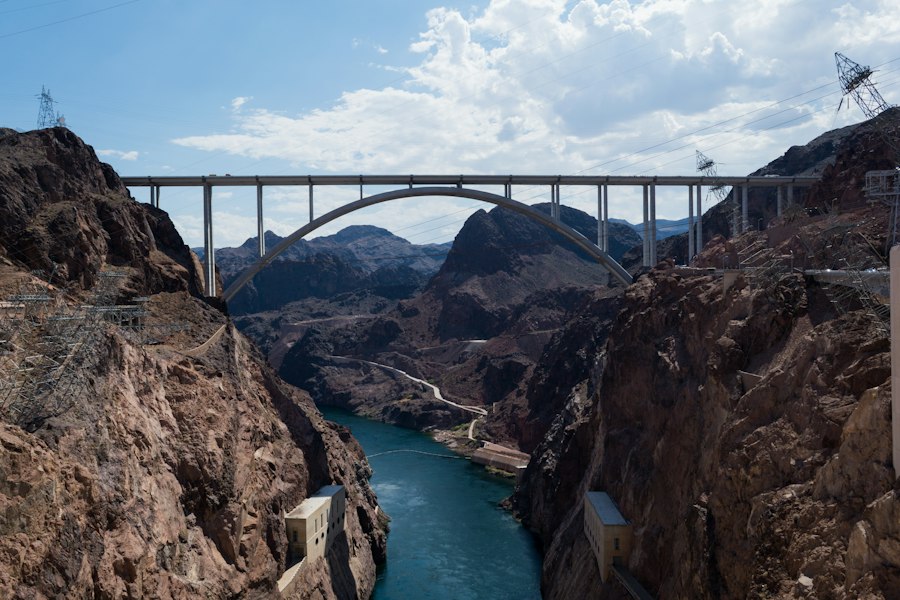
| 1930s | Hoover Dam Construction | Dam and Hydroelectric | Provided water and power to Southwest US | Height: 726 feet; Length: 1,244 feet; Power: 2,080 MW |
| 1956 | Interstate Highway System Initiation | Highway | Created a national network of highways for defense and commerce | Planned length: 41,000 miles; Cost: 129 billion; Construction span: 35 years |
| 1977 | Amtrak Formation | Passenger Rail | Nationalized passenger rail service to maintain rail travel | Initial routes: 21; Annual ridership (2020): ~32 million |
In the late 20th and early 21st centuries, American infrastructure has continued to evolve, facing new demands and challenges. The focus has broadened to encompass not only transportation but also the increasingly critical sectors of energy, water, and communication. While the nation boasts an extensive transportation network, many of its components are aging and in need of significant investment and modernization.
The Evolving Transportation Landscape
While the Interstate Highway System remains a vital artery, its age and capacity have become significant concerns. Congestion, deteriorating surfaces, and the need to accommodate increasing freight volumes are persistent problems. Public transportation, including urban rail systems and bus networks, plays a crucial role in metropolitan areas but often suffers from underfunding and outdated infrastructure. The rise of air travel has become a dominant mode for long-distance passenger transport, necessitating constant upgrades and expansions of airports and air traffic control systems. The development of high-speed rail, while nascent in the US compared to other developed nations, is increasingly seen as a potential solution for intercity travel.
The Criticality of Utilities and Communications
Beyond transportation, the nation’s utility infrastructure—encompassing electricity grids, water and wastewater systems, and natural gas pipelines—forms the backbone of modern life. Aging power grids are increasingly vulnerable to extreme weather events and cyber threats, leading to widespread outages. Decades-old water and sewer pipes in many cities require urgent replacement to ensure public health and prevent water loss. The rapid evolution of communication technology has seen the build-out of fiber optic networks and the expansion of wireless connectivity, transforming how Americans work, learn, and interact. However, ensuring equitable access to high-speed internet, particularly in rural and underserved areas, remains a significant challenge.
The Imperative of Investment and Innovation
The persistent theme in modern American infrastructure is the need for substantial and sustained investment. Decades of underfunding have left many systems in a state of disrepair, hindering economic productivity and posing risks to public safety and well-being. There is a growing recognition that addressing these deficiencies requires not only financial commitment but also innovative approaches to planning, financing, and construction. This includes exploring public-private partnerships, embracing new materials and technologies, and prioritizing sustainable and resilient infrastructure solutions that can withstand the impacts of climate change. The future of American infrastructure hinges on its ability to adapt to technological advancements, environmental pressures, and the evolving needs of a dynamic society.
The Railroad That Bet on the Panama Canal—and Lost
FAQs
What is the history of American infrastructure?
American infrastructure has evolved over centuries, starting with the construction of roads and canals in the early 19th century to the development of modern highways, bridges, railways, airports, and communication networks.
How did the Industrial Revolution impact American infrastructure?
The Industrial Revolution in the 19th century led to significant advancements in American infrastructure, including the construction of railroads, bridges, and telegraph lines to support the growing economy and population.
What role did government play in shaping American infrastructure?
The government has played a crucial role in funding and regulating the development of American infrastructure, from the establishment of the Interstate Highway System in the 1950s to the creation of agencies like the Federal Aviation Administration and the Environmental Protection Agency.
What are some key challenges facing American infrastructure today?
Some key challenges facing American infrastructure today include aging bridges and roads, inadequate public transportation systems, vulnerability to natural disasters, and the need for investments in sustainable and resilient infrastructure to address climate change.
How has technology influenced the evolution of American infrastructure?
Advancements in technology have revolutionized American infrastructure, from the introduction of electric power and automobiles in the early 20th century to the use of digital tools, sensors, and artificial intelligence in modern infrastructure projects for improved efficiency and safety.