The flickering screen offered a glimpse into a distant past, an era before the hum of machinery, before sprawling metropolises, and before the abundance that many take for granted. “The Evolution of Agriculture: A Historical Documentary” was not merely a chronicle of farming practices; it was a sweeping narrative of human ingenuity, adaptation, and the very foundations upon which civilization was built. The documentary unfurled across millennia, tracing humanity’s tenacious journey from nomadic hunter-gatherers to the architects of cultivated landscapes.
The opening segments of “The Evolution of Agriculture” meticulously reconstructed the precarious existence of early humans. Images of stark, unforgiving environments were juxtaposed with the graceful, yet often desperate, movements of individuals tracking game and gathering wild edibles. The documentary emphasized the deep, intimate knowledge these ancestors possessed of their surroundings, a knowledge born of necessity. The concept of “domestication,” the very cornerstone of agriculture, was presented not as a sudden invention, but as a gradual, almost organic process.
The Accidental Gardeners: Observing Plant Life Cycles
The film vividly depicted how early humans, in their constant search for sustenance, inadvertently became observers of plant life. The act of gathering wild grains and fruits would have led to discarded seeds near encampments. Over time, a keen eye would have noticed that plants sprouted where these seeds fell, particularly in areas enriched by waste. This simple observation, repeated across countless generations, is credited by the documentary as the spark that ignited the agricultural revolution. It was a slow burn, not an instantaneous flash, built on a series of minor discoveries and a growing understanding of natural cycles. The documentary highlighted the painstaking work of identifying which wild plants were most nutritious, which were easiest to cultivate, and which offered a reliable and predictable harvest. This rudimentary form of selection, driven by the immediate needs of survival, was the nascent stage of genetic improvement.
The Fertile Crescent: A Cradle of Civilization
“The Evolution of Agriculture” dedicated a significant portion to the Fertile Crescent, presenting it as the undisputed cradle of this transformative shift. The documentary showcased detailed CGI reconstructions of early settlements in regions like Mesopotamia and the Levant, illustrating the gradual transition from mobile camps to more permanent villages. The availability of naturally growing grains like wheat and barley, along with the presence of suitable domesticated animals such as goats and sheep, created an ideal environment for agricultural experimentation. The film explored the complex interplay of environment, human social dynamics, and the availability of resources that converged to make this region so pivotal. It was not simply a matter of finding the right plants and animals, but also of developing the social structures and cooperation necessary to manage them.
Early Tools and Techniques: The First Steps in Shaping the Land
The documentary then delved into the nascent stages of agricultural technology. Simple yet effective tools, fashioned from stone, bone, and wood, were showcased and explained. The digging stick, the rudimentary hoe, and the grinding stone represented the first significant human intervention in shaping the landscape for food production. These tools, while primitive by modern standards, were revolutionary in their ability to increase the efficiency of planting, harvesting, and processing food. The film emphasized the physical labor involved, the sheer effort required to clear land, sow seeds, and tend crops with these basic instruments. It was a testament to human perseverance and the transformative power of even the simplest innovations. The documentary also touched upon the early development of irrigation, demonstrating how communities learned to channel water from rivers to their fields, a crucial step in overcoming the limitations of rainfall.
For those interested in the evolution of farming practices and their impact on society, a fascinating resource can be found in the article “The History of Agriculture: From Ancient Times to Modern Innovations.” This piece delves into the transformative journey of agriculture, highlighting key developments and innovations that have shaped food production throughout history. To explore this insightful article, visit here.
The Rise of Agrarian Societies: From Villages to Civilizations
As agriculture took root, human societies underwent a profound transformation. “The Evolution of Agriculture” meticulously charted the transition from scattered villages to the emergence of more complex, organized communities. This shift, the documentary argued, was inextricably linked to the surplus of food that agriculture began to generate.
Settled Life and Population Growth: The Village Takes Form
The film vividly illustrated the consequences of settled agriculture: the establishment of permanent villages, the construction of more robust dwellings, and the beginnings of population growth. Unlike nomadic lifestyles, which often limited family size due to the challenges of constant movement, settled communities could support larger populations. The documentary highlighted how this increased population density fostered the development of social structures, division of labor, and the exchange of goods and ideas. The very concept of “home” began to take on a new meaning, tied to the land under cultivation rather than a temporary campsite. The increased stability and predictability offered by agriculture allowed for the development of more complex social relationships and the formation of distinct communities.
The history of agriculture is a fascinating journey that has shaped human civilization over thousands of years. For those interested in exploring this topic further, a related article can provide valuable insights into the evolution of farming practices and their impact on society. You can read more about it in this informative piece on agriculture at My Geo Quest, which delves into the various techniques and innovations that have transformed the way we cultivate crops and raise livestock.
Specialization and the Birth of New Professions: Beyond the Farmer
With a reliable food supply, not everyone needed to be directly involved in cultivation. “The Evolution of Agriculture” explored the emergence of specialized professions. Potters, weavers, toolmakers, and builders began to appear, each contributing to the growing complexity of agrarian societies. This division of labor, the documentary emphasized, led to increased efficiency and innovation, driving further advancements in various fields. The surplus of food acted as a catalyst for human potential, allowing for the exploration of interests and skills beyond mere survival. The film demonstrated how these specialized roles were crucial for the development of more sophisticated tools, clothing, and housing, further enhancing the quality of life and the overall productivity of the community.
Early Forms of Governance and Trade: Managing the Harvest
The management of agricultural surplus necessitated new forms of social organization. “The Evolution of Agriculture” showcased how early leaders emerged to oversee land allocation, harvest distribution, and dispute resolution. The documentary also touched upon the beginnings of trade, as surplus crops and crafted goods began to be exchanged between communities. This exchange fostered interdependence and the spread of knowledge and technology. The film argued that the need to manage resources and organize labor laid the groundwork for the development of more formal systems of governance and administration. The rise of leadership roles, often tied to the control and distribution of food, was a direct consequence of agricultural success.
The Impact on Social Hierarchy: Seeds of Inequality
However, the documentary also acknowledged the darker side of agricultural development. The accumulation of land and resources could lead to the emergence of social hierarchies and, in some cases, inequality. “The Evolution of Agriculture” presented this as a natural, albeit unfortunate, consequence of settled life and the differential control of productive assets. The film suggested that the ability to accumulate and control surplus food gave rise to power imbalances and the stratification of society, a trend that would continue to shape human history. While agriculture brought abundance, it also introduced new dynamics of power and control, leading to varying levels of prosperity within communities.
Industrial Agriculture: The Revolution of Machines and Chemistry
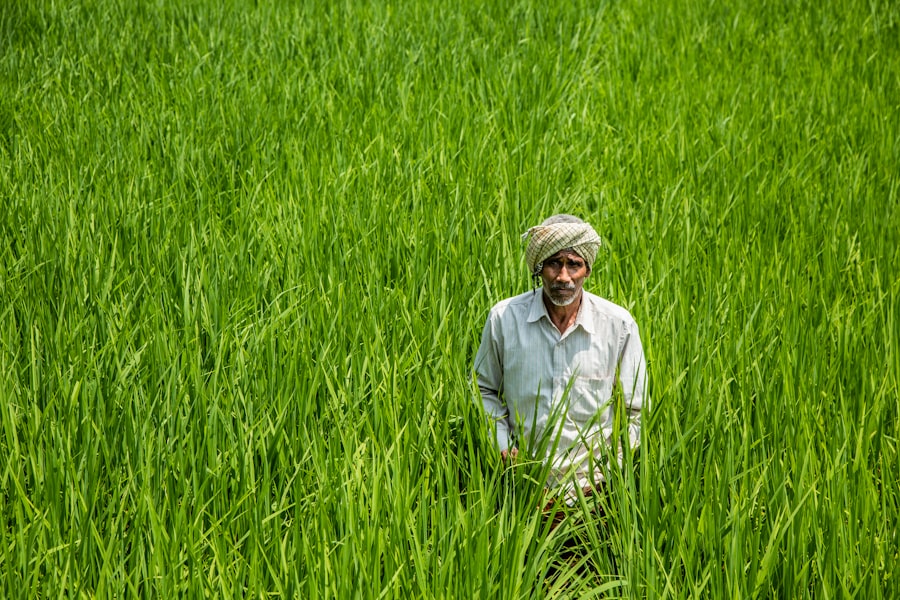
Fast forward several millennia, and “The Evolution of Agriculture” then plunged into the seismic shifts brought about by the Industrial Revolution. This era marked a dramatic departure from traditional farming methods, ushering in an age of mechanization and chemical intervention.
The Mechanization of Labor: From Plow to Tractor
The documentary showcased the transformative impact of inventions like the seed drill, the mechanical reaper, and ultimately, the tractor. These machines, the film explained, drastically reduced the need for manual labor, allowing a single farmer to cultivate increasingly larger tracts of land. This mechanization, while increasing productivity, also led to significant social changes, including rural-to-urban migration as farming became less labor-intensive. The film emphasized the sheer scale of change, depicting vast fields being worked by powerful machines, a stark contrast to the images of human toil from earlier segments. The increased efficiency and speed offered by these machines fundamentally altered the rhythm of agricultural production.
The Chemical Revolution: Fertilizers and Pesticides
“The Evolution of Agriculture” then focused on the advent of synthetic fertilizers and pesticides. The documentary explained how these chemical innovations, born from scientific advancements, dramatically boosted crop yields by replenishing soil nutrients and controlling pests and diseases. While acknowledging the immense benefits in terms of food production, the film also began to raise questions about the long-term ecological and health consequences of widespread chemical use. The documentary presented the scientific rationale behind their development, highlighting the desire to overcome natural limitations and maximize food output to feed a growing global population.
The Rise of Monoculture: Efficiency Versus Biodiversity
The documentary critically examined the rise of monoculture, the practice of growing a single crop over vast areas. While efficient in terms of mechanization and management, “The Evolution of Agriculture” highlighted the inherent risks associated with this approach: increased vulnerability to pests and diseases, and a significant reduction in biodiversity. The film used compelling visuals to illustrate sprawling fields of identical crops, contrasting them with the more diverse landscapes of traditional farming. This shift, the documentary argued, represented a trade-off between immediate efficiency and long-term ecological resilience. The loss of biodiversity was presented not just as an aesthetic concern, but as a fundamental vulnerability that could have profound consequences.
The Globalization of Food Systems: From Local to Global
The industrialization of agriculture, the documentary explained, paved the way for the globalization of food systems. Improved transportation and storage technologies allowed for the mass production and distribution of food across vast distances. This led to greater access to a wider variety of foods year-round, but also created complex supply chains and increased dependence on global markets. The film explored the interconnectedness of modern food production, where a drought in one region can impact food prices across continents. This globalization was presented as a double-edged sword, offering affordability and accessibility but also introducing new vulnerabilities and complex economic dependencies.
Modern Agriculture: Challenges and Innovations in the 21st Century

“The Evolution of Agriculture” concluded by examining the complex landscape of contemporary farming, acknowledging both the remarkable achievements and the pressing challenges of the 21st century. The documentary presented a nuanced picture, showcasing cutting-edge innovations alongside ongoing debates about sustainability and equity.
Sustainable Agriculture: Towards a Greener Future
The film dedicated a significant segment to the growing movement towards sustainable agriculture. It showcased a variety of practices, including organic farming, regenerative agriculture, and precision farming, all aimed at minimizing environmental impact and ensuring long-term soil health. The documentary presented hopeful examples of farmers who are embracing these methods, demonstrating that increased yields and environmental stewardship are not mutually exclusive. The importance of soil health, water conservation, and the reduction of chemical inputs were central themes in this exploration of a more sustainable future for food production. The film highlighted the scientific research and practical application of these methods, demonstrating their potential to mitigate the negative impacts of industrial agriculture.
Technology and Precision Farming: Data-Driven Cultivation
The documentary explored the increasing role of technology in modern agriculture. Precision farming, which utilizes GPS, sensors, and data analytics to optimize resource use, was presented as a key innovation. The film visualized how farmers can now monitor soil conditions, water levels, and crop health with unprecedented accuracy, leading to more efficient and targeted interventions. This data-driven approach, the documentary argued, has the potential to significantly reduce waste and improve yields. The film showcased interactive maps and real-time data streams, illustrating the sophisticated technological infrastructure that underpins modern agricultural decision-making.
Food Security and Global Challenges: Feeding a Growing Planet
“The Evolution of Agriculture” addressed the ongoing challenge of ensuring food security for a rapidly growing global population. The documentary highlighted the complex interplay of climate change, political instability, and economic disparities that contribute to food insecurity in many regions. The film argued that innovation in agriculture, coupled with equitable distribution and policy reforms, will be crucial in meeting this global challenge. The documentary underscored the urgency of the situation, presenting data and expert opinions on the projected food needs of the future. It was a call to action, emphasizing that the evolution of agriculture is a continuous process, adapting to new challenges and striving for a more secure and equitable food future.
The Future of Farming: Biotechnology and Beyond
Finally, the documentary cast its gaze towards the future. It explored advancements in biotechnology, including gene editing and vertical farming, and discussed their potential to address future agricultural needs. “The Evolution of Agriculture” concluded by emphasizing that the journey of agriculture is far from over. It is a story of continuous adaptation, innovation, and the enduring human drive to cultivate a better future. The film left the audience with a profound appreciation for the long and complex history of agriculture, and a sense of anticipation for the innovations that will continue to shape how humanity feeds itself for generations to come. The concluding remarks served as a powerful reminder that the story of agriculture is, in essence, the story of humanity itself, a narrative of resilience, ingenuity, and an unending quest to thrive.

The Three Ingredients That Feed the World
FAQs
What is the history of agriculture documentary about?
The history of agriculture documentary explores the evolution of farming practices and their impact on human civilization. It delves into the origins of agriculture, the development of farming techniques, and the role of agriculture in shaping societies throughout history.
What time period does the history of agriculture documentary cover?
The history of agriculture documentary covers a wide range of time periods, starting from the origins of agriculture around 10,000 years ago to the modern agricultural practices of today. It examines the agricultural revolution, the development of crop cultivation, and the impact of industrialization on farming.
What are some key topics discussed in the history of agriculture documentary?
Some key topics discussed in the history of agriculture documentary include the domestication of plants and animals, the rise of agricultural societies, the impact of agriculture on population growth and urbanization, the development of agricultural technology, and the challenges and opportunities facing modern agriculture.
What are some notable historical figures and civilizations featured in the history of agriculture documentary?
The history of agriculture documentary features notable historical figures such as Gregor Mendel, who is known as the father of modern genetics, and civilizations such as the Sumerians, Egyptians, and Chinese, who made significant contributions to the development of agriculture.
What can viewers expect to learn from the history of agriculture documentary?
Viewers can expect to gain a deeper understanding of the origins and evolution of agriculture, the impact of farming on human societies, the technological advancements in agriculture, and the current challenges and future prospects of the agricultural industry. The documentary aims to provide a comprehensive overview of the history of agriculture and its significance in shaping human history.