The governance of Belgium is a perpetual exercise in intricate negotiation and consensus-building, a testament to the nation’s deep-seated linguistic, cultural, and political divisions. Far from a straightforward unitary state, Belgium operates as a federal monarchy with a complex web of overlapping authorities, each with its own sphere of competence and legislative power. Understanding this system requires delving into its historical evolution, its constitutional framework, and the ongoing challenges of managing diverse regional aspirations within a unified sovereign.
The origins of Belgium’s complex governance lie not in a deliberate design for decentralization, but rather in the historical pressures and compromises that have shaped its very existence. The country’s formation in 1830, following a rebellion against Dutch rule, was itself a delicate balancing act between French-speaking liberals and Flemish Catholics, each with distinct social and political agendas.
The French-Dutch Divide: A Lingering Legacy
From its inception, Belgium has been characterized by a significant linguistic and cultural divide between the Dutch-speaking Flemish community in the north and the French-speaking Walloon community in the south. This division was exacerbated by economic disparities, with the industrialized south initially holding economic dominance, a situation that gradually reversed with the decline of Walloon heavy industry and the rise of Flemish economic dynamism.
Early Centralization and the Rise of Flemish Grievances
For much of its early history, Belgium operated as a highly centralized state. This meant that national policies were largely dictated from Brussels, often to the detriment of Flemish interests, which felt their language and culture were being marginalized. The Flemish Movement, advocating for greater recognition and autonomy for Dutch speakers, gained traction throughout the 19th and 20th centuries, becoming a powerful force demanding constitutional reform.
World Wars and Shifting Power Dynamics
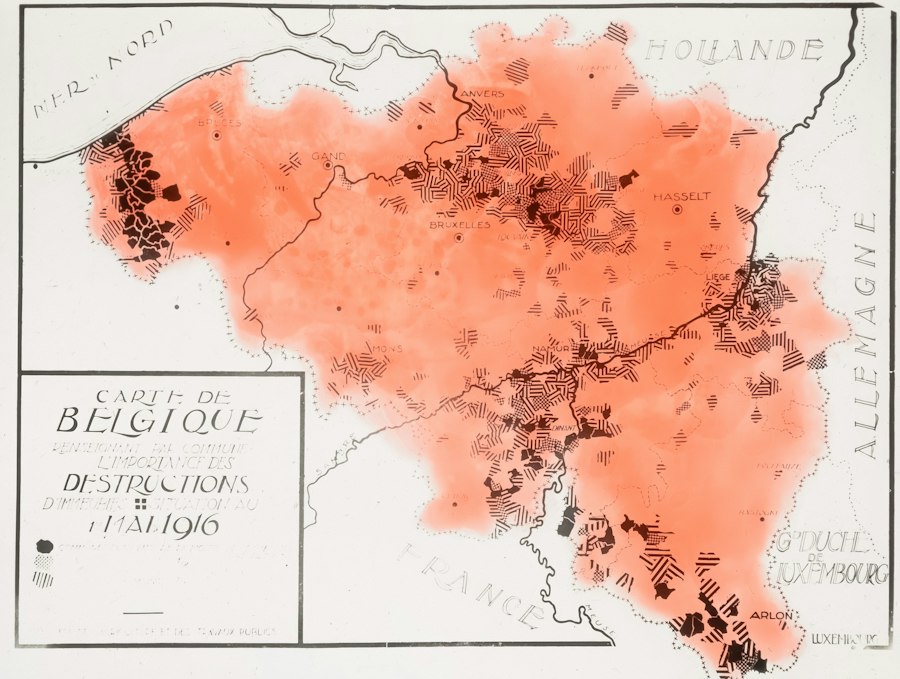
The World Wars played a complex role in shaping Belgium’s political landscape. While national unity was tested, the post-war periods also saw a growing awareness of regional inequalities. The economic fortunes of Flanders and Wallonia continued to diverge, further fueling demands for greater regional control over economic policy.
The Post-War Era: Towards a Federal Compromise
The latter half of the 20th century witnessed a gradual but profound transformation of Belgium’s governance structure. Recognizing the unsustainable nature of centralized power in a divided nation, successive governments embarked on a path of decentralization, ultimately leading to the establishment of a federal state.
The First and Second State Reforms: Laying the Groundwork
The first significant state reform in 1970 formally recognized the existence of linguistic communities and laid the groundwork for cultural autonomy. This was followed by the second state reform in 1980, which institutionalized these communities and created regional entities with limited legislative powers, particularly in economic matters.
The Third and Fourth State Reforms: Solidifying Federalism
The subsequent state reforms in 1988-89 and 1993 were crucial in solidifying Belgium’s federal structure. The 1993 reform, in particular, enshrined Belgium as a federal state, dividing powers between the federal level and the three regions (Flanders, Wallonia, and Brussels-Capital) and the three communities (Flemish, French, and German-speaking). This reform aimed to create a more equitable distribution of power and address the long-standing grievances of the Flemish population.
Belgium’s complex political landscape, characterized by its linguistic divisions and regional autonomy, makes it particularly challenging to govern effectively. For a deeper understanding of the factors contributing to this difficulty, you can read a related article that explores the intricacies of Belgian governance and its historical context. To learn more, visit this article.
The Pillars of Belgian Federalism: Regions and Communities
Belgium’s federal system is characterized by a division of powers between the federal government and its constituent entities: the regions and the communities. This dual layer of decentralization is at the heart of its complex governance.
The Three Regions: Economic and Territorial Autonomy
The three regions – Flanders, Wallonia, and Brussels-Capital – are primarily responsible for matters related to their territory and economy. They have their own governments and parliaments and possess significant legislative and executive powers in areas such as economic development, employment, spatial planning, and public works.
Flanders: Economic Powerhouse and Cultural Unity
The Flemish Region, encompassing the northern part of the country, is the economic engine of Belgium. Its government and parliament, known as the Flemish Parliament and Government, wield considerable influence. Flanders has a strong sense of cultural identity, and the Flemish government has actively promoted Dutch language and culture.
Wallonia: Industrial Heritage and Economic Transition
The Walloon Region, located in the south, has a rich industrial history. Its government and parliament, the Walloon Parliament and Government, are tasked with managing the region’s economic transition from heavy industry to new sectors. Wallonia faces unique challenges in revitalizing its economy and creating new employment opportunities.
Brussels-Capital: A Bilingual Hub with Special Status
The Brussels-Capital Region is a unique entity, officially bilingual but predominantly French-speaking. It is the seat of federal institutions and many international organizations. The Brussels-Capital Region has a special status, reflecting its importance as a national and international hub, and its governance is a delicate balance between linguistic communities.
The Three Communities: Cultural and Personal Matters
The communities – Flemish, French, and German-speaking – are responsible for matters related to culture, education, and personal affairs. Their competencies are personal in nature, meaning they apply to individuals regardless of their region of residence.
The Flemish Community: Education and Culture for Dutch Speakers
The Flemish Community’s responsibilities largely overlap with those of the Flemish Region. Its government and parliament (the same as the Flemish Region) oversee education, culture, and audio-visual policy for Dutch speakers. This has led to a convergence of powers in Flanders, where the region and community are effectively run by the same institutions.
The French Community: Education and Culture for French Speakers
The French Community, governed by its own Parliament and Government, is responsible for education, culture, and arts for French speakers across Belgium, including those living in Flanders and Brussels. This cross-regional competence highlights the complexity of the community system.
The German-Speaking Community: A Minority with Specific Rights
The German-Speaking Community, located in the eastern part of Belgium, is the smallest of the three. Its community government and parliament have a specific mandate to protect and promote the rights and culture of the German-speaking population, including their own schooling and cultural institutions.
The Federal Layer: National Cohesion and Shared Responsibilities
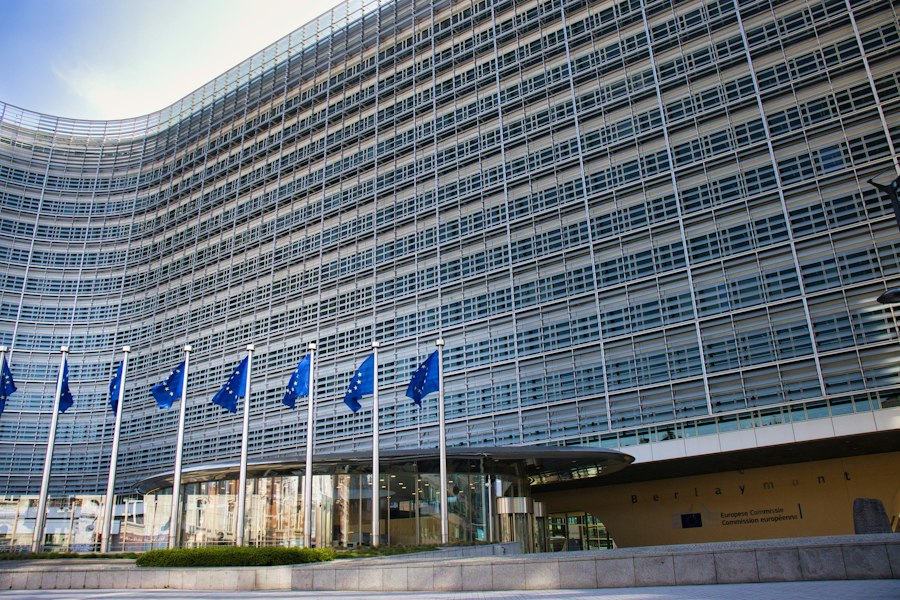
Despite the significant decentralization, a strong federal government remains crucial for Belgium’s existence and functioning. The federal level is responsible for areas that are essential for national unity and international relations.
The Federal Parliament and Government: Maintaining National Unity
The federal parliament, composed of the Chamber of Representatives and the Senate, and the federal government, headed by the Prime Minister, are responsible for areas such as defense, justice, foreign affairs, social security, and economic policy at the national level. They play a vital role in ensuring that the country functions as a coherent entity.
Divided Competences and the Challenge of Cooperation
The division of powers between the federal and regional/community levels is a constant source of negotiation and requires extensive cooperation. Harmonizing policies in areas like healthcare, environmental regulations, and economic competitiveness is a significant challenge.
The Role of the King: A Symbol of National Unity
The King of the Belgians, as Head of State, plays a symbolic role in fostering national unity and acting as a neutral arbiter in political disputes. While his powers are largely ceremonial, the King’s presence can be important in times of political crisis.
The Unique Case of Brussels-Capital
The Brussels-Capital Region presents a particularly complex governance challenge due to its unique status as a bilingual capital and the seat of numerous international institutions. Its governance structure reflects this complexity, with a regional executive and parliament and dual representation from both French and Dutch-speaking communities within its institutions.
Bilingualism and the Brussels Executive
The Brussels-Capital Region’s government is composed of members from both the French-speaking and Dutch-speaking communities, reflecting its official bilingual status. This requires constant dialogue and compromise in decision-making.
The French Community Commission (COCOF) and the Flemish Community Commission (VGC)
Within Brussels, specific commissions – the French Community Commission (COCOF) and the Flemish Community Commission (VGC) – are responsible for implementing community-specific policies, particularly in areas like education and culture, within the region. This creates another layer of governance within the capital.
The Importance of Brussels on the International Stage
As the de facto capital of the European Union and host to NATO headquarters, Brussels’ governance has implications that extend far beyond Belgium’s borders. Maintaining stability and efficiency in its administration is therefore of international importance.
Belgium’s complex political landscape often makes it a challenging country to govern, a situation that can be attributed to its linguistic and regional divisions. The article on MyGeoQuest explores these intricacies, shedding light on how the country’s split between Dutch-speaking Flanders and French-speaking Wallonia contributes to political gridlock. For a deeper understanding of the factors that complicate governance in Belgium, you can read more in this insightful piece on MyGeoQuest.
Challenges and Future Prospects of Belgian Governance
| Factor | Description | Impact on Governance |
|---|---|---|
| Language Divide | Belgium has three official languages: Dutch, French, and German, with Dutch and French being dominant in different regions. | Creates political and cultural divisions, complicating national policy-making and coalition building. |
| Federal Structure | Belgium is a federal state divided into regions and communities with significant autonomy. | Leads to complex power-sharing arrangements and overlapping competencies between federal and regional governments. |
| Political Fragmentation | Multiple political parties often represent linguistic or regional interests rather than national ones. | Results in lengthy coalition negotiations and unstable governments. |
| Economic Disparities | Economic differences exist between the more industrialized Flanders and the less prosperous Wallonia. | Generates tensions over resource allocation and economic policy priorities. |
| Complex Electoral System | Proportional representation with linguistic electoral colleges. | Encourages party fragmentation and complicates the formation of majority governments. |
| Historical Conflicts | Longstanding cultural and political tensions between Flemish and French-speaking communities. | Influences contemporary political discourse and hinders national unity. |
The intricate federal structure of Belgium, while designed to accommodate diversity, also presents significant challenges. Navigating these complexities requires continuous adaptation and a commitment to consensus.
The Permanent Negotiation Culture
Belgian politics is characterized by a culture of permanent negotiation. Every significant policy decision, whether at the federal or regional level, often involves protracted discussions and compromises between different political parties and linguistic communities.
The Risk of Deadlock and Political Instability
This constant need for consensus can, at times, lead to political deadlock and prolonged government formation periods. The differing priorities of the various regions and communities can make it difficult to find common ground, potentially leading to periods of political instability.
The Evolution of Federalism: Ongoing Debates
The debate about the future of Belgian federalism is ongoing. Some advocate for further decentralization, granting even more powers to the regions, while others argue for a stronger federal state to ensure national cohesion and economic competitiveness.
The Financial Imbalance and Fiscal Federalism
The current fiscal federalism in Belgium, where regions and communities have their own tax-raising powers, has also led to discussions about financial imbalances. The economic disparities between Flanders and Wallonia, in particular, are a recurring point of contention.
The Burden of Debt and Intergenerational Solidarity
The federal government still bears a significant portion of the national debt, and questions arise about how this debt should be managed and financed in a federalized state. Debates around intergenerational solidarity and the financial responsibilities of each entity are ongoing.
The Future of Belgium: Unity in Diversity?
The future of Belgium hinges on its ability to continue to manage its inherent diversity through its complex governance system. The success of its federal model will depend on the willingness of its constituent parts to cooperate, compromise, and find solutions that benefit the nation as a whole. The ongoing evolution of its federal structure suggests that Belgium’s governance will remain a dynamic and complex undertaking for the foreseeable future, a constant testament to the challenges and rewards of governing a nation built on the principle of unity in diversity.

Belgium Has a Border With No Wall — Here’s Why
FAQs
1. What is the political structure of Belgium?
Belgium is a federal state with a complex political system that includes multiple levels of government – federal, regional, and community governments.
2. Why is Belgium difficult to govern?
Belgium is difficult to govern due to its linguistic and cultural divisions between the Dutch-speaking Flemish community in the north and the French-speaking Walloon community in the south, as well as the bilingual Brussels-Capital region.
3. How does the linguistic divide impact governance in Belgium?
The linguistic divide in Belgium leads to challenges in forming coalition governments, passing legislation, and managing issues related to language, education, and cultural differences between the Dutch-speaking and French-speaking communities.
4. What is the role of the regions and communities in Belgium’s governance?
Belgium’s regions (Flanders, Wallonia, and Brussels-Capital) and communities (Flemish, French, and German-speaking) have significant autonomy in areas such as education, culture, and public works, which adds complexity to the governance of the country.
5. How does Belgium’s political system impact decision-making and policy implementation?
The consensus-based decision-making process in Belgium, which often involves lengthy negotiations and compromises between different linguistic and regional groups, can slow down policy implementation and make it challenging to address pressing issues efficiently.