
Mexico City, a sprawling metropolis that pulsates with life and history, bears a profound and visible scar: its sinking foundations. More than just a geological curiosity, this gradual descent into the earth, known as subsidence, is a complex phenomenon with far-reaching consequences, impacting infrastructure, culture, and the very identity of this ancient city. From its Aztec origins to its modern-day challenges, the story of Mexico City’s sinking is a testament to human ingenuity, the unforgiving forces of nature, and the ongoing struggle to adapt to a changing environment.
The story of Mexico City’s subsidence is inextricably linked to its very foundation, laid by the Aztecs centuries ago. Their magnificent capital, Tenochtitlan, was built on a series of islands within the vast Lake Texcoco. This ingenious engineering feat, creating a city on water, was a marvel of its time, a testament to their understanding of the environment and their ability to manipulate it.
The Island City of Tenochtitlan
The Aztecs chose their location for both practical and spiritual reasons. The lake provided a natural defense, abundant resources, and was central to their cosmology. Their construction techniques involved building artificial islands, called chinampas, which were essentially floating gardens anchored by reeds and branches. These chinampas not only sustained their population but also formed the intricate network of canals that crisscrossed their city, earning it the moniker “Venice of the Americas.” The foundation of Tenochtitlan was a testament to their mastery of hydraulic engineering, a sophisticated system of dikes, aqueducts, and causeways designed to manage the water and connect their island city to the mainland.
The Spanish Conquest and the Draining of the Lake
Following the Spanish conquest in the 16th century, the colonizers embarked on a monumental task: draining the lake. Their fear of flooding, a persistent threat to the city built on water, drove this ambitious project. The Spanish saw the lake as a hazard to be overcome rather than a resource to be managed. Over centuries, a network of canals and tunnels was painstakingly dug, gradually removing the water that had once been the lifeblood of the valley. This process, while initially aimed at securing the city, set in motion a geological drama that continues to unfold today.
The Angel of Independence in Mexico City, a prominent national monument, has been facing challenges due to subsidence in the region. This phenomenon, caused by factors such as excessive groundwater extraction and the city’s geological conditions, poses risks to the structural integrity of the monument. For a deeper understanding of the implications of subsidence in urban areas, you can read a related article that discusses the broader impacts on infrastructure and historical sites. For more information, visit this article.
The Modern Metropolis and the Insatiable Thirst
As Mexico City grew exponentially in the 20th and 21st centuries, so did its demand for water. The city’s insatiable thirst, coupled with its unique geological makeup, became the primary drivers of its accelerating subsidence. The urban sprawl, a characteristic of modern metropolises, placed immense pressure on the available water resources.
The Overexploitation of Aquifers
The most significant factor contributing to Mexico City’s sinking is the overexploitation of its underground aquifers. The city relies heavily on these vast reservoirs of water, primarily the Cutzamala system and local groundwater. As the population boomed and industrial activity increased, the rate at which water was extracted from these aquifers far outpaced the rate at which they could be replenished. This intensive pumping created a void beneath the city, leading to the compaction of the underlying clay layers.
The Cutzamala System: A Lifeline Under Strain
The Cutzamala system, a complex network of dams, tunnels, and pipelines, is the primary source of water for the metropolitan area. This engineering marvel, originating hundreds of kilometers away, provides a significant portion of the city’s daily water needs. However, the Cutzamala system itself is under immense pressure, facing declining water levels due to climate change and increased demand. The continued reliance on this system, without adequate measures for replenishment, exacerbates the problem of aquifer depletion.
Local Groundwater Extraction: The Deeper Problem
While the Cutzamala system is crucial, local groundwater extraction plays a significant role in the subsidence problem. Many neighborhoods and industries have historically relied on wells tapping into shallower aquifers. This localized pumping, often unregulated, contributes directly to the uneven sinking of different parts of the city.
The Clay Beneath: A Compressible Foundation
Mexico City is built on the former bed of Lake Texcoco, a lacustrine basin composed of thick layers of soft, compressible clay. This clay, known as tezontle, is highly absorbent and, when saturated with water, provides a relatively stable foundation. However, as water is pumped out of the ground, the clay loses its structural integrity and begins to compress. This process is akin to squeezing a sponge; the more water you remove, the more it shrinks.
The Unconsolidated Sediments of the Valley of Mexico
The geological history of the Valley of Mexico has resulted in a thick accumulation of unconsolidated sediments, primarily clay and volcanic ash. These sediments are inherently unstable when subjected to changes in water content. The gradual removal of groundwater has led to a process of dewatering and consolidation, causing the land surface to settle. This settling is not uniform, leading to differential subsidence, where some areas sink faster than others.
The Tangible Scars: Visible Signs of Subsidence
The consequences of Mexico City’s sinking are not confined to scientific reports; they are visible, tangible, and impact the daily lives of its inhabitants. From tilting buildings to flooded streets, the city bears the physical marks of its descent.
Tilting Towers and Uneven Streets
One of the most striking visual manifestations of subsidence is the tilting of buildings, particularly older structures. The uneven settlement of the clay layers causes some parts of a building to sink faster than others, resulting in a noticeable lean. This not only poses structural risks but also creates an unsettling visual landscape. Streets can become uneven, with sidewalks sloping dramatically and storm drains overflowing as they fail to keep pace with the sinking ground.
The Metropolitan Cathedral: A Grand Example
The Metropolitan Cathedral, a magnificent edifice in the heart of the Zócalo, stands as a prime example of subsidence’s impact. Constructed over centuries, its foundations rest on the soft clay. Over time, the cathedral has visibly tilted, with its bell tower leaning precariously. Despite ongoing efforts to stabilize and repair it, the relentless sinking continues to pose a challenge to its preservation.
Infrastructure Under Threat: Roads, Sewers, and Utilities
The sinking ground places immense strain on the city’s vital infrastructure. Roads buckle and crack, making transportation difficult and dangerous. The elaborate network of sewer lines, designed to function with a specific gradient, can become ineffective, leading to drainage problems and sewage backups. Water and gas pipes are also susceptible to damage, increasing the risk of leaks and ruptures.
The Challenge of Maintaining Drainage Systems
Mexico City’s drainage system is particularly vulnerable. The city receives heavy rainfall during the summer months, and the sinking ground can disrupt the natural flow of water. As the city sinks, storm drains can become submerged, making it impossible for them to function effectively. This can lead to widespread flooding, particularly in low-lying areas, exacerbating the challenges of urban living.
The Fragility of Underground Utilities
The constant movement of the ground poses a significant threat to the city’s underground utilities, including water mains, sewage pipes, and gas lines. These vital arteries of the city are susceptible to rupture and leakage as the earth shifts. Repairing and replacing these damaged lines is a costly and ongoing endeavor, further straining municipal resources.
The El Ángel de la Independencia: A Sinking Icon

Perhaps the most poignant symbol of Mexico City’s struggle with subsidence is the “El Ángel de la Independencia,” or the Angel of Independence. This iconic monument, a beloved landmark and a potent symbol of Mexican national pride, is also succumbing to the forces of gravity and geology.
A Monumental Symbol of Freedom
Erected in 1910 to commemorate the centenary of Mexican Independence, the Angel of Independence stands tall on a traffic circle at the intersection of Paseo de la Reforma and Florencia Street. Its gilded bronze statue of Nike, the Greek goddess of victory, has for generations represented the country’s freedom and resilience. The monument’s ornate base and soaring column have become an integral part of the city’s skyline and a focal point for national celebrations.
The Visible Lean of the Angel
Over the decades, it has become increasingly apparent that the Angel is not standing as straight as it once did. The subsidence beneath the monument has caused it to tilt, a visible and troubling sign of the city’s geological plight. Engineers have been working for years to stabilize the Angel, employing sophisticated techniques to counteract the sinking. However, the ongoing nature of the subsidence means that this is a continuous battle.
Engineering Interventions and Stabilization Efforts
Numerous engineering interventions have been undertaken to try and arrest the Angel’s descent. These have included the installation of piles to support the monument and the creation of a system of hydraulic jacks to adjust its position. The sheer scale and complexity of the problem require constant monitoring and adaptation of these stabilization efforts. The goal is not to reverse the sinking, but to prevent further tilting and ensure the monument’s structural integrity.
The Symbolism of a Sinking Icon
The sinking of the Angel of Independence holds profound symbolic weight for the people of Mexico City. It represents the city’s struggle against the forces that threaten to engulf it, both literal and metaphorical. The monument’s resilience in the face of this challenge, despite its visible lean, mirrors the spirit of the city and its inhabitants. It serves as a constant reminder of the need for sustainable practices and a deeper understanding of the delicate balance between urban development and environmental realities.
The Angel of Independence in Mexico City, a symbol of national pride, is facing challenges due to the city’s subsidence issues. As the ground continues to sink, the structural integrity of this iconic monument is at risk. For a deeper understanding of the factors contributing to this phenomenon, you can explore a related article that discusses the geological and urban planning aspects of subsidence in Mexico City. This insightful piece can be found here.
The Path Forward: Adaptation and Sustainability
| Year | Subsidence Rate (cm/year) |
|---|---|
| 1990 | 3.5 |
| 2000 | 6.2 |
| 2010 | 9.8 |
| 2020 | 12.4 |
The challenges posed by Mexico City’s subsidence are immense, but they are not insurmountable. The city is actively seeking solutions, focusing on adaptation, innovation, and a more sustainable approach to water management and urban planning.
Sustainable Water Management and Replenishment
The cornerstone of any long-term solution lies in sustainable water management. This involves reducing reliance on groundwater extraction and exploring alternative water sources, as well as implementing robust water conservation measures.
Reducing Groundwater Dependence: The Ultimate Goal
The ultimate goal is to significantly reduce the city’s dependence on groundwater. This requires a multi-pronged approach, including investing in advanced water treatment technologies to recycle wastewater and exploring the potential of rainwater harvesting on a large scale.
Innovative Water Sources: Rainwater Harvesting and Wastewater Recycling
Innovative approaches to water sourcing are crucial. Large-scale rainwater harvesting systems, coupled with advanced wastewater recycling plants, can significantly supplement the city’s water supply, thereby reducing the pressure on underground aquifers. These technologies, while requiring substantial investment, offer a path towards a more resilient water future.
Urban Planning and Resilient Infrastructure
Adapting urban planning and infrastructure to account for subsidence is essential for the city’s continued viability. This involves rethinking construction practices and developing more resilient infrastructure designs.
Building Codes and Foundation Engineering
Revised building codes that take into account the seismic and subsidence risks are paramount. Engineers are developing new foundation techniques and materials that can better withstand the differential settlement of the ground. This includes the use of deep piles, flexible connections for utilities, and structures designed to tolerate some degree of movement.
The Importance of Monitoring and Research
Continuous monitoring of subsidence rates and ongoing geological research are critical for informed decision-making. Understanding the dynamics of the sinking process allows for more effective planning and intervention. Scientists and engineers are employing sophisticated technologies, such as GPS and satellite imagery, to track land movements and predict future trends.
The Spirit of Resilience: A City that Adapts
Mexico City’s history is a testament to its resilience. From its Aztec origins to its modern-day challenges, the city has consistently adapted and overcome adversity. The ongoing struggle with subsidence is another chapter in this remarkable story, a reminder of the interconnectedness of human endeavor and the natural world. The spirit of innovation, the determination of its people, and a growing commitment to sustainability offer hope for a future where this magnificent city can continue to thrive, even as it slowly sinks. The “Sinking Angel of Independence” may be a somber reminder, but it also stands as a testament to the enduring spirit of a city that refuses to be defeated.
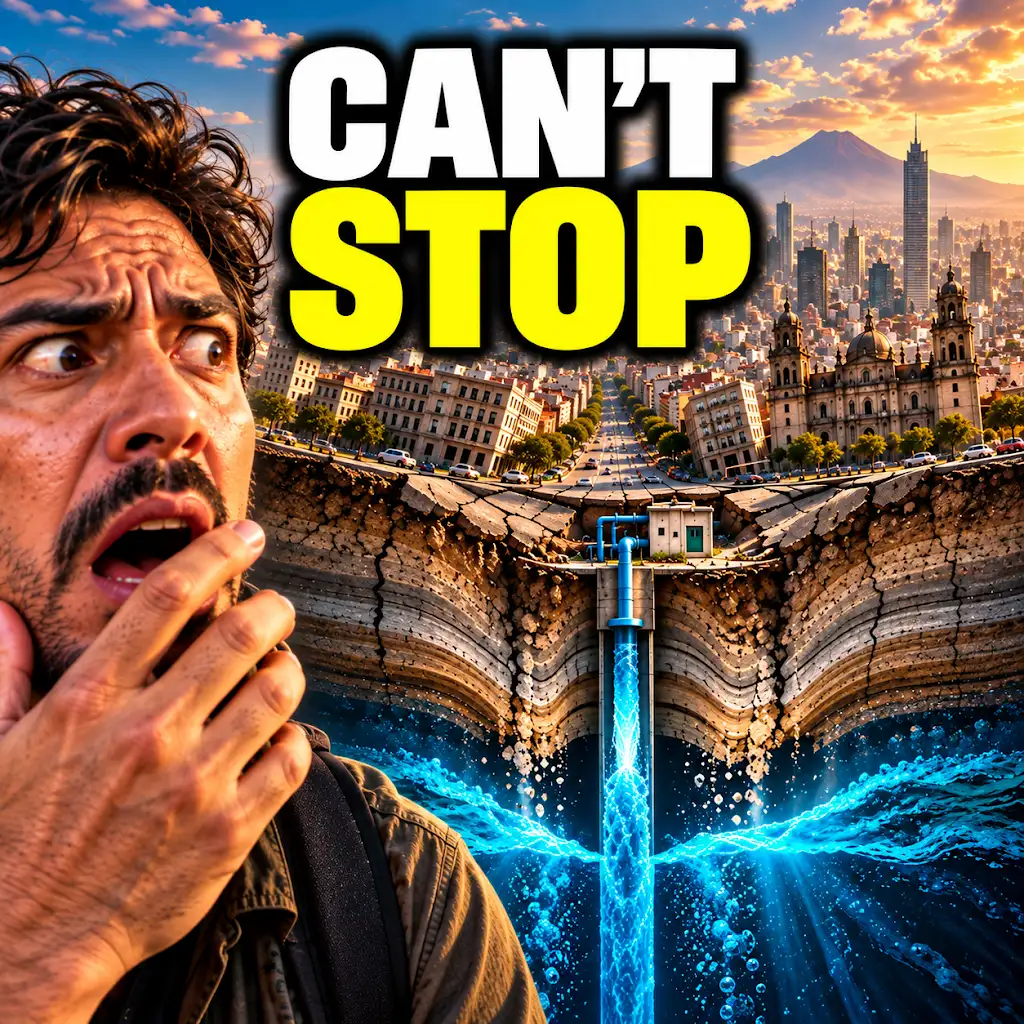
Mexico City Is Sinking Because It Needs Water
FAQs
What is the Angel of Independence in Mexico City?
The Angel of Independence is a famous monument located in Mexico City, Mexico. It was built in 1910 to commemorate the centennial of the beginning of Mexico’s War of Independence.
What is subsidence and how does it relate to the Angel of Independence?
Subsidence is the gradual sinking or settling of the Earth’s surface. In the case of the Angel of Independence, the monument has been affected by subsidence, causing it to tilt and creating concerns about its structural integrity.
What are the causes of subsidence in Mexico City?
Subsidence in Mexico City is primarily caused by the excessive extraction of groundwater, which leads to the compaction of the soil and the sinking of the land. Additionally, the city was built on top of a drained lake bed, which further contributes to subsidence.
What are the potential risks associated with the subsidence of the Angel of Independence?
The subsidence of the Angel of Independence poses a risk to public safety, as the monument could potentially collapse if the issue is not addressed. Additionally, subsidence can also lead to damage to surrounding infrastructure and buildings.
What measures are being taken to address the subsidence of the Angel of Independence?
To address the subsidence of the Angel of Independence, engineers and experts are working on stabilization and restoration efforts. This may involve injecting grout or other materials into the ground to stabilize the monument and prevent further sinking. Additionally, efforts to reduce groundwater extraction and improve the city’s drainage system are also being considered to mitigate subsidence in the long term.