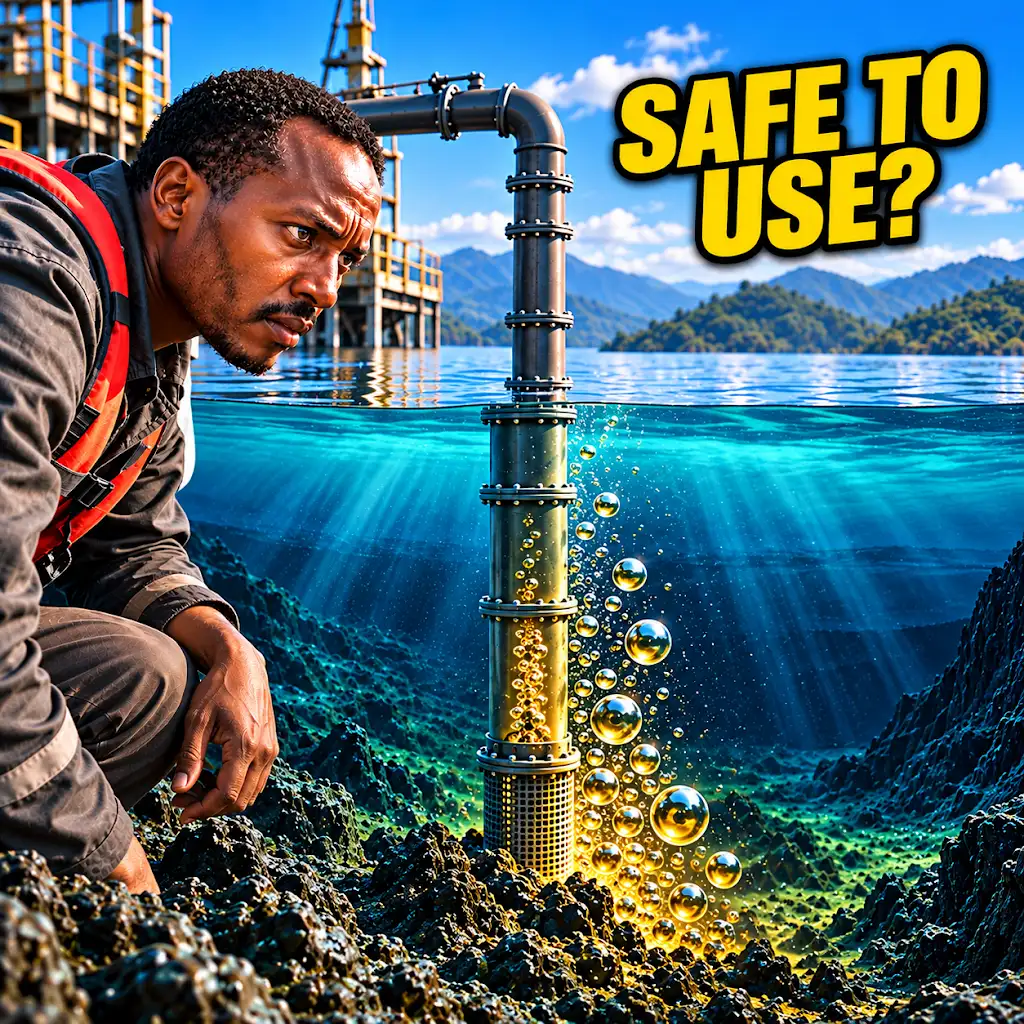
Rwanda’s innovative approach to energy generation is a testament to its commitment to sustainable development and resourcefulness. At the heart of this endeavor lies the ingenious harnessing of methane gas bubbling up from Lake Kivu, a vast volcanic lake straddling the border between Rwanda and the Democratic Republic of Congo. This natural phenomenon, once viewed with apprehension, is now being transformed into a powerful engine for economic growth and a vital source of electricity for the nation. The story of Rwanda’s methane power is one of scientific ingenuity, strategic investment, and a forward-thinking vision for a cleaner energy future.
The Volcanic Reservoir of Lake Kivu
Lake Kivu, a breathtakingly beautiful, yet potentially hazardous, body of water, holds a secret beneath its serene surface. Dissolved within its depths is an immense concentration of gases, primarily methane (CH4) and carbon dioxide (CO2), released from volcanic activity deep below. These gases are trapped in the lake’s stratified water column, creating a unique and, for a long time, unexploited reservoir. The dissolved gases are present in significant quantities, estimated to be around 50-60 billion cubic meters of methane, a potent greenhouse gas and a valuable fuel source. The sheer scale of this potential energy source has captivated engineers and policymakers, offering a compelling alternative to traditional fossil fuels. The geological processes that have led to this supersaturation are complex, involving volcanic heat and pressure dissolving gases from the Earth’s mantle into the lake water.
The Dual Nature of Lake Kivu’s Gases
The presence of dissolved gases in Lake Kivu presents a double-edged sword. On one hand, it represents a significant environmental hazard. If the lake were to experience a sudden overturn, a phenomenon known as limnic eruption, the massive release of these gases could be catastrophic, leading to widespread asphyxiation and potentially triggering tsunamis. Historical events in other African lakes, such as Lake Nyos in Cameroon in 1986, serve as stark reminders of this danger. On the other hand, the methane component of these dissolved gases is a highly combustible and energy-rich molecule, making it an attractive fuel for power generation. This duality has spurred a concerted effort to safely extract and utilize the methane, thereby mitigating the environmental risk while simultaneously unlocking a sustainable energy resource. The concentration of methane is particularly high in the deeper layers of the lake, making controlled extraction crucial to avoid disrupting the delicate balance of the ecosystem.
Scientific Understanding and Early Explorations
For decades, scientists have studied the unique geochemistry of Lake Kivu, meticulously documenting the gas concentrations and understanding the underlying geological processes. Early research, often driven by concerns for the surrounding populations, laid the groundwork for future exploitation. Pioneers in the field recognized the immense potential of the dissolved methane, but the technical challenges of extracting it safely and efficiently were substantial. Developing technologies that could operate in the unique environment of the lake, while ensuring the safe venting of non-combustible gases, was a significant hurdle. These early explorations were critical in building the scientific foundation upon which Rwanda’s current energy initiatives are built. The data gathered provided crucial insights into the gas distribution, saturation levels, and the thermodynamic properties of the system, all of which were essential for designing viable extraction methods.
Rwanda is making significant strides in harnessing grid power from methane, which presents a sustainable solution to the country’s energy needs. This innovative approach not only aims to increase electricity access but also contributes to environmental conservation by utilizing methane from Lake Kivu. For more insights on this topic, you can read a related article that discusses the potential of methane as a renewable energy source in Rwanda by following this link: Rwanda’s Methane Power Initiatives.
The Dawn of Methane-to-Power Projects
Recognizing the immense potential and the dual imperative of energy generation and risk mitigation, Rwanda embarked on a ambitious journey to harness Lake Kivu’s methane. This initiative, driven by a strong political will and strategic partnerships, has led to the development of several pioneering projects that are now contributing significantly to the nation’s power grid. The country’s commitment to renewable energy has been a key factor in prioritizing these projects, aligning with global efforts to transition away from fossil fuels. The economic benefits are manifold, ranging from reduced reliance on imported energy to job creation and the stimulation of local industries.
KivuWatt: A Flagship Initiative
One of the most prominent projects is KivuWatt, a joint venture that has become a cornerstone of Rwanda’s methane-to-power strategy. KivuWatt utilizes a sophisticated system to extract dissolved gases from the lake, separate the methane, and then use it to drive turbines and generate electricity. The process involves pumping lake water to the surface, where the pressure reduction allows the dissolved gases to be released. The extracted methane is then fed into engines or turbines, producing electricity that is fed into the national grid. This project, in particular, has demonstrated the viability and scalability of methane extraction from Lake Kivu. The company has invested heavily in state-of-the-art technology and employs highly skilled personnel to ensure the efficient and safe operation of its facilities. The success of KivuWatt has served as a crucial proof of concept, encouraging further investment and development in the sector.
Other Development Partners and Projects
Beyond KivuWatt, other development partners and companies have joined forces with Rwanda to exploit the methane potential of Lake Kivu. These collaborations have brought in diverse expertise and financial resources, accelerating the pace of development. Each project is tailored to specific technological approaches and operational scales, contributing to a diversified and robust energy infrastructure. The involvement of international partners not only provides financial backing but also brings invaluable technical knowledge and experience, further enhancing the reliability and efficiency of the methane extraction and power generation processes. These partnerships often involve complex negotiations and agreements, underscoring the strategic importance of these energy projects for Rwanda’s development.
Technological Innovations in Methane Extraction

The successful harnessing of Lake Kivu’s methane has necessitated the development and deployment of innovative technologies. Extracting dissolved gases from a deep lake and safely converting them into electricity presents unique engineering challenges. These technologies are designed to be efficient, reliable, and, most importantly, environmentally responsible. The continuous refinement of these methods is key to maximizing the energy output while minimizing any potential negative impacts on the lake’s ecosystem. The inherent dangers of limnic eruptions also dictate that any extraction process must be carefully monitored and controlled to prevent sudden gas releases.
Rwanda is making significant strides in harnessing renewable energy sources, particularly through the innovative use of methane for grid power. This approach not only addresses the country’s energy needs but also contributes to environmental sustainability. For more insights on this topic, you can read a related article that explores the potential of methane in energy production and its impact on Rwanda’s development. To learn more, visit this article for an in-depth analysis.
Dissolved Gas Extraction Systems
At the core of these projects are advanced dissolved gas extraction (DGE) systems. These systems typically involve submersible pumps that draw water from the gas-rich layers of the lake. As the water rises to the surface and the pressure decreases, the dissolved gases, including methane, are released. This process is carefully managed to avoid large, uncontrolled gas releases. The efficiency of these pumps and the design of the intake mechanisms are critical for maximizing the yield of methane. The initial stages of water withdrawal and depressurization are crucial for the effective separation of gases. Researchers are continually exploring new materials and designs to improve the efficiency and durability of these sub-surface components.
Gas Processing and Purification
Once the gases are extracted, they undergo a processing and purification stage. This involves separating the valuable methane from other gases, primarily carbon dioxide. While carbon dioxide is also a significant component of the dissolved gases, it is not combustible and therefore needs to be removed before the methane can be used as fuel. Various separation technologies, such as membrane separation or absorption, are employed to achieve the desired purity of methane. The safe venting or potential utilization of the separated carbon dioxide is also an important consideration for environmental sustainability. The purity of the methane is paramount for the efficient operation of the power generation turbines.
Power Generation and Grid Integration
The purified methane is then used to fuel generators, typically internal combustion engines or gas turbines, to produce electricity. This electricity is then conditioned and fed into Rwanda’s national power grid, contributing to a more stable and reliable energy supply for households, businesses, and industries. The integration of this new power source into the existing grid requires careful planning and sophisticated control systems to ensure seamless operation and to balance supply and demand. The development