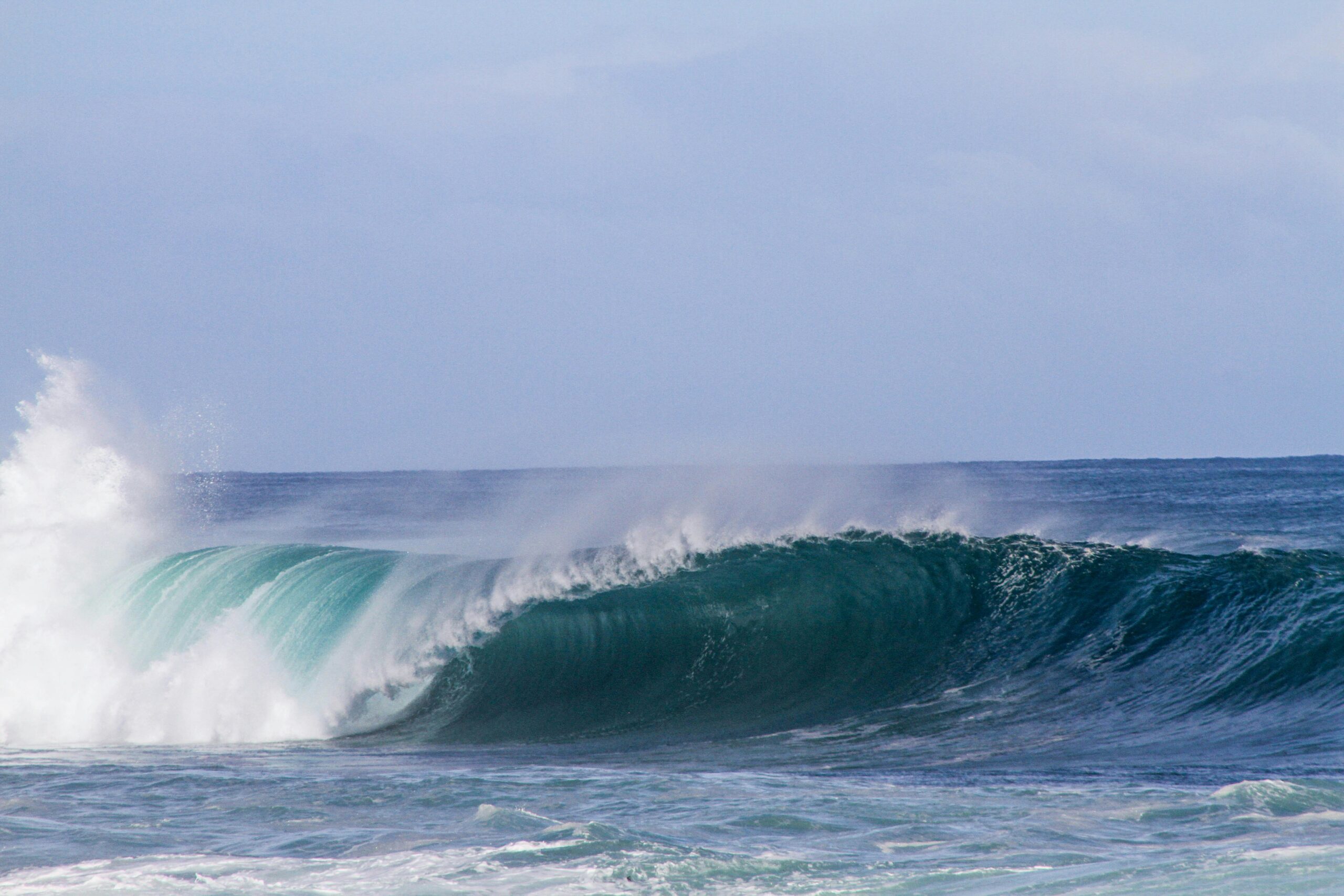
The North Sea, a body of water renowned for its vital shipping lanes and rich fishing grounds, also harbors a hidden, terrifying secret: rogue waves. These monstrous swells, appearing without warning, defy conventional understanding of oceanography and present a grave, unpredictable danger to all who venture onto its surface. For centuries, tales of ships being swallowed by impossibly large waves were dismissed as sailor’s yarns, the product of fear and exhaustion. However, as scientific understanding of the ocean has advanced, and through harrowing accounts from survivors and the analysis of maritime accidents, the reality of rogue waves has become undeniable, cementing their status as one of the North Sea’s most formidable threats.
Rogue waves, also known as freak waves or monster waves, are defined as waves that are more than twice the height of the surrounding significant wave height. The significant wave height is the average height of the highest one-third of waves in a wave record. This means that in a relatively calm sea with waves of, say, 2 meters, a rogue wave could be 4 meters or more. However, the true terror of rogue waves lies not just in their height but also in their sheer unpredictability and their disproportionate power. Unlike typical storm-generated waves that build and dissipate in a more predictable manner, rogue waves can appear suddenly, often in the midst of what appears to be moderate seas. Their steepness, narrow crest, and deep trough contribute to their destructive potential, able to dwarf even large vessels.
Defining the Unpredictable
The scientific community has grappled with the phenomenon of rogue waves for decades. Early observations and anecdotal evidence were met with skepticism, as they challenged the established wave theories of the time. However, the development of advanced wave measurement technologies, such as satellite altimetry and offshore buoys, has provided concrete data to support these accounts. The first documented proof of a rogue wave in the North Sea came in the late 20th century, forever changing the perception of these oceanic anomalies. This empirical evidence was crucial in shifting the understanding from myth to scientific reality.
Historical Accounts and Folklore
Before scientific validation, the existence of rogue waves was primarily confined to maritime folklore. Sailors, hardened by years at sea, spoke of walls of water that rose from nowhere, capable of overwhelming ships in seconds. These stories, often relayed in hushed tones in port taverns, contributed to a mystique surrounding the ocean’s capacity for sudden violence. The North Sea, with its often-turbulent weather patterns and strong currents, was a fertile ground for such tales. Many a vessel, lost without a trace, was likely a victim of these elusive giants, their fate forever shrouded in mystery.
Rogue waves in the North Sea have garnered significant attention from researchers and mariners alike due to their unpredictable nature and potential for destruction. An insightful article that delves deeper into this phenomenon can be found at this link, where the complexities of rogue wave formation and their impact on maritime activities are explored. Understanding these massive waves is crucial for improving safety measures and navigation in one of the world’s busiest shipping regions.
The North Sea: A Breeding Ground for Danger
The geographical and meteorological characteristics of the North Sea make it a particularly susceptible region for the formation of rogue waves. Its relatively shallow depth in some areas, combined with the confluence of strong currents and prevailing wind patterns, can create a complex sea state where unusual wave phenomena are more likely to occur. The constant interplay of these forces, often exacerbated by the passage of powerful storm systems, provides the perfect cauldron for the genesis of these maritime leviathans.
Converging Currents and Wind Patterns
The North Sea is characterized by a complex system of tidal currents and wind-driven flows. The interaction of these currents, particularly in areas where they meet or change direction, can lead to the constructive interference of waves. This phenomenon, known as wave grouping, occurs when multiple waves align and combine their energy, leading to an amplified wave crest. When this constructive interference is particularly pronounced, a rogue wave can form. Furthermore, strong prevailing winds, especially when blowing against the prevailing current, can also contribute to the formation of steep and unstable waves that have the potential to develop into rogue waves.
The Influence of Shallow Waters
While rogue waves are known to occur in deep ocean waters, the North Sea’s varied bathymetry, with its significant areas of shallower continental shelf, can play a role in their formation and behavior. In shallower waters, waves tend to steepen as they approach the seabed. This shoaling effect can increase the likelihood of wave instability and breaking, potentially leading to the formation of rogue waves or influencing their impact. The interaction between wave energy and the seabed in these areas is a complex process that scientists continue to study to better understand the dynamics of wave behavior.
Storm Systems and Their Aftermath
The North Sea is frequently subjected to intense storm systems, particularly during the autumn and winter months. These storms generate powerful winds and large waves, creating a chaotic sea state. While the storm itself is a significant hazard, the residual effects can also contribute to rogue wave formation. Even after the strongest winds have subsided, a complex pattern of waves can persist, with different wave trains moving in various directions and at different speeds. The interaction of these residual waves can lead to the unpredictable amplification of wave height, giving rise to rogue wave events.
Mechanisms of Rogue Wave Formation

The precise mechanisms by which rogue waves form are still a subject of ongoing research, but several theories have emerged, supported by both mathematical models and observational data. These theories often involve the convergence of wave energy, leading to an extreme amplification of wave height. Understanding these formation processes is crucial for developing predictive models and mitigation strategies.
Linear Superposition and Constructive Interference
One of the most widely accepted theories for rogue wave formation involves linear superposition, where individual waves combine to create a larger wave. In a chaotic sea state, multiple wave crests can align themselves in such a way that they reinforce each other. This constructive interference leads to a temporary, but significant, increase in wave height. While this can explain moderately large waves, the extreme heights of some rogue waves suggest that non-linear effects are also at play.
Non-linear Focusing Effects
Beyond simple linear superposition, non-linear wave interactions play a significant role in the formation of extreme waves. These non-linear effects, which become more prominent as waves grow larger and steeper, can cause wave energy to focus. One such mechanism is the Benjamin-Feir instability, which can lead to the spontaneous generation of large, isolated waves from a seemingly uniform wave train. Another is the modulational instability, where a dominant wave can extract energy from surrounding waves, leading to its own amplification. These non-linear processes are critical for understanding how a few meters of swell can suddenly erupt into a towering wall of water.
Wave-Current Interaction
The interaction between waves and strong ocean currents can also be a significant factor in rogue wave formation. When waves travel against a strong current, their speed decreases, causing them to bunch up and become steeper. This compression of wave energy can lead to a dramatic increase in wave height. In the North Sea, where powerful tidal currents are prevalent, this interaction is a likely contributor to the formation of rogue waves, especially in constrictions or areas where currents change direction.
Bathymetric Effects and Shoaling
As mentioned earlier, the shape of the seabed can also influence wave behavior. In shallower areas, the shoaling of waves can lead to their steepening. Furthermore, complex bathymetry, such as underwater ridges or trenches, can interact with incoming waves, causing them to refract and focus their energy. This focusing effect can lead to localized areas of increased wave height, potentially creating conditions conducive to rogue wave formation.
The Devastating Impact on Maritime Operations

The presence of rogue waves presents a profound and existential threat to all forms of maritime activity in the North Sea, from small fishing vessels to the largest cargo ships and offshore installations. The sheer power of these waves can inflict catastrophic damage, leading to the loss of vessels, cargo, and precious human lives. The unpredictable nature of these events means that even modern vessels, equipped with advanced navigation and safety systems, are not immune to their destructive force.
Vulnerability of Vessels of All Sizes
No vessel is entirely immune to the destructive power of a rogue wave. While smaller vessels are obviously at greater risk due to their lower freeboard and reduced stability, even massive supertankers and container ships can be severely damaged or capsized. A rogue wave can hit a vessel broadside, causing it to heel to dangerous angles, or directly impact its bow, leading to structural failure or even plunging the vessel into the trough. The force exerted by tons of water crashing down onto a ship can be immense, exceeding the design limits of even the most robust structures.
Offshore Installations and Infrastructure
The North Sea is home to a significant number of offshore oil and gas platforms, wind farms, and other vital infrastructure. These installations, designed to withstand harsh weather conditions, are also vulnerable to rogue waves. While engineered to resist extreme forces, a particularly powerful or unexpectedly positioned rogue wave can pose a severe threat, potentially causing structural damage, compromising safety systems, and endangering the lives of personnel working on these platforms. The repair and replacement of such infrastructure, should it be damaged, represent enormous economic costs.
Impact on Shipping and Logistics
The economic implications of rogue waves are substantial. Shipping is the backbone of global trade, and any disruption to North Sea shipping routes can have far-reaching consequences. The loss of a cargo ship, with its valuable freight, represents a significant financial blow. Furthermore, the perceived threat of rogue waves can lead to increased insurance premiums for vessels operating in the region, and in some cases, may influence shipping routes and schedules, adding to operational costs and potential delays. The unpredictability of these events makes robust planning and risk assessment exceedingly difficult.
Rogue waves in the North Sea have garnered significant attention due to their unpredictable nature and potential danger to maritime activities. A fascinating article that delves deeper into this phenomenon can be found at My Geo Quest, where researchers explore the causes and implications of these massive waves. Understanding rogue waves is crucial for improving safety measures and enhancing navigation strategies in one of the world’s busiest maritime regions.
Mitigation, Prediction, and Future Research
“`html
| Year | Number of Rogue Waves | Maximum Wave Height (m) |
|---|---|---|
| 2000 | 15 | 25 |
| 2005 | 20 | 28 |
| 2010 | 18 | 26 |
| 2015 | 22 | 30 |
| 2020 | 25 | 32 |
“`
The scientific community and maritime industry are actively engaged in research and the development of strategies to mitigate the risks posed by rogue waves. While complete prediction remains an elusive goal, advancements in technology and understanding are gradually improving our ability to anticipate and respond to these dangerous phenomena.
Advances in Wave Forecasting and Warning Systems
While predicting the exact location and timing of a rogue wave is currently impossible, significant progress has been made in improving general sea state forecasting. Sophisticated numerical models, incorporating data from satellites, buoys, and weather forecasts, can now provide more accurate predictions of wave heights and patterns. This allows for improved warnings of potentially hazardous sea conditions, enabling vessels to take evasive action or postpone voyages. The development of real-time wave monitoring systems further enhances situational awareness for mariners.
Ship Design and Navigational Strategies
Naval architects and shipbuilders are continuously working to design vessels that are more resilient to extreme wave conditions. This includes improving hull shapes, enhancing structural integrity, and incorporating advanced stability systems. Furthermore, navigational strategies are being refined to help crews avoid potentially dangerous sea states. This includes utilizing weather routing services, monitoring wave patterns, and understanding the limitations of their vessel in various conditions. Training crews to recognize and respond to hazardous wave phenomena is also a critical component of safety.
Ongoing Scientific Research and Data Collection
The quest to fully understand rogue waves continues. Researchers are employing a variety of methods, including advanced computer simulations, laboratory wave tank experiments, and the analysis of data from real-world rogue wave events. The deployment of sophisticated sensors on research vessels and offshore structures is providing invaluable data on wave behavior and the conditions that lead to rogue wave formation. Continued research into the complex non-linear dynamics of ocean waves is essential for improving predictive models and ultimately enhancing maritime safety in the North Sea and beyond. The ultimate goal is to move from reactive responses to proactive prevention, ensuring that the vast and vital North Sea remains a passage of opportunity, not an arena of unpredictable peril.

The Dangerous Sea Europe Can’t Live Without
FAQs
What are rogue waves?
Rogue waves are unusually large and unexpected waves that occur in the ocean. They are characterized by their extreme height and can be very dangerous to ships and offshore structures.
What causes rogue waves in the North Sea?
Rogue waves in the North Sea can be caused by a combination of factors including strong winds, ocean currents, and the interaction of different wave systems. These waves can also be influenced by the presence of underwater features such as seabed topography and currents.
How common are rogue waves in the North Sea?
Rogue waves are relatively rare, but they do occur in the North Sea. Studies have shown that the North Sea is one of the areas where rogue waves are more likely to occur due to its unique oceanographic and meteorological conditions.
What are the impacts of rogue waves in the North Sea?
Rogue waves can have significant impacts on maritime activities in the North Sea. They pose a threat to ships, offshore platforms, and coastal infrastructure. These waves can also cause damage to vessels and lead to accidents at sea.
How are rogue waves monitored and predicted in the North Sea?
Rogue waves are monitored and predicted using a combination of satellite data, oceanographic measurements, and numerical modeling. Advanced radar systems and wave buoys are also used to track and study the behavior of rogue waves in the North Sea.