
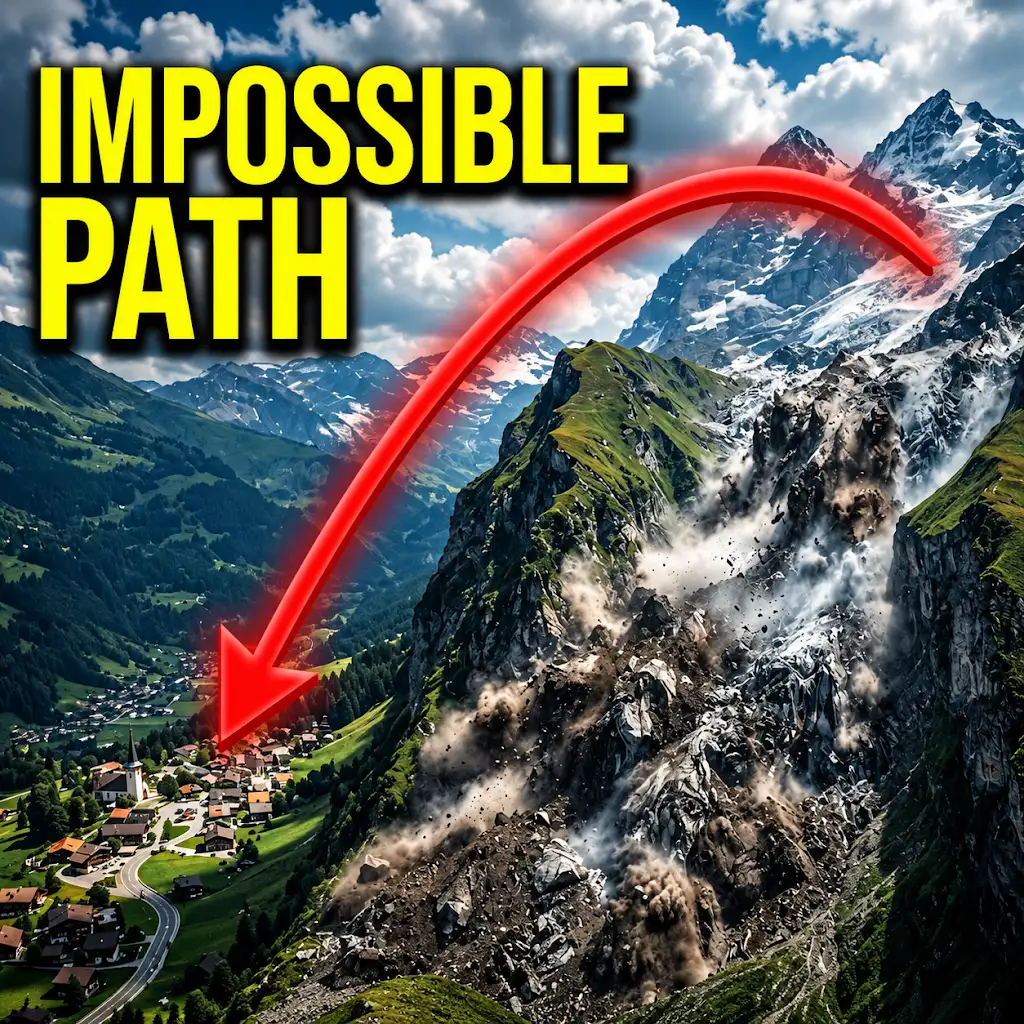
The mountain stood, a colossal sentinel of stone and snow, its jagged peaks piercing the cerulean sky. For millennia, it had weathered the relentless assault of wind, sun, and the slow, inexorable creep of ice. Yet, even this titan of nature, seemingly immutable, could not command every force. Today, a different kind of power stirred within its snowy flanks, a power that would soon render even the most formidable natural barrier irrelevant. The ridge, a prominent spine of rock and compacted snow, had long been a perceived line of defense, a natural demarcation that hikers and skiers understood. It was a place where one might pause, catch their breath, and appreciate the panoramic vista before descending. But the mountain held secrets, and the forces it harbored were far more dynamic and potent than any human construct or natural feature could truly contain. The impending event was not a matter of if, but when, and when it came, it would be a stark testament to the overwhelming might of a free-falling world.
The Unseen Pressures Beneath the Surface
The mountain’s seemingly serene exterior belied the complex and dynamic processes occurring deep within its snowpack. While the ridge presented a solid, defined barrier to the casual observer, the reality beneath was a symphony of shifting pressures and subtle instability. Layers of snow, deposited over weeks and months, each with its own unique density, temperature, and moisture content, created a stratified structure. These layers, like pages in a geological history book, told the story of recent weather patterns. A warm spell followed by a deep freeze could create a slippery ice crust, while a heavy snowfall atop a poorly bonded older layer could trigger catastrophic release. The weight of new snow accumulating on top of existing layers acted as a constant, increasing pressure. This pressure, though imperceptible on a human scale, was the unseen hand pushing the system towards its breaking point. Understanding these internal forces was key to comprehending why even a substantial ridge could ultimately fail.
The Dance of Temperature and Moisture
The intricate relationship between temperature and moisture was a primary driver of instability. During winter, temperatures could fluctuate dramatically. A sudden warming trend, even if brief, could melt the snowpack from the surface downward, creating a lubricating layer of water. This water would seep between the individual snow crystals, weakening the bonds that held them together. Conversely, if the temperature dropped significantly after such a melt, the water could refreeze, forming ice lenses that acted as slip planes. This freeze-thaw cycle, repeated over time, created a treacherous environment where the snowpack was perpetually on the verge of collapse. Even without direct warming, the latent heat released as snow crystals underwent phase changes could contribute to internal melting and weakening, particularly in deeper snow layers. The moisture content, whether from recent snowfall or sublimation and re-deposition, played a crucial role in the strength of the bonds between snow grains. Wetter snow, while often more cohesive in the short term, could become a heavy, waterlogged mass susceptible to sliding under its own weight.
The Weight of Accumulation
The sheer accumulation of snow was a direct and undeniable factor in triggering avalanches. Each fresh snowfall added a significant burden to the underlying layers. While healthy snowpack could generally support substantial weight, there were limits. When the cumulative load exceeded the shear strength of a weak layer – perhaps an old, poorly bonded surface, or a layer of faceted crystals formed in hollows – the inevitable occurred. This was particularly true on steeper slopes, where gravity exerted a greater pull, and the force of the snow pushing downwards was amplified. The ridge, while offering some resistance due to its topography and potentially more compacted snow on its crest, was ultimately part of a larger slope system. The immense weight of snow accumulating above and on its flanks meant that if a critical failure point was reached, the ridge itself would not be strong enough to contain the cascading mass.
In a recent article discussing the dynamics of avalanches, it was noted that the presence of a ridge did not prevent the occurrence of a significant avalanche in the region. This highlights the complex interplay of factors that contribute to avalanche formation, which can often defy conventional expectations. For more insights on this topic, you can read the full article here: Avalanche Dynamics and Ridge Influence.
The Topography as a Catalyst, Not a Controller
The ridge, a seemingly imposing natural feature, was in fact a complex element of the mountain’s overall topography, and its role in avalanche dynamics was far more nuanced than simply acting as a barrier. While it might divert or channel snow in some instances, it could also contribute to the very conditions that led to an avalanche. The steepness of the slopes leading to and from the ridge, the aspect (the direction the slope faces), and the presence of natural features like gullies and convexities all played critical roles in how snow accumulated and how prone it was to release. The ridge itself, with its varying gradients and potential for wind-loading, could become a site of both accumulation and instability.
Aspect and Wind’s Deceptive Influence
The aspect of the slope, its orientation relative to the sun, had a profound impact on snowpack stability. South-facing slopes, for instance, received more direct sunlight and experienced more significant temperature fluctuations, leading to increased melt-freeze cycles and potential instability. North-facing slopes, on the other hand, might remain colder and more stable but could develop weak layers of faceted crystals due to prolonged cold temperatures and low humidity. Wind, too, was a deceptive force. It could scour snow from some areas, creating wind-scoured slabs, and deposit it in others, forming dense, heavy wind slabs that were notoriously prone to collapse. The ridge, by its very nature, often acted as a focal point for wind activity, accumulating snow on its lee side and potentially creating dangerous cornices – overhanging masses of snow that could break off and trigger avalanches. These wind-driven accumulations on the ridge could add significant load to the snowpack below, overwhelming its structural integrity.
The Undulating Terrain and Potential for Release
The undulating terrain of the mountain, characterized by its convexities and concavities, further complicated the avalanche equation. Convexities, or bulges in the slope, often concentrated snow and could act as natural starting zones for avalanches. The snow here was often deeper and more susceptible to shearing. Conversely, concavities, or depressions, could accumulate large amounts of snow, but the stability depended on the underlying terrain. Natural features like gullies and channels could act as natural highways for avalanches, channeling the flow of snow and debris down the mountain with devastating force. The ridge, while appearing as a solid line on a map, was part of this dynamic, interconnected system. If a weak layer existed above or below it, and the terrain was conducive to release, the ridge would not prevent the avalanche’s inevitable path. It could even funnel the avalanche into a more concentrated and dangerous flow.
The Inevitable Cascade: The Avalanche Unleashed
When the internal pressures within the snowpack, amplified by topographic factors and atmospheric conditions, finally reached a critical threshold, the avalanche was unleashed. It was a moment of raw, unadulterated power, where the mountain seemed to exhale in a thunderous roar. The ridge, a feature that might have once offered a perceived sense of safety or a defined path, became utterly insignificant in the face of this primal force. The events that transpired were not a failure of the ridge to “stop” nature, but rather a demonstration of nature’s overwhelming ability to transcend any man-made or natural barrier.
The Initiation and the Speed of Destruction
The initiation of an avalanche is often a subtle event, a microscopic fracture within a weak layer that propagates rapidly. This fracture then causes a larger slab of snow to detach from the underlying surface. Once released, the avalanche is no longer a passive accumulation of snow but a dynamic, rapidly accelerating mass of ice crystals, air, and debris. Its speed is astonishing, often reaching over 100 miles per hour, creating powerful winds and shockwaves. The sheer momentum and force generated are immense, capable of demolishing trees, engulfing structures, and reshaping the very landscape. The ridge, a static entity, could do nothing to impede this onslaught of moving energy. The snow that cascaded over and around it was a testament to its lack of true control.
The Flow and the Force of the Snow Mass
As the avalanche descends, it is not simply a slide of snow but a complex, fluid-like mass. The snow particles become fluidized by the air trapped within them, behaving much like a liquid. This allows the avalanche to flow over uneven terrain, climb small inclines, and exert tremendous pressure on anything in its path. The destructive power lies not only in the weight of the snow but also in its momentum and the suction and pressure waves it generates. This turbulent flow, often referred to as a powder cloud avalanche or a full-depth avalanche, can carry immense destructive force. The ridge, by its very existence, might temporarily alter the flow’s path, but it could not halt its inexorable progress. The avalanche would continue its descent, a testament to the uncontainable nature of this natural phenomenon.
A Humbling Reminder of Nature’s Superiority
The visual evidence was stark. Where the ridge had stood, a prominent feature defining the landscape, now lay a chaotic swathe of debris, trees snapped like twigs, and snow piled high. The avalanche had not merely bypassed the ridge; it had fundamentally altered the landscape, demonstrating the ephemeral nature of human perceptions of control in the face of elemental forces. The ridge, a physical manifestation of a perceived boundary, had been utterly consumed and rendered irrelevant by the sheer, unbridled power of the mountain’s descent. It was a powerful, and often tragic, reminder of humanity’s place within the grand, indifferent theatre of nature.
The Illusion of Control
Humans have a natural inclination to impose order and control upon their environment. We build structures, create paths, and establish boundaries, believing these efforts can mitigate the risks posed by the natural world. In the context of avalanches, features like ridges might seem like natural bulwarks, offering protection and a clear demarcation of safe zones. However, the failure of a ridge to arrest an avalanche highlights the fundamental illusion of such control. Nature operates on scales and with forces that dwarf our attempts at containment. The mountain, with its deep-seated geological processes and atmospheric dynamics, is not governed by our understanding of lines on a map or the solidity of rock. Its forces are primal, chaotic, and ultimately, unstoppable when they choose to manifest.
The Respect Due to Untamed Power
The event served as a profound lesson in humility. It underscored the need for respect for the untamed power of the natural world. Instead of seeking to “stop” nature, the more prudent approach is to understand its patterns, anticipate its potential, and tread with caution and respect. This means understanding the conditions that lead to avalanches, adhering to safety guidelines, and acknowledging that even the most formidable natural features are mere footnotes in the grand narrative of geological and atmospheric forces. The mountain will continue to shape itself, and its actions, though sometimes devastating, are a fundamental part of its existence. The ridge, in its ultimate insignificance, became a monument to this truth.
In a recent analysis of avalanche dynamics, researchers highlighted how the presence of a ridge did not prevent the occurrence of an avalanche, challenging previous assumptions about terrain influence on snow stability. This finding aligns with insights shared in a related article that delves deeper into the factors contributing to avalanche risks. For more information on this topic, you can read the full article here. Understanding these dynamics is crucial for improving safety measures in mountainous regions.
Lessons Learned and Future Considerations
| Metric | Value | Unit | Description |
|---|---|---|---|
| Ridge Elevation | 2,800 | meters | Height of the ridge where the avalanche occurred |
| Avalanche Size | 3 | on the European Avalanche Danger Scale (1-5) | Severity of the avalanche |
| Snow Depth | 120 | cm | Snow depth at the ridge before avalanche |
| Wind Speed | 45 | km/h | Wind speed contributing to snow accumulation |
| Temperature | -5 | °C | Ambient temperature at the time of avalanche |
| Ridge Width | 15 | meters | Width of the ridge that failed to stop the avalanche |
| Avalanche Runout Distance | 600 | meters | Distance the avalanche traveled beyond the ridge |
| Snowpack Stability | Low | N/A | Stability rating of the snowpack before the avalanche |
The aftermath of such an event is rarely just about the physical destruction. It is also a moment for reflection, for learning, and for adapting our understanding of the natural world. The failure of the ridge to contain the avalanche prompts a re-evaluation of how we perceive risk, how we interact with mountainous environments, and what lessons we must carry forward. It is not about blaming the ridge itself, but about understanding the forces that rendered it irrelevant. This understanding is crucial for future safety and for a more profound appreciation of the wild places we inhabit.
Reassessing Risk Assessment and Human Intervention
The experience necessitates a critical reassessment of how humans conduct risk assessment in mountainous terrain. Relying on perceived natural barriers like ridges as definitive points of safety is a flawed approach. Future efforts should focus on understanding the underlying snowpack conditions, the steepness and aspect of the entire slope system, and the prevailing weather patterns. This involves greater reliance on scientific forecasting, advanced monitoring technologies, and the accumulated knowledge of experienced mountaineers and avalanche professionals. Human intervention, such as avalanche control measures, must be approached with a deep understanding of their limitations and potential unintended consequences. The goal should be to mitigate risk through knowledge and preparedness, rather than assuming we can unilaterally control nature’s inherent volatility.
Embracing a Deeper Understanding of Natural Systems
Ultimately, the incident underscores the importance of embracing a deeper understanding of natural systems. Mountains are not static landscapes; they are dynamic, ever-changing entities shaped by forces far beyond human comprehension. Avalanches are a natural part of this process, a release of pent-up energy that is essential for the mountain’s ongoing evolution. Instead of viewing such events as failures of natural defenses, we should strive to see them as manifestations of powerful, interconnected processes. This shift in perspective fosters a greater sense of respect and a more sustainable approach to interacting with the natural world. The ridge, in its inability to stop the avalanche, ultimately succeeded in teaching a profound lesson about the limits of our control and the enduring, unstoppable force of nature.
The Social Security Mistake At 62 That Could Ruin Your Spouse’s Retirement
FAQs
What caused the avalanche despite the presence of a ridge?
The avalanche was likely triggered by factors such as heavy snowfall, unstable snowpack, or human activity, which can overcome the protection offered by a ridge.
Can ridges always prevent avalanches from occurring?
Ridges can provide some level of protection by blocking snow accumulation and reducing the risk of avalanches, but they are not foolproof and cannot guarantee complete prevention.
How common is it for avalanches to occur despite the presence of a ridge?
Avalanches can still occur even with ridges in place, as various factors such as weather conditions, snowpack stability, and terrain features can contribute to avalanche risk regardless of the presence of a ridge.
What precautions can be taken in avalanche-prone areas with ridges?
Individuals in avalanche-prone areas with ridges should still practice safety measures such as carrying avalanche safety gear, checking avalanche forecasts, and avoiding risky terrain, even if a ridge is present.
Are there any warning signs that an avalanche may occur despite the presence of a ridge?
Signs such as recent snowfall, cracking or collapsing of the snowpack, and unstable snow conditions can indicate an increased risk of avalanche, even if there is a ridge in the area.