
The persistent pressure of global trade and the ever-growing demand for efficient cargo movement necessitate constant evolution in logistical infrastructure. Nations and regions find themselves at a critical juncture, weighing two primary pathways for enhancing their trade capacity: the expansion of existing port facilities or the development of a “land bridge.” These are not merely construction projects; they represent divergent philosophies of how best to connect producers to consumers across vast distances. Understanding the nuances, advantages, and disadvantages of each approach is crucial for informed decision-making.
Port expansion, at its core, is about optimizing and enlarging the gateways where goods transition between maritime and terrestrial transport. It is akin to widening and deepening existing arteries within a city, allowing for a greater flow of traffic without fundamentally altering the city’s layout. This strategy leverages established infrastructure and recognizes the inherent efficiency of waterborne transportation for bulk and long-haul movements.
Increasing Capacity Through Dredging and Quayside Development
The most immediate and common form of port expansion involves dredging. This process deepens approach channels and berths, allowing larger, more colossal vessels to dock. The “super-post-Panamax” and “New Panamax” class ships, with their immense carrying capacity, are the modern leviathans of the sea. To accommodate them, ports must be able to welcome these giants. This necessitates the removal of vast quantities of sediment from waterways, a technically demanding and environmentally sensitive undertaking.
Enhancing Terminal Efficiency and Technology Adoption
Beyond physical deepening, port expansion frequently entails the acquisition and deployment of advanced cargo handling equipment. Giant gantry cranes, capable of swiftly lifting containers from ship to shore and vice versa, are the visible symbols of this evolution. Investing in automation, such as automated guided vehicles (AGVs) and quay cranes, can significantly reduce turnaround times for vessels. Furthermore, ports are increasingly integrating sophisticated Terminal Operating Systems (TOS) and Internet of Things (IoT) solutions to optimize yard management, track cargo movements, and streamline operations, thereby creating a more intelligent and responsive logistical hub.
Expanding Hinterland Connectivity: The Crucial Link
A common misconception is that port expansion is solely about the port itself. In reality, the effectiveness of a deepened and modernized port is inextricably linked to its ability to move goods efficiently inland. This involves significant investment in expanding and upgrading direct rail and road links from the port. Improving highway access, constructing dedicated freight rail lines, and developing intermodal facilities are all essential components of a successful port expansion strategy. Without robust hinterland connectivity, a state-of-the-art port risks becoming a bottleneck, its capacity choked by the inability to dispatch goods to their final destinations. Think of a magnificent funnel with a narrow spout; the broader the funnel, the more it can hold, but if the spout remains constrictive, its potential is never fully realized.
Challenges and Considerations in Port Expansion
Despite its inherent advantages, port expansion is not without its significant hurdles. Environmental impact is a paramount concern. Dredging can disrupt marine ecosystems, alter currents, and impact local water quality. The disposal of dredged material also presents an environmental challenge. Furthermore, physical expansion within existing port areas often faces limitations imposed by urbanized surroundings or ecological sensitivities. The significant capital investment required for dredging, new equipment, and infrastructure upgrades can also be a deterrent, demanding long-term financial planning and often relying on public-private partnerships. The social impact, including potential displacement of communities or increased noise and traffic congestion in adjacent areas, must also be carefully managed.
The Economic Rationale for Port Investment
The economic arguments for port expansion are compelling. Enhanced port efficiency translates directly into lower shipping costs for businesses, making exports more competitive and imports more affordable. This can stimulate economic growth, create jobs in port operations and related industries, and attract foreign direct investment. Ports are vital engines of economic activity, and their effective functioning is a cornerstone of national prosperity. The ability to handle larger vessels often leads to economies of scale in shipping, reducing the per-unit cost of transportation for businesses.
The ongoing debate between port expansion and land bridge infrastructure has significant implications for trade efficiency and environmental sustainability. A related article that delves deeper into this topic can be found at My Geo Quest, where various perspectives on the benefits and drawbacks of each approach are explored. This discussion is crucial for policymakers and stakeholders in the logistics and transportation sectors as they navigate the complexities of modern infrastructure development.
The Land Bridge Concept: Weaving a Network Across Continents
In contrast to port expansion, a land bridge seeks to create a comprehensive intermodal transport corridor that utilizes rail and road networks to move cargo, often across vast continental distances, between two or more oceanic ports. It is akin to constructing entirely new, high-speed circulatory systems across a region, bypassing congested waterways for specific long-haul routes. This approach aims to optimize the transit time and cost for certain types of cargo by eliminating the need for ocean transshipment at intermediate points.
Defining the Land Bridge: From One Ocean to Another
A true land bridge is not simply a collection of well-connected rail lines. It is a strategic infrastructure project designed to facilitate the rapid and efficient movement of containerized cargo between seaports on different coastlines of a continent, or even between continents. The most prominent examples of land bridges often involve connecting ports on a western coastline to ports on an eastern coastline, utilizing a backbone of high-speed rail and advanced logistics hubs along the route. These projects are ambitious undertakings, requiring extensive planning, coordination, and investment across multiple jurisdictions.
The Role of Rail Infrastructure in Land Bridge Development
Rail transport is the linchpin of any land bridge strategy. The effectiveness of a land bridge hinges on the existence of high-capacity, efficient, and reliable rail networks. This often necessitates significant upgrades to existing rail lines, including the doubling or quadrupling of tracks, the electrification of lines for faster and greener operation, and the installation of advanced signaling systems. The development of specialized freight terminals capable of handling massive volumes of containers, often equipped with sophisticated cranes and automated sorting systems, is also critical. The goal is to match, or even exceed, the speed and efficiency of maritime transit for specific trade lanes.
Creating Integrated Logistics Hubs
A successful land bridge requires more than just a railway line. It necessitates the creation of integrated logistics hubs strategically located along the corridor. These hubs serve as crucial nodes for the transfer of cargo between ships, trains, and trucks. They are designed to be highly efficient, minimizing dwell times and ensuring seamless transshipment. These hubs often incorporate warehousing facilities, customs clearance services, and value-added logistics operations, further enhancing the attractiveness of the land bridge as a preferred transport solution.
Advantages of the Land Bridge Model
The primary allure of the land bridge model is the potential for significantly reduced transit times. By bypassing lengthy ocean voyages and the associated port congestion, cargo can reach its destination considerably faster. This is particularly advantageous for time-sensitive goods. Furthermore, for certain trade routes, a land bridge can offer a more predictable transit schedule, mitigating the risks associated with weather delays at sea. In instances where the overland distance is shorter than the maritime route, and when coupled with efficient rail, the cost can also become competitive, especially for high-value or time-sensitive cargo. From a national security perspective, a robust land bridge can enhance the resilience of supply chains, offering an alternative route in times of geopolitical uncertainty or maritime disruptions.
Managing the Complexities of Cross-Border Operations
The implementation of a land bridge, especially one that crosses international borders, introduces a layer of complexity. Harmonizing customs procedures, regulatory frameworks, and inspection protocols across multiple countries is a formidable challenge. Streamlining these processes through bilateral or multilateral agreements is essential to realize the full potential of the land bridge. The efficient movement of goods requires a unified approach to border management, minimizing delays and administrative burdens.
The Environmental Footprint of Land Bridges
The environmental impact of land bridges requires careful consideration. While rail transport is generally considered more fuel-efficient per ton-mile than road transport, the construction of new rail lines and logistics hubs can have significant localized environmental consequences, including habitat fragmentation and increased noise pollution. The energy consumption associated with operating these extensive rail networks, particularly if powered by fossil fuels, is also a factor. However, the potential for electrification of rail lines and the use of renewable energy sources in logistics hubs can mitigate these concerns. Comparing the environmental impact necessitates a lifecycle assessment that considers both the construction and operational phases, as well as the diversion of traffic from more polluting modes.
Port Expansion vs. Land Bridge: A Direct Confrontation of Choices

The decision between investing in port expansion and developing a land bridge is not a simple either/or proposition. It is a strategic choice that depends on a myriad of factors, including geographical location, existing infrastructure, trade patterns, and long-term economic objectives. These two approaches, while distinct, are not mutually exclusive and can, in some cases, be complementary.
Geographical Determinants: The Influence of Location
A nation’s geography plays a pivotal role in shaping its infrastructure priorities. Island nations or those possessing extensive coastlines may naturally gravitate towards port expansion as their primary mode of international trade. Continents with well-developed interior rail networks stretching between major coastal cities are more predisposed to considering the land bridge concept. For instance, a coastal nation looking to become a dominant transshipment hub will invest heavily in its ports. Conversely, a large continental nation seeking to efficiently link its eastern and western seaboards for trade with distant markets might see a land bridge as a more strategic investment.
Existing Infrastructure and Investment Horizon
The starting point for infrastructure development significantly influences the choice. A country with aging but functional port facilities might find port expansion a more pragmatic and cost-effective initial step. Established rail networks awaiting modernization might lean towards land bridge development. The scale of investment also matters. Port expansion, while substantial, might be perceived as incremental compared to the monumental undertaking of establishing a new continental land bridge. The time horizon for realizing returns on investment also differs; port upgrades can often yield results relatively quickly, while a land bridge requires a longer-term vision and commitment.
Trade Routes and Cargo Types: Tailoring the Solution
The nature of goods being traded and the primary trade routes are crucial determinants. Bulk commodities, such as raw materials and agricultural products, often benefit most from the economies of scale offered by large vessels and thus favor robust port infrastructure. Containerized cargo, particularly high-value manufactured goods and electronics, can be more amenable to land bridge solutions, especially for intercontinental transit where speed and reliability are paramount. Analyzing the dominant trade flows and the specific demands of key trading partners is essential for making an informed decision.
The Complementary Potential: Synergy Between Approaches
It is a fallacy to view port expansion and land bridges as entirely adversarial. In many scenarios, they can exist in synergy. A highly efficient and expanded port can serve as the critical terminus for a land bridge, efficiently receiving transoceanic vessels and seamlessly transferring cargo onto inland rail networks. The land bridge, in turn, can extend the reach of that port, allowing it to serve a broader hinterland and attract more shipping lines. Therefore, a holistic approach that considers how both systems can interoperate and amplify each other’s strengths is often the most effective strategy.
The Economic and Strategic Ramifications: Beyond Bricks and Mortar
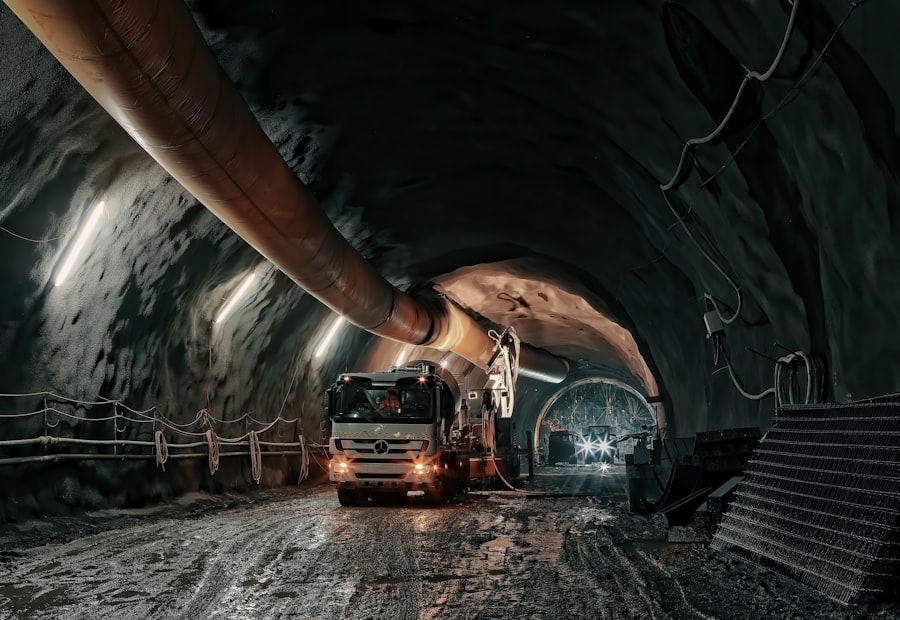
The decision to pursue port expansion or a land bridge has profound economic and strategic implications that extend far beyond the tangible infrastructure itself. These choices shape a nation’s competitive position in the global economy, influence its geopolitical relationships, and impact its long-term development trajectory.
Impact on Global Trade Networks and Competitiveness
The development of either a port or a land bridge can significantly alter global trade networks. A strategically located and highly efficient port can become a magnet for shipping lines, rerouting trade flows and increasing a nation’s importance as a maritime hub. Similarly, a successful land bridge can create new, faster pathways for trade, potentially diverting cargo from established maritime routes and challenging the dominance of existing logistical choke points. The nation that makes the most effective and timely infrastructure investments often gains a significant competitive advantage, attracting more trade and fostering economic growth at the expense of less developed alternatives.
Attracting Foreign Direct Investment and Economic Growth
The promise of efficient and reliable logistics infrastructure is a powerful lure for foreign direct investment (FDI). Companies seeking to establish manufacturing or distribution facilities often prioritize locations with excellent access to global markets. A well-developed port or a robust land bridge signals a commitment to facilitating international commerce, making a region more attractive for investment. This, in turn, can lead to job creation, technology transfer, and broader economic development. The presence of cutting-edge logistics infrastructure is a critical factor in a nation’s ability to compete for elusive FDI.
National Security and Supply Chain Resilience
In an increasingly interconnected and sometimes volatile world, the resilience of supply chains is a paramount concern for national security. Reliance on a single maritime route or a limited number of ports can create vulnerabilities to disruptions caused by natural disasters, geopolitical conflicts, or trade disputes. A diversified logistical infrastructure, incorporating robust port facilities and a well-developed land bridge network, can provide essential redundancy and flexibility. This ensures that vital goods can continue to flow into and out of the country, even in the face of unforeseen challenges. A land bridge, in particular, can offer a vital alternative during times when maritime routes are compromised.
The Geopolitical Landscape: A New Silk Road?
The development of significant land bridge projects can have substantial geopolitical ramifications. These endeavors often involve cross-border cooperation and can foster closer economic and political ties between participating nations. The concept of a modern “Silk Road,” facilitated by extensive rail and road networks, is a testament to the potential for land bridges to redefine regional and global connectivity. Such projects can become instruments of soft power, fostering interdependence and potentially reshaping alliances and economic partnerships.
The ongoing debate between port expansion and land bridge infrastructure continues to shape the future of transportation and trade. A recent article discusses the implications of these developments on regional economies and environmental sustainability. For a deeper understanding of the challenges and opportunities presented by these competing infrastructures, you can read more in this insightful piece on MyGeoQuest. This exploration highlights how strategic decisions in infrastructure can significantly impact logistics and commerce in the coming years.
Conclusion: Navigating the Future of Connectivity
| Metric | Port Expansion | Land Bridge Infrastructure |
|---|---|---|
| Initial Construction Time | 3-5 years | 5-8 years |
| Capacity Increase | Up to 50% more container throughput | Depends on rail/road capacity; typically 30-40% increase in cargo flow |
| Land Use | Requires significant waterfront and adjacent land | Requires extensive inland land for rail/road corridors |
| Environmental Impact | Potential marine ecosystem disruption | Potential habitat fragmentation and air pollution along corridors |
| Operational Flexibility | High for maritime logistics | High for multimodal transport integration |
| Cost Efficiency (per ton of cargo) | Lower for bulk maritime cargo | Lower for inland distribution and transshipment |
| Impact on Transit Time | Reduces port congestion, faster ship turnaround | Reduces inland transit time, faster cargo movement |
| Maintenance Requirements | High due to marine environment | Moderate, focused on rail/road upkeep |
The choice between expanding existing ports and developing a land bridge is not a simple matter of choosing one over the other. It is a complex strategic decision that requires careful consideration of a nation’s unique circumstances, its economic aspirations, and its long-term vision for its role in the global economy. Both approaches offer distinct advantages and present unique challenges.
Port expansion is often the more familiar and incremental path, leveraging existing strengths and focusing on optimizing the crucial interface between sea and land. It is about enhancing the gateways that have served trade for centuries. Land bridges, on the other hand, represent a more ambitious, forward-looking vision, aiming to weave new arteries of connectivity across continents, potentially redefining the speed and efficiency of intercontinental trade.
Ultimately, the most successful strategies will likely involve a nuanced understanding of both options. The future of connectivity may not be about choosing between ports and land bridges, but rather about intelligently integrating them. A robust and efficient port system, capable of handling the largest vessels, can serve as the vital on-ramp to a sophisticated land bridge network, extending its reach and impact. Conversely, a well-developed land bridge can enhance the utility and competitiveness of its terminal ports.
Nations that can accurately assess their geographical advantages, their trade patterns, their existing infrastructure, and their strategic goals will be best positioned to make the infrastructure choices that will propel them forward. The investment in either ports or land bridges is not merely an investment in concrete and steel; it is an investment in a nation’s future prosperity, its global influence, and its ability to navigate the ever-evolving currents of international commerce. The path chosen will determine not only how goods move, but how fortunes are made and how nations connect in the decades to come.
FAQs
What is port expansion?
Port expansion refers to the process of increasing the capacity and capabilities of a seaport by adding new docks, terminals, storage facilities, and other infrastructure to accommodate more and larger vessels, improve cargo handling efficiency, and support increased trade volumes.
What is land bridge infrastructure?
Land bridge infrastructure involves the development of transportation networks, such as railways and highways, that connect two seaports across a landmass, allowing cargo to be transferred overland between oceans or seas, effectively creating a “bridge” for shipping routes.
How do port expansion and land bridge infrastructure differ in their impact on trade?
Port expansion primarily enhances a single port’s capacity to handle maritime traffic and cargo, while land bridge infrastructure facilitates faster and potentially more cost-effective overland transport between ports, reducing reliance on longer sea routes and improving regional connectivity.
What are the environmental considerations for port expansion versus land bridge projects?
Port expansion can lead to habitat disruption, water pollution, and increased marine traffic, whereas land bridge infrastructure may impact terrestrial ecosystems, require significant land use changes, and contribute to emissions from overland transport, though it can also reduce shipping distances and associated maritime emissions.
Which factors influence the choice between investing in port expansion or land bridge infrastructure?
Key factors include geographic location, existing transportation networks, trade volume and patterns, cost and feasibility of construction, environmental impact assessments, and long-term economic benefits, all of which determine whether enhancing port capacity or developing land-based transport links is more advantageous.