The Unfinished Symphony: Understanding the Darien Gap’s Crucial Role in the Pan-American Highway
The Pan-American Highway, a legendary network of roads stretching across the Americas, conjures images of epic road trips, diverse landscapes, and a continent united by asphalt. From the rugged peaks of Alaska to the windswept plains of Patagonia, this ambitious undertaking represents one of humanity’s most significant feats of infrastructure. However, this grand vision remains incomplete, perpetually interrupted by a formidable natural barrier: the Darien Gap. This vast, untamed expanse of dense rainforest, swampland, and rugged mountains, situated between Panama and Colombia, stands as a stark reminder of nature’s power and a persistent challenge to the dream of a continuous, unbroken highway connecting North and South America. Understanding the Darien Gap is not merely about acknowledging an obstacle; it’s about comprehending the unique ecological, political, and logistical complexities that have kept this vital link severed for decades, and perhaps, for good.
The Pan American Highway is a remarkable feat of engineering that stretches from Alaska to Argentina, but one of its most challenging sections is the Darién Gap, a dense jungle region between Panama and Colombia. For those interested in learning more about the complexities and adventures associated with traversing this notorious route, you can read a related article that delves into the history, challenges, and experiences of travelers in the Darién Gap. Check it out here: Darién Gap Adventures.
The Darien Gap: A Biologically Rich and Logistically Intractable Barrier
The Darien Gap is not just a stretch of undeveloped land; it is a globally significant biodiversity hotspot and a landform that has defied conventional engineering. Its geographical isolation and challenging terrain have made it a sanctuary for unique flora and fauna, while simultaneously presenting insurmountable difficulties for road construction. The sheer scale of the undertaking required to carve a highway through this region, coupled with the immense environmental impact such a project would entail, has been a primary factor in its continued status as the Pan-American Highway’s notorious missing link.
Ecological Significance of the Darien Region
The Darien Gap is a testament to the raw power and biodiversity of the natural world. This region, straddling the border between Panama and Colombia, is characterized by its incredibly dense tropical rainforest, extensive mangrove swamps, and rugged, often mist-shrouded, mountain ranges. It is a critical transitional zone where the ecosystems of Central and South America converge, resulting in an unparalleled richness of plant and animal life. The area is home to an astonishing array of species, many of which are endemic or found nowhere else on Earth. Scientists estimate that the Darien harbors hundreds of species of mammals, including jaguars, tapirs, and spider monkeys, as well as thousands of species of insects and birds, such as the harpy eagle and the magnificent quetzal.
The rainforest canopy is a vibrant tapestry of life, with a multitude of epiphytes, orchids, and ancient trees forming a complex and interconnected ecosystem. Below, the forest floor teems with unseen activity, from myriad fungi to insects that play vital roles in decomposition and nutrient cycling. The swampy terrain, often waterlogged and difficult to traverse, creates unique habitats for amphibians, reptiles, and specialized plant life. This ecological complexity is not merely a matter of scientific curiosity; it is fundamental to the health of regional and global ecosystems. The forests of the Darien act as carbon sinks, play a crucial role in regulating local and regional weather patterns, and are a vital source of genetic diversity that could hold the key to future scientific and medical discoveries. The very challenges that make road construction so difficult—the dense vegetation, the unpredictable rainfall, the unstable soil, and the prevalence of disease-carrying insects—are precisely what have allowed this ecosystem to thrive in relative isolation.
Geological and Topographical Hurdles
The terrain of the Darien Gap presents a formidable obstacle to any large-scale infrastructure project, particularly a continuous highway. The region is characterized by a combination of steep, heavily forested hillsides, deep ravines, and extensive, often impassable, swampland. The geological composition of the area is complex, with underlying rock formations that can be unstable, especially when subjected to heavy excavation and construction. Furthermore, the high rainfall characteristic of tropical rainforests exacerbates these challenges. Heavy precipitation leads to significant erosion, making it difficult to maintain stable roadbeds. Rivers and streams swell rapidly, often flooding adjacent areas and creating temporary or permanent impassable conditions.
The sheer density of the jungle itself is another significant factor. Clearing a path wide enough for a highway would require the removal of millions of trees, a monumental undertaking that would have devastating environmental consequences. The dense undergrowth and the tangled network of vines and roots make any form of mechanical excavation incredibly slow and labor-intensive. Moreover, the mountainous sections of the Gap involve steep gradients, requiring extensive cut-and-fill operations, the construction of numerous bridges and tunnels, and the implementation of complex drainage systems to manage water runoff. The swampland presents its own unique set of problems, often requiring the construction of elevated causeways or complex drainage works to prevent the road from sinking or becoming submerged. The combination of these geological and topographical challenges has historically made any attempt at building a continuous road through the Darien Gap an economically unfeasible and technically daunting prospect.
The Darien Gap: A History of Failed Attempts and Unintended Consequences
The dream of a complete Pan-American Highway has been pursued for decades, with numerous proposals and even limited attempts to bridge the Darien Gap. However, these efforts have consistently been thwarted by a combination of the aforementioned natural challenges, coupled with growing awareness of the environmental and social implications. The history of the Darien Gap is a narrative of ambitious visions clashing with the realities of the natural world and evolving global priorities.
Early Proposals and Engineering Fantasies
The concept of the Pan-American Highway gained momentum in the early 20th century, fueled by a spirit of intercontinental cooperation and the burgeoning automotive age. As segments of the highway were constructed across North, Central, and South America, the gap in the Darien loomed as the most significant remaining hurdle. Early proponents envisioned a continuous ribbon of asphalt connecting the continents, facilitating trade, tourism, and cultural exchange. Engineers and planners proposed various ambitious solutions, ranging from ambitious bridge projects spanning estuaries to extensive road construction through the dense jungle.
However, even in those early days, the scale of the challenge was recognized. The limited engineering capabilities of the time, coupled with the immense cost and logistical complexities, made any concrete plan to fully traverse the Darien Gap seem more like a utopian ideal than a practical reality. Discussions often centered on the potential for a ferry system to bypass the gap, a solution that has become the de facto method for transporting vehicles between Panama and Colombia. Nevertheless, the allure of a continuous road persisted, leading to periodic studies and conceptual designs that, while impressive on paper, never translated into tangible construction efforts. These early proposals, while perhaps naive in their optimism, laid the groundwork for understanding the magnitude of the problem and the limited technological solutions available.
The Ecological Awakening and the Halt to Construction
As the 20th century progressed, a global shift in environmental awareness began to take hold. The potential impact of large-scale infrastructure projects on pristine ecosystems became a subject of intense scrutiny. The Darien Gap, with its unparalleled biodiversity, emerged as a prime example of an area that warranted preservation rather than development. Environmental organizations and scientific bodies voiced strong opposition to any attempts to build a highway through the region, citing the irreversible damage that would be inflicted upon its unique ecosystems and the indigenous communities that call it home.
The consequences of deforestation, habitat fragmentation, and the introduction of invasive species were becoming increasingly understood. Building a road through the Darien would inevitably lead to increased human access, resulting in logging, agricultural encroachment, and the displacement of wildlife. Furthermore, the presence of diseases like malaria and yellow fever, endemic to the region, presented significant health risks to construction crews and future travelers. These concerns, coupled with the immense cost and the inherent difficulties in construction, eventually led to a consensus that the Darien Gap should remain undeveloped. While the Pan-American Highway network continued to grow and connect most of the Americas, the segment through the Darien Gap remained deliberately unbuilt, a testament to the growing prioritization of ecological preservation over the completion of a continuous road. This decision, while disappointing to some proponents of a unified highway, has been instrumental in safeguarding one of the planet’s last great wildernesses.
Navigating the Absence: Alternative Routes and Travel Solutions
The absence of a direct road connection through the Darien Gap necessitates alternative methods of travel for those wishing to traverse the continent. While the dream of driving from Alaska to Argentina remains unfulfilled, innovative solutions have emerged to bridge this geographical divide, allowing for the continued movement of people and goods across the Americas. These alternatives, while not a direct highway, represent the practical compromises made to overcome the Darien Gap’s impassability.
The Ferry System: A Crucial Connector
The most common and practical solution for transporting vehicles across the Darien Gap is the use of a ferry service. Several shipping companies operate routes between Panama and Colombia, providing a vital link for overland travelers and commercial transport. These ferries, often capable of carrying large numbers of vehicles, offer a safe and relatively efficient way to move cars, trucks, motorcycles, and even RVs between the two countries. The journey typically takes around 24 to 48 hours, depending on the specific route and vessel, and often includes passenger accommodations.
Travelers undertaking this journey must plan meticulously, as ferry schedules can be variable and booking in advance is highly recommended, especially during peak travel seasons. The process involves preparing all necessary vehicle documentation, including registration, insurance, and customs paperwork for both countries. Once onboard, vehicles are secured, and passengers can relax in comfortable lounges or cabins. While this method adds significant time and cost to an overland journey, it is an indispensable service that allows for the continuity of the Pan-American Highway’s spirit for those committed to completing a continuous overland route. The ferry system, though an interruption to the “highway,” has become an integral part of the Pan-American experience for many adventurers.
Air Travel and Cargo Logistics
For those who prioritize speed and efficiency, or for whom a ferry journey is not feasible, air travel offers a direct alternative to bypass the Darien Gap. Flights between major cities in Panama and Colombia are frequent and relatively affordable, allowing travelers to quickly transition between continents. This option is particularly popular for individuals and businesses that do not require the transport of their own vehicles.
Furthermore, the absence of a road connection has also made air cargo an essential component of the supply chain between the two regions. Many goods that would otherwise travel by road are now transported by air, contributing to the economic interdependence of Panama and Colombia. While this circumvents the overland travel experience, it ensures the continued flow of commerce and facilitates rapid movement of essential items. For adventurous travelers who seek a truly uninterrupted overland journey, the ferry remains the primary solution. However, for many, the convenience and speed of air travel offer a practical way to navigate the Darien Gap’s absence in the Pan-American Highway system.
The Pan American Highway, a remarkable feat of engineering, faces a significant challenge at the Darién Gap, a dense jungle region that separates Panama and Colombia. This area poses logistical difficulties for travelers and has sparked interest in alternative routes. For those looking to explore more about the complexities and potential solutions regarding this iconic highway, a related article can be found at My Geo Quest, which delves into the history and current developments surrounding the Darién Gap.
The Future of the Darien Gap: Development, Preservation, or Indefinite Stalemate?
| Metric | Details |
|---|---|
| Location | Darien Gap, between Panama and Colombia |
| Length | Approx. 100 km (62 miles) |
| Terrain | Dense rainforest, swamps, mountainous regions |
| Road Status | Unpaved, no continuous road; gap in Pan-American Highway |
| Travel Difficulty | Extremely high due to natural obstacles and security concerns |
| Wildlife | Home to diverse species including jaguars, crocodiles, and various birds |
| Security Issues | Presence of armed groups and drug trafficking activities |
| Alternative Routes | Sea or air transport between Panama and Colombia |
| Environmental Concerns | Protected indigenous lands and biodiversity hotspots |
| Construction Status | No official plans to build a road through the gap |
The question of whether the Darien Gap will ever be conquered by a continuous highway remains a subject of ongoing debate and speculation. While the ecological and logistical barriers are substantial, the allure of a complete Pan-American Highway continues to inspire discussions about potential solutions, however improbable they may seem. The future of the Darien Gap hinges on a complex interplay of economic interests, environmental concerns, and evolving geopolitical landscapes.
Reconsidering the Road: Economic Arguments vs. Environmental Realities
The economic arguments for completing the Pan-American Highway through the Darien Gap are often presented by those who envision increased trade, tourism, and development opportunities. Proponents suggest that a continuous road would foster greater economic integration between Panama and Colombia, leading to job creation and improved infrastructure in remote areas. They argue that modern engineering techniques and advanced technology could overcome the existing challenges, albeit at a significant cost. The potential for faster and more direct transportation of goods and people is a compelling economic incentive for some.
However, these economic aspirations are continually weighed against the overwhelming environmental realities. The ecological impact of constructing a highway through this pristine rainforest would be catastrophic. Deforestation, habitat loss, increased pollution, and the potential introduction of invasive species are just some of the serious concerns that would arise. Furthermore, the region is home to indigenous communities whose ancestral lands and way of life would be severely threatened by such development. The ethical and long-term sustainability implications of such a project are a significant counterpoint to the economic arguments. The global outcry from environmental organizations and conservationists would be immense, posing a significant challenge to any government or consortium attempting such a project. The current consensus leans heavily towards preservation, recognizing the invaluable ecological services the Darien Gap provides.
The Role of Indigenous Communities and Conservation Efforts
The Darien Gap is not an empty wilderness; it is the ancestral home of several indigenous communities, including the Kuna, Emberá, and Wounaan peoples. These communities possess a deep understanding of the region’s ecology and have lived in harmony with their environment for centuries. Any discussion about developing the Darien Gap must inherently involve their rights, their perspectives, and their consent. These communities often express strong opposition to road construction, fearing the displacement, cultural disruption, and environmental degradation that would inevitably follow. Their traditional knowledge and their role as guardians of the rainforest are invaluable assets in the ongoing debate.
Conservation efforts in the Darien Gap are paramount. Numerous national and international organizations are actively engaged in protecting the region’s biodiversity and supporting the indigenous communities in their conservation initiatives. These efforts focus on sustainable land management, combating illegal logging and mining, and promoting ecotourism that benefits local populations while minimizing environmental impact. The success of these conservation programs further solidifies the argument for leaving the Darien Gap undeveloped as a highway corridor. Preserving this unique ecosystem for future generations, and respecting the rights and traditions of its indigenous inhabitants, are increasingly seen as more valuable goals than the completion of a continuous road. The ongoing conservation work in the region represents a commitment to safeguarding a global treasure.
The Enduring Legacy of the Unfinished Highway
The Pan-American Highway, a testament to human ambition and connectivity, remains an incomplete masterpiece due to the formidable presence of the Darien Gap. This vast expanse of rainforest and swampland has not only served as a natural barrier but has also become a symbol of the intricate balance between human development and ecological preservation. The challenges of navigating this gap – from the immense logistical hurdles and engineering complexities to the critical importance of its unparalleled biodiversity and the rights of indigenous communities – have shaped its destiny for decades.
While the dream of a continuous road remains elusive, the spirit of the Pan-American Highway endures through innovative solutions like ferry services and air travel, facilitating the movement of people and goods across the Americas. The history of failed attempts and the growing recognition of the Darien Gap’s ecological significance have led to a prevailing sentiment towards preservation, underscoring the value of safeguarding this unique natural heritage. The future of the Darien Gap will likely continue to be a complex negotiation between economic aspirations and environmental imperatives, with the voices of indigenous communities and conservationists playing an increasingly vital role. Ultimately, the unfinished section of the Pan-American Highway stands as a powerful reminder of nature’s enduring dominion and the profound responsibility humanity holds in protecting the planet’s most precious ecosystems.
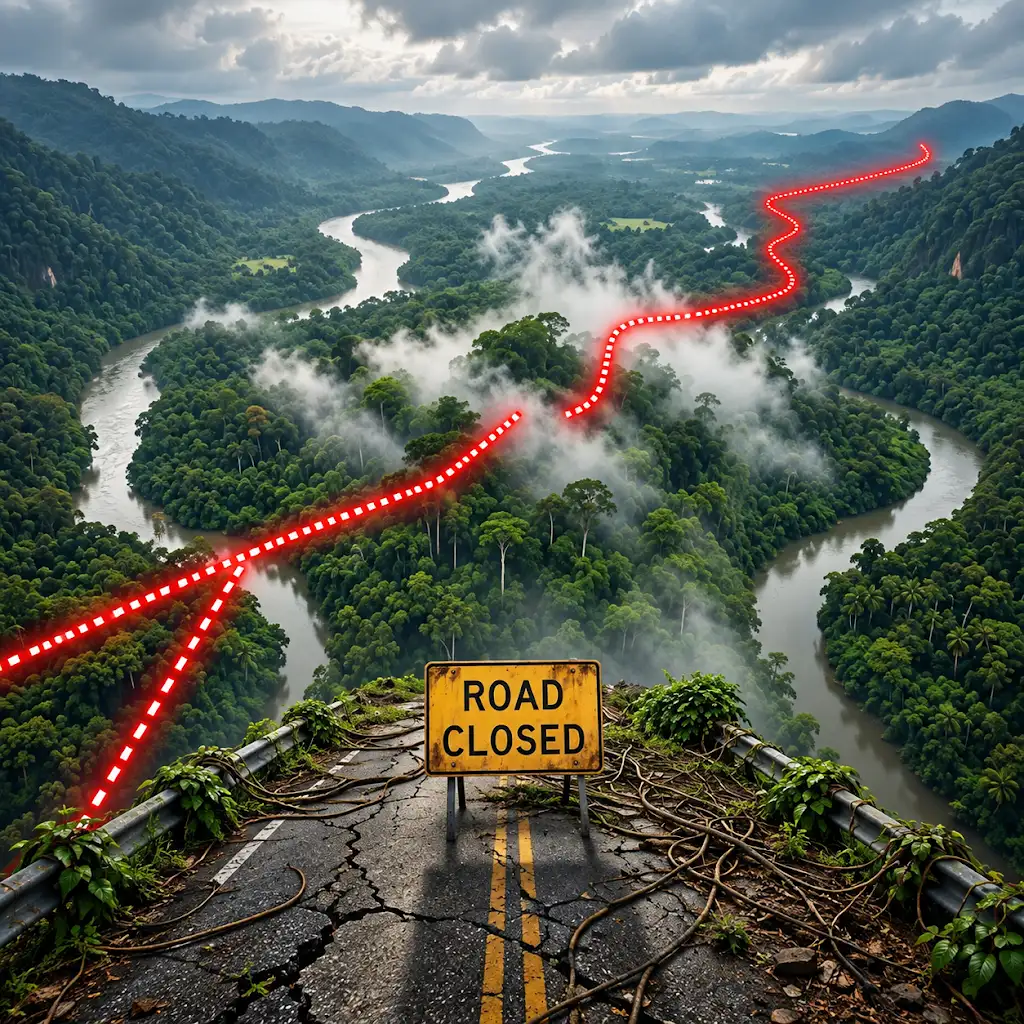
Why the World’s Longest Highway Stops Here
FAQs
What is the Darien Gap and why is it a challenge for the Pan-American Highway?
The Darien Gap is a dense, roadless stretch of jungle between Panama and Colombia. It poses a challenge for the Pan-American Highway as it is impassable by road, requiring travelers to find alternative transportation methods such as boats or planes.
Are there any plans to bridge the Darien Gap and complete the Pan-American Highway?
There have been discussions and proposals over the years to build a bridge or road through the Darien Gap to connect the Pan-American Highway. However, environmental concerns, logistical challenges, and the presence of indigenous communities have made this a controversial and difficult project to undertake.
What are the alternative routes for travelers wanting to bypass the Darien Gap?
Travelers looking to bypass the Darien Gap can choose alternative routes such as flying between Panama and Colombia, taking a boat along the coast, or using a combination of buses and boats to navigate around the gap. These options can be more time-consuming and expensive than a direct road route.
Why is the Darien Gap considered a dangerous area for travelers?
The Darien Gap is known for its rugged terrain, dense jungle, and challenging conditions, making it a dangerous area for travelers. It is also home to drug trafficking routes, criminal activity, and the presence of armed groups, posing additional risks to those passing through the region.
How does the Darien Gap impact trade and transportation between North and South America?
The Darien Gap creates a significant barrier for trade and transportation between North and South America, as it interrupts the continuity of the Pan-American Highway. This gap forces goods to be transported by alternative means, increasing costs and logistical challenges for businesses and governments in the region.