The North Sea, a vast and often tempestuous expanse of water separating Great Britain from mainland Europe, holds within its depths a story of unprecedented wealth, technological ingenuity, and enduring challenges. For decades, its seabed has been a treasure trove, yielding prodigious quantities of oil and gas that have profoundly shaped the economies and landscapes of the surrounding nations. This is the saga of North Sea oil, a narrative woven with threads of discovery, innovation, geopolitical shifts, and the relentless pursuit of energy.
The early 20th century saw limited exploration for oil and gas in the United Kingdom, with efforts primarily focused on onshore reserves. The vastness of the North Sea, however, remained largely an untapped frontier, its potential for hydrocarbon riches a mere whisper of speculation. The post-World War II era brought a growing demand for energy, and with it, an increased interest in exploring offshore possibilities. While seismic surveys in the 1950s and early 1960s hinted at the presence of hydrocarbons, the true magnitude of the North Sea’s potential remained elusive until a pivotal moment.
Early Explorations and the Groningen Gas Field
The discovery of the massive Groningen gas field in the Netherlands in 1959 proved to be a crucial catalyst. This colossal find, the largest onshore gas field in Europe, ignited imaginations and spurred greater investment in offshore exploration across the entire region. Geologists and petroleum engineers, armed with burgeoning technologies and inspired by the Dutch success, began to cast their gaze towards the North Sea with renewed vigor. The understanding of geological formations that could trap hydrocarbons, such as salt domes and anticlines, became paramount in directing exploration efforts.
The Breakthrough: The Wildcat Well of 1965
The true turning point arrived in 1965 with the drilling of the first successful exploratory well by the Transatlantic I rig in the UK sector of the North Sea. This “wildcat” well, drilled by a consortium led by the British Petroleum (BP) company, struck commercial quantities of natural gas. While gas was the initial prize, it was the subsequent discoveries of oil that truly heralded the era of North Sea bonanza. The Viking field, discovered in 1968, and the Ekofisk field, a significant Norwegian discovery in 1969, confirmed that the North Sea was indeed a prolific source of both oil and gas, setting the stage for an unprecedented boom. The initial excitement was palpable, with governments and energy companies alike recognizing the transformative potential of these discoveries.
The history of North Sea oil is a fascinating topic that highlights the economic and geopolitical transformations in Europe since the late 20th century. For a deeper understanding of this subject, you can explore the article available at this link, which delves into the exploration, extraction, and impact of oil production in the North Sea, shedding light on its significance for both the UK and Norway.
The Golden Age: A Torrent of Black Gold and Economic Transformation
The 1970s and 1980s marked the “golden age” of North Sea oil and gas production. Fields like Forties, Brent, and Ninian in the UK sector, and Statfjord and Oseberg in the Norwegian sector, began to flow, transforming the economic fortunes of the nations involved. This period was characterized by rapid development, massive investment, and a surge in employment within the oil and gas industry and its associated sectors. The wealth generated from these offshore fields had a profound impact, funding public services, driving infrastructure development, and significantly altering the balance of trade for the United Kingdom and Norway.
Engineering Marvels: Platform Design and Installation
The challenging environment of the North Sea, with its fierce storms, powerful waves, and deep waters, demanded significant innovation in engineering. The development of massive offshore platforms, some the largest structures ever built by man, was a testament to human ingenuity.
Fixed Platforms and Gravity-Based Structures
Early platforms were largely fixed structures, anchored to the seabed. These included steel jacket platforms, characterized by their lattice-like steel frames, and gravity-based concrete structures (GBS). GBS platforms, like those used at Ekofisk, utilized their own immense weight to remain stable in the harsh conditions. The construction and installation of these gargantuan structures were complex logistical feats, often involving floating them out to sea and carefully submerging them onto pre-prepared seabed foundations. The scale of these operations was unprecedented, requiring specialized vessels and a highly skilled workforce.
Floating Production Systems and Subsea Technology
As exploration moved into deeper waters and more challenging geological areas, floating production systems, such as tension-leg platforms (TLPs) and semi-submersibles, became increasingly prevalent. These offered greater flexibility and were suitable for a wider range of seabed conditions. Furthermore, advancements in subsea technology allowed for the development of wells and pipelines directly on the seabed, reducing the need for surface platforms in some instances and enabling the exploitation of smaller, more dispersed fields. This allowed for a more efficient and cost-effective extraction of hydrocarbons from previously uneconomical reserves.
The Economic Boom and its Consequences
The influx of revenue from North Sea oil and gas had a dramatic impact on the economies of the United Kingdom and Norway. For the UK, it provided a significant boost during a period of economic stagnation, reducing reliance on imported energy and contributing billions of pounds to government revenues. Norway, in particular, benefited immensely, establishing the sovereign wealth fund, the Government Pension Fund Global, to manage its oil wealth responsibly for future generations.
Job Creation and Industrial Development
The oil and gas industry created a vast number of jobs, both directly and indirectly. This led to a surge in demand for skilled labor, from engineers and geologists to rig workers and support staff. Cities and towns along the coast, particularly in Scotland and Norway, experienced significant economic growth and development as they became hubs for offshore operations, service industries, and related manufacturing. The industry fostered innovation in areas such as offshore construction, robotics, and materials science, creating a ripple effect of technological advancement.
The “Dutch Disease” and Economic Diversification Challenges
However, the wealth generated also brought its own set of challenges. In the UK, the rise of North Sea oil contributed to what became known as “Dutch disease,” a phenomenon where a booming natural resource sector can lead to the appreciation of the national currency, making other export industries less competitive. This led to a decline in manufacturing and other traditional sectors, highlighting the need for economic diversification. While Norway managed its oil wealth more proactively, all nations grappled with the challenge of ensuring that their economies were not overly reliant on a single, finite resource.
The Evolution of Technology and Operational Challenges
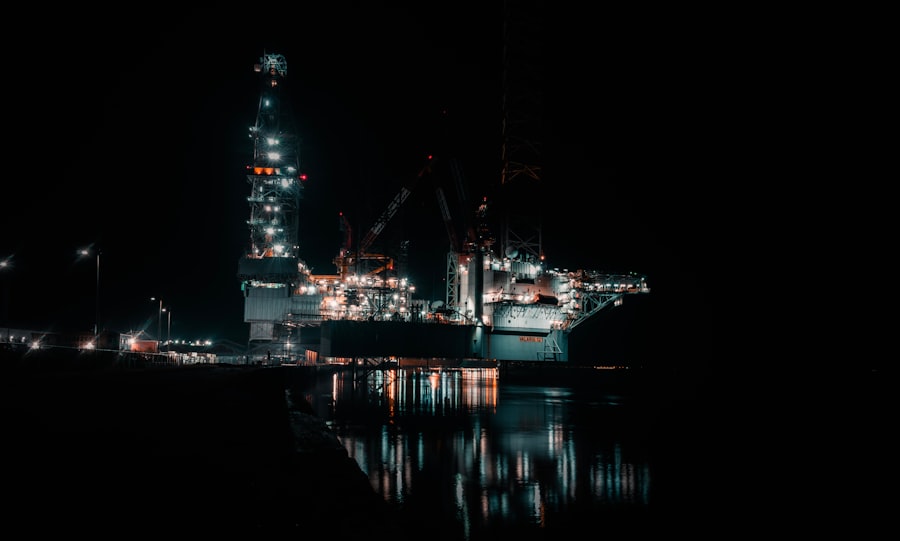
The North Sea’s demanding environment has consistently pushed the boundaries of technological innovation. From drilling techniques to production methods, the industry has been in a perpetual state of evolution to overcome the inherent difficulties of operating offshore. The challenges have been immense, from the sheer scale of the operations to the relentless forces of nature.
Deepwater Exploration and Production
As the more accessible fields were depleted, exploration and production moved into deeper waters. This presented significant engineering hurdles, requiring the development of new drilling technologies, more robust platform designs, and advanced subsea equipment capable of withstanding extreme pressures and cold temperatures.
Advanced Drilling Techniques
The development of advanced drilling techniques, including horizontal drilling and extended reach drilling, allowed operators to access reserves trapped in complex geological formations and under challenging seabed conditions. These techniques enabled the extraction of hydrocarbons from reservoirs that were previously considered uneconomical or technically impossible to reach. The precision required for these operations demanded sophisticated directional drilling tools and real-time monitoring systems.
Subsea Processing and Enhanced Oil Recovery
The move towards subsea production systems led to the development of sophisticated technologies for processing oil and gas directly on the seabed. This reduced the need for costly and complex surface facilities. Furthermore, enhanced oil recovery (EOR) techniques, such as water and gas injection, were employed to extract more oil from existing reservoirs, extending the life of mature fields. These methods involved injecting fluids into the reservoir to maintain pressure or to mobilize trapped oil, maximizing the yield from each well.
Environmental Concerns and Safety Standards
The North Sea is a sensitive ecosystem, and the exploration and production of oil and gas have always been accompanied by environmental concerns. Accidents, though relatively rare, have had significant consequences, leading to stringent safety regulations and a continuous focus on environmental protection.
The Threat of Oil Spills and Pollution
The risk of oil spills, whether from operational incidents or well blowouts, has been a constant concern. Major accidents, such as the Ekofisk Bravo blowout in 1977 and the Piper Alpha disaster in 1988, served as stark reminders of the potential environmental and human cost. These events prompted significant improvements in safety protocols, emergency response capabilities, and the development of new technologies for spill containment and cleanup. The prevention of spills became a paramount focus for the industry.
Stricter Regulations and Environmental Monitoring
In response to these concerns, governments and international bodies have implemented increasingly stringent regulations governing offshore operations. These include requirements for environmental impact assessments, waste management, and the decommissioning of platforms. Extensive monitoring of the marine environment is also conducted to track any potential impacts of oil and gas activities. The industry has invested heavily in research and development to minimize its environmental footprint, exploring cleaner technologies and more sustainable practices.
The Maturing Industry: Decline and Diversification
As the North Sea fields have matured, production has naturally declined from its peak. This has led to a shift in the industry, with a greater emphasis on efficiency, cost reduction, and the development of smaller, more marginal fields. The focus has also broadened to include renewable energy sources, leveraging the existing infrastructure and expertise of the oil and gas sector.
The Challenge of Decommissioning
A significant challenge facing the North Sea industry is the decommissioning of aging platforms and infrastructure. This complex and costly process involves safely dismantling and removing structures from the seabed, with careful consideration for environmental impact.
Environmental Regulations and Disposal Methods
Decommissioning projects are subject to strict environmental regulations, dictating how materials are disposed of and how the seabed is restored. Various methods are employed, including topside removal, partial removal, and in some cases, leaving structures in place for artificial reef purposes, subject to rigorous assessment. The scale of the undertaking requires meticulous planning and specialized equipment.
Economic Implications of Decommissioning
The cost of decommissioning is substantial and represents a significant financial burden for oil and gas companies. This cost is factored into the economics of field development and production. The industry is constantly seeking innovative and cost-effective ways to manage this final stage of an asset’s lifecycle.
The Rise of Renewables and Energy Transition
Recognizing the finite nature of hydrocarbon reserves and the global imperative to transition to cleaner energy sources, the North Sea region is increasingly becoming a hub for renewable energy development, particularly offshore wind. The expertise and infrastructure developed for oil and gas are proving invaluable in this new phase.
Offshore Wind Farms and Synergies
The vast open spaces and strong winds of the North Sea make it an ideal location for large-scale offshore wind farms. The oil and gas industry’s experience in offshore construction, logistics, and project management is directly transferable to the development of these renewable energy projects. This has led to a diversification of the industry and the creation of new employment opportunities.
Carbon Capture and Storage (CCS)
Another area of significant interest is Carbon Capture and Storage (CCS). The geological formations that once trapped oil and gas are now being explored as potential sites for storing captured carbon dioxide, offering a potential pathway to decarbonize industrial processes. This technology holds promise for mitigating the climate impact of ongoing fossil fuel use and can utilize existing offshore infrastructure.
The history of North Sea oil is a fascinating journey that has significantly shaped the economies of several countries. For those interested in exploring this topic further, a related article can provide deeper insights into the exploration and production milestones that have defined the industry. You can read more about it in this informative piece on myGeoQuest, which delves into the technological advancements and geopolitical implications of oil extraction in the North Sea.
The Legacy of North Sea Oil: A Continuing Influence
| Year | Production (million barrels) | Revenue (billion USD) |
|---|---|---|
| 1970 | 0.1 | 0.2 |
| 1980 | 2.6 | 5.3 |
| 1990 | 4.5 | 10.1 |
| 2000 | 3.2 | 15.6 |
| 2010 | 2.0 | 20.3 |
The North Sea oil and gas era has left an indelible mark on the economies, technologies, and environments of the nations involved. While the era of peak production may be receding, the legacy of this period continues to shape the present and future of energy in the region. The lessons learned, the technologies developed, and the wealth generated have had a profound and lasting impact.
Economic Independence and Geopolitical Shifts
For decades, North Sea oil provided a degree of energy independence for the UK, altering its geopolitical standing and its relationships with oil-producing nations. The revenues generated funded significant public investments and contributed to economic stability. Norway’s prudent management of its oil wealth has established it as a global economic powerhouse, with its sovereign wealth fund providing long-term financial security.
Technological Advancements and Knowledge Transfer
The rigorous demands of North Sea exploration and production spurred unparalleled technological innovation. From specialized drilling equipment and platform designs to advanced safety systems and subsea robotics, the industry has been a fertile ground for innovation. Much of this knowledge and expertise has since been transferred to other offshore sectors and to the development of renewable energy technologies.
Environmental Stewardship and Future Energy Landscapes
The ongoing focus on environmental stewardship and the transition to renewable energy sources in the North Sea demonstrate a commitment to a more sustainable future. The challenges of decommissioning and carbon capture are being addressed with ingenuity and a long-term perspective. The North Sea, once defined by its black gold, is now evolving to embrace a new chapter in its energy story, one that promises to be equally transformative. The ongoing pursuit of cleaner energy solutions, building upon the hard-won lessons of the oil and gas era, ensures that the North Sea will continue to be a focal point for energy innovation and development for decades to come. The integration of offshore wind and the exploration of CCS underscore the region’s adaptability and its commitment to shaping a sustainable energy future.

The Dangerous Sea Europe Can’t Live Without
FAQs
What is the history of North Sea oil?
The history of North Sea oil dates back to the 1960s when significant oil and gas reserves were discovered in the North Sea. This discovery led to a major economic boom for the countries bordering the North Sea, particularly the United Kingdom and Norway.
When was North Sea oil first discovered?
The first significant discovery of oil in the North Sea was made in 1969 by Phillips Petroleum Company in the Ekofisk field. This discovery marked the beginning of the North Sea oil industry and led to further exploration and development of oil and gas reserves in the region.
How has North Sea oil impacted the economies of the surrounding countries?
The discovery and exploitation of North Sea oil has had a significant impact on the economies of the surrounding countries, particularly the United Kingdom and Norway. It has led to increased government revenue, job creation, and economic growth, as well as the development of a thriving oil and gas industry.
What are some of the challenges associated with North Sea oil production?
Some of the challenges associated with North Sea oil production include aging infrastructure, declining reserves, and environmental concerns. As the oil fields in the North Sea mature, maintaining production levels becomes more challenging, and there is a need for ongoing investment in new technology and infrastructure.
What is the current status of North Sea oil production?
North Sea oil production has declined in recent years as many of the oil fields have matured and become less productive. However, there are still significant reserves in the region, and efforts are being made to maximize recovery from existing fields and explore new areas for potential oil and gas discoveries.