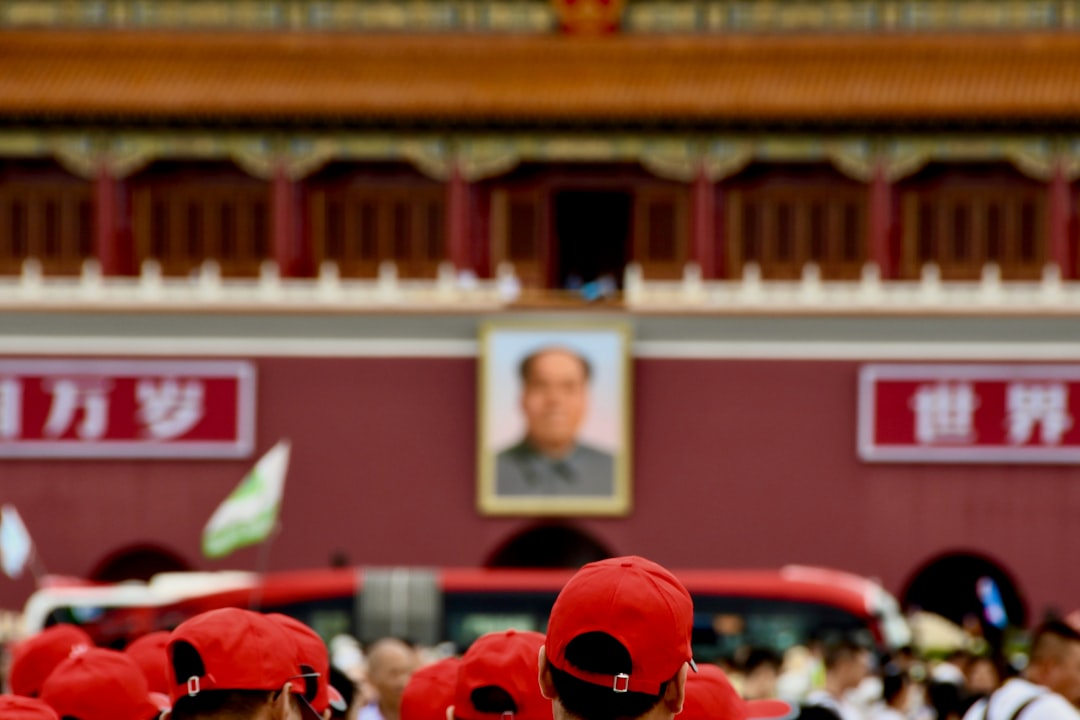
You stand at a precipice, peering into a geopolitical landscape as intricate and layered as an ancient Chinese scroll. The relationship between mainland China and Taiwan isn’t a simple binary; it’s a tapestry woven with history, ideology, economics, and an ever-present specter of conflict. To truly grasp it, you must untangle its threads, understand its underlying tensions, and recognize the delicate dance of diplomacy, deterrence, and dreams that defines this crucial nexus.
You can’t talk about China-Taiwan relations without acknowledging the profound historical abyss that separates and yet binds them. They are, in essence, two entities forged in the crucible of a civil war, each claiming legitimacy, each vying for recognition, and each haunted by the ghost of a unified past and a contested future.
The Chinese Civil War’s Aftermath: A Divided Legacy
Your understanding begins with the 1949 victory of the Communist Party of China (CPC) under Mao Zedong. As the Kuomintang (KMT), led by Chiang Kai-shek, was defeated on the mainland, they retreated to the island of Taiwan, establishing the Republic of China (ROC) government there. This wasn’t a peaceful divorce; it was an unresolved separation. The CPC declared the founding of the People’s Republic of China (PRC) on the mainland, asserting its claim as the sole legitimate government of all of China. The ROC, though vastly diminished in territory, continued to govern Taiwan, maintaining its own democratic institutions and a distinct identity that has blossomed over decades. This fundamental division, born from conflict, forms the bedrock of the entire dispute. You see, for the PRC, Taiwan is a “renegade province” awaiting reunification, by force if necessary. For many in Taiwan, it’s a sovereign democracy that has evolved far beyond the KMT’s original continental aspirations.
Differing Ideologies and Political Systems: A Chasm of Governance
The divergence extends beyond mere geography. You are witnessing two fundamentally different political systems. The PRC operates under a one-party authoritarian rule, prioritizing stability and national unity above individual freedoms. Taiwan, on the other hand, has transformed into a vibrant multi-party democracy, with a robust civil society and a strong emphasis on individual rights and freedoms. This ideological chasm influences everything, from how each side views its own legitimacy to its approach to international relations. You observe how this difference fuels mutual suspicion and complicates any genuine convergence of aspirations. The PRC sees Taiwan’s democratic evolution as a destabilizing force, a dangerous precedent that could undermine its own political model. Conversely, Taiwan views the PRC’s authoritarianism as a threat to its way of life and its hard-won freedoms.
The “One China” Principle: A Source of Contention
At the heart of the PRC’s claim lies the “One China” principle. This is not a mere diplomatic nicety; it’s a cornerstone of Beijing’s foreign policy and its domestic narrative. The PRC insists that there is only one sovereign state under the name “China,” and that Taiwan is an inalienable part of it. This principle dictates how international actors engage with both entities. Most countries, including the United States, acknowledge the PRC’s “position” or “take” on the matter, without explicitly endorsing its sovereignty claim over Taiwan. However, this careful diplomatic phrasing doesn’t erase the core disagreement. For the PRC, recognition of the “One China” principle is non-negotiable and a prerequisite for diplomatic ties. For Taiwan, it represents an existential threat, a denial of its de facto independence and the will of its people. You see the constant tug-of-war, where Beijing seeks to isolate Taiwan diplomatically, and Taiwan strives to maintain its international space and recognition.
In recent discussions surrounding China-Taiwan relations, an insightful article titled “Navigating the Cross-Strait Tensions: A Historical Perspective” provides a comprehensive overview of the evolving dynamics between the two regions. This piece delves into the historical context and the implications of current geopolitical developments, making it a valuable resource for anyone looking to understand the complexities of this relationship. For more information, you can read the article here: Navigating the Cross-Strait Tensions: A Historical Perspective.
The Economic Interdependence: A Double-Edged Sword
While history and ideology create distance, economics often acts as a powerful, albeit complex, connector. You observe a deep and intricate web of economic ties between mainland China and Taiwan, a relationship that has grown significantly over the past few decades, creating a peculiar brand of interdependence.
Trade and Investment: A Flow of Capital and Goods
Taiwanese businesses, seeking greater market access and lower production costs, have invested heavily in the mainland since the late 1980s. This has resulted in a massive flow of trade and capital. Taiwan is a major importer of Chinese goods and a significant exporter to the mainland, particularly in high-tech sectors. You witness how this economic integration has, for a time, fostered a sense of shared prosperity. Taiwanese companies have become deeply embedded in China’s manufacturing supply chains, contributing to its economic miracle. This interdependence has, in many ways, served as an informal buffer against outright conflict, as neither side wishes to disrupt this lucrative economic relationship.
The Semiconductor Dominance: Taiwan’s Strategic Leverage
Within this economic landscape, one sector stands out: semiconductors. Taiwan, particularly through its giant Taiwan Semiconductor Manufacturing Company (TSMC), plays an indispensable role in the global supply of advanced microchips. These are the brains behind everything from smartphones to advanced military equipment. You understand that this dominance gives Taiwan significant leverage, even in the face of China’s overwhelming military and economic might. The idea of a disruption to this supply chain is a global concern, and it’s a card Taiwan can subtly play. Beijing covets this technological prowess and sees its acquisition as vital for its own future economic and military development. However, any attempt to forcibly take control of this industry would likely cripple the global economy, a risk even Beijing must carefully consider.
Economic Coercion and Dependence: The Bipartisan Concern
However, this economic interdependence is also a source of vulnerability for Taiwan. Beijing has, at times, used economic leverage as a tool of political pressure. You’ve seen instances where trade restrictions, import bans, and other economic measures have been employed to punish Taiwan for actions or political statements deemed unacceptable by the mainland. This creates a constant tension within Taiwan, with some advocating for greater economic decoupling from the mainland to reduce this vulnerability, while others argue that such a move would be economically ruinous. You see the difficult balancing act: how to benefit from economic engagement without becoming overly reliant and susceptible to coercion. This economic weaponization is a constant worry, a reminder that economic ties don’t necessarily translate into political goodwill.
The Political Landscape: Shifting Sands and Divergent Aspirations
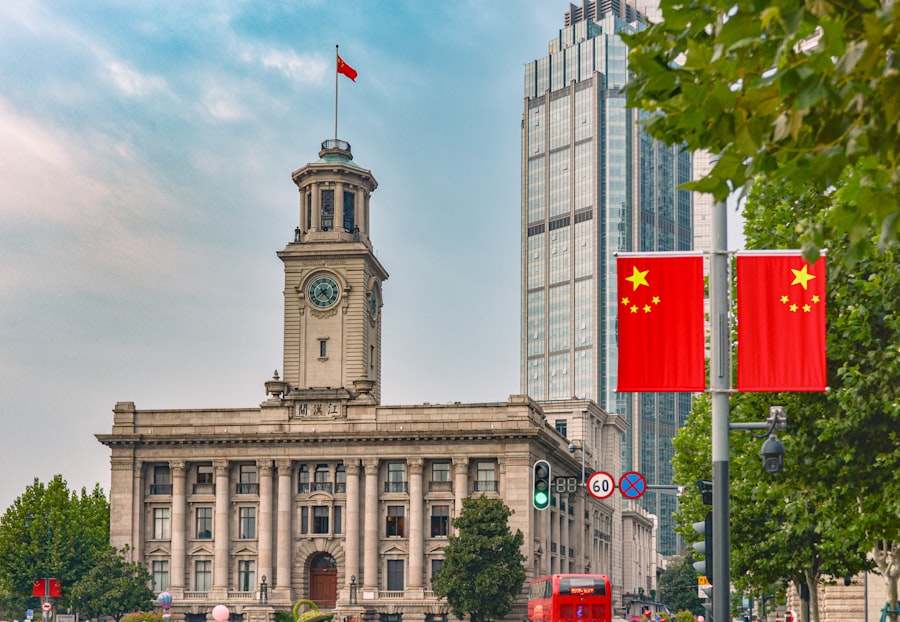
The political currents shaping China-Taiwan relations are as dynamic as they are complex, marked by evolving public opinion in Taiwan and the unwavering resolve of the Chinese Communist Party on the mainland.
Taiwan’s Evolving Identity: From KMT to DPP and Beyond
Over the decades, Taiwan’s political landscape has undergone a profound transformation. While the KMT once dominated, the Democratic Progressive Party (DPP) has emerged as a major force, advocating for Taiwan’s distinct identity and often favoring a more assertive stance on its sovereignty. You observe how the younger generations in Taiwan increasingly identify as Taiwanese, rather than Chinese, a sentiment that has profound implications for the future. This sense of a separate identity is fueled by Taiwan’s democratic experience and its distinct cultural evolution. The narrative of a separate Taiwanese identity is a powerful force that Beijing finds increasingly difficult to counter with its “One China” narrative.
The “Status Quo” Debate: A Fragile Equilibrium
For many years, the prevailing policy in Taiwan, and an international consensus of sorts, was to maintain the “status quo”—neither formal independence nor outright unification with the mainland. However, this equilibrium is becoming increasingly fragile. You see how the PRC’s growing assertiveness and military modernization have made the “status quo” feel less secure for Taiwan. Simultaneously, within Taiwan, there are growing calls for a clearer declaration of independence, while others fear that such a move would provoke a military response from Beijing. The concept of the “status quo” itself is subject to interpretation, and its maintenance requires constant careful maneuvering by all parties involved.
Beijing’s Unwavering Stance: The Unification Imperative
On the mainland, the CPC’s stance on Taiwan remains remarkably consistent: unification is an imperative, a historical mission that cannot be abandoned. You witness how President Xi Jinping has made Taiwan a central theme of his leadership, emphasizing the inevitability of reunification and refusing to rule out the use of force. This unwavering resolve is a constant source of concern for Taiwan and its international partners. The PRC views any move toward formal independence by Taiwan as a red line that will not be tolerated. This creates a dynamic where Taiwan must constantly gauge Beijing’s red lines while advocating for its own aspirations.
The Military Dimension: Deterrence and Escalation
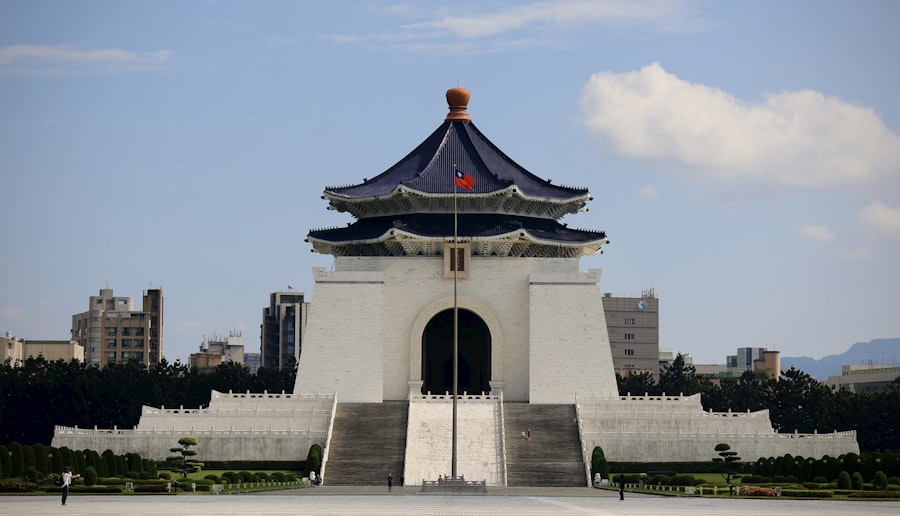
The specter of military conflict looms large over China-Taiwan relations, a constant factor shaping the strategic calculus of both sides and influencing the decisions of regional and global powers.
PRC’s Military Modernization: A Growing Threat
You’ve seen the dramatic escalation of the People’s Liberation Army’s (PLA) capabilities in recent decades. China has invested billions in modernizing its navy, air force, and missile programs, many of which are explicitly designed with Taiwan in mind. You observe the increasing frequency of PLA air and naval exercises near Taiwan, which are widely seen as a form of intimidation and a demonstration of Beijing’s willingness to use force. The sheer scale of China’s military power dwarfs Taiwan’s, making outright military victory for Taiwan highly improbable. This creates a significant power imbalance that Taiwan must constantly contend with.
Taiwan’s Asymmetric Warfare Strategy: The David and Goliath Approach
In response to this overwhelming military might, Taiwan has adopted an asymmetric warfare strategy. You see how they focus on developing capabilities that can inflict significant costs on an invading force, even if they cannot win a conventional war. This includes advanced missile defense systems, naval mines, mobile artillery, and cyber warfare capabilities. The idea is to make an invasion so costly and time-consuming that it becomes politically untenable for Beijing. You understand that this strategy relies heavily on effective deterrence, the idea that the price of invasion will be too high.
The Role of the United States: “Strategic Ambiguity” and Beyond
The United States plays a pivotal, albeit complex, role in this security dynamic. For decades, the US has maintained a policy of “strategic ambiguity” regarding its commitment to defend Taiwan in the event of a PRC attack. You see how this policy is intended to deter Beijing from attacking by not giving it a clear signal of US inaction, while also deterring Taiwan from declaring formal independence by not giving it an explicit promise of immediate US intervention. However, with China’s increasing assertiveness, there are growing debates about whether this ambiguity is still effective, and whether a clearer commitment is needed. You witness the constant speculation about US intentions and the potential for direct US involvement in a conflict.
The ongoing tensions between China and Taiwan have sparked numerous discussions and analyses in recent months. A recent article explores the evolving dynamics of this relationship and highlights the implications for regional stability. For a deeper understanding of the complexities involved, you can read the article here: China Taiwan relations. This piece provides valuable insights into the historical context and current developments that shape the interactions between these two entities.
International Dynamics: A Global Chessboard
| Year | Event | Outcome |
|---|---|---|
| 1949 | Chinese Civil War | The Nationalist government retreated to Taiwan |
| 1971 | United Nations seat | China replaced Taiwan in the UN |
| 1979 | US-Taiwan Relations Act | US recognized the People’s Republic of China |
| 1992 | 1992 Consensus | Agreement on One China policy |
| 2020 | National Security Law | Imposed by China on Hong Kong, affecting relations |
The complexities of China-Taiwan relations extend far beyond the immediate shores of the island and the mainland. You are watching a global chessboard where international actors, driven by their own strategic interests and values, constantly navigate this delicate situation.
The “One China Policy” vs. “One China Principle”: A Diplomatic Tightrope
You observe how most countries officially adhere to a “One China Policy,” acknowledging the PRC and its claim over Taiwan, while at the same time maintaining unofficial relations with Taiwan. This is a careful diplomatic tightrope walk. Countries often engage in a nuanced balancing act, trading with Taiwan and supporting its democratic institutions, while not formally recognizing it as an independent state, to avoid antagonizing Beijing. You see how this diplomatic dance is meticulously choreographed to maintain peace and stability without upsetting the established international order.
The Question of Recognition: A Symbol of Sovereignty
For Taiwan, the quest for international recognition is a constant struggle. You see how Beijing actively works to isolate Taiwan diplomatically, often pressuring smaller nations to sever ties with Taipei in favor of Beijing. This is more than just diplomatic protocol; it’s a battle for legitimacy and international acceptance. Every country that switches recognition from Taipei to Beijing is seen as a victory for the PRC and a setback for Taiwan’s aspirations. Conversely, any country that strengthens its unofficial ties with Taiwan, or maintains them, is seen as a statement of support for Taiwan’s autonomy.
Geopolitical Implications: A Flashpoint for Global Stability
The implications of a conflict over Taiwan are truly global. You are witnessing a potential flashpoint that could disrupt global trade, trigger widespread economic instability, and fundamentally alter the geopolitical balance of power. The world’s reliance on Taiwan for semiconductors alone makes any disruption a catastrophic event. Regional powers like Japan and South Korea, heavily reliant on shipping lanes that pass through the Taiwan Strait, would be directly impacted. You see how this potential conflict is a major concern for global leaders, influencing their foreign policy decisions and their alliances. The international community is not a passive observer; it is deeply invested in maintaining peace and stability in this crucial region. Your understanding of these complex relationships is essential to navigating the precarious peace that currently exists.

The Taiwan Strait: The Most Dangerous Place in the Global Economy
FAQs
What is the current status of China-Taiwan relations?
As of now, China considers Taiwan to be a part of its territory and has not ruled out the use of force to bring the island under its control. Taiwan, on the other hand, considers itself a sovereign state and has its own government, military, and constitution.
What is the history of China-Taiwan relations?
The relationship between China and Taiwan has been complex and contentious since the Chinese Civil War in the 1940s. The Communist Party of China established the People’s Republic of China on the mainland, while the Nationalist government retreated to Taiwan and continued to govern there.
How does the international community view China-Taiwan relations?
Most countries, including the United States, do not officially recognize Taiwan as a sovereign state due to their adherence to the “One China” policy, which recognizes the People’s Republic of China as the legitimate government of China. However, many countries maintain unofficial relations with Taiwan and support its participation in international organizations.
What are the key issues in China-Taiwan relations?
Some of the key issues in China-Taiwan relations include Taiwan’s political status, military security, economic ties, and international recognition. The two sides also have differing views on the future of their relationship, with China advocating for eventual reunification and Taiwan seeking to maintain its de facto independence.
What are the potential implications of China-Taiwan relations on the global stage?
The ongoing tensions between China and Taiwan have the potential to impact regional stability and international relations. Any escalation of conflict between the two sides could have far-reaching consequences for trade, security, and diplomatic relations in the Asia-Pacific region and beyond.