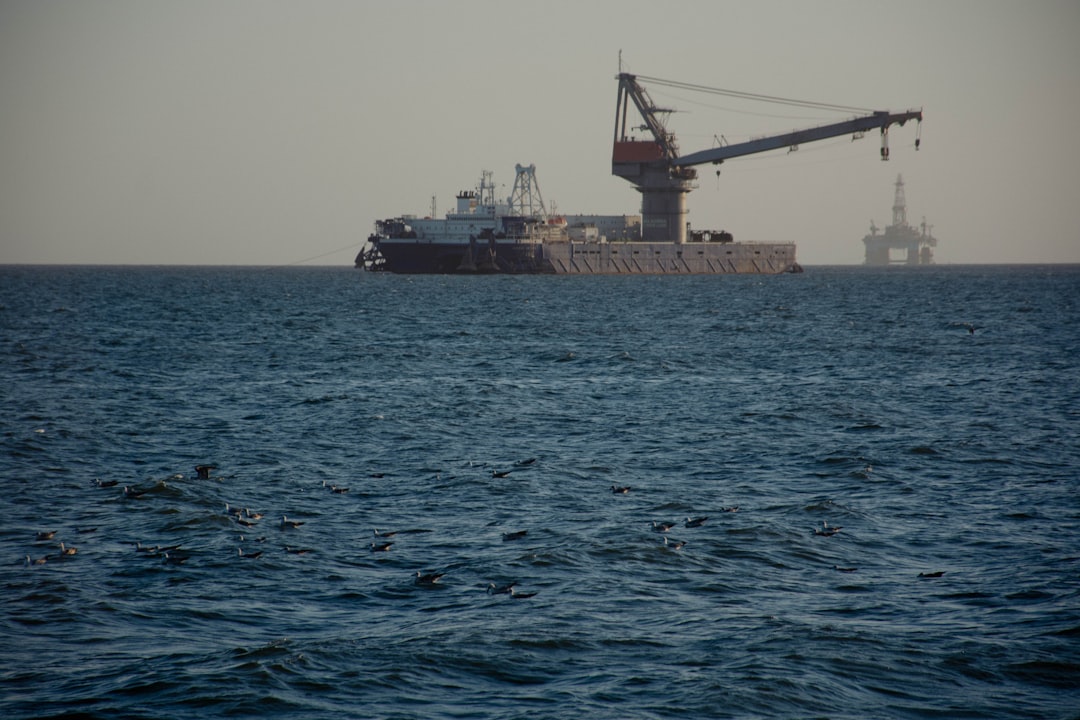
The Caspian Sea, a vast inland body of water straddling the eastern edge of Europe and the western bulwark of Asia, represents a geographical anomaly. It is the world’s largest lake, yet its size and the wealth of resources beneath its waves have led to it being more commonly referred to as a sea. This very nomenclature has become a central point in a persistent and intricate web of boundary disputes that have entangled the five littoral states – Azerbaijan, Iran, Kazakhstan, Russia, and Turkmenistan – for decades. The quest to delineate maritime boundaries and establish sovereign rights over the seabed and its hydrocarbon riches has been a complex geopolitical puzzle, a Gordian knot of competing interests and historical legacies.
To understand the present-day complexities, one must first delve into the historical bedrock upon which these disputes are built. The Caspian Sea’s legal status has been a perennial challenge, largely stemming from the dissolution of the Soviet Union.
The Soviet Era: A Duumvirate Dominance
During the Soviet era, the Caspian Sea was, in essence, an exclusive preserve of two powers: the Soviet Union and Iran. The 1921 and 1940 Soviet-Iranian treaties, though intended to regulate relations and fishing rights, did not establish clearly defined maritime boundaries in the modern sense.
Absence of Sectoral Delimitation
These treaties focused primarily on shared resource utilization, particularly fishing, and did not delineate exclusive economic zones or continental shelf boundaries. The Soviet Union, as a single entity controlling the entire northern and eastern coast, effectively managed the northern half of the sea. Iran, with its southern and western coastline, held sway over the southern portion. This de facto division, however, lacked the formal legal framework that would be necessary in a multipolar post-Soviet landscape.
Impact of the USSR’s Collapse
The dissolution of the Soviet Union in 1991 dramatically altered the geopolitical configuration of the Caspian’s littoral. What was once a bilateral understanding between Moscow and Tehran was suddenly transmuted into a multilateral challenge involving five independent states. The absence of pre-existing, internationally recognized maritime boundaries left a void, and into this void rushed a torrent of competing claims and interpretations. The Soviet legacy, therefore, became not a stable foundation, but a fertile ground for future contention.
The ongoing maritime boundary disputes in the Caspian Sea have significant geopolitical implications, particularly concerning the rights to natural resources and navigation routes. For a deeper understanding of these complex issues, you can read a related article that explores the historical context and current developments in the region. To learn more, visit this article on MyGeoQuest.
The Legal Quagmire: Sea or Lake?
The fundamental crux of the Caspian Sea dispute lies in its classification: is it a lake or a sea? This seemingly academic question carries profound implications for how its waters and seabed are divided.
International Law and its Caspian Application
International law offers distinct frameworks for lakes and seas. Seas are typically governed by the United Nations Convention on the Law of the Sea (UNCLOS), which provides for principles like territorial waters, contiguous zones, exclusive economic zones (EEZs), and the continental shelf. These concepts allow for the division of resources and sovereignty extending far from the coastline.
The Case for a “Sea” Classification (UNCLOS)
Proponents of classifying the Caspian as a sea often point to its immense size, considerable salinity (though less than typical oceans), and its connectivity to global waters through navigable rivers like the Volga. This interpretation would lead to a division based on UNCLOS principles, allowing each state to claim extensive rights over their maritime areas. This would be a significant boon for countries possessing vast hydrocarbon reserves off their shores.
The Case for a “Lake” Classification
Conversely, those who argue for a lake classification often cite its inland nature and lack of direct connection to the world’s oceans. Under a lake regime, historically, states often shared common access and resources, or employed a condominium approach. Russia and Iran, in particular, have historically leaned towards a shared or condominium model, particularly after the Soviet collapse.
The 1977 Agreement: A Precursor to Complexity
A significant development, often cited but with differing interpretations, was the 1977 agreement between the Soviet Union and Iran. This agreement, aimed at regulating fishing, divided the Caspian into national sectors along a median line, though it explicitly stated it was not intended to create preclusive maritime boundaries for other purposes.
Interpretation of “National Sectors”
The interpretation of these “national sectors” is a key point of contention. While the agreement outlined areas of fishing responsibility, it did not address the division of the seabed, mineral resources, or navigation rights in a manner that satisfied post-Soviet ambitions. Azerbaijan, Kazakhstan, and Turkmenistan, having gained independence from the USSR, naturally sought to assert their sovereign rights over the resources within their geographically defined sectors, leading to friction with the interpretations favored by Russia and Iran.
Competing Claims and Delimitation Models
The absence of a universally accepted legal framework has led to the emergence of several competing models for dividing the Caspian Sea. Each model reflects the distinct geopolitical and economic interests of the littoral states.
The “Median Line” Approach
This model, often favored by Azerbaijan, Kazakhstan, and Turkmenistan, suggests dividing the Caspian based on an equidistant line drawn between the opposite and adjacent coasts of the littoral states. This approach aligns with UNCLOS principles for maritime delimitation.
Application and Challenges
Applying a strict median line can be complex, especially given the irregular shape of the Caspian coastline and the presence of islands. Negotiating these lines requires detailed geographical surveys and can lead to disputes over resource-rich areas situated between potential boundary points. For instance, disputes over the hydrocarbon fields in the South Caspian, near the Apsheron Peninsula, have been particularly acute.
The “State Waters” or Sectoral Division Model
This model, supported by Russia and Iran in various forms, proposes dividing the Caspian into national sectors, but with a potential for greater shared areas or different interpretations of sovereignty.
Emphasizing National Sovereignty
This approach, particularly the interpretation favored by the newly independent states, aims to grant each country sovereign rights over its seabed and subsoil resources within its geographically defined sector. This is the most common understanding of resource division under a UNCLOS framework.
The “Condominium” or Shared Access Concept
More traditionally, Russia and Iran, drawing from their historical arrangements, have sometimes favored interpretations that lean towards a condominium approach, implying shared ownership and management of the entire sea or significant portions thereof. This would mean that all five states would have a stake in decisions regarding resource exploitation and management across the entire basin, rather than strictly defined national zones. This approach, however, can hinder individual states from fully exploiting their perceived resource wealth.
The Role of Islands and Their Influence
The presence of islands within the Caspian Sea adds another layer of complexity to boundary negotiations. Islands can alter the calculation of median lines and generate unique territorial claims.
Disputed Island Territories
Several islands, such as the larger ones in the Azerbaijani sector and numerous smaller ones along the coast, have been subject to competing claims or have been instrumental in defining maritime zones. The differing interpretations of how island territories influence baseline calculations contribute significantly to the ongoing negotiations.
The Hydrocarbon Nexus: Resource Competition

The Caspian Sea is not merely a geographical feature; it is a treasure trove of hydrocarbons, a fact that significantly fuels the intensity of the boundary disputes. The potential for vast oil and gas reserves has transformed the Caspian into a geopolitical chessboard where resource control translates directly into economic and strategic power.
Untapped Reserves and Economic Aspirations
The Caspian basin is estimated to hold substantial reserves of oil and natural gas, with significant fields yet to be fully explored and exploited. For countries like Azerbaijan, Kazakhstan, and Turkmenistan, these resources represent a crucial pathway to economic development and energy independence.
Azerbaijan’s Position
Azerbaijan, with its rich oil reserves in the Absheron archipelago, has been a strong advocate for a sectoral division based on median lines. Its existing offshore platforms and production activities underscore its vested interest in clearly defined sovereign maritime zones.
Kazakhstan’s North Caspian Projects
Kazakhstan’s massive offshore projects, such as the Kashagan oil field (one of the largest in the world), are heavily reliant on clear maritime boundaries to facilitate investment and development. The delimitation of the northern Caspian is therefore of paramount importance to its economic prosperity.
Turkmenistan’s Offshore Ambitions
Turkmenistan, with its significant natural gas reserves, also seeks to assert its rights over its offshore territories to attract foreign investment and expand its energy export capabilities.
Iran’s Stance and Regional Power Dynamics
Iran, a major hydrocarbon producer, has historically favored a more equitable distribution of resources, perhaps reflecting its lower share of the oil and gas discoveries compared to some of its northern neighbors. Its geopolitical position in the region also influences its approach to the Caspian’s legal status.
Russia’s Strategic Interests
Russia, while possessing significant hydrocarbon reserves domestically, also views the Caspian Sea as a strategically important region for energy transit and regional influence. Its historical dominance in the area means it has a vested interest in maintaining a degree of control or ensuring its interests are not marginalized by a strict sectoral division.
The ongoing maritime boundary disputes in the Caspian Sea have significant implications for regional security and resource management. As countries like Azerbaijan, Iran, and Kazakhstan navigate their claims, the situation remains complex and fluid. For a deeper understanding of the geopolitical dynamics at play, you can explore a related article that discusses the historical context and current developments in this area. This article provides valuable insights into how these disputes affect not only the nations involved but also the broader international community. To read more, visit this link.
Towards a Resolution: The Convention on the Legal Status of the Caspian Sea
| Country | Disputed Area (sq km) | Main Dispute Issue | Current Status | Key Agreements |
|---|---|---|---|---|
| Russia | Approx. 20,000 | Maritime boundary delimitation with Kazakhstan and Azerbaijan | Partially resolved; bilateral agreements with Kazakhstan; ongoing negotiations with Azerbaijan | 2003 Russia-Kazakhstan Agreement |
| Azerbaijan | Approx. 25,000 | Disputes with Turkmenistan and Iran over seabed and resource rights | Negotiations ongoing; 2018 Convention on the Legal Status of the Caspian Sea signed | 2018 Caspian Sea Convention |
| Turkmenistan | Approx. 30,000 | Boundary delimitation with Azerbaijan and Iran; oil and gas field rights | Ongoing disputes; bilateral talks with Azerbaijan; no formal agreement with Iran | 2018 Caspian Sea Convention (multilateral) |
| Iran | Approx. 50,000 | Disputes with Azerbaijan and Turkmenistan over maritime boundaries and resource exploitation | Disputes remain unresolved; Iran did not sign 2018 Convention | None (refused 2018 Convention) |
| Kazakhstan | Approx. 15,000 | Boundary delimitation with Russia and Turkmenistan | Agreements reached with Russia; ongoing talks with Turkmenistan | 2003 Russia-Kazakhstan Agreement; 2018 Caspian Sea Convention |
After years of protracted negotiations, a significant milestone was reached in August 2018 with the signing of the Convention on the Legal Status of the Caspian Sea. This convention, a culmination of intense diplomatic efforts, represented a breakthrough in addressing the long-standing boundary disputes.
Key Provisions and Agreements
The Convention, while not definitively resolving all delimitation issues, laid down a framework for future cooperation and defined significant aspects of the legal regime of the Caspian Sea.
Delimitation of Coastlines and Seabed
A crucial aspect of the Convention is the agreement on how to delimit the seabed for resource exploitation. While it doesn’t provide exact boundary lines for all areas, it establishes principles for their determination through bilateral agreements between adjacent and opposite states. This essentially kicks the can down the road for some of the most contentious seabed divisions, requiring individual negotiations.
Surface Water and Navigation Rights
The Convention also addressed the regime of surface waters, confirming common use for navigation and outlining provisions for freedom of passage. It also established rules for the establishment of territorial waters and fishing zones along the coastlines, generally limiting them to 15 nautical miles and 3 nautical miles respectively.
Prohibition of Non-Littoral Military Presence
A significant achievement was the agreement to exclude the military presence of non-littoral states from the Caspian Sea, thereby preserving the region as an exclusively regional domain. This addresses security concerns and aims to prevent external interference in the region’s affairs.
Remaining Challenges and Future Prospects
Despite the Convention’s significance, several challenges persist, and the path to full resolution remains winding.
Bilateral Delimitation Negotiations
The Convention mandates that states with adjacent and opposite coasts must reach bilateral agreements for the delimitation of their maritime boundaries. These negotiations are ongoing and are expected to be complex, especially in areas with overlapping resource claims. The fate of the previously disputed Buzachi and Chechen islands, for instance, will likely be determined in these bilateral discussions.
Environmental Cooperation and Resource Management
Beyond boundary delineation, the Convention also emphasizes the need for environmental protection and sustainable resource management. Addressing pollution, managing fish stocks, and ensuring the ecological health of the Caspian remains a joint responsibility that requires continued cooperation.
The Delicate Dance of Diplomacy
The Caspian Sea boundary disputes serve as a potent reminder of the enduring complexities of international relations, particularly when resource wealth intersects with historical legacies and evolving geopolitical realities. The Convention is a testament to the power of sustained diplomacy, but the ongoing bilateral negotiations are akin to carefully tending a fragile seedling, requiring patience, compromise, and a shared vision for the future of this unique and vital inland sea. The dance of diplomacy continues on the Caspian stage, with each step carefully calculated to avoid tripping over the still-unresolved landmines of delimitation.
FAQs
What countries are involved in the Caspian Sea maritime boundary disputes?
The primary countries involved in the Caspian Sea maritime boundary disputes are Russia, Iran, Azerbaijan, Kazakhstan, and Turkmenistan.
What is the main cause of the Caspian Sea maritime boundary disputes?
The disputes mainly arise from disagreements over the legal status of the Caspian Sea and the division of its seabed resources, including oil and natural gas reserves.
Has there been any international agreement to resolve the Caspian Sea disputes?
Yes, the Convention on the Legal Status of the Caspian Sea was signed in 2018 by the five littoral states, aiming to clarify legal status and promote cooperation, but some issues regarding maritime boundaries remain unresolved.
Why is the Caspian Sea strategically important?
The Caspian Sea is strategically important due to its vast energy resources, including significant oil and natural gas reserves, as well as its role in regional transportation and geopolitical influence.
What challenges remain in fully resolving the Caspian Sea maritime boundary disputes?
Challenges include differing interpretations of the 2018 Convention, disputes over specific maritime boundaries, and the need for bilateral agreements between some states to delineate precise borders and resource-sharing arrangements.