
When cultivating crops, optimizing water usage is crucial for both agricultural sustainability and economic viability. Two prominent methods for delivering water directly to plant roots are drip irrigation and baseflow. While both aim to be more efficient than traditional flood or furrow irrigation, they operate on distinct principles and offer different advantages and disadvantages. Understanding these nuances will allow growers to make informed decisions about which system, or combination of systems, best suits their specific needs and environmental conditions. This article will delve into the mechanics of drip irrigation and baseflow, exploring their respective strengths, limitations, and optimal applications.
Drip irrigation represents a highly nuanced approach to watering, where water is delivered slowly and directly to the root zone of individual plants through a network of pipes, tubing, and emitters. Think of it as a sophisticated plumbing system for your crops, meticulously designed to quench their thirst precisely where and when they need it. This method minimizes water loss through evaporation and runoff, significantly improving water use efficiency.
The Mechanics of Drip Systems
At its core, a drip irrigation system consists of several key components, each playing a vital role in the controlled delivery of water.
Water Source and Pumping
The journey of water begins at the source, which can be a well, reservoir, river, or municipal supply. A pump is typically employed to generate the necessary pressure to move the water through the distribution network. The size and power of the pump are dictated by the system’s flow rate requirements and the distance and elevation it needs to overcome. Reliable water pressure is the lifeblood of a drip system, ensuring that each emitter receives a consistent flow.
Filtration: The Gatekeeper of the System
Impurities in the water, such as sediment, sand, algae, and debris, can be the Achilles’ heel of a drip irrigation system. These particles can clog the small orifices of emitters, disrupting or completely halting water delivery. Therefore, a robust filtration system is paramount. Filters can range from simple screens to more complex media filters or disc filters. Regular cleaning and maintenance of the filtration system are essential to prevent costly blockages and ensure the longevity of the entire setup. A clogged filter is like a choked artery; it restricts the vital flow of nutrients and water to the plants.
Mainlines, Submains, and Laterals: The Arteries and Veins
The water, once filtered, travels through a series of pipes. The mainlines are the largest pipes, carrying water from the pump and filter to different zones of the field. Submains branch off from the mainlines to further segment the field, and finally, laterals are the smallest diameter tubes that run parallel to the crop rows. These laterals are where the emitters are typically embedded or attached. The strategic layout of these pipes ensures that water is distributed evenly across the entire irrigated area.
Emitters: The Precision Droppers
Emitters are the heart of the drip system, responsible for releasing water directly to the soil surface or subsurface near the plant roots. They come in various types, including:
- Button Emitters (Drip Emitters): These are inserted into the lateral tubing at specific spacing. They are characterized by their flow rate, measured in liters per hour (LPH) or gallons per hour (GPH).
- Drip Line Tubing: This is a type of tubing with pre-installed emitters at regular intervals. It is often used for closely spaced crops.
- Micro-sprinklers and Sprayers: While not strictly “drip” in the sense of single drops, these are often grouped under micro-irrigation and deliver water in a fine spray over a small area. They are useful for ground cover or areas where uniform wetting is desired.
- Soaker Hoses: These porous hoses allow water to seep out along their entire length, providing a more diffuse wetting pattern.
The selection of emitter type and flow rate is critical and depends on factors such as soil type, plant spacing, and crop water requirements.
Advantages of Drip Irrigation
The meticulous design of drip irrigation systems translates into several significant advantages for agricultural operations.
High Water Use Efficiency
This is the cornerstone of drip irrigation’s appeal. By delivering water directly to the root zone, evaporation from the soil surface and water loss through runoff are drastically reduced. Studies consistently show that drip irrigation systems can achieve water use efficiencies of 90% or higher, meaning that 90% or more of the applied water is actually absorbed by the plants. This is a stark contrast to flood irrigation, which can have efficiencies as low as 50-60%.
Reduced Weed Growth
Because water is delivered precisely to the crop’s root zone, the areas between rows remain relatively dry. This significantly inhibits weed germination and growth, reducing the need for herbicides and manual weeding. Weeds are like opportunistic freeloaders at a banquet, taking what they can without contributing, and drip irrigation denies them their banquet.
Improved Crop Yield and Quality
Consistent and optimal moisture levels directly at the root zone promote healthier plant growth, leading to improved yields and better quality produce. Plants are not subjected to the stress of drought or overwatering, allowing them to allocate more energy to growth and fruit production.
Fertilizer and Nutrient Application Efficiency
Drip irrigation systems are ideal for chemigation, the application of fertilizers and other chemicals through the irrigation system. Nutrients are delivered directly to the root zone, where they are most readily absorbed by plants. This reduces nutrient leaching and waste, leading to cost savings and a more environmentally friendly approach.
Adaptability to Various Topographies
Drip irrigation systems can be designed to operate effectively on sloped or uneven terrain, which would be challenging and inefficient for flood or furrow irrigation. The controlled release of water minimizes erosion on slopes.
Reduced Labor Costs
Once installed and properly maintained, drip irrigation systems require less manual labor compared to traditional irrigation methods. The automated nature of the system reduces the need for constant supervision and adjustment.
Limitations of Drip Irrigation
Despite its numerous benefits, drip irrigation is not without its drawbacks.
High Initial Investment Cost
The upfront cost of purchasing and installing a drip irrigation system, including pumps, filters, piping, and emitters, can be substantial. This can be a barrier for small-scale farmers or those with limited capital.
Clogging Potential
As mentioned earlier, emitters are susceptible to clogging from sediment, algae, mineral deposits, and debris. Regular flushing, filtration, and maintenance are essential to prevent this issue.
Requires Clean Water Source
Drip irrigation systems perform best with relatively clean water. Water with high levels of dissolved solids or suspended particles may require extensive pre-treatment, adding to the complexity and cost.
Salinity Buildup
In arid and semi-arid regions with saline irrigation water, salts can accumulate in the soil profile along the wetted edges of the root zone. This can be managed through periodic leaching with higher volumes of water, but it requires careful planning.
Susceptibility to Damage
The plastic tubing and emitters are vulnerable to damage from rodents, insects, mechanical equipment, and UV degradation. Careful installation and protective measures are necessary.
In exploring the relationship between drip irrigation efficiency and its impact on baseflow, one can refer to a related article that delves into the intricacies of water management in agricultural practices. This article highlights how efficient irrigation systems, such as drip irrigation, can significantly reduce water wastage and enhance groundwater recharge, ultimately influencing baseflow levels in nearby water bodies. For more detailed insights, you can read the article here: MyGeoQuest.
Exploring Baseflow Irrigation: Natural Undersoil Delivery
Baseflow irrigation, in contrast to the engineered precision of drip irrigation, draws upon natural processes to deliver water to plant roots. It relies on the phenomenon of capillary action and the natural movement of water in the soil profile. Imagine the soil as a sponge; baseflow taps into that sponge’s ability to hold and slowly release water to thirsty roots.
The Principles of Baseflow Irrigation
Baseflow irrigation is not a distinct system in the same way as drip irrigation, but rather a concept that leverages the inherent properties of soil and water. It is most effective in certain soil types and with specific irrigation strategies.
Capillary Action: The Soil’s Natural Pumping Mechanism
Capillary action is the ability of a liquid to flow in narrow spaces without the assistance of, or even in opposition to, external forces like gravity. In soils, this occurs due to the cohesive forces between water molecules and the adhesive forces between water molecules and the soil particles. As water is applied to the soil surface or to a specific zone, it moves upwards and outwards through the soil pores, drawn by the capillary pull of drier soil particles.
Subsurface Water Storage and Movement
Baseflow irrigation aims to create and maintain a zone of moisture in the root zone by allowing water to soak into the soil and then be naturally wicked upwards to the roots. This is often achieved by applying water to the soil surface or to a subsurface irrigation line, allowing it to distribute through the soil matrix.
Soil Type as a Critical Factor
The effectiveness of baseflow irrigation is heavily dependent on soil type.
- Loam and Sandy Loam Soils: These soils possess a good balance of sand, silt, and clay particles, providing adequate pore space for water infiltration and movement, as well as sufficient surface area for capillary action. They are generally well-suited for baseflow irrigation.
- Clay Soils: While clay soils have excellent water-holding capacity, their small pore spaces can sometimes impede the vertical movement of water upwards, limiting the effectiveness of baseflow. However, with proper management, they can still benefit.
- Sandy Soils: These soils have large pore spaces that allow for rapid infiltration but have limited water-holding capacity and weaker capillary action. They are generally less suitable for a pure baseflow approach and often require more frequent and substantial watering.
Methods Employed to Facilitate Baseflow
While baseflow is a natural phenomenon, certain irrigation practices are designed to maximize its benefits.
Subsurface Drip Irrigation (SDI)
While often categorized under drip irrigation, SDI utilizes buried drip lines that deliver water below the soil surface. This not only minimizes evaporation but also establishes a constant moisture gradient that encourages capillary action to bring water to the roots from the buried source. It’s a hybridization where engineered delivery assists natural movement.
Traditional Irrigation with Focus on Soil Moisture
Practices like furrow irrigation or even sprinkler irrigation, when managed meticulously with an emphasis on maintaining optimal soil moisture in the root zone, can leverage baseflow. The key is to apply water in a way that allows it to infiltrate and then be naturally distributed by capillary action to the plant roots.
Raised Beds and Specific Planting Techniques
In some horticultural settings, planting crops on raised beds with specific soil amendments can encourage better water management and the utilization of baseflow. The structure of the bed can influence water infiltration and distribution.
Advantages of Baseflow Irrigation
The appeal of baseflow irrigation lies in its simplicity and its ability to mimic natural hydration processes.
Reduced Evaporation Losses
By delivering water below the soil surface or allowing it to infiltrate before significant exposure, baseflow irrigation significantly reduces water loss due to surface evaporation.
Minimal Runoff
When managed correctly, water applied to the soil surface can infiltrate effectively, minimizing overland runoff and preventing water waste and potential erosion.
Potential for Simpler Infrastructure
Depending on the specific method employed, baseflow irrigation can sometimes involve less complex and potentially less expensive infrastructure compared to a fully engineered drip system, particularly if leveraging existing practices.
Promotes Deeper Root Growth
When the primary water source is slightly below the surface, plants may be encouraged to develop deeper root systems in search of moisture, leading to greater drought tolerance.
Reduced Weed Pressure (to a degree)
Similar to drip irrigation, if the surface remains drier, weed growth can be suppressed, although perhaps not to the same extent as with precisely targeted drip emitters.
Limitations of Baseflow Irrigation
The natural mechanisms underpinning baseflow also present certain limitations.
Less Precise Water Control
Unlike drip irrigation, which allows for precise control over the amount and location of water delivered, baseflow relies on the inherent properties of the soil. This can make it harder to manage water precisely for different plant needs or soil variations.
Soil Type Dependency
As highlighted, the effectiveness of baseflow is highly dependent on soil characteristics. This limits its applicability in certain regions or with specific soil types.
Slower Water Delivery
Capillary action, while efficient, is a slower process than direct pressurized delivery. This can be a limitation in periods of high crop water demand or during establishment.
Potential for Uneven Wetting
Depending on soil uniformity and application methods, baseflow can sometimes lead to uneven wetting patterns, with some areas receiving more moisture than others.
Requires Careful Management and Understanding of Soil Physics
To effectively utilize baseflow, growers need a good understanding of soil hydrology and the ability to interpret soil moisture levels to ensure proper irrigation scheduling.
Drip Irrigation vs. Baseflow: A Comparative Analysis

When faced with the decision between drip irrigation and baseflow, a direct comparison of their attributes is essential. Each offers a unique approach to water delivery, and the optimal choice will depend on a multitude of factors specific to the agricultural operation.
Water Use Efficiency: The Core Metric
Drip irrigation generally excels in water use efficiency due to its precision. The direct delivery to the root zone minimizes losses to evaporation and runoff. Baseflow, while also reducing these losses, is inherently less precise. Its efficiency is heavily influenced by soil type, application method, and environmental conditions. A well-designed drip system can consistently achieve 90%+ efficiency, while baseflow, in its purest form, might range from 70-85% depending on circumstances.
Infrastructure and Cost: The Financial Equation
The initial investment for drip irrigation systems is typically higher than for methods that rely more on natural baseflow, especially if the latter involves less complex subsurface delivery. However, the long-term operational costs of drip irrigation can be lower due to reduced water usage and labor. Baseflow methods might have lower upfront costs but could incur higher ongoing expenses related to water purchase and potentially more labor for management. It’s a trade-off between initial capital outlay and ongoing operational expenditure.
Management Complexity: The Grower’s Burden
Drip irrigation, while requiring initial planning and ongoing maintenance (especially filter cleaning), can be largely automated, reducing day-to-day management complexity. Baseflow irrigation often demands a deeper understanding of soil physics and more attentive monitoring of soil moisture levels to ensure adequate watering without over or under-application. The “hands-off” potential of drip contrasts with the more “hands-on” requirement of effective baseflow management.
Suitability for Different Crops and Farms
The choice between drip and baseflow also hinges on the specific crop being grown and the scale of the farm.
Crop Requirements: Thirsty vs. Frugal
High-value crops with demanding water requirements often benefit from the precision and efficiency of drip irrigation, ensuring optimal growth conditions. Crops with less demanding water needs or those adapted to drier conditions might be suitable for baseflow irrigation, especially in regions where water is abundant or where a more natural approach is preferred.
Farm Scale and Resources: Size Matters
Large-scale commercial farms may find the initial investment in drip irrigation justifiable due to the significant water savings and yield improvements. Smaller farms or those with limited resources might find certain baseflow-leveraging techniques more accessible.
Integrating Systems: The Best of Both Worlds
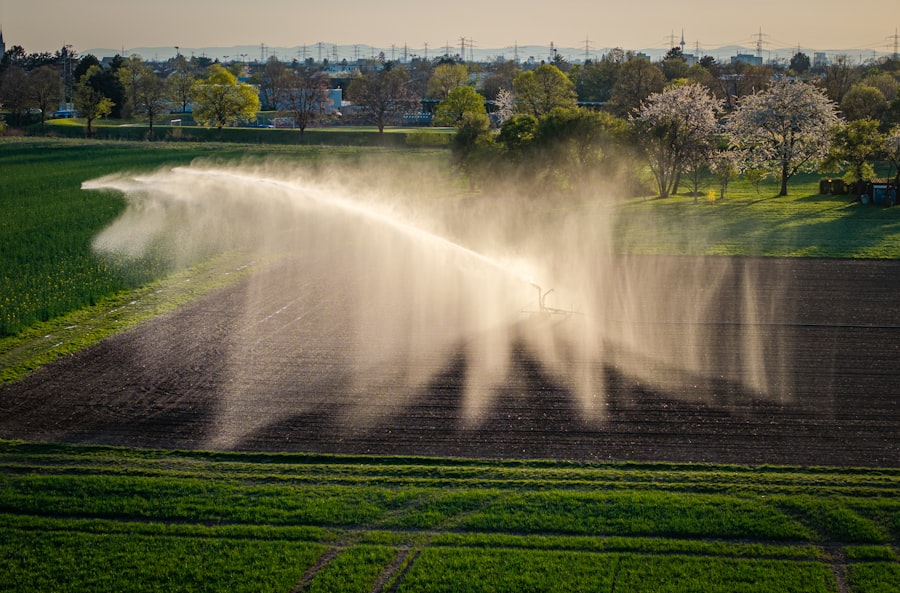
In many agricultural scenarios, the most effective approach is not a strict dichotomy between drip irrigation and baseflow, but rather an intelligent integration of both principles. This allows for a robust and adaptable watering strategy.
Subsurface Drip Irrigation: A Hybrid Powerhouse
As previously mentioned, Subsurface Drip Irrigation (SDI) is a prime example of integration. It employs the precise delivery of drip emitters but buries them within the soil profile. This combines the efficiency of drip with the benefits of reduced surface evaporation and the leveraging of capillary action to distribute water from the buried source. SDI systems are a sophisticated merging of engineered precision and natural water movement.
Strategic Application of Over-Surface Irrigation
Even with a drip system in place, strategically applying water to the soil surface during certain critical growth stages or for specific weed control measures can complement the subsurface delivery. This allows for the benefits of baseflow to be harnessed when beneficial.
Leveraging Natural Rainfall with Supplemental Drip
For farms in regions with unpredictable rainfall, a drip irrigation system can serve as a crucial supplement. Natural rainfall can contribute to soil moisture, which then gets supplemented and managed by the drip system to ensure optimal levels are maintained. This is like having a robust emergency backup system powered by nature.
In exploring the relationship between drip irrigation efficiency and baseflow, it is essential to consider various factors that influence water management in agricultural practices. A related article that delves deeper into this topic can be found at this link, where the impact of irrigation techniques on groundwater levels and surface water interactions is discussed. Understanding these dynamics can help farmers optimize their water usage while maintaining sustainable agricultural practices.
Conclusion: Informed Decisions for Sustainable Agriculture
| Parameter | Drip Irrigation Efficiency (%) | Baseflow Impact | Notes |
|---|---|---|---|
| Water Use Efficiency | 85-95 | Minimal reduction in baseflow | Drip irrigation delivers water directly to roots, reducing runoff and deep percolation. |
| Runoff Loss | Less than 5 | Baseflow maintained | Low surface runoff preserves groundwater recharge and baseflow. |
| Deep Percolation | 5-10 | Moderate contribution to baseflow | Excess water percolates below root zone, recharging groundwater. |
| Evapotranspiration | 70-80 | Indirect effect on baseflow | Higher crop water uptake reduces water available for baseflow. |
| Baseflow Change | N/A | 0-10% decrease | Improved irrigation efficiency may slightly reduce baseflow due to less excess water. |
The choice between drip irrigation and baseflow is not a simple one-size-fits-all answer. Both methodologies offer distinct pathways to more efficient water utilization in agriculture. Drip irrigation, with its engineered precision, provides unparalleled control and efficiency but comes with a higher initial cost and the need for vigilant maintenance. Baseflow irrigation, on the other hand, leverages natural soil properties, offering potential cost savings and a less engineered approach, but with limitations in precise control and greater dependence on soil type.
Ultimately, the decision hinges on a comprehensive assessment of farm-specific factors: crop type, soil characteristics, water availability, financial resources, and management capacity. By understanding the fundamental principles, advantages, and limitations of each approach, growers can make informed decisions that lead to maximized water use, enhanced crop productivity, and a more sustainable agricultural future. The true mastery lies in understanding these systems not as rivals, but as tools within a broader toolkit for responsible water stewardship.
WATCH NOW ▶️ SHOCKING: The $12 Trillion Lie Starving The World
FAQs
What is drip irrigation efficiency?
Drip irrigation efficiency refers to the effectiveness with which water is delivered directly to the plant root zone using a drip irrigation system. It measures how much of the applied water is actually used by the plants, minimizing losses due to evaporation, runoff, or deep percolation.
What is baseflow in the context of irrigation?
Baseflow is the portion of streamflow or groundwater flow that sustains a river or stream during dry periods. In irrigation contexts, it represents the natural groundwater contribution to surface water bodies, which can be affected by irrigation practices.
How does drip irrigation impact baseflow?
Drip irrigation can positively impact baseflow by reducing excessive water application and minimizing runoff and deep percolation. Efficient water use helps maintain groundwater levels, which supports baseflow in nearby streams and rivers.
Why is comparing drip irrigation efficiency to baseflow important?
Comparing drip irrigation efficiency to baseflow is important to understand how irrigation practices influence groundwater recharge and surface water availability. Efficient irrigation can help sustain baseflow, which is critical for ecosystem health and water resource management.
What are the environmental benefits of using drip irrigation over traditional methods?
Drip irrigation reduces water wastage by delivering water directly to plant roots, lowering evaporation and runoff. This efficiency helps conserve water resources, maintain groundwater levels, and support baseflow, thereby protecting aquatic ecosystems and reducing soil erosion.