The Shifting Sands and Vanishing Shores
The Jamuna River, a mighty artery flowing through the heart of the Indian subcontinent, has always been a force of both creation and destruction. Its ever-changing course, a testament to the raw power of nature, has sculpted landscapes, sustained livelihoods, and whispered tales of communities that once thrived along its banks. Yet, the very dynamism that defines the Jamuna also carries an inherent fragility. Over generations, numerous settlements have been swallowed by its relentless embrace, their inhabitants scattered like leaves on the wind, leaving behind only echoes and fragmented memories. These are the lost communities of the Jamuna, their lives and stories submerged beneath the silt and the passage of time, a poignant reminder of the ephemeral nature of human existence in the face of an untamed river.
The Jamuna’s serpentine journey is a narrative etched in erosion and accretion. It is a river that does not adhere to static boundaries. Its channels meander, its banks recede, and its islands emerge and disappear with bewildering speed. This fluidity, while vital for the river’s ecological health and the fertile plains it irrigates, poses an existential threat to the human settlements that have historically clung to its edges. Villages that once prospered, their fields yielding bountiful harvests, their marketplaces buzzing with activity, have been gradually, or sometimes abruptly, erased from the map. The reasons for their disappearance are as varied as the river itself: relentless erosion that carves away at the land, sudden and catastrophic floods that reshape the terrain overnight, or the slow, insidious encroachment of the river’s insatiable waters.
These are not mere geographical footnotes; they represent the loss of distinct cultural identities, unique traditions, and the collective memory of generations. The stories of these communities are often passed down through oral traditions, hushed whispers of elders recounting tales of a “village that used to be” or a “field that was once ours.” The physical evidence, if any remains, is often a collection of scattered pottery shards, weathered foundations peeking through the mud, or perhaps a solitary, ancient tree standing sentinel over a lost settlement. The narrative of these vanished lives is a somber counterpoint to the stories of resilience and adaptation, a testament to the profound impact of the natural world on human society. Understanding these lost communities is not just an exercise in historical curiosity; it is a vital endeavor to comprehend the complex relationship between humanity and its environment, and to acknowledge the enduring legacies that even submerged lives can leave behind.
The lost communities of the Jamuna River have been a subject of fascination for researchers and historians alike, shedding light on the rich cultural heritage that once thrived along its banks. For a deeper exploration of this topic, you can read a related article that delves into the historical significance and the impact of environmental changes on these communities. To learn more, visit this article.
The Whispers of Erosion and the Scars of Flood
The primary architects of the Jamuna’s lost communities are the twin forces of erosion and flood. The river’s power to reshape its own course is a relentless, often gradual, process that can, over time, decimate even well-established settlements. Erosion, particularly bank erosion, is a constant threat. The river’s current, especially during monsoon seasons or periods of high discharge, can gnaw away at the soil, undermining foundations and gradually consuming farmland and homes. This process can be so insidious that communities might not realize the imminent danger until it is too late, forcing them to abandon their ancestral lands with little more than the clothes on their backs and the memories in their hearts.
The Insidious Advance of the Current
Bank erosion is not a single event but a continuous battle. The Jamuna, with its often steep banks in certain stretches, is particularly susceptible to this form of erosion. The sheer force of the water, carrying with it sediment and debris, acts like a giant chisel, constantly carving away at the river’s edges. When a village is situated close to the riverbank, this erosion can become a slow-motion disaster. Houses nearest the water’s edge are the first to be affected. Cracks appear in walls, the ground beneath them softens, and eventually, with a groan and a splash, they succumb to the river’s pull. The process continues, creeping inwards, forcing residents to retreat, to rebuild further inland, only to face the same threat again in a few years or decades. The communal memory of such retreats becomes ingrained, a constant anxiety that shapes their relationship with the river.
The Fury of the Deluge
While erosion is often a gradual threat, floods represent the Jamuna’s more dramatic and destructive potential. Annual monsoon rains swell the river, and when these rains are particularly intense, or when upstream dams release water, the Jamuna can breach its banks with terrifying speed. These floods can inundate entire villages, submerging homes, destroying crops, and washing away whatever cannot be secured. The impact of a major flood can be catastrophic, leading to displacement on a massive scale and the complete abandonment of settlements that have been rendered uninhabitable. The scars left by these deluges are not just physical; they are imprinted on the collective consciousness of those who survive, shaping their folklore and their fear of the river. The memory of a devastating flood can be so profound that survivors might choose not to rebuild in the same location, opting for higher ground, thus contributing to the slow demise of a former settlement. The remnants of houses, swept away and scattered downstream, or the silted-up fields that were once fertile, serve as stark reminders of the river’s awesome power.
Echoes of Culture and Livelihoods Submerged
The lost communities of the Jamuna were not merely collections of houses; they were vibrant centers of human activity, each with its unique cultural tapestry and economic sustenance. Their disappearance represents not just a loss of physical structures but the silencing of unique voices and the erosion of specialized knowledge.
The Rhythms of Riverine Life
Life along the Jamuna was intrinsically tied to the river’s rhythm. Fishing communities formed the backbone of many settlements. Generations of knowledge had been passed down regarding the best fishing spots, the types of nets to use for different species, and the techniques for preserving the catch. The market days in these villages would have been alive with the scent of fresh fish, the calls of vendors, and the vibrant exchange of goods. Similarly, farming communities depended on the alluvial soil deposited by the river, a soil renowned for its fertility. Their agricultural practices, honed over centuries, were adapted to the seasonal floods and the specific needs of crops like rice, wheat, and pulses. The loss of these settlements means the loss of these intricate systems of livelihood, the specialized skills that sustained them, and the social structures that revolved around them.
Cultural Legacies Washed Away
Beyond economics, these communities fostered their own unique cultural expressions. Oral traditions, songs, dances, and local festivals often revolved around the river, its bounty, and its moods. Stories of river deities, folklore about water spirits, and tales of heroic rescues or tragic drownings would have been woven into the fabric of their cultural identity. Marriage ceremonies, religious rituals, and community gatherings would have had their own distinct Jamuna flavor, influenced by the river’s presence. When a community is lost, these intangible cultural assets are often lost with it, becoming mere footnotes in anthropological studies or fleeting references in the memories of the oldest surviving members. The unique dialect or accent that might have evolved in isolation, the specific crafts practiced by artisans, or the distinct culinary traditions – all these elements of cultural diversity are vulnerable to submersion.
The Scattered Seeds of Dispersal
The process of a community being lost is rarely an immediate or clean break. It is often a gradual dispersal, a forced migration that scatters the inhabitants across different regions. Families might relocate to nearby towns or cities, seeking new opportunities, or they might move further inland, attempting to recreate a semblance of their former lives on less precarious land. This dispersal breaks the social bonds that held the community together, dilutes their shared cultural heritage, and often leads to assimilation into larger, existing populations. The younger generations, born in new environments, may have little to no connection to their ancestral home, and the stories of the lost village begin to fade with each passing year. This scattering, therefore, is a secondary layer of loss, where the very people who carried the memories are themselves dispersed, making the reconstruction of their history an even more challenging endeavor.
The Archaeological Ghosts and the Anthropological Quest
The tangible evidence of these lost communities is often sparse, buried beneath layers of silt or submerged beneath the river’s flow. Yet, archaeologists and anthropologists are increasingly recognizing the importance of seeking out these forgotten settlements, piecing together the fragments of lives lived and lost along the Jamuna.
Unearthing the Silent Sentinels
Archaeological investigations in the Jamuna basin have begun to reveal the physical remnants of past human habitation. These might include the foundations of houses, remnants of ancient irrigation systems, pottery shards bearing distinctive designs, tools, and even burial sites. The challenge lies in the dynamic nature of the river. Sites that were once accessible might now be submerged, and erosion can scatter artifacts across vast areas, making systematic excavation difficult. However, the persistence of researchers, often working in collaboration with local communities who possess intimate knowledge of the river’s behavior, has led to significant discoveries. These findings offer a glimpse into the daily lives, the economic activities, and the technological capabilities of these vanished populations, providing concrete evidence of their existence.
The Oral Histories as a Living Archive
Complementing the material evidence are the oral histories, the anecdotal accounts passed down through generations. Anthropologists play a crucial role in collecting these narratives, often engaging with the elderly members of neighboring or displaced communities. These stories, though subjective and sometimes embellished, provide invaluable insights into the social structures, belief systems, customs, and the lived experiences of the lost communities. They offer a human dimension to the archaeological findings, transforming abstract artifacts into the possessions of real people with hopes, fears, and relationships. The act of recording these oral traditions is a race against time, as the oldest storytellers, the living links to these forgotten lives, are gradually passing away.
The Interdisciplinary Pursuit of Knowledge
The study of the lost communities of the Jamuna is inherently an interdisciplinary endeavor. It requires the expertise of archaeologists to excavate and interpret material remains, anthropologists to collect and analyze oral histories and understand social structures, geologists to study the river’s geomorphology and understand the processes of erosion and deposition, and historians to contextualize the findings within broader regional histories. This collaborative approach is essential for a comprehensive understanding of these vanished settlements. It allows for the triangulation of evidence, where archaeological finds can validate oral testimonies, and oral accounts can shed light on the function of discovered artifacts. This multi-faceted approach is vital in reconstructing a more complete and nuanced picture of these lost chapters of human history.
The lost communities of the Jamuna River have a rich history that reflects the changing landscapes and cultures of the region. For those interested in exploring this topic further, an insightful article can be found that delves into the various aspects of these communities and their connection to the river. You can read more about it in this fascinating piece that highlights the impact of environmental changes on the lives of the people who once thrived along the banks of the Jamuna.
Lessons from the Drowned Villages
| Community Name | Location | Year Lost | Cause of Loss | Estimated Population Displaced | Current Status |
|---|---|---|---|---|---|
| Char Kukri Mukri | Jamuna River Delta, Bangladesh | 1990s | Riverbank erosion and flooding | Approximately 5,000 | Relocated to nearby mainland areas |
| Char Manik Sandesh | Middle Jamuna River, Bangladesh | 2005 | Severe river erosion | Around 3,200 | Displaced, many migrated to urban centers |
| Char Nizam | Lower Jamuna River, Bangladesh | 2010 | Flooding and land loss | 2,500 | Resettled in government rehabilitation camps |
| Char Bhairab | Upper Jamuna River, Bangladesh | 2018 | Riverbank erosion | 1,800 | Ongoing displacement, temporary shelters |
The study of the Jamuna’s lost communities offers profound lessons, not just for understanding the past but for shaping our future. The stories of these vanished settlements are stark reminders of the impermanence of human endeavor when pitted against the might of nature and the consequences of unsustainable practices.
The Precarious Balance with Nature
The existence and eventual disappearance of these communities underscore the delicate and often precarious balance that human societies have historically maintained with their environment. The Jamuna, in its unpredictable ebb and flow, highlights the limitations of human control over natural forces. It serves as a cautionary tale about the hubris of assuming absolute dominion over the land and water. The decision to settle in flood-prone areas or on erosive riverbanks, while often driven by economic necessity and the availability of fertile land, carried inherent risks that, over time, proved insurmountable for many. Understanding these past vulnerabilities can inform modern settlement planning and risk management strategies.
The Impact of Climate Change and Human Intervention
While the Jamuna’s natural dynamism has always posed challenges, contemporary factors like climate change and increased human intervention, such as large-scale dam construction and deforestation upstream, can exacerbate these risks. Changes in rainfall patterns, leading to more intense monsoons and longer droughts, can amplify flood and erosion cycles. Deforestation can increase soil erosion, leading to higher sediment loads in the river, which in turn can alter its course and increase its erosive power. The lessons learned from the historical loss of communities are therefore amplified in the context of a changing climate, urging a more sensitive and sustainable approach to land and water management.
Preserving Memory for a Sustainable Future
The endeavor to document and understand the lost communities of the Jamuna is not merely an academic pursuit; it is a vital act of preserving memory and learning from it. By acknowledging the stories of those who were displaced and their struggles, we gain a deeper appreciation for the resilience of the human spirit and the importance of adaptability. More importantly, by understanding the factors that led to their demise – the unyielding power of the river, the impact of environmental changes, and perhaps even the limitations of their own societal structures – we can better equip ourselves to build more sustainable and resilient communities for the future. The vanished lives along the Jamuna, though submerged, continue to offer us crucial wisdom, a reminder that our present and future well-being are inextricably linked to our respect for and understanding of the natural world that sustains us. Their forgotten stories, when unearthed and retold, can serve as powerful guides for navigating the challenges ahead, ensuring that future generations are not destined to become another chapter in the Jamuna’s ever-expanding archive of lost communities.
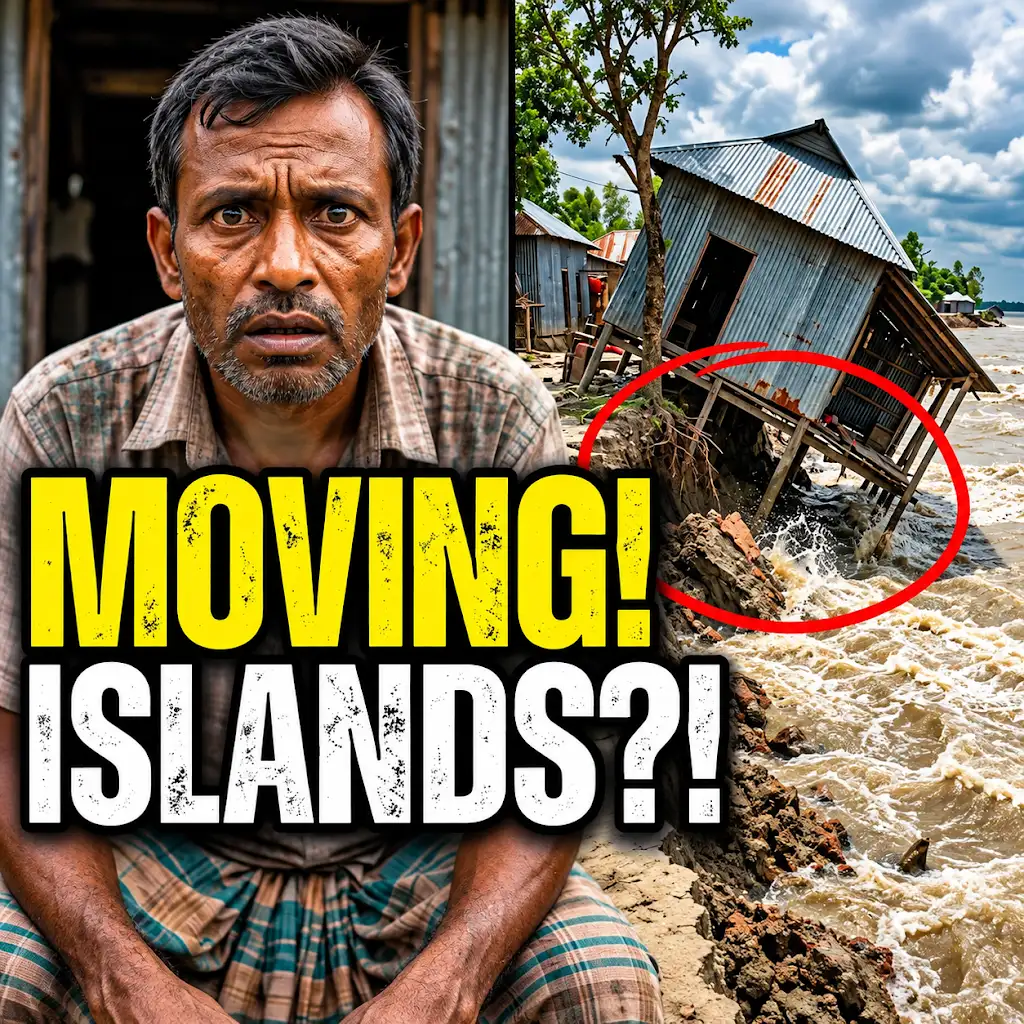
This River is Literally Erasing Islands
FAQs
What are the lost communities of the Jamuna River?
The lost communities of the Jamuna River refer to villages and settlements that have been submerged or displaced due to flooding or erosion along the riverbanks.
How many communities have been affected by the Jamuna River’s changes?
It is estimated that hundreds of communities along the Jamuna River have been impacted by the river’s changing course and flooding over the years.
What factors contribute to the loss of communities along the Jamuna River?
The loss of communities along the Jamuna River can be attributed to factors such as erosion, deforestation, climate change, and the river changing its course over time.
Are there any efforts being made to address the issue of lost communities along the Jamuna River?
Various government and non-governmental organizations are working on initiatives to help the affected communities, including relocation, building embankments, and implementing sustainable development projects.
What are some of the challenges faced by the lost communities of the Jamuna River?
The lost communities of the Jamuna River face challenges such as lack of access to basic services, displacement, loss of livelihoods, and vulnerability to natural disasters.