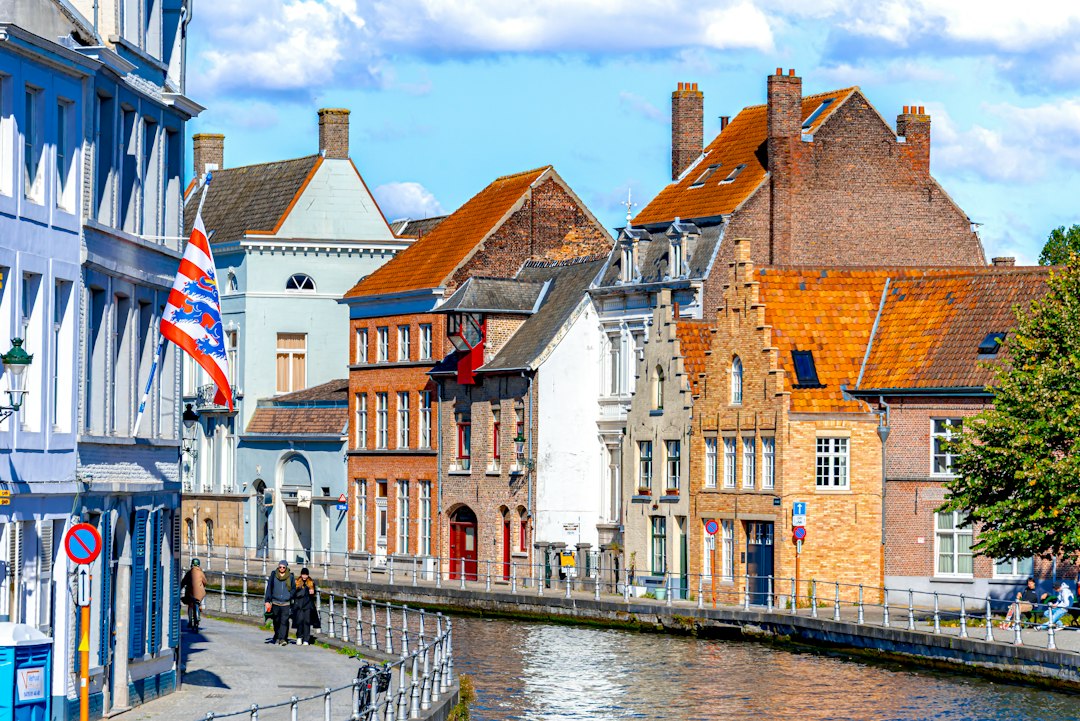
The gentle hum of conversation, a tapestry woven from different linguistic threads, often forms the background soundtrack to life in Europe. Yet, in the unassuming border towns of Belgium, this tapestry can fray, revealing the intricate and often challenging reality of the nation’s language divide. Here, where Flemish Dutch and Walloon French brush shoulders, the everyday lives of residents are shaped by a historical and political inheritance that manifests in subtle, and sometimes not-so-subtle, ways. These towns, perched precariously on the linguistic frontier, offer a unique microcosm of Belgium’s enduring bilingualism, a phenomenon that, while fostering cultural richness, also presents a constant negotiation of identity, access, and belonging.
Belgium’s linguistic landscape is not a natural phenomenon but a product of centuries of historical development, geopolitical influences, and deliberate policy choices. The current division, primarily between Dutch-speaking Flanders in the north and French-speaking Wallonia in the south, with a German-speaking minority in the east, is a relatively recent crystallization of these historical currents.
The Frankish Influence and Early Linguistic Divergence
The earliest roots of the linguistic divide can be traced back to the early Middle Ages. The region that would become Belgium was part of the Frankish Empire, and two main dialectal groups emerged: a Germanic-speaking north and a Romance-speaking south. The Franks, a Germanic people, settled in the northern part of the region, laying the groundwork for what would evolve into Dutch. In the southern regions, Roman influence and Latin persisted, forming the basis of what would become French. This initial divergence, while gradual, set the stage for a long-term linguistic separation.
The Burgundian and Habsburg Eras: Centralization and Lingual Stratification
During the Burgundian and later Habsburg periods, the Low Countries experienced increasing centralization. However, this administrative unity did not erase the existing linguistic differences. Instead, it often exacerbated them. The courts and administrative centers tended to adopt French as the language of prestige and power, a trend that continued for centuries. This meant that within the administration, and increasingly in higher education and cultural life, French became the dominant language, particularly in urban centers and among the elite, regardless of the region’s vernacular. This created a linguistic stratification where French was associated with power and social advancement, while Dutch, spoken by the majority of the population, was often relegated to a less prestigious status.
The French Revolution and its Lingual Echoes
The French Revolution and the subsequent Napoleonic era brought about significant changes. The imposition of French as the sole official language across the conquered territories, including what is now Belgium, further entrenched its dominance. While the Napoleonic administration aimed for uniformity, its linguistic policies reinforced the existing hierarchy. After Belgium gained independence in 1830, the linguistic landscape became a focal point of national identity and political struggle. The newly formed kingdom, ironically, continued to operate primarily in French.
The language divide in Belgium’s border towns has been a topic of significant interest, highlighting the cultural and social complexities that arise in multilingual regions. For an in-depth exploration of this issue, you can read the related article that discusses how language influences daily life and community interactions in these areas. To learn more, visit this article.
The Dawn of Linguistic Federalism and its Borderline Consequences
The linguistic divide within Belgium did not remain a static feature. Over the course of the 20th century, a series of legislative reforms transformed the country from a unitarian state into a federal one, with language communities playing a central role. These reforms, intended to address long-standing grievances and achieve a more equitable distribution of power, have had a profound impact on the nature of the language divide, particularly in the border towns.
The Flemish Movement and the Push for Linguistic Equality
The 19th and early 20th centuries witnessed the rise of the Flemish Movement, a powerful socio-political force advocating for the recognition and elevation of the Dutch language and Flemish culture. This movement sought to redress the historical imbalance where French held a privileged position. Through persistent activism, lobbying, and electoral pressure, the Flemish Movement gradually achieved its goals, leading to a series of “language laws” that recognized Dutch and French as official languages and began to delineate linguistic territories.
The Establishment of Linguistic Regions and the Creation of the Brussels-Capital Region
A pivotal moment in Belgian linguistic history was the establishment of distinct linguistic regions in the 1960s and 1970s. Flanders was designated as the Dutch-speaking region, Wallonia as the French-speaking region, and a small German-speaking minority area was also recognized. This territorial division, however, created a complex situation for Brussels, a historically bilingual city surrounded by Flanders, which was eventually recognized as a distinct, officially bilingual region. This federalization process, while seemingly bringing clarity, created new complexities, particularly along the internal linguistic borders.
The Impact on Border Towns: A Zone of Transition
The establishment of linguistic regions meant that border towns, which historically existed in a more fluid linguistic space, were now officially assigned to one linguistic community or the other. This has had a significant impact on their character, their administrative structures, and the everyday lives of their inhabitants. For towns with a mixed population, this official demarcation has sometimes led to a reassertion of one language over the other, or a heightened awareness of linguistic identity, creating a sense of being on the frontline of the national language divide.
The Daily Realities of the Language Divide in Border Towns
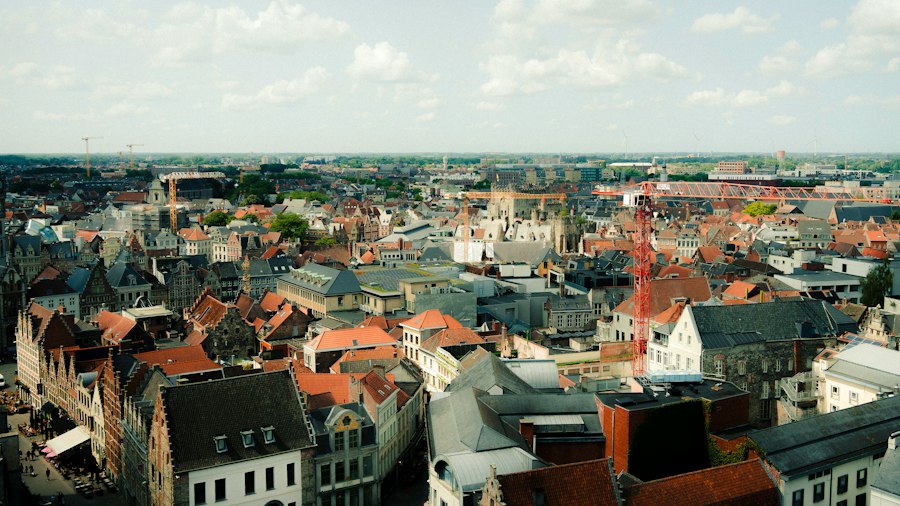
Life in Belgium’s border towns is characterized by a constant, often unconscious, negotiation of linguistic boundaries. While the official maps may delineate clear linguistic territories, the human reality is far more nuanced, marked by a blend of languages, cultures, and sometimes, a palpable sense of being caught between two worlds.
Bilingualism as a Lived Experience, Not Just a Policy
In many border towns, bilingualism is not merely a political construct but a lived experience. Families may have members who speak Dutch and others who speak French. Children may attend schools that are predominantly French-speaking but grow up in a Dutch-speaking environment, or vice-versa. This constant exposure to both languages fosters a practical form of bilingualism, even if official policies or educational systems lean towards one language. However, this can also lead to challenges in accessing services or fully participating in public life if one’s proficiency in the dominant language of the administrative region is limited.
The Access to Services: Navigating Linguistic Gateways
One of the most significant practical implications of the language divide in border towns is the access to public services. Official administrative bodies, hospitals, and municipal services are generally required to operate in the official language of the region. This means that a French-speaking resident of a Dutch-speaking border town might face difficulties communicating with their local town hall, or a Dutch-speaking resident in a French-speaking border town might struggle with official paperwork. While provisions for translation and interpretation exist, they can sometimes be cumbersome and less efficient than direct communication in one’s native tongue.
Education: The Frontline of Linguistic Identity
The educational system in Belgium is strictly divided along linguistic lines. Schools are either Dutch-language or French-language institutions, and enrollment is typically determined by the linguistic region in which the child resides. For border towns, this can mean that children may have to travel to a neighboring municipality to attend a school in their preferred language, or they may be enrolled in a school where the dominant language is not their mother tongue. This can lead to anxieties about academic performance, social integration, and the preservation of linguistic heritage.
The “Facilitated Communes”: A Unique Linguistic Anomaly
A particularly interesting phenomenon in the border region are the so-called “facilitated communes.” These are municipalities along the linguistic frontier that have a significant minority population of the other language. To cater to this linguistic diversity, these communes are granted special “facilities,” meaning that official documents and communications are available in both Dutch and French, and administrative staff are expected to be proficient in both languages. These facilities, however, are often a source of political tension and debate, with some advocating for their expansion and others seeking to limit their scope. They represent a tangible attempt to bridge the linguistic divide but also highlight its persistent presence.
The Political Dimension: A Constant Balancing Act

The language divide in Belgium is not merely a cultural or social phenomenon; it is deeply embedded in the country’s political fabric. The federal structure, with its emphasis on linguistic communities and regions, means that language issues are perpetually on the political agenda, influencing everything from government formation to local governance in the border towns.
The Rise of Linguistic Parties and their Influence
Belgian politics is characterized by the presence of parties that are strongly aligned with linguistic interests. In Flanders, parties like the N-VA (New Flemish Alliance) advocate for greater Flemish autonomy, while in Wallonia, parties often champion the rights and interests of the French-speaking community. These parties wield considerable influence, and their stances on linguistic matters can significantly impact policies affecting border towns. Debates surrounding the facilitation of communes, linguistic rights in Brussels, and the allocation of resources often revolve around these linguistic divisions.
Federalization and Decentralization: Shifting Power Dynamics
The ongoing process of federalization and decentralization in Belgium has aimed to give more autonomy to the linguistic communities and regions. While this has empowered Flanders and Wallonia, it has also created a complex web of responsibilities and competences that can be challenging to navigate at the local level, especially in border areas. Decisions made at the federal or regional level can have immediate and significant repercussions for the residents of these towns, often with limited local input.
The Future of Linguistic Harmony: Challenges and Opportunities
The future of linguistic harmony in Belgium’s border towns, and indeed in the country as a whole, remains an open question. The challenges are considerable, stemming from historical resentments, differing political visions, and the practical difficulties of managing a deeply ingrained linguistic divide. However, there are also opportunities for greater understanding and cooperation.
In Belgium, the language divide between border towns has created a unique cultural landscape that reflects the country’s complex history. This division often influences daily life, education, and local governance, leading to intriguing interactions among residents. For a deeper understanding of how these dynamics play out in various regions, you can explore a related article that delves into the nuances of this linguistic divide. Check it out here to gain more insights into the fascinating interplay of language and community in Belgium’s border towns.
Cultural Exchange and the Blurring of Lines
| Town | Region | Primary Language | Population | Language Divide Impact | Cross-border Interaction |
|---|---|---|---|---|---|
| Arlon | Wallonia (Luxembourg Province) | French | 29,000 | Minor tensions due to French-Dutch language border | High (close to Luxembourg and German borders) |
| Hasselt | Flanders (Limburg Province) | Dutch | 79,000 | Low, predominantly Dutch-speaking area | Moderate (near Dutch border) |
| Maastricht (Netherlands) | Netherlands | Dutch | 122,000 | N/A (Dutch-speaking) | High (close to Belgian border) |
| Comines | Wallonia (Hainaut Province) | French | 10,000 | Moderate, bilingual services due to proximity to Flanders | High (border with Flanders) |
| Lanaken | Flanders (Limburg Province) | Dutch | 24,000 | Low, Dutch-speaking majority | Moderate (near Dutch border) |
| Welkenraedt | Wallonia (Liège Province) | French | 9,000 | Minor language divide issues | Moderate (close to German border) |
Despite the official divisions and political tensions, the inherent proximity and shared history of Belgium’s border towns have fostered a degree of cultural exchange and a blurring of linguistic lines. This is often driven by personal connections, economic interdependence, and a shared European identity.
Cross-Border Connections: Personal and Professional
Many residents of border towns have personal connections that transcend linguistic barriers. Families may live on opposite sides of the linguistic frontier, fostering a natural bilingualism. Furthermore, economic ties often lead to cross-border commuting for work, further integrating communities and promoting linguistic interaction. These everyday connections can act as a powerful force for bridging the divide.
Shared Heritage and Cultural Crossovers
While distinct linguistic identities are strong, there are also shared aspects of culture and heritage in Belgium’s border regions. Historical influences, shared culinary traditions, and even similar geographical landscapes can create a sense of common ground. This shared heritage provides fertile ground for cultural crossovers, where artistic expressions, music, and even language can influence and blend, creating unique local flavors.
The Role of Youth in Fostering Intercultural Understanding
Younger generations, often more open to new ideas and less burdened by historical grievances, have a crucial role to play in fostering intercultural understanding. Educational initiatives that promote language learning and cultural exchange between Dutch-speaking and French-speaking schools in border regions can be instrumental in building bridges and fostering a more inclusive future. Exposure to different languages and cultures from an early age can help dismantle stereotypes and cultivate a greater appreciation for Belgium’s linguistic diversity.
The Concept of a “Third Space”: Where Languages Converge
In some border towns, a “third space” emerges, a colloquial term for a space where neither Dutch nor French is exclusively dominant, and a unique blend of both languages, and perhaps even local dialect, is spoken. This is not necessarily a formal linguistic policy, but a natural evolution of communication born out of necessity and proximity. In these spaces, individuals may code-switch effortlessly, adapting their language use to their interlocutor, demonstrating a fluid and practical approach to bilingualism that bypasses the rigidities of official linguistic divisions. This informal linguistic convergence offers a glimpse into a more integrated and less fragmented future.
In conclusion, the language divide in Belgium’s border towns is a complex phenomenon, deeply rooted in history and continuously shaped by political realities. While official policies have drawn clear lines, the lived experiences of residents often paint a more nuanced picture, characterized by pragmatic bilingualism, personal connections, and a subtle blurring of linguistic boundaries. These towns, perched on the edge of linguistic territories, are not simply markers of division but dynamic spaces where Belgium’s linguistic heritage is negotiated daily, offering both challenges and profound opportunities for cultural understanding and the forging of a unified, albeit linguistically diverse, national identity. The ongoing evolution of these borderlands holds valuable lessons for managing linguistic diversity in an increasingly interconnected world.

Belgium Has a Border With No Wall — Here’s Why
FAQs
What is the language divide in Belgium border towns?
The language divide in Belgium border towns refers to the linguistic differences between the Dutch-speaking region of Flanders and the French-speaking region of Wallonia.
How did the language divide in Belgium border towns come about?
The language divide in Belgium border towns has historical roots dating back to the country’s complex history of being ruled by various European powers. The linguistic divide was further solidified by the division of Belgium into linguistic regions in the 20th century.
Which are some of the prominent Belgium border towns affected by the language divide?
Prominent Belgium border towns affected by the language divide include cities like Brussels, Antwerp, Ghent, and Liège, where both Dutch and French are commonly spoken.
What are the implications of the language divide in Belgium border towns?
The language divide in Belgium border towns can lead to issues related to governance, education, and cultural identity. It can also create challenges in communication and cooperation between the Dutch-speaking and French-speaking communities.
How does the Belgian government address the language divide in border towns?
The Belgian government has implemented policies to promote bilingualism and ensure equal rights for both Dutch-speaking and French-speaking communities in border towns. Additionally, there are language laws in place to protect the linguistic rights of citizens in different regions of Belgium.