The story of the Aral Sea is a stark, haunting testament to the power of human ambition and its devastating ecological consequences. Once the fourth-largest lake in the world, a vibrant and vital body of water teeming with life, it has been reduced to a mere fraction of its former glory, a haunting specter of what once was. This dramatic shrinking, a human-induced catastrophe, offers a profound lesson in the delicate balance of ecosystems and the far-reaching repercussions of unchecked development. The Aral Sea’s disappearance from the map is not just a geographical shift; it is a human impact of unparalleled magnitude, a narrative of ecological erasure etched in salt and dust.
A Watery Oasis in an Arid Land
For millennia, the Aral Sea served as a critical lifeline in the vast, arid expanse of Central Asia. Fed by two mighty rivers, the Amu Darya and the Syr Darya, it was a vast inland sea, stretching over 68,000 square kilometers at its peak. Its waters were not only a source of sustenance for local populations but also a crucial component of the region’s biodiversity. The sea was a vibrant ecosystem, supporting a rich variety of fish species, including sturgeon, carp, and pike, which formed the backbone of a thriving fishing industry. Its shores were dotted with bustling port towns like Aralsk and Muynak, where the salty air was filled with the calls of fishermen and the scent of drying fish. The Aral Sea was more than just a body of water; it was the heart of a regional economy and culture.
A Cradle of Biodiversity and Economic Prosperity
The ecological richness of the Aral Sea was astounding. Its saline waters, varying in salinity over time and by location, fostered a unique environment where life adapted and flourished. Numerous species of fish, some endemic to the region, provided a consistent source of protein for millions. The fishing industry, centered around Aralsk and Muynak, was a significant employer and economic driver for the surrounding republics of the Soviet Union, particularly Uzbekistan and Kazakhstan. Large processing plants churned out canned fish, and fleets of fishing vessels plied the waters. Beyond the direct economic benefits of fishing, the Aral Sea also influenced the regional climate, moderating temperatures and providing a source of moisture that supported agriculture in the surrounding oases. The sea was a critical element in a complex ecological web, its health intrinsically linked to the well-being of the entire region.
Lifeblood of Communities: Beyond Economics
The impact of the Aral Sea extended far beyond its economic contributions. For the communities that lived on its shores, it was an integral part of their identity and way of life. The fishing traditions, passed down through generations, were a source of pride and cultural continuity. The vastness of the sea inspired awe and wonder, shaping the local folklore and artistic expressions. Children learned to swim in its waters, and families gathered on its beaches. The Aral Sea was a living entity that sustained not only bodies but also spirits. The rhythms of life in Aralsk and Muynak were dictated by the ebb and flow of the sea, the arrival of migratory birds, and the abundance of the fish catch. This deep, interwoven relationship created a sense of belonging and dependence that would be brutally severed.
In a fascinating exploration of human impact on the environment, the article “Humans Erased a Sea from the Map” delves into the consequences of extensive water diversion and climate change that led to the near disappearance of the Aral Sea. This dramatic transformation highlights the urgent need for sustainable water management practices. For more insights on geographical changes and their implications, you can read more at My Geo Quest.
The Grand Soviet Plan: Ambition Takes Precedence
The Virgin Lands Campaign and the Thirst for Cotton
In the mid-20th century, under the fervent drive of Soviet agricultural policy, a grand vision began to take shape: to transform the arid plains of Central Asia into a global powerhouse for cotton production. The “Virgin Lands Campaign,” initiated in the 1950s, aimed to cultivate vast new areas of land for agriculture, with cotton being the primary focus due to its high demand and profitability. To achieve this ambitious goal, however, massive amounts of water were needed, far exceeding the natural rainfall of the region. The Aral Sea, with its seemingly inexhaustible supply of water, became the obvious, albeit ultimately catastrophic, solution. The decision was made to divert the waters of the Amu Darya and Syr Darya, the very rivers that fed the Aral Sea, for irrigation.
Engineering a Miracle: The Karakum Canal and Beyond
The centerpiece of this ambitious irrigation scheme was the Karakum Canal, a colossal engineering project designed to bring water from the Amu Darya across hundreds of kilometers of desert to irrigate cotton fields. Construction began in 1954 and continued for decades, with millions of cubic meters of earth moved and immense resources poured into its creation. This canal, along with a network of smaller canals, dams, and pumping stations, was intended to create an agricultural utopia, a verdant landscape blooming with cotton in the heart of the desert. The ideology of the time championed human ingenuity’s ability to conquer nature, and the Aral Sea was viewed as a mere reservoir to be tapped for this monumental endeavor. The long-term ecological consequences were largely ignored in the pursuit of immediate economic gains and the fulfillment of ambitious production quotas.
The Illusion of Abundance: Short-Term Gains, Long-Term Loss
The immediate impact of these diversions was a surge in cotton production. The Soviet Union’s cotton output soared, contributing significantly to its economy and fulfilling its strategic agricultural goals. The success of these irrigation projects was hailed as a triumph of socialist planning and human endeavor. However, this perceived abundance was built on a foundation of ecological unsustainability. The water diverted for irrigation was not returned to the Aral Sea, and much of the water that did reach the fields was lost to evaporation, seepage, and inefficient agricultural practices. The vast quantities of water being siphoned off were not a surplus, but the lifeblood of the Aral Sea. The illusion of abundant water for agriculture masked the slow, insidious death of an entire ecosystem.
The Shrinking Sea: A Visible Tragedy Unfolds

Rivers Diverted, Life Withdrawn
As the irrigation canals drew water away from the Amu Darya and Syr Darya, the Aral Sea began its agonizing decline. The volume of water flowing into the sea dwindled year by year. By the 1970s, the reduction in inflow was becoming starkly apparent. The sea’s coastline began to recede, exposing vast expanses of dry land. The once-navigable waterways that connected communities became shallow trickles, and the vibrant port towns found themselves stranded miles from the water’s edge. The once-proud fishing fleets were grounded, their timbers slowly decaying in the sun. The visual evidence of the sea’s retreat was undeniable, a slow-motion disaster unfolding before the eyes of the world, yet often met with a deafening silence from those in power.
Salinity Spikes and Ecological Collapse
The shrinking of the Aral Sea led to a dramatic increase in its salinity. As the water volume decreased, the salt that was naturally present became more concentrated. This escalating salinity proved devastating to the indigenous fish species, most of which were adapted to a specific range of salinity levels. One by one, the fish populations began to collapse. The sturgeon, once a prized catch, disappeared entirely. The once-thriving fishing industry, the economic heart of towns like Aralsk, was decimated. This ecological collapse had a cascading effect, impacting the entire food web, from the plankton to the birds that relied on the fish. The vibrant biodiversity that once characterized the Aral Sea was replaced by a barren, saline wasteland.
The Ghost Ports: A Legacy of Abandonment
The most poignant symbols of the Aral Sea’s demise are its ghost ports. Aralsk and Muynak, once bustling centers of maritime activity, are now haunting monuments to human folly. The remains of ships, rusted and weathered, lie stranded in the desert, remnants of a time when water lapped at their hulls. The buildings of these towns stand empty, their windows staring out at a landscape that has been irrevocably altered. The former docks are now kilometers from the water, their pilings reaching uselessly into the sand. The inhabitants, once sustained by the sea, were forced to abandon their homes, their livelihoods, and their heritage, leaving behind a palpable sense of loss and desolation. The silence of these ghost towns speaks volumes about the devastating human impact.
The Dust Bowl of the Aral: A New, Deadly Threat

Salt and Toxic Dust Storms
As the Aral Sea dried, its exposed seabed became a vast desert of salt and contaminated sediment. This dry, pulverized seabed, laden with accumulated agricultural chemicals and heavy metals from decades of intensive pesticide use, became a source of deadly dust storms. These storms, often immense and far-reaching, carried toxic dust for hundreds, even thousands, of kilometers across Central Asia and beyond. The fine particles, laden with salt, pesticides, and other pollutants, were carried by the wind, creating a pervasive and insidious environmental hazard. The once life-giving sea had transformed into a source of ecological poisoning.
Health Crisis in the Region
The consequences of these toxic dust storms for human health in the surrounding regions have been dire. Respiratory illnesses, including asthma and bronchitis, have become rampant. The increased exposure to salt and chemical contaminants has also been linked to higher rates of cancer, particularly among children. Birth defects and other health problems have also been reported at alarming rates. The communities that once thrived on the bounty of the Aral Sea are now struggling with a legacy of disease and suffering, a direct consequence of the environmental degradation. The air they breathe, the water they drink, and the land they inhabit have all been poisoned.
The Expanding Desert: Desertification’s Grip
The drying of the Aral Sea has accelerated the process of desertification in the region. The loss of the moderating influence of the sea has led to more extreme temperatures, with hotter summers and colder winters. The once fertile lands surrounding the sea have become increasingly arid, making agriculture difficult and unsustainable. The encroaching desert poses a significant threat to food security and the livelihoods of the remaining populations. The ecological imbalance created by the Aral Sea’s disappearance has unleashed a relentless march of desertification, further shrinking the habitable areas of Central Asia.
In a fascinating exploration of environmental changes, the article on how humans erased a sea from the map sheds light on the impact of human activities on natural landscapes. This transformation not only affects local ecosystems but also alters the cultural and historical significance of the regions involved. For a deeper understanding of these changes and their implications, you can read more in this insightful piece found here.
The Long Road to Recovery: A Fragile Hope
| Location | Sea Name | Year Erased |
|---|---|---|
| Mesopotamia | Aral Sea | 1960s-present |
| China | East China Sea | Unknown |
| United States | Salton Sea | 1905-present |
The North Aral Sea Project: A Glimmer of Hope
Recognizing the catastrophic consequences, efforts have been made, albeit belatedly, to mitigate the damage. The most significant and successful initiative has been the North Aral Sea Project, initiated in the early 2000s with international support. This project involved the construction of the Kok-Aral Dam, a dike built to separate the northern, smaller part of the Aral Sea from the southern, more severely affected sections. This measure has allowed the Syr Darya river’s waters to partially refill the North Aral. The results have been surprisingly positive, with the salinity of the North Aral decreasing and some fish species beginning to return.
Challenges and Setbacks: The Scale of the Damage
Despite the successes in the North Aral Sea, the challenges remain immense. The southern Aral Sea, which received the majority of the water from the Amu Darya, is largely a desiccated wasteland. The scale of the ecological damage is so profound that a complete restoration to its former glory seems highly improbable. The toxic legacy of the exposed seabed continues to pose a significant threat, and the altered regional climate is a stubborn reality. Furthermore, the economic and social recovery for the displaced communities is a long and arduous process, requiring sustained investment and political will. The Aral Sea serves as a stark reminder that ecological wounds inflicted can be slow to heal, if they heal at all.
Lessons Learned and the Future
The story of the Aral Sea is a profound cautionary tale for humanity. It underscores the critical importance of understanding and respecting ecological limits, the dangers of prioritizing short-term economic gains over long-term sustainability, and the interconnectedness of all living systems. The mistakes made in Central Asia offer invaluable lessons for other regions facing similar environmental challenges. As the world grapples with climate change and resource scarcity, the Aral Sea’s ghost whispers a vital warning: the consequences of human impact can be irreversible, and the erasure of a sea from the map is a tragedy that echoes far beyond its geographical boundaries. The future demands a more responsible and sustainable approach to our relationship with the natural world, lest we repeat the devastating mistakes of the past.
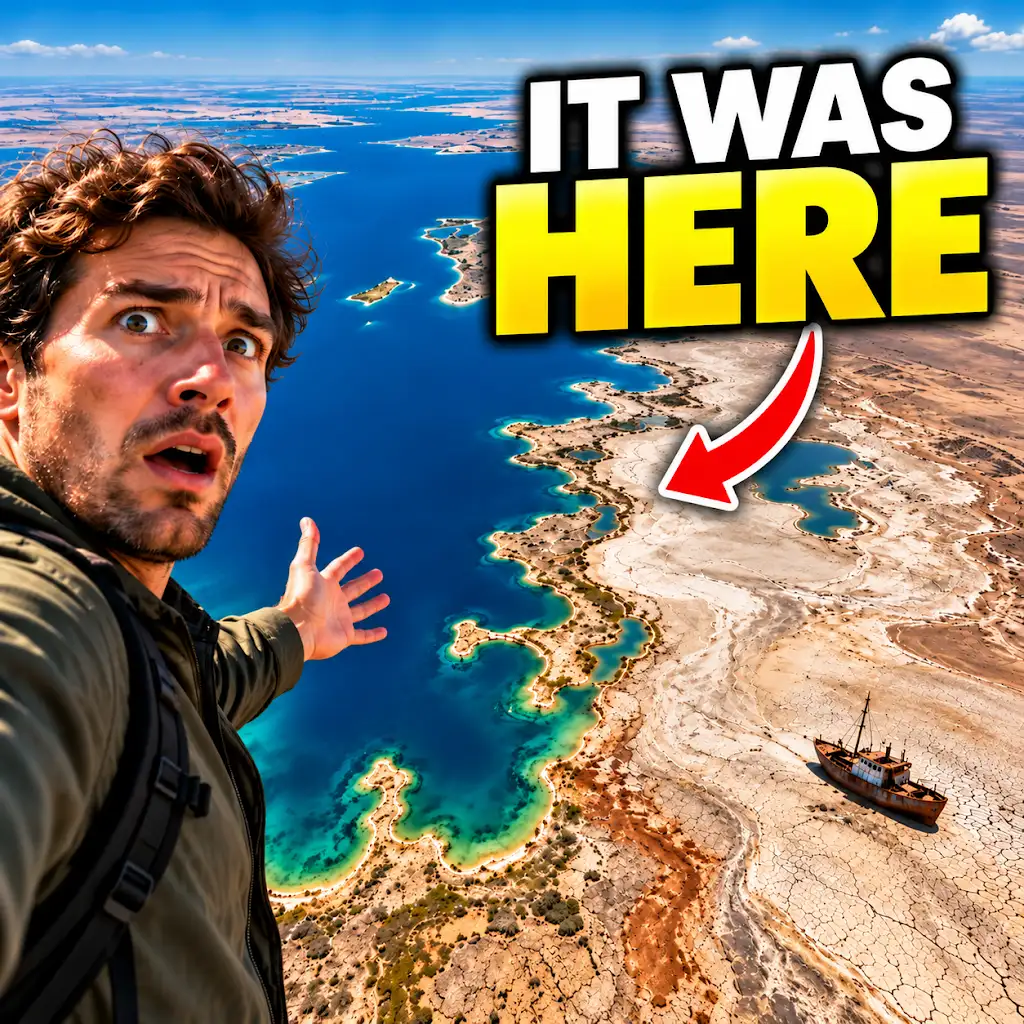
The Sea the Soviet Union Erased From the Map
FAQs
What sea was erased from the map by humans?
The Aral Sea, located in Central Asia, was significantly reduced in size due to human activities such as diverting water for irrigation.
How did humans contribute to the disappearance of the Aral Sea?
The main contributors to the shrinking of the Aral Sea were the diversion of water from its two main tributaries for irrigation purposes and the lack of adequate conservation measures.
What were the environmental consequences of the disappearance of the Aral Sea?
The disappearance of the Aral Sea led to a range of environmental consequences, including the exposure of toxic chemicals and salts from the exposed seabed, the loss of biodiversity, and the disruption of local climate patterns.
What efforts have been made to address the shrinking of the Aral Sea?
Efforts to address the shrinking of the Aral Sea have included the construction of dams and canals to redirect water flow, as well as international initiatives to promote sustainable water management in the region.
What lessons can be learned from the disappearance of the Aral Sea?
The disappearance of the Aral Sea serves as a stark reminder of the environmental impact of human activities, highlighting the importance of sustainable water management and conservation efforts.