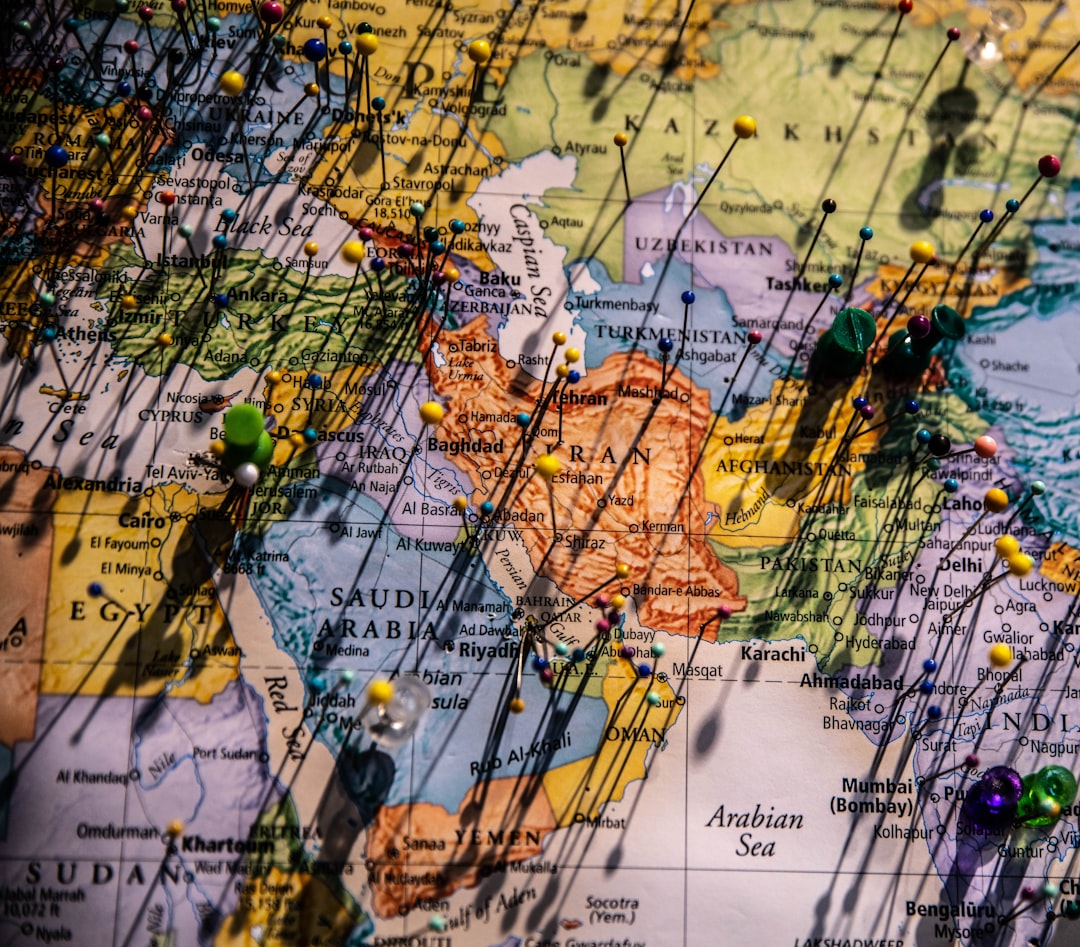
Sometimes, the ground beneath our feet, or the way water flows, or even where the land itself ends, does something unexpected. These aren’t just quirks of nature; they’re geographic anomalies that have profoundly reshaped history, guiding explorers, sparking conflicts, and altering the course of human civilization in ways we might not always immediately recognize.
The Allure of the Unseen: Early Exploration and the Pull of Imagined Lands
For centuries, the edges of the known world were as much a realm of speculation as of geography. Imagine sailing into the vast unknown, with only ancient texts and whispers as your guide to what lay beyond the horizon. This was the reality for early explorers, and geographic anomalies played a significant role in their journeys.
The Myth of the Seven Cities of Cibola
Stories of legendary cities of gold, like Cíbola, fueled expeditions into North America. While the actual wealthy civilizations of Mesoamerica were far to the south, the allure of these mythical lands drove figures like Francisco Vázquez de Coronado on vast, arduous searches. The very concept of these anomalies, even if untrue, was enough to propel people across continents.
- The Power of Rumor: Oral traditions and embellished accounts were potent forces. Explorers weren’t just looking for land; they were often chasing legends, a testament to how anomalies, even imagined ones, can act as powerful motivators.
- The Reality Check: Coronado’s expedition found no golden cities, but it did vastly expand European knowledge of the American Southwest. The anomaly then, in a way, became the discrepancy between legend and reality, and the resulting exploration was the historical outcome.
The Strait of Anian and the Northwest Passage
For European powers, the dream of a shorter trade route to Asia was a constant obsession. The idea of a navigable strait connecting the Atlantic and Pacific oceans in the north – the Strait of Anian – became a persistent geographic anomaly that haunted cartographers and lured adventurers for centuries.
- Cartographic Dreams: Early maps often included speculative coastlines and passages, reflecting not just what was known, but what was hoped for. The Strait of Anian was a prime example of this.
- The Persistent Hope: Despite numerous failed attempts by explorers like Sir Francis Drake and Martin Frobisher, the belief in a Northwest Passage persisted, a geographic anomaly that kept giving rise to risky endeavors. The eventual discovery of the actual, treachero us Northwest Passage by Roald Amundsen in 1906 was the fulfillment of this long-held wish, though its commercial viability remained limited for many years.
Geographic anomalies have played a significant role in shaping historical events, influencing everything from trade routes to military strategies. One fascinating example is the article on MyGeoQuest that explores how the unique topography of the Himalayas affected the outcomes of various historical conflicts in the region. The article delves into how these geographical features not only provided natural barriers but also influenced the movement of armies and the establishment of trade routes. For more insights into how geography has impacted history, you can read the full article here: MyGeoQuest.
Waterways of Wealth and War: Rivers, Straits, and Naval Power
Water has always been the lifeblood of trade and the highway of conquest. Geographic anomalies related to water – unusual river courses, strategically vital straits, or unexpected freshwater sources in arid lands – have repeatedly been central to historical power struggles.
The Nile’s Predictable Unpredictability
The Nile River is perhaps one of the most striking examples of a geographic feature that, through its predictable annual flooding, created a civilization. However, its very nature, its dependence on distant, unknown sources, also presented an anomaly that spurred curiosity and control.
- The Gift of the Flood: The predictable inundation of the Nile brought fertile silt, enabling agriculture in an otherwise desert region. This anomaly of life-giving water in an arid landscape was the bedrock of ancient Egyptian civilization.
- The Mystery of the Source: For millennia, the source of the Nile remained a tantalizing enigma. This geographic anomaly of a massive river appearing as if from nowhere fueled centuries of exploration, culminating in the identification of Lake Victoria as a major source in the 19th century. The control of the Nile’s waters has continued to be a source of geopolitical interest well into modern times.
The Strategic Strait of Gibraltar
The Strait of Gibraltar, a narrow passage connecting the Atlantic Ocean to the Mediterranean Sea, is a natural choke point. Its unique geography has made it a focal point for empires and conflicts throughout history, from ancient Phoenicians to modern navies.
- “Pillars of Hercules”: The ancient Greeks and Romans considered the rocks on either side of the strait, connected by the myth of Hercules, as the edge of the known world. This perceived anomaly of a great sea pouring into a vast ocean marked a significant boundary.
- Naval Dominance: Control of this strait has consistently been key to naval power. Whoever commanded Gibraltar could effectively control access to the wealthy Mediterranean basin, leading to countless naval battles and strategic maneuvers. The presence of both Spain and the UK on its shores today highlights its enduring strategic importance.
The Suez Canal: A Man-Made Anomaly Changing World Trade
While many anomalies are natural, humans have also created them. The Suez Canal, completed in 1869, is a prime example of an artificial geographic anomaly that revolutionized global trade and naval movements.
- Bridging Continents: Connecting the Mediterranean Sea to the Red Sea, it dramatically shortened the sea route between Europe and Asia. Before its construction, ships had to navigate the long and perilous journey around the Cape of Good Hope.
- Economic and Political Impact: The Suez Canal immediately became a vital artery for global commerce. Its creation led to shifts in economic power and was a significant factor in colonial ambitions and geopolitical maneuvering, most notably during the Suez Crisis of 1956.
Islands of Opportunity and Isolation: Anomaly and Development
The presence or absence of islands, their size, their proximity to continents, or their unique geological formations, have all acted as geographic anomalies that have shaped human settlement, trade, and even the evolution of species.
Sri Lanka: The Pearl of the Indian Ocean
Located just off the southeastern coast of India, Sri Lanka is a large island that has experienced a distinct historical trajectory due to its island status. This geographic anomaly has fostered a unique culture and economy, while also presenting challenges.
- Natural Barrier and Trade Hub: As an island, Sri Lanka has historically been somewhat protected from continental invasions, allowing for the development of its own distinct kingdoms and cultures. Simultaneously, its location has made it a crucial point on ancient maritime trade routes.
- Resource Rich: The island’s geology has endowed it with valuable resources like precious gems, spices, and later, tea and rubber plantations, further enhancing its economic significance.
The Galapagos Islands: A Crucial Anomaly for Scientific Discovery
The Galapagos Islands, a volcanic archipelago in the Pacific Ocean, are a remote and geologically young landmass. Their isolation and unique environments have made them a profound geographic anomaly, with far-reaching scientific implications.
- Evolutionary Laboratories: The isolation of the Galapagos led to the evolution of unique species, found nowhere else on Earth. This biological anomaly provided Charles Darwin with the crucial evidence for his theory of natural selection.
- Ongoing Research: The islands continue to be a living laboratory for evolutionary biologists and ecologists, offering insights into adaptation and speciation. The ongoing management and conservation of this unique ecosystem highlight the challenges of protecting such an anomaly.
Madagascar: A Continent in Miniature
The island of Madagascar, off the eastern coast of Africa, is the fourth-largest island in the world. Its colossal size and long separation from the mainland have resulted in a remarkable biodiversity and a distinct cultural identity.
- Endemic Life: Due to its isolation, over 80% of Madagascar’s wildlife, including its famous lemurs, are found nowhere else on Earth. This biological anomaly is a direct consequence of its geographic separation.
- Unique Human Migration: The human settlement of Madagascar appears to have involved migrations from both Africa and Southeast Asia, creating a unique blend of genetic and cultural influences, a testament to how geographic anomalies can shape human populations.
Landforms That Defy Expectation: Deserts, Mountains, and the Making of Nations
Exceptional landforms, from the most forbidding deserts to the most impassable mountain ranges, have acted as both barriers and cradles for human societies, significantly influencing political boundaries and cultural development.
The Sahara Desert: A Dividing Line and a Crucible
The Sahara Desert, the largest hot desert in the world, is a profound geographic anomaly that has historically acted as a formidable barrier across North Africa. Its harshness shaped ancient trade routes and cultural interactions.
- Trans-Saharan Trade: Despite its forbidding nature, the Sahara facilitated intense trade networks, connecting North Africa with sub-Saharan Africa. Caravans braved the desert, trading goods and ideas, a testament to the resilience of human endeavor in the face of geographic extremity.
- Cultural and Political Division: The Sahara has historically served as a significant dividing line between different cultural and political spheres in Africa, impacting the development of distinct empires and societies on its northern and southern fringes.
The Himalayas: The Roof of the World and a Natural Border
The Himalayas, the world’s highest mountain range, represent an extreme geographic anomaly that has shaped entire regions. Their sheer scale has influenced climate, human migration, and the formation of nations.
- Climate Control: The Himalayas act as a massive natural barrier, influencing monsoon patterns in South Asia and creating distinct microclimates on their northern and southern slopes.
- Political Boundaries: The range has served as a formidable natural border between China and India, defining political territories and influencing historical interactions between these two giants. Passage through the Himalayas has always been difficult and controlled, shaping the nature of relations.
The Great Rift Valley: A Scar on the Earth and a Cradle of Humanity
The Great Rift Valley, a series of geological faults stretching through East Africa, is a dramatic geographic anomaly that has profoundly impacted both the environment and human history.
- Fossil Discoveries: The geological processes that created the Rift Valley have led to the preservation of incredibly rich fossil beds. These discoveries have provided unparalleled insights into early human evolution, making it a critical site for understanding our origins.
- Resource Richness and Conflict: The valley’s geological activity also leads to fertile soils and volcanic activity in some areas, while creating arid regions in others. This uneven distribution of resources has influenced settlement patterns and, at times, led to resource-based conflicts throughout history.
Geographic anomalies have often played a crucial role in shaping historical events, influencing everything from trade routes to military strategies. For instance, the unique topography of the Himalayas not only served as a natural barrier but also facilitated the spread of cultural exchanges between India and Tibet. To explore more about how such geographic features have impacted history, you can read this insightful article on the subject at My Geo Quest. Understanding these anomalies helps us appreciate the intricate relationship between geography and historical developments.
Hidden Treasures and Strategic Depths: Underground Anomalies and Maritime Secrets
Beneath the surface of the earth or in the depths of the ocean lie geographic anomalies that have been sought, exploited, and guarded with great fervor, impacting economies and military strategies.
The Mammoth Caves: A Subterranean Anomaly Shaping Human Use
The Mammoth Cave system in Kentucky, USA, is the longest known cave system in the world. This vast subterranean anomaly has been utilized by humans for millennia, from prehistoric peoples to modern tourism.
- Ancient Shelters and Resources: Archeological evidence shows that prehistoric peoples used the dry, stable environment of the caves for shelter and for obtaining minerals like gypsum and mirabilite, salts essential for various uses.
- Modern Exploitation: Beyond its historical human use, the cave system today is a major tourist attraction and a site of scientific research, demonstrating the enduring appeal and utility of such massive underground geographic anomalies.
The Mariana Trench: An Oceanic Anomaly and a Frontier of Exploration
The Mariana Trench, the deepest known oceanic trench on Earth, represents an extreme geographic anomaly in the ocean floor. Its unfathomable depths present a unique challenge and a frontier for exploration.
- Extreme Environment: The immense pressure, complete darkness, and near-freezing temperatures of the trench create an environment where life has adapted in extraordinary ways, contributing to our understanding of extremophile biology.
- Scientific and Technological Push: The challenges of exploring the Mariana Trench have driven innovation in submersible technology and deep-sea exploration, pushing the boundaries of what we can discover and understand about our planet.
The Strategic Importance of Islands and Archipelagos
Beyond Sri Lanka or Madagascar, countless smaller islands and archipelagos have played outsized roles in history due to their geographic anomalies – their isolation, their strategic location on trade routes, or their unique resources.
- Naval Outposts: Islands like Malta, the Falklands, or Singapore have served as crucial naval bases and refueling stations, altering the balance of power during various conflicts. Their very existence as landmasses in the vast sea made them indispensable.
- Trade Hubs: Places like Hong Kong or Zanzibar historically capitalized on their island geography to become major trading centers, facilitating the exchange of goods and cultures across vast distances. Their anomaly lay in being accessible points in a sea of water.
Geographic anomalies are not mere curiosities; they are powerful forces that have steered the ship of human history. Whether it’s an unexpected river, an impassable mountain, or an isolated island, these quirks of our planet have demanded adaptation, spurred innovation, and, in many cases, dictated the very shape of the world we inhabit.
FAQs
What are geographic anomalies?
Geographic anomalies are unusual or unexpected features of the Earth’s surface that deviate from the norm. These anomalies can include natural formations such as mountains, rivers, and valleys, as well as unusual weather patterns and geological phenomena.
How have geographic anomalies changed history?
Geographic anomalies have had a significant impact on human history. They have influenced the outcomes of wars, the development of civilizations, and the course of exploration and trade. For example, the Himalayas have acted as a natural barrier, shaping the history and culture of the Indian subcontinent.
What are some examples of geographic anomalies that changed history?
Examples of geographic anomalies that changed history include the formation of the Panama Canal, which revolutionized global trade and transportation, and the eruption of Mount Tambora in 1815, which led to the “Year Without a Summer” and widespread famine and social unrest.
How do geographic anomalies continue to impact the world today?
Geographic anomalies continue to impact the world today in various ways. For example, natural disasters such as earthquakes and tsunamis can have devastating effects on communities and economies. Additionally, geographic features like the Amazon rainforest play a crucial role in global climate regulation and biodiversity.
Can geographic anomalies be predicted or controlled?
While advancements in technology and scientific understanding have improved our ability to predict certain geographic anomalies, such as hurricanes and volcanic eruptions, many natural phenomena remain unpredictable. As for controlling geographic anomalies, human intervention can sometimes mitigate the impact of certain anomalies, but controlling them entirely is often beyond our capabilities.