
Farmland appraisal is the process of determining the monetary value of agricultural land. This valuation serves important purposes for farmers, investors, lenders, and government officials who need accurate assessments for financial planning and policy development. The appraisal considers multiple factors, including soil composition, geographic location, current market conditions, and the land’s capacity for crop production.
As global food demand increases, accurate farmland valuation is essential for promoting sustainable farming methods and supporting sound investment decisions. Farmland appraisal presents distinct challenges compared to residential or commercial property valuation. Agricultural land value depends on a specialized set of factors that differ significantly from other property types.
Consequently, farmland appraisers must combine expertise in agricultural science with knowledge of real estate valuation methods to produce reliable assessments.
Key Takeaways
- Farmland appraisal is essential for accurate valuation and informed decision-making in agriculture.
- Traditional, market-based, income, and cost approaches each offer unique methods for assessing farmland value.
- Challenges include lack of uniformity and gaps in current farmland valuation practices.
- Government policies significantly impact farmland valuation outcomes and market dynamics.
- Emerging trends focus on improving valuation accuracy and addressing existing methodological limitations.
Importance of Farmland Valuation
The valuation of farmland plays a pivotal role in the agricultural sector and the broader economy. Accurate farmland valuation is essential for facilitating transactions, securing financing, and making informed investment decisions. For farmers looking to buy or sell land, understanding its value can mean the difference between a profitable transaction and a financial loss.
Moreover, lenders rely on accurate appraisals to assess risk when providing loans for agricultural operations or land purchases. In addition to individual transactions, farmland valuation has broader implications for food security and land use policy. As urbanization continues to encroach on agricultural land, understanding the value of farmland helps policymakers make informed decisions about land preservation and zoning regulations.
Furthermore, accurate valuations can guide investments in sustainable farming practices, ensuring that agricultural land remains productive and viable for future generations.
Traditional Valuation Methods for Farmland
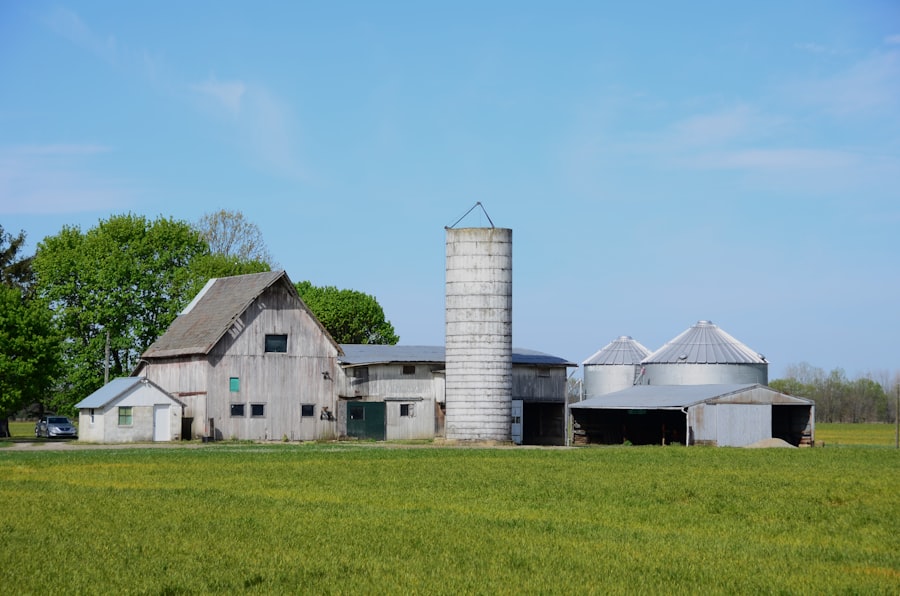
Traditional methods of farmland valuation have long been rooted in established practices that focus on tangible aspects of the land. One common approach is the sales comparison method, which involves analyzing recent sales of comparable properties to determine a fair market value. This method relies heavily on local market data and requires appraisers to have a comprehensive understanding of recent transactions in the area.
By comparing similar parcels of land, appraisers can derive a value that reflects current market conditions. Another traditional method is the cost approach, which estimates the value of farmland based on the cost to replace or reproduce it. This approach considers factors such as land improvements, infrastructure, and development costs.
While this method can provide a baseline value, it may not always reflect the true market dynamics or potential income generation capabilities of the land. As such, traditional methods often require supplementary approaches to ensure a comprehensive valuation.
Market-Based Valuation Approaches
Market-based valuation approaches have gained traction in recent years as they offer a more dynamic perspective on farmland value. These methods focus on current market conditions and trends rather than solely relying on historical data. One popular market-based approach is the hedonic pricing model, which assesses how various characteristics of farmland—such as location, soil quality, and access to water—affect its price.
By analyzing these attributes, appraisers can better understand how market forces influence farmland values. Additionally, the use of Geographic Information Systems (GIS) has revolutionized market-based valuation approaches. GIS technology allows appraisers to visualize and analyze spatial data related to farmland, enabling them to identify patterns and trends that may not be immediately apparent through traditional methods.
This technological advancement enhances the accuracy of valuations by providing a more comprehensive view of the factors influencing farmland prices.
Income Approach to Farmland Valuation
| Appraisal Method | Description | Common Use | Advantages | Limitations | Typical Valuation Gap (%) |
|---|---|---|---|---|---|
| Sales Comparison Approach | Valuation based on recent sales of comparable farmland parcels. | Most common for market value estimation. | Reflects current market conditions; easy to understand. | Requires sufficient comparable sales; may not account for unique features. | 5 – 15% |
| Income Capitalization Approach | Estimates value based on the income generated by the farmland. | Used when farmland is primarily income-producing. | Focuses on profitability; useful for investment decisions. | Income estimates can be volatile; requires accurate expense data. | 10 – 20% |
| Cost Approach | Value based on the cost to replace or reproduce the farmland improvements. | Less common; used for specialized properties. | Useful when no market data available. | Does not reflect market demand; ignores land value appreciation. | 15 – 25% |
| Residual Land Value Method | Value derived by subtracting development costs from potential sale price. | Used for farmland with development potential. | Captures highest and best use value. | Highly sensitive to assumptions; speculative. | 20 – 30% |
| Valuation Gap | Difference between appraised value and actual market transaction price. | Indicator of appraisal accuracy and market inefficiencies. | Helps identify under- or over-valuation trends. | Varies by method, region, and market conditions. | 5 – 30% |
The income approach to farmland valuation focuses on the potential income that can be generated from agricultural operations on the land. This method is particularly relevant for investors and lenders who are interested in the financial viability of a property. By estimating future cash flows from crop production or leasing arrangements, appraisers can determine a present value for the farmland based on its income-generating potential.
To apply the income approach effectively, appraisers must consider various factors such as crop yields, market prices for agricultural products, and operating expenses. This method requires a thorough understanding of agricultural economics and market conditions to accurately project future income streams. While the income approach provides valuable insights into the financial aspects of farmland valuation, it also necessitates careful consideration of risks associated with fluctuating commodity prices and changing agricultural practices.
Cost Approach to Farmland Valuation

The cost approach to farmland valuation is grounded in the principle that a property’s value is equal to the cost of acquiring or reproducing it minus any depreciation. This method is particularly useful when valuing unique or specialized properties where comparable sales data may be limited. By assessing the costs associated with land improvements—such as irrigation systems, fencing, or buildings—appraisers can arrive at a value that reflects both tangible assets and potential productivity.
However, while the cost approach provides a useful framework for valuation, it has its limitations. It may not account for market demand or changes in agricultural practices that could affect land value over time. Additionally, this method may overlook intangible factors such as location desirability or soil fertility that can significantly influence a property’s worth.
As such, appraisers often use the cost approach in conjunction with other valuation methods to ensure a more comprehensive assessment.
Challenges and Gaps in Farmland Valuation Methods
Despite the various methods available for farmland valuation, challenges persist that can hinder accurate assessments. One significant challenge is the lack of reliable data on recent sales and market trends in rural areas. Many transactions occur privately or are not well-documented, making it difficult for appraisers to access comprehensive information needed for accurate valuations.
This data gap can lead to discrepancies in property assessments and affect decision-making for buyers and sellers alike. Furthermore, fluctuations in agricultural markets can complicate valuations. Changes in commodity prices, weather patterns, and shifts in consumer demand can all impact the income potential of farmland.
The dynamic nature of agriculture necessitates ongoing education and awareness among appraisers to navigate these challenges effectively.
Lack of Uniformity in Farmland Valuation
Another significant issue in farmland valuation is the lack of uniformity across different regions and appraisal practices. Valuation standards can vary widely depending on local regulations, market conditions, and professional practices. This inconsistency can create confusion among stakeholders and lead to disputes over property values.
For instance, what may be considered a fair market value in one region might not hold true in another due to differing economic conditions or agricultural practices. The absence of standardized methodologies also poses challenges for lenders and investors who operate across multiple jurisdictions. Without consistent valuation practices, it becomes difficult to compare properties or assess risk accurately.
Efforts to establish uniform guidelines for farmland appraisal could help mitigate these issues and promote greater transparency within the industry.
Influence of Government Policies on Farmland Valuation
Government policies play a crucial role in shaping farmland valuation by influencing land use regulations, tax assessments, and conservation programs. Policies aimed at promoting sustainable agriculture or protecting natural resources can impact property values by restricting development or incentivizing conservation efforts. For example, land designated for agricultural use may be subject to lower tax rates than land earmarked for commercial development, affecting its overall valuation.
Additionally, government programs that provide financial assistance or subsidies to farmers can enhance the income potential of farmland, thereby influencing its market value. Appraisers must consider these policies when conducting valuations to ensure they accurately reflect the economic landscape in which the property operates. Understanding how government interventions affect farmland values is essential for stakeholders seeking to navigate this complex environment.
Emerging Trends in Farmland Valuation
As agriculture continues to evolve, so too do the trends influencing farmland valuation. One notable trend is the increasing emphasis on sustainability and environmental stewardship in agricultural practices. Investors are becoming more interested in properties that prioritize sustainable farming methods or incorporate renewable energy sources.
This shift is prompting appraisers to consider environmental factors when assessing farmland value. Technological advancements are also reshaping farmland valuation methodologies. The integration of big data analytics and machine learning into appraisal processes allows for more precise assessments based on vast amounts of information.
These technologies enable appraisers to analyze trends more effectively and make data-driven decisions that enhance valuation accuracy.
Conclusion and Future Directions for Farmland Appraisal
In conclusion, farmland appraisal is an intricate process that requires a nuanced understanding of various factors influencing land value. As agriculture faces new challenges and opportunities in an ever-changing economic landscape, accurate farmland valuation will remain essential for stakeholders across the industry. The importance of reliable appraisal methods cannot be overstated; they serve as a foundation for informed decision-making regarding investments, policy development, and sustainable agricultural practices.
Looking ahead, there is a pressing need for greater standardization in farmland valuation methodologies to address inconsistencies across regions and practices. Additionally, embracing emerging technologies and trends will be crucial for appraisers seeking to enhance their accuracy and relevance in an evolving market. By fostering collaboration among industry professionals and policymakers, stakeholders can work towards creating a more transparent and efficient framework for farmland appraisal that benefits all parties involved while ensuring the sustainability of agricultural resources for future generations.
In the realm of farmland appraisal methods, understanding the valuation gaps is crucial for accurate assessments. A related article that delves into these topics can be found on MyGeoQuest, which provides insights into various appraisal techniques and their implications on farmland valuation. For more information, you can read the article [here](https://www.mygeoquest.com/sample-page/).
FAQs
What is farmland appraisal?
Farmland appraisal is the process of estimating the value of agricultural land based on various factors such as soil quality, location, market conditions, and potential income from farming activities.
What are the common methods used for farmland appraisal?
Common methods include the sales comparison approach, income capitalization approach, and cost approach. Each method evaluates farmland value from different perspectives, such as recent sales data, potential income generation, or replacement costs.
What is the sales comparison approach in farmland valuation?
The sales comparison approach estimates farmland value by comparing it to similar properties that have recently sold in the same area, adjusting for differences in size, location, and features.
How does the income capitalization approach work in farmland appraisal?
This method calculates the present value of expected future income generated by the farmland, such as crop yields or rental income, using a capitalization rate to convert income into value.
What causes valuation gaps in farmland appraisal?
Valuation gaps can arise due to differences in appraisal methods, market fluctuations, lack of comparable sales data, or subjective judgments by appraisers, leading to discrepancies between estimated and actual land values.
Why is understanding valuation gaps important?
Recognizing valuation gaps helps buyers, sellers, lenders, and policymakers make informed decisions, ensuring fair transactions and effective land use planning.
Can farmland appraisal methods vary by region?
Yes, appraisal methods may vary depending on regional market conditions, agricultural practices, and availability of data, which can influence the choice and accuracy of valuation techniques.
How often should farmland be appraised?
Farmland should be appraised periodically, typically every few years or when significant changes occur in market conditions, land use, or ownership, to maintain accurate valuation records.
Who typically conducts farmland appraisals?
Professional appraisers with expertise in agricultural land valuation, often certified or licensed, conduct farmland appraisals to provide objective and reliable value estimates.
What role do soil quality and land productivity play in farmland valuation?
Soil quality and land productivity are critical factors as they directly affect the potential agricultural output and income, thereby influencing the overall value of the farmland.