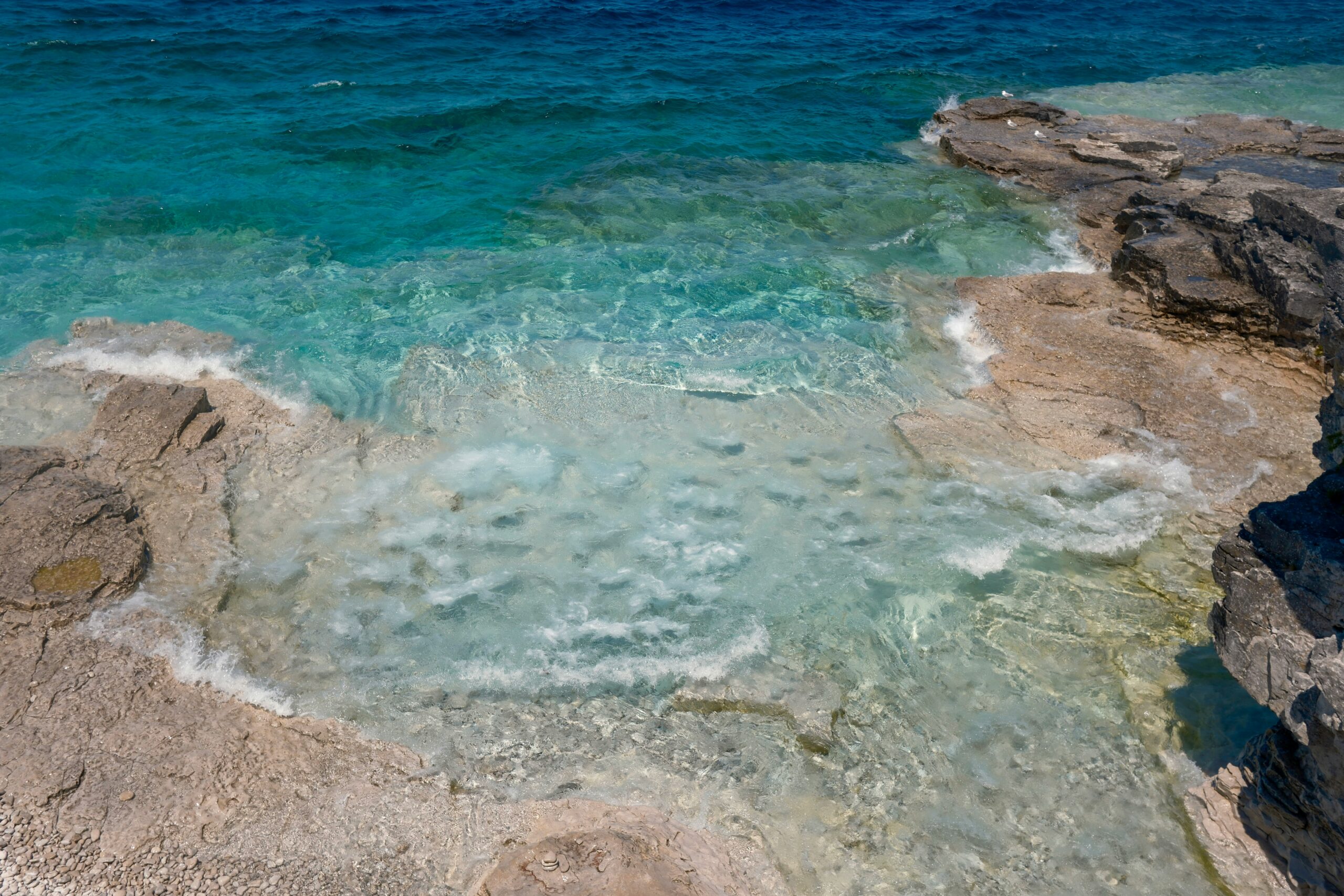
The North Sea, a vibrant and dynamic body of water nestled between Great Britain, Scandinavia, and continental Europe, presents a fascinating realm for the study of oceanographic phenomena. Among its many characteristics, the behavior of shallow water waves holds particular significance for maritime activities, coastal engineering, and ecological understanding. This article delves into the intricacies of North Sea shallow water waves, exploring their generation, propagation, impact, and the ongoing research efforts dedicated to unraveling their complexities.
Understanding Shallow Water Wave Dynamics
Shallow water waves are defined not by their height, but by their relationship to the water depth. A wave is considered to be in shallow water when its wavelength is significantly larger than the depth of the water. This ratio, often expressed as the ratio of wavelength ($L$) to water depth ($h$), is crucial. As a general rule, a wave is considered shallow water if $L/h > 20$. In the North Sea, vast areas are characterized by relatively modest depths, making shallow water wave dynamics a dominant feature.
The Fundamental Physics of Wave Motion
Wave motion in general is a transfer of energy through a medium, not a net transport of the medium itself. In the case of water waves, this energy propagates as a disturbance, causing water particles to move in orbital paths. The characteristics of these orbits are profoundly influenced by the water depth.
Deep Water vs. Shallow Water Particle Orbits
In deep water, where the depth is greater than half the wavelength ($h > L/2$), water particles near the surface move in nearly circular orbits. As depth increases, the amplitude of these orbits decreases exponentially. However, in shallow water, the seafloor acts as a significant boundary. This boundary restricts the vertical movement of water particles, causing their orbits to become increasingly elliptical and flattened with depth. Near the seabed, particle motion is almost entirely horizontal, oscillating back and forth. This interaction with the seafloor is a defining characteristic of shallow water wave behavior.
Wave Velocity and Dispersion
The speed at which a wave propagates is known as its phase velocity. In deep water, phase velocity is primarily dependent on the wavelength, with longer waves traveling faster. This phenomenon is called dispersion. However, in shallow water, the phase velocity becomes predominantly dependent on the water depth. The formula for phase velocity ($c$) in shallow water is approximated by $c = sqrt{gh}$, where $g$ is the acceleration due to gravity and $h$ is the water depth. This simplified relationship highlights how the depth of the North Sea directly dictates the speed of its shallow water waves. The shallower the water, the slower the waves travel.
Key Parameters Defining Waves
Several parameters are essential for describing and analyzing waves:
Wavelength and Amplitude
Wavelength ($L$) is the horizontal distance between two consecutive crests or troughs of a wave. Amplitude ($A$) is half the vertical distance between a crest and a trough. While amplitude can vary significantly, the underlying physics of shallow water waves is fundamentally governed by their wavelength relative to depth.
Wave Period and Frequency
Wave period ($T$) is the time it takes for two consecutive crests or troughs to pass a fixed point. Wave frequency ($f$) is the inverse of the period ($f = 1/T$), representing the number of waves passing a point per unit time. These temporal characteristics are crucial for understanding the energy flux of a wave system.
Wave Energy and Momentum
Waves carry significant amounts of energy and momentum. In shallow water, the interaction with the seabed can lead to energy dissipation through friction and turbulence, influencing the overall energy budget of the wave field. Understanding these energy transfers is vital for coastal processes and marine engineering.
Recent studies on North Sea shallow water waves have highlighted their impact on coastal erosion and marine ecosystems. For a deeper understanding of the dynamics involved, you can explore the related article on this topic at MyGeoQuest. This resource provides valuable insights into wave patterns, their interactions with the seabed, and the implications for coastal management strategies.
Generation and Evolution of North Sea Waves
The waves observed in the North Sea are not static entities; they are continuously generated, modified, and dissipated. Understanding these processes is key to predicting wave conditions.
Wind as the Primary Driver
The overwhelming majority of waves in the North Sea are generated by wind. As wind blows over the water surface, it imparts energy to the water through friction and pressure differences. This energy transfer causes the water to deform, creating small ripples that grow into larger waves. The intensity, duration, and fetch (the distance over which the wind blows uninterrupted) of the wind all play a critical role in determining the size and characteristics of the generated waves.
Fetch, Duration, and Wind Speed
These three factors are intrinsically linked in wave generation. A longer fetch allows waves more time to grow. A longer duration ensures that the wind’s energy is sustained. Higher wind speeds impart more energy. In the North Sea, the relatively confined nature of the basin and the prevailing westerly winds contribute to significant wave development.
Swell and Sea
When waves are generated by local winds, they are referred to as “sea” waves. These waves tend to be irregular in height and period. As waves travel away from their generation area, they organize into more regular patterns and lose their direct connection to the wind. These longer, more uniform waves are called “swell.” The North Sea, with its proximity to the Atlantic Ocean, often experiences swells generated by distant storms, contributing to its complex wave climate.
Transformation in Shallow Waters
As waves move from deeper waters into the shallower regions of the North Sea, they undergo significant transformations. This process, known as shoaling, is a critical aspect of shallow water wave dynamics.
Shoaling and Refraction
Shoaling is the change in wave characteristics due to decreasing water depth. As waves encounter shallower water, their speed decreases, and their height tends to increase. This shoaling effect concentrates wave energy, which can lead to more energetic waves near the coast. Refraction occurs when waves approach a coastline at an angle. As parts of the wave crest enter shallower water at different points along its length, they slow down at different rates. This causes the wave crests to bend and become more parallel to the shoreline, a process that redistributes wave energy along the coast.
Wave Breaking
When waves become too steep for the water depth to support them, they break. In shallow water, wave breaking is a crucial process that dissipates wave energy and plays a significant role in shaping coastlines and influencing sediment transport. The depth at which a wave breaks is typically around 1.3 times its height. The characteristic “plunging” or “spilling” breakers are a common sight in the North Sea.
Impacts of North Sea Shallow Water Waves
The presence and behavior of shallow water waves have profound implications for a wide range of human activities and natural processes within the North Sea.
Coastal Erosion and Sediment Transport
Shallow water waves are a primary driver of coastal erosion. The relentless impact of waves on the shoreline, especially during storm events, can relentlessly wear away beaches and cliffs. The energy of the waves is used to dislodge and transport sediment, shaping the seabed and the coastline itself.
Nearshore Processes and Beach Dynamics
The dynamic interplay between waves, currents, and sediment in the nearshore zone is fundamental to beach formation and maintenance. Shallow water waves are responsible for the onshore transport of sand, forming berms and nourishing beaches. Conversely, during storms, the increased energy of waves can lead to significant offshore transport and beach erosion. Understanding these processes is vital for coastal management and the protection of coastal communities.
Submarine Landslides and Seafloor Morphology
In some areas of the North Sea, particularly where sediments are unconsolidated, the forces exerted by shallow water waves, especially during storms, can contribute to submarine landslides. These events can dramatically alter the seafloor morphology and pose risks to underwater infrastructure such as pipelines and cables.
Maritime Operations and Navigation
The unpredictable nature of shallow water waves presents significant challenges for maritime operations in the North Sea. Ships must navigate carefully to avoid hazardous conditions, and offshore infrastructure needs to be designed to withstand the forces exerted by these waves.
Vessel Stability and Safety
Wave action directly impacts the stability of vessels. In shallow water, the combination of wave height, period, and the ship’s own characteristics can lead to significant rolling and pitching motions. This can affect the safety of crew, cargo, and the vessel itself. Nautical charts and wave forecasts are essential tools for safe navigation in these areas.
Offshore Infrastructure Design
The design of offshore structures such as oil and gas platforms, wind turbines, and subsea pipelines must account for the forces exerted by shallow water waves. These forces can be substantial, especially during extreme weather events. Engineers use sophisticated modeling techniques to predict wave loads and ensure the structural integrity of these installations.
Marine Ecosystems and Biodiversity
Shallow water waves play a crucial role in shaping marine habitats and influencing the distribution and behavior of marine life. The constant movement of water and sediment can create diverse environments that support a rich array of species.
Intertidal Zone Dynamics
The intertidal zone, the area between high and low tide, is a highly dynamic environment profoundly shaped by wave action. Shallow water waves are responsible for scouring, sediment deposition, and the physical disturbance of organisms living in this zone. Species adapted to these conditions, such as mussels, barnacles, and various algae, have developed remarkable resilience.
Benthic Habitats and Food Webs
The seafloor in shallow water areas is influenced by wave-induced currents and sediment movement. This can create varied benthic habitats, from sandy plains to gravelly areas, each supporting different communities of organisms. The constant churning of the water column also affects nutrient distribution and the availability of food for filter feeders and other benthic organisms, forming the base of many marine food webs.
Research and Monitoring of North Sea Waves
Understanding and predicting the behavior of North Sea shallow water waves is an ongoing area of scientific research and technological development. Various methods are employed to monitor and model these complex phenomena.
Observational Techniques and Data Collection
A combination of in-situ measurements and remote sensing techniques provides the data necessary to study North Sea waves.
Buoy Networks and Wave Measurement Devices
Deploying a network of buoys equipped with wave sensors across the North Sea is a fundamental approach to collecting real-time wave data. These buoys measure wave height, period, direction, and other parameters, providing valuable insights into wave variability and trends. Specialized wave measurement devices, such as wave staffs and pressure sensors, are also used in specific locations.
Satellite Altimetry and Remote Sensing
Satellite altimetry provides a broad overview of wave conditions across large oceanic areas. Satellites equipped with radar altimeters can measure the height of the sea surface, allowing for the estimation of significant wave height. Other remote sensing techniques, such as synthetic aperture radar (SAR), can provide information on wave patterns and the presence of breaking waves.
Numerical Modeling and Prediction
Sophisticated numerical models are essential tools for simulating and forecasting wave conditions in the North Sea. These models integrate various physical processes to predict how waves will behave.
Wave Models (e.g., SWAN)
The Simulating WAves Nearshore (SWAN) model is a widely used spectral wave model specifically designed for shallow, limited, and deep water areas. SWAN simulates the generation, propagation, refraction, and dissipation of waves under the influence of wind and currents. These models are crucial for forecasting wave conditions for maritime safety, coastal management, and offshore operations.
Coupling with Ocean and Weather Models
For comprehensive predictions, wave models are often coupled with ocean circulation models and atmospheric weather models. This integration allows for a more accurate representation of the complex interactions between wind, currents, and waves, leading to more reliable forecasts.
Recent studies on North Sea shallow water waves have revealed fascinating insights into their behavior and impact on coastal ecosystems. For a deeper understanding of this topic, you can explore a related article that discusses the dynamics of wave patterns and their implications for marine life. This article provides valuable information and can be found here. By examining these wave interactions, researchers aim to develop better strategies for coastal management and conservation efforts.
Challenges and Future Directions in Research
Despite significant advancements, several challenges remain in understanding and predicting North Sea shallow water waves. Future research will likely focus on refining models, improving data assimilation, and addressing the impacts of climate change.
Improving Wave Model Accuracy
While current wave models are sophisticated, there is always room for improvement. Research efforts are focused on better parameterizing complex physical processes such as wave breaking, whitecapping, and the interaction of waves with bottom friction.
Advanced Parameterizations and Physical Processes
Accurately representing processes like wave-seabed interaction, including the influence of complex seabed topography and sediment properties, is a key area of ongoing research. Developing more robust parameterizations for wave breaking in various conditions is also crucial for improving model accuracy.
Assimilation of Real-Time Data
Integrating real-time observational data into numerical models through data assimilation techniques can significantly improve the accuracy of short-term wave forecasts. This allows models to continuously adjust their predictions based on the most up-to-date information.
Understanding Climate Change Impacts
The North Sea, like other marine environments, is subject to the impacts of climate change. Changes in wind patterns, storm intensity, and sea-level rise will inevitably influence shallow water wave characteristics.
Changes in Storm Frequency and Intensity
Climate models suggest potential changes in the frequency and intensity of storms in the North Atlantic, which could directly affect wave generation in the North Sea. Understanding how these changes will manifest and impact wave climates is a critical research priority.
Sea Level Rise and Coastal Vulnerability
Rising sea levels will alter the water depth in coastal areas, potentially changing the dynamics of wave shoaling and breaking. This increased vulnerability of coastlines to wave action, particularly during storm surges, necessitates a thorough understanding of future wave conditions.
Interdisciplinary Research and Collaboration
Addressing the complexities of North Sea shallow water waves requires an interdisciplinary approach, fostering collaboration between oceanographers, meteorologists, engineers, ecologists, and coastal managers. This collaborative effort is essential for developing holistic solutions to the challenges posed by these dynamic oceanographic features. The North Sea continues to be a rich laboratory for scientific inquiry, offering valuable lessons about the intricate interplay between the atmosphere, the ocean, and the land. As our understanding deepens, we can better harness its resources, protect its coasts, and preserve its unique ecosystems for future generations.

The Dangerous Sea Europe Can’t Live Without
FAQs
What are North Sea shallow water waves?
North Sea shallow water waves are waves that occur in the North Sea, which is a marginal sea of the Atlantic Ocean located between Great Britain, Scandinavia, Germany, the Netherlands, Belgium, and France. Shallow water waves are waves that occur in water depths less than half their wavelength.
What causes North Sea shallow water waves?
North Sea shallow water waves are primarily caused by wind. When wind blows over the surface of the water, it transfers some of its energy to the water, creating waves. The size and strength of the waves depend on the speed and duration of the wind, as well as the distance over which it blows.
How do North Sea shallow water waves impact the environment?
North Sea shallow water waves can impact the environment in various ways. They can cause erosion of coastlines, affect marine habitats, and influence sediment transport. Additionally, they can also impact human activities such as shipping, fishing, and offshore energy production.
What are the characteristics of North Sea shallow water waves?
North Sea shallow water waves are typically shorter in wavelength and higher in amplitude compared to deep water waves. They are also influenced by the topography of the seabed, which can cause them to refract, diffract, and reflect as they propagate through the water.
How are North Sea shallow water waves studied and monitored?
North Sea shallow water waves are studied and monitored using a combination of field measurements, remote sensing techniques, and numerical modeling. Instruments such as wave buoys, coastal radar systems, and satellite imagery are used to collect data on wave characteristics, while computer models are used to simulate wave behavior under different conditions.