
In recent years, the agricultural sector has witnessed a notable decline in water usage, a trend that has garnered attention from environmentalists, policymakers, and farmers alike. This shift is not merely a response to the growing awareness of water scarcity but also reflects a broader commitment to sustainable practices within the industry. As global populations continue to rise and climate change exacerbates water shortages, the need for efficient water management in agriculture has never been more pressing.
The decline in agricultural water usage signifies a pivotal moment where innovation and responsibility converge, offering a glimpse into a more sustainable future. The reduction in water consumption in agriculture is not just a matter of necessity; it is also an opportunity for transformation. Farmers are increasingly recognizing that adopting water-efficient practices can lead to enhanced productivity and resilience against climate variability.
By examining these elements, one can appreciate the significance of this trend and its potential to shape the future of agriculture.
Key Takeaways
- Agricultural water usage is declining due to multiple environmental and technological factors.
- Innovative technologies and practices are key drivers in reducing water consumption in farming.
- Reduced agricultural water use benefits the environment by conserving resources and protecting ecosystems.
- Economic advantages arise from water-saving methods, including cost savings and increased efficiency.
- Continued collaboration, supportive policies, and overcoming challenges are essential for sustainable water conservation in agriculture.
Factors Contributing to the Decline in Agricultural Water Usage
Several interrelated factors have contributed to the decline in agricultural water usage, with climate change and resource scarcity at the forefront. As weather patterns become increasingly erratic, farmers are compelled to adapt their practices to cope with reduced rainfall and prolonged droughts. This adaptation often involves implementing more efficient irrigation systems and crop management techniques that minimize water waste.
The urgency of these changes is underscored by the reality that many regions are experiencing unprecedented water shortages, prompting a reevaluation of traditional agricultural practices. In addition to environmental pressures, economic considerations play a significant role in driving down agricultural water usage. Rising costs associated with water extraction and treatment have incentivized farmers to seek out more sustainable alternatives.
The financial burden of excessive water use has led many to invest in technologies that enhance efficiency, such as drip irrigation systems and soil moisture sensors. These innovations not only conserve water but also reduce operational costs, creating a compelling case for farmers to embrace more sustainable practices.
Innovative Technologies and Practices in Agriculture
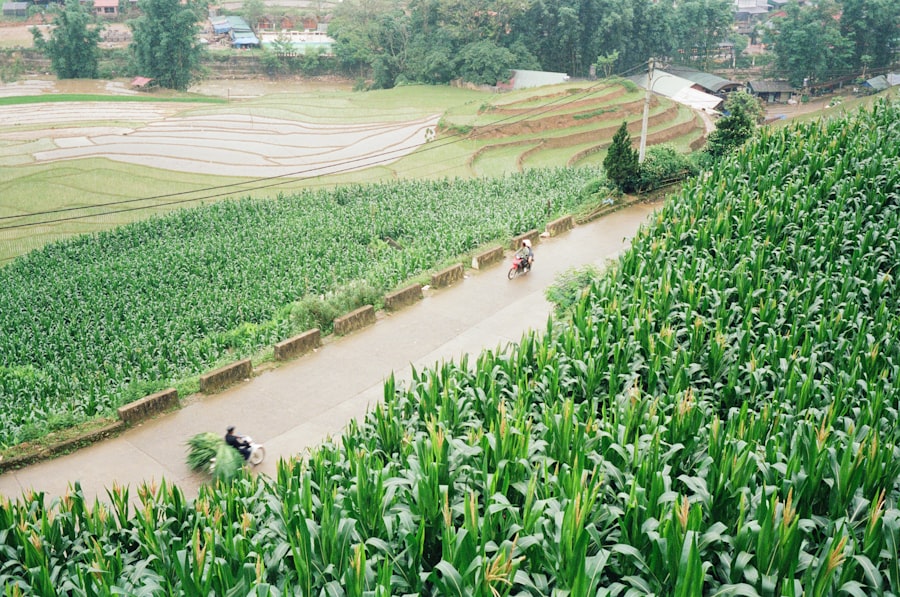
The agricultural landscape is undergoing a technological revolution, with innovations designed to optimize water usage taking center stage. Precision agriculture, which utilizes data analytics and advanced sensors, allows farmers to monitor soil moisture levels and crop health in real-time. This technology enables them to apply water only when necessary, significantly reducing waste.
Moreover, the adoption of alternative irrigation methods, such as rainwater harvesting and aquaponics, has gained traction among progressive farmers. Rainwater harvesting systems capture and store precipitation for later use, providing a sustainable source of irrigation that reduces reliance on groundwater.
Aquaponics combines aquaculture with hydroponics, creating a closed-loop system that recycles water while producing both fish and crops. These innovative practices not only conserve water but also promote biodiversity and enhance food security.
Impact of Decline in Agricultural Water Usage on the Environment
The decline in agricultural water usage has far-reaching implications for the environment, particularly in terms of ecosystem health and biodiversity. Reduced water consumption can lead to lower levels of runoff and pollution entering local waterways, thereby improving water quality. This positive impact is crucial for maintaining aquatic ecosystems that rely on clean water for survival.
Additionally, by minimizing the extraction of groundwater resources, farmers can help preserve vital aquifers that support both agricultural and natural ecosystems. Furthermore, decreased agricultural water usage contributes to enhanced soil health. Over-irrigation can lead to soil salinization and degradation, negatively impacting crop yields over time.
By adopting more efficient irrigation practices, farmers can maintain soil structure and fertility, promoting sustainable land use. This shift not only benefits individual farms but also supports broader environmental goals, such as carbon sequestration and climate resilience.
Economic Benefits of Reduced Agricultural Water Usage
| Year | Region | Agricultural Water Usage (Billion Cubic Meters) | Percentage Decline from Previous Year | Key Factors for Decline |
|---|---|---|---|---|
| 2018 | North America | 150 | – | Introduction of efficient irrigation technologies |
| 2019 | North America | 140 | 6.7% | Adoption of drought-resistant crops |
| 2020 | North America | 130 | 7.1% | Improved water management policies |
| 2018 | Europe | 90 | – | Shift to less water-intensive crops |
| 2019 | Europe | 85 | 5.6% | Enhanced irrigation scheduling |
| 2020 | Europe | 80 | 5.9% | Government incentives for water conservation |
| 2018 | Asia | 300 | – | Initial high water usage baseline |
| 2019 | Asia | 285 | 5.0% | Improved irrigation infrastructure |
| 2020 | Asia | 270 | 5.3% | Promotion of water-saving farming techniques |
The economic advantages of reduced agricultural water usage are becoming increasingly evident as farmers embrace sustainable practices. By implementing water-efficient technologies, farmers can significantly lower their operational costs. For instance, precision irrigation systems reduce the amount of water needed for crops, leading to lower utility bills and decreased labor costs associated with traditional irrigation methods.
These savings can be reinvested into other areas of the farm, fostering growth and innovation. Moreover, consumers are becoming more conscious of sustainability in their purchasing decisions. As a result, products labeled as sustainably grown or produced using water-efficient practices often command higher prices in the market.
This trend presents an opportunity for farmers who adopt these practices to enhance their profitability while contributing positively to environmental conservation. The economic benefits extend beyond individual farms; communities that prioritize sustainable agriculture can experience increased resilience against economic downturns related to resource scarcity.
Challenges and Barriers to Further Reducing Agricultural Water Usage

Despite the progress made in reducing agricultural water usage, several challenges remain that hinder further advancements. One significant barrier is the initial cost associated with adopting new technologies and practices. While long-term savings are evident, many farmers face financial constraints that make it difficult to invest in innovative solutions upfront.
This challenge is particularly pronounced among smallholder farmers who may lack access to credit or financial resources. Additionally, there is often resistance to change within established farming communities. Traditional practices have been passed down through generations, and some farmers may be hesitant to adopt new methods due to uncertainty about their effectiveness or concerns about potential risks.
Education and outreach efforts are essential to address these concerns and demonstrate the tangible benefits of sustainable practices. Building trust within farming communities is crucial for fostering a culture of innovation and collaboration.
Case Studies of Successful Water-Saving Agricultural Practices
Examining successful case studies can provide valuable insights into effective water-saving agricultural practices. One notable example is found in Israel, where advanced irrigation techniques have transformed arid landscapes into productive agricultural hubs. The widespread adoption of drip irrigation has allowed Israeli farmers to maximize crop yields while minimizing water usage.
This approach has not only enhanced food security but has also positioned Israel as a leader in agricultural innovation. Another compelling case study comes from California’s Central Valley, where farmers have implemented groundwater recharge projects to combat declining aquifer levels. By capturing excess stormwater during wet seasons and directing it into recharge basins, these farmers are replenishing groundwater supplies while simultaneously reducing surface runoff.
This collaborative effort between farmers, local governments, and environmental organizations showcases how innovative practices can address both agricultural needs and environmental concerns.
Government Policies and Incentives for Water-Saving Agriculture
Government policies play a pivotal role in promoting water-saving agriculture by providing incentives for farmers to adopt sustainable practices. Many regions have implemented programs that offer financial assistance for upgrading irrigation systems or investing in water-efficient technologies. These initiatives not only alleviate the financial burden on farmers but also encourage widespread adoption of best practices across the agricultural sector.
In addition to financial incentives, regulatory frameworks can help guide farmers toward more sustainable water management practices. Policies that promote conservation measures or establish limits on water extraction can create a sense of urgency for farmers to adopt innovative solutions. Collaborative efforts between government agencies, agricultural organizations, and research institutions are essential for developing effective policies that balance agricultural productivity with environmental sustainability.
Collaborative Efforts between Farmers, Researchers, and Industry
Collaboration among farmers, researchers, and industry stakeholders is crucial for advancing water-saving agricultural practices. By working together, these groups can share knowledge, resources, and expertise to develop innovative solutions tailored to specific regional challenges. Research institutions play a vital role in conducting studies that identify best practices and evaluate the effectiveness of new technologies in real-world settings.
Industry partnerships can also facilitate access to cutting-edge technologies and resources that may otherwise be out of reach for individual farmers. For example, companies specializing in agricultural technology can provide training and support for implementing precision irrigation systems or soil moisture sensors. By fostering collaboration across sectors, stakeholders can create a supportive ecosystem that encourages continuous improvement in water management practices.
Future Outlook for Sustainable Agriculture and Water Conservation
The future outlook for sustainable agriculture and water conservation appears promising as awareness of environmental issues continues to grow. As climate change intensifies pressures on water resources, the agricultural sector will likely prioritize innovative solutions that enhance efficiency while minimizing environmental impact. Advances in technology will play a critical role in shaping this future, with developments in artificial intelligence and machine learning offering new opportunities for optimizing resource use.
Moreover, consumer demand for sustainably produced food is expected to rise, further incentivizing farmers to adopt water-saving practices. As consumers become more educated about the environmental implications of their purchasing decisions, they will increasingly seek out products that align with their values. This shift presents an opportunity for farmers who embrace sustainability as a core principle of their operations.
The Importance of Continued Efforts to Reduce Agricultural Water Usage
In conclusion, the decline in agricultural water usage represents a significant step toward achieving sustainability within the sector. While progress has been made through innovative technologies and collaborative efforts, continued commitment is essential for addressing ongoing challenges related to resource scarcity and environmental degradation. The economic benefits associated with reduced water usage further underscore the importance of this trend for both individual farmers and broader communities.
As stakeholders across the agricultural landscape work together to promote sustainable practices, they must remain vigilant in their efforts to adapt to changing conditions and embrace new opportunities for innovation. The path forward will require ongoing investment in research, education, and policy development aimed at fostering a resilient agricultural system capable of thriving in an era marked by uncertainty. Ultimately, the importance of continued efforts to reduce agricultural water usage cannot be overstated; it is a vital component of ensuring food security while safeguarding precious natural resources for future generations.
Recent studies have highlighted a concerning trend in agricultural water usage decline, which poses significant challenges for food production and sustainability. For a deeper understanding of this issue, you can read more in the article available at this link. The article discusses various factors contributing to the decline and explores potential solutions to mitigate its impact on agriculture.
WATCH THIS! 💧 The $1 Trillion Lie: America’s Water Crisis Is 10x Worse Than They Tell You
FAQs
What is agricultural water usage?
Agricultural water usage refers to the amount of water used for farming activities, including irrigation of crops, watering livestock, and other related processes necessary for food production.
Why is agricultural water usage important?
Agricultural water usage is crucial because agriculture is one of the largest consumers of freshwater globally. Efficient water use in agriculture is essential for food security, sustainable farming, and maintaining water resources.
What does a decline in agricultural water usage mean?
A decline in agricultural water usage means that less water is being used for farming activities over a certain period. This can result from improved irrigation techniques, changes in crop patterns, water conservation policies, or reduced agricultural activity.
What are the main causes of the decline in agricultural water usage?
The decline can be caused by factors such as adoption of water-efficient irrigation technologies (e.g., drip irrigation), shifts to less water-intensive crops, improved water management practices, climate change impacts, and regulatory measures aimed at conserving water.
How does a decline in agricultural water usage affect crop production?
If managed properly, a decline in water usage can maintain or even improve crop yields through efficient irrigation and better water management. However, if water reduction is excessive or poorly managed, it may lead to reduced crop productivity.
What are the environmental benefits of reduced agricultural water usage?
Reduced water usage in agriculture can lead to less depletion of freshwater resources, improved groundwater levels, reduced soil salinization, and better ecosystem health in surrounding areas.
Can technology help reduce agricultural water usage?
Yes, technologies such as drip irrigation, soil moisture sensors, automated irrigation systems, and drought-resistant crop varieties can significantly reduce water consumption in agriculture.
Is the decline in agricultural water usage a global trend?
While some regions have seen declines due to improved practices and policies, others may still experience high or increasing water use due to expanding agricultural activities. The trend varies depending on local climate, water availability, and agricultural practices.
How do policies influence agricultural water usage?
Government policies and regulations can promote water conservation through incentives for efficient irrigation, restrictions on water withdrawals, and support for sustainable farming practices, thereby influencing the overall water usage in agriculture.
What challenges exist in reducing agricultural water usage?
Challenges include the need for investment in new technologies, farmer education and training, balancing water use with crop yield demands, and addressing the impacts of climate variability on water availability.