Continental crust transforming into oceanic crust is a complex and fascinating geological process, a testament to the dynamic nature of our planet’s lithosphere. This transformation, though not a singular event that happens overnight, represents a profound shift in Earth’s crustal composition and behavior, playing a crucial role in the grand cycle of plate tectonics. It’s a slow, drawn-out dance of geological forces, primarily driven by the immense heat from Earth’s interior and the relentless movement of tectonic plates. This metamorphosis is not a direct conversion but rather a series of events that lead to the eventual subsidence and replacement of continental crust with younger, denser oceanic crust. Understanding this process provides critical insights into the formation of ocean basins, the distribution of continents, and the very architecture of our planet.
The journey from continental to oceanic crust begins with the initial weakening and stretching of the Earth’s continental lithosphere. This immense, rigid outer shell of the Earth is composed of the crust and the uppermost part of the mantle. Continental crust, in particular, is relatively thick, buoyant, and less dense than oceanic crust, making it resistant to subduction. However, when large-scale tectonic forces begin to pull the lithosphere apart, this seemingly robust continental plate begins to yield.
Understanding Lithospheric Extension
The primary driver behind this initial weakening is extensional tectonics. Imagine a large, brittle sheet being slowly pulled from opposite ends. Eventually, stress will build up, leading to cracks and thinning. On a planetary scale, this pulling apart is driven by forces within the Earth’s mantle. Mantle plumes, upwelling currents of hotter, less dense rock from deep within the mantle, can exert upward pressure on the overlying lithosphere, causing it to dome and stretch. Alternatively, large-scale plate boundary forces, such as the divergence of other tectonic plates, can create tensional stresses across continental interiors. These forces initiate a process of ductile stretching and brittle fracturing within the continental lithosphere.
The Role of Asthenospheric Upwelling
As the continental lithosphere is stretched, it thins. This thinning reduces the lithostatic pressure on the underlying asthenosphere, the hotter, weaker, and more ductile layer of the upper mantle. With reduced pressure, the asthenosphere can partially melt, leading to increased buoyancy and further upward movement. This upwelling asthenosphere plays a crucial role in weakening the lithosphere from below. It injects heat, further reducing the viscosity of the overlying mantle and lithospheric mantle. This thermal weakening makes the lithosphere more susceptible to deformation and fracturing.
Formation of Grabens and Horst Structures
The brittle fracturing of the continental crust under tension results in the formation of characteristic geological structures known as grabens and horsts. Grabens are down-dropped blocks of crust bounded by parallel faults, creating elongated valleys. Horst are the uplifted blocks between grabens, forming higher terrain. The Rhine Graben in Europe is a classic example of such a rift valley, marking an area where continental crust is actively being pulled apart. These grabens act as the initial sites where sediment accumulates, and as the rifting progresses, they become the precursors to future rift lakes and eventually, oceanic basins.
The transformation of continental crust into oceanic crust is a fascinating geological process that highlights the dynamic nature of Earth’s lithosphere. For a deeper understanding of this phenomenon, you can explore the article on plate tectonics and crust formation at MyGeoQuest. This resource provides valuable insights into how tectonic activity leads to the recycling of crustal materials and the formation of new oceanic crust through processes such as subduction and seafloor spreading.
The Birth of a Rift Valley: Tears in the Continents
As the extensional forces intensify and the lithosphere continues to stretch and thin, the continental crust begins to tear. This tearing process leads to the formation of a pronounced depression in the Earth’s surface – a rift valley. This valley is a dynamic environment, characterized by active faulting, volcanism, and the accumulation of sediments and early oceanic crust.
Volcanic Activity and Basaltic Magmatism
The thinning of the lithosphere brings the hot asthenosphere closer to the surface, increasing the likelihood of partial melting. This molten rock, or magma, rises to the surface, leading to significant volcanic activity. The type of magma erupted is typically basaltic, which is basaltic in composition and relatively low in silica. This basaltic magma is characteristic of oceanic crust formation. These volcanic eruptions can occur along the faults bounding the rift valley, creating volcanic cones and fissure eruptions. The outpouring of basaltic lava helps to fill in the rift valley floor.
Sedimentation and the Accumulation of Sedimentary Basins
As the rift valley forms and deepens, it creates a topographic low that collects eroded material from the surrounding highlands. Rivers flow into the valley, carrying sediment that accumulates in thick layers. These sedimentary basins can become vast repositories of sand, silt, and clay, preserving a record of the rift’s evolution. Over time, these sediments can be buried and lithified, forming sedimentary rocks. In some cases, the rifting may be accompanied by the presence of water bodies, leading to the formation of large rift lakes. These lakes can preserve unique fossil assemblages, providing valuable insights into the ancient life forms that inhabited these evolving continental margins.
Early Stages of Oceanic Crust Formation
While the initial volcanism is basaltic, the crust forming within the rift valley is still considered a transitional type. It’s not yet the fully developed, thick oceanic crust found in the deep ocean. However, the continuous eruption of basaltic magma and its cooling and solidification contribute to the formation of a new crustal layer that is denser and thinner than the surrounding continental crust. This nascent oceanic crust is characterized by its igneous origin and its predominantly mafic composition.
The Transition to a True Ocean Basin: The Sub-Atlantic Stage

The rift valley stage is a prelude to the eventual formation of a true ocean basin. As the rifting continues and the continental margins pull further apart, the thinned continental crust eventually reaches a point where it can no longer sustain itself. This leads to the wholesale subsidence of the continental fragments and the establishment of a spreading center, a crucial element in the creation of oceanic crust.
Oceanic Spreading Centers and Mid-Ocean Ridges
The ultimate consequence of sustained rifting is the development of an oceanic spreading center, typically a mid-ocean ridge. This is where new oceanic crust is continuously generated. Magma from the asthenosphere rises to fill the gap created by the separating continental plates. This magma erupts onto the seafloor, solidifies, and accretes to the edges of the separating plates. This process is known as seafloor spreading and is the engine that drives plate tectonics. The mid-ocean ridge is a vast underwater mountain range, the longest mountain chain on Earth.
Basaltic Pillow Lava and Hydrothermal Vents
The magma erupting at mid-ocean ridges cools rapidly as it comes into contact with the cold ocean water. This rapid cooling forms characteristic bulbous structures known as pillow lavas. These are a hallmark of newly formed oceanic crust. The high temperatures and chemical reactions associated with the upwelling magma and the interaction with seawater create unique hydrothermal vent systems. These vents spew out superheated, mineral-rich fluids, supporting diverse and chemosynthetic ecosystems in the deep ocean.
Formation of Dikes and Gabbro
Beneath the pillow lavas, the magma solidifies more slowly, forming vertical dikes (sheet-like intrusions of magma) and larger intrusive bodies of gabbro (a coarse-grained igneous rock similar in composition to basalt). Together, the pillow lavas, dikes, and gabbro form the oceanic crust, which is significantly thinner and denser than continental crust. This new crust is basaltic in composition, rich in mafic minerals like pyroxene and olivine.
The Fate of the Continental Margin: Subsidence and Sedimentation

As the oceanic crust forms and spreads away from the mid-ocean ridge, the adjacent continental margins begin to subside. This subsidence is a consequence of several factors, including cooling and densification of the lithosphere as it moves away from the heat of the spreading center, and the increased load of overlying oceanic crust and water. This subsidence creates a broad, submerged platform along the edge of the continent.
Passive Continental Margins
The continental edges that are no longer actively involved in plate boundary interactions, such as those facing a mid-ocean ridge across an ocean basin, are termed passive continental margins. These margins are characterized by their relatively gentle slopes, extensive continental shelves, and thick sequences of accumulated sediments. The subsidence of these margins provides ideal conditions for the deposition of vast amounts of sediment eroded from the continent.
Accumulation of Sedimentary Sequences
Over millions of years, these subsided margins accumulate thick sequences of sedimentary rocks. These sediments, derived from the weathering and erosion of the continents, can include sands, muds, and carbonates. The weight of these accumulating sediments, combined with the ongoing cooling and densification of the lithosphere, further enhances the subsidence. These sedimentary sequences are of immense geological and economic importance, often containing significant hydrocarbon reserves.
Potential for Metamorphism and Melting
While the primary process at passive margins is sedimentation, in some instances, the buried continental crust beneath these thick sedimentary piles can experience increased heat and pressure. This can lead to the metamorphism of the continental crust, transforming its mineralogy and texture. In extreme cases, if the temperatures become high enough, partial melting of the continental crust can occur, generating felsic magmas. However, this is a less common scenario in the direct transformation from continental to oceanic crust.
The transformation of continental crust into oceanic crust is a fascinating geological process that highlights the dynamic nature of Earth’s lithosphere. This phenomenon occurs primarily at convergent plate boundaries, where tectonic plates collide and one plate is forced beneath another in a process known as subduction. For a deeper understanding of this topic, you can explore a related article that discusses the intricacies of plate tectonics and the formation of different crust types. To learn more about these geological processes, visit this article.
The Cycle of Destruction and Creation: Subduction and the Return Journey
| Process | Description | Typical Rate | Key Factors | Resulting Crust Type |
|---|---|---|---|---|
| Subduction | Oceanic crust is forced beneath continental crust, leading to melting and recycling of crustal material. | 5-10 cm/year (convergence rate) | Plate convergence, temperature, pressure | Oceanic crust consumed, continental crust partially melts |
| Continental Rifting | Continental crust stretches and thins, eventually breaking to form new oceanic crust. | 1-10 mm/year (extension rate) | Tectonic stress, mantle upwelling | New oceanic crust formed at mid-ocean ridges |
| Partial Melting | Melting of subducted continental crust material contributes to magma generation. | Variable, depends on subduction depth and temperature | Pressure, temperature, composition | Magma that can form new crust or volcanic arcs |
| Crustal Recycling | Continental crust material is recycled into the mantle and may re-emerge as oceanic crust. | Over millions of years | Subduction, mantle convection | Transformation from continental to oceanic crust material |
The process of continental crust transforming into oceanic crust is not the end of its geological journey. The newly formed, denser oceanic crust, as it ages and moves away from the spreading center, eventually encounters continental margins where it is destined to be recycled back into the Earth’s mantle through the process of subduction. This completes the grand cycle of lithospheric creation and destruction that defines plate tectonics.
Oceanic Crust’s Density and Subduction
Oceanic crust, being denser than continental crust, has a tendency to sink into the mantle when it meets a region of compression. This occurs at convergent plate boundaries where tectonic plates collide. If an oceanic plate converges with a continental plate, the denser oceanic plate will bend and descend beneath the lighter continental plate. This downward bending initiates the subduction process.
The Role of the Mantle Wedge
As the oceanic plate subducts, it carries with it water and other volatile compounds that were incorporated into its crust and upper mantle. As the subducting plate descends into the hotter mantle, these volatiles are released. These released volatiles lower the melting point of the overlying mantle wedge – the wedge of mantle material above the subducting slab. This reduction in melting point triggers partial melting within the mantle wedge, generating magma.
Formation of Volcanic Arcs and Continental Mountain Ranges
The magma generated in the mantle wedge rises through the overlying continental crust. This rising magma can erupt at the surface, forming chains of volcanoes known as volcanic arcs. These volcanic arcs are often found parallel to the subduction zone and contribute to the building of mountain ranges on the overriding continental plate. The Andes Mountains in South America, formed by the subduction of the Nazca Plate beneath the South American Plate, are a prime example of a volcanic arc associated with subduction. This is where remnants of former oceanic crust can be incorporated into the continental landmass, but it represents a destruction of oceanic crust, not a transformation of continental into oceanic. The transformation discussed previously is the creation of oceanic crust from continental rifting.
Recycling of Crustal Material
Through subduction, oceanic crust is returned to the Earth’s mantle. This recycling process is fundamental to plate tectonics. It prevents the Earth’s surface from being endlessly covered by ever-thickening oceanic crust. The subducted material contributes to the chemical and thermal heterogeneity of the mantle, influencing future geological processes. While continental crust is generally too buoyant to subduct significantly, some fragments can be incorporated into the overriding plate during collisional events, leading to the thickening and uplift of continental mountain ranges. The transformation of continental crust into oceanic crust is a one-way street in terms of crustal type, but the entire cycle ensures the continuous renewal of Earth’s lithosphere.
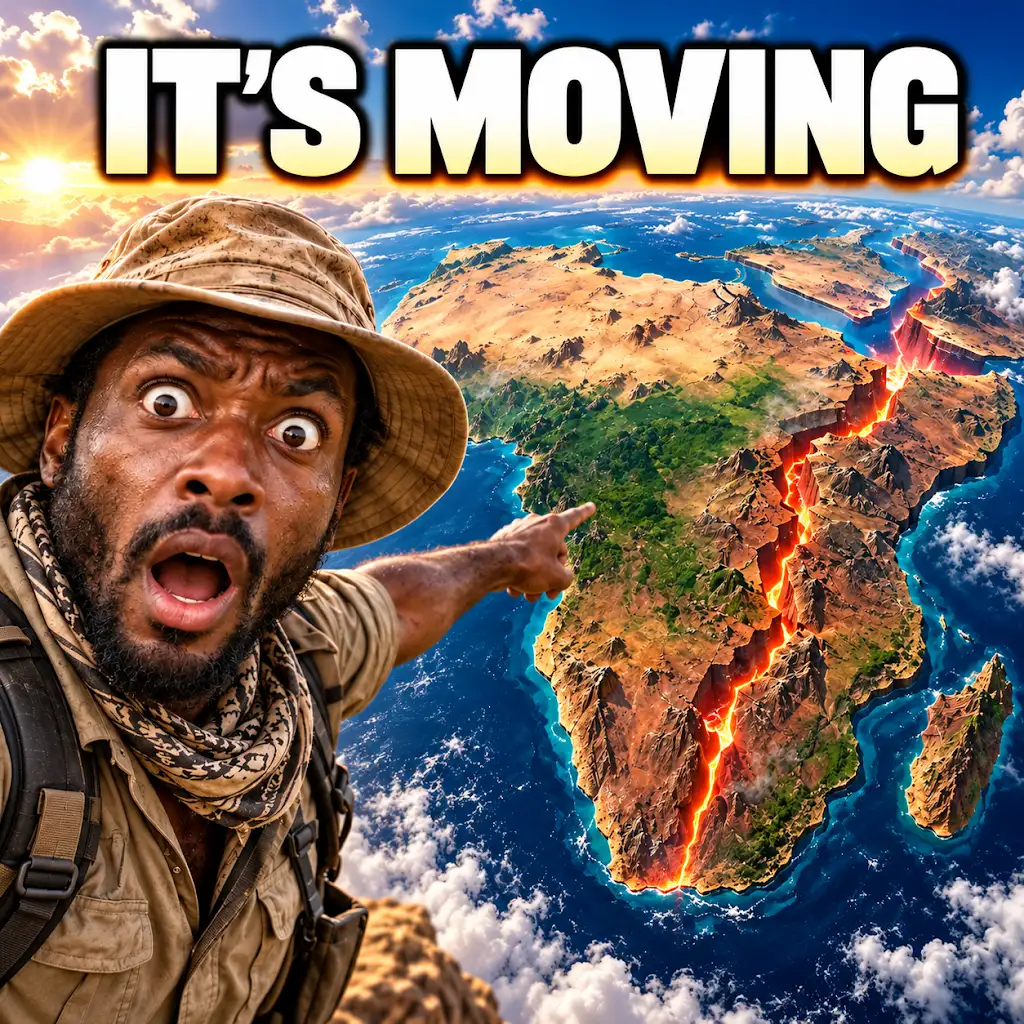
Africa Is Splitting Apart — And a New Ocean Could Be Next
FAQs
What is continental crust?
Continental crust is the layer of Earth’s crust that forms the continents and is typically thicker and less dense than oceanic crust.
How does continental crust become oceanic crust?
Continental crust can become oceanic crust through a process called rifting, where the continental crust stretches and thins, eventually leading to the formation of a new ocean basin.
What happens during the process of continental crust becoming oceanic crust?
During this process, as the continental crust stretches and thins, magma rises to the surface and solidifies, creating new oceanic crust. This can lead to the formation of mid-ocean ridges.
What are some examples of areas where continental crust is becoming oceanic crust?
One well-known example of continental crust becoming oceanic crust is the East African Rift, where the African Plate is splitting apart, potentially leading to the formation of a new ocean basin in millions of years.
How does the transformation of continental crust into oceanic crust impact the Earth’s geology?
This process plays a crucial role in the Earth’s tectonic cycle and the movement of tectonic plates. It also influences the distribution of continents and oceans on our planet.