
Grain transport, the intricate dance of moving essential commodities from farm to table, relies heavily on two dominant forces: rail and barge. Each possesses a distinct personality, a unique rhythm, and a set of strengths and weaknesses that shape their suitability for different logistical challenges. Understanding these differences is akin to deciphering a complex map, allowing shippers to chart the most efficient and cost-effective course for their valuable cargo. This article delves into a comparative analysis of rail and barge transportation for grain, exploring their operational characteristics, environmental impacts, economic considerations, and the factors that influence their selection.
The fundamental mechanisms by which rail and barge transport grain are rooted in their respective infrastructures and operating principles. Imagine rail as a tireless serpent gliding across the land, tethered to a fixed path of steel. Barges, on the other hand, are patient leviathans navigating the liquid arteries of a continent.
Rail Transport: The Steadfast Arteries
Rail transport for grain typically involves specialized hopper cars, designed to hold vast quantities of grain and facilitate easy loading and unloading. These cars are coupled into long trains, often stretching for miles, pulled by powerful locomotives. The key advantage of rail lies in its ability to cover significant distances overland with a consistent speed, albeit dictated by track conditions and train schedules.
Hopper Cars: The Grain Vaults
Hopper cars, the workhorses of grain rail transport, are engineered for bulk movement. Their distinctive design features a sloped interior and bottom unloading gates, allowing gravity to do much of the work during discharge. Different sizes and capacities exist, catering to varied shipment volumes. Locomotives, the muscle behind the operation, vary in power and number depending on the train’s length and the terrain.
The Rail Network: A Gridded Web
The extensive network of railways crisscrossing continents forms the backbone of this mode. These tracks, meticulously maintained, dictate the routes and destinations accessible by rail. The interconnectedness of these lines allows for a relatively direct movement of grain from rural production areas to processing centers or export terminals, often bypassing congested roadways.
Barge Transport: The Gentle Giants of Waterways
Barge transport utilizes the natural or engineered waterway systems – rivers, canals, and the Great Lakes – to move grain. Barges themselves are essentially flat-bottomed vessels, often towed or pushed in groups by powerful tugboats or towboats. Their capacity is immense, capable of carrying quantities of grain that would require dozens of railcars or hundreds of trucks.
Barges and Towboats: The Waterborne Conveyors
The barges used for grain are typically open-top and designed for bulk cargo. They are often paired with specialized towboats or push boats, which provide the motive force. These vessels are designed for maneuverability on waterways, navigating locks, dams, and river bends. The sheer volume a single tow can carry makes this a compelling option for large-scale grain movements.
Waterways: The Liquid Highways
The navigable waterways system acts as the conduit for barge transport. This network, consisting of natural rivers, canals, and improved channels, dictates the accessibility and flow of grain. The efficiency of barge transport is directly tied to the navigability of these waterways, which can be impacted by factors such as water levels and ice.
When considering the most efficient methods for transporting grain, the debate between rail and barge transport is significant. A related article that delves into the advantages and disadvantages of each mode can be found at MyGeoQuest. This resource provides valuable insights into the cost-effectiveness, environmental impact, and logistical challenges associated with both rail and barge transportation, helping stakeholders make informed decisions in the agricultural supply chain.
The Economics of the Journey: Cost Comparisons
When considering the financial implications of grain transportation, rail and barge present a stark contrast. The cost per ton-mile is a crucial metric, reflecting the efficiency of each mode for long-haul movements.
Rail Costs: The Price of Speed and Reach
Rail transport, while efficient for reaching inland destinations and overcoming geographical barriers, often carries a higher per-ton-mile cost than barge, especially for very long distances. This is influenced by factors such as infrastructure maintenance, fuel consumption, and the specialized equipment required.
Per-Ton-Mile Efficiency: A Trade-off
The cost-effectiveness of rail can be seen as a trade-off. While it might be more expensive on a per-ton-mile basis compared to barge, its ability to reach a wider range of destinations and its faster transit times can sometimes offset these costs, especially when considering inventory holding costs and the demand for timely delivery. The investment in specialized hopper cars and the ongoing maintenance of the rail infrastructure contribute to this cost structure.
Terminal Costs and Transloading: The Intermediary Charges
Moving grain via rail often involves costs associated with loading and unloading at rail terminals. If grain needs to be transferred from a truck to a railcar or from a railcar to a barge (transloading), additional charges apply. These intermediary steps add to the overall expense and complexity of the supply chain. The efficiency of these terminal operations can significantly impact the final cost.
Barge Costs: The Power of Scale and Water
Barge transport is renowned for its cost-effectiveness, particularly for large volumes of grain over long distances. The low friction of water and the immense carrying capacity of barges translate into a significantly lower cost per ton-mile.
Low Friction, High Volume: The Cost Advantage
The fundamental advantage of barge transport lies in the minimal resistance offered by water. This allows a single tow to move an enormous quantity of grain with relatively modest fuel consumption per ton. This inherent efficiency makes it an attractive option for bulk commodities where margins can be tight. Imagine trying to push a boulder across a dry field versus gently nudging it through a calm canal – the difference in effort, and therefore cost, is substantial.
Infrastructure Costs: Navigable Waterways
While the operational costs of barges are low, the cost of maintaining navigable waterways, including locks, dams, and dredging, is a significant public investment. However, these costs are generally amortized across all users of the waterway, making the direct cost to the individual shipper lower than if they were solely responsible for providing and maintaining their own transport infrastructure.
The Environmental Footprint: Sustainability in Motion

In an era of increasing environmental consciousness, the ecological impact of grain transport is a critical consideration. Both rail and barge offer more sustainable alternatives to trucking, but they each have their own environmental profiles.
Rail’s Environmental Credentials: Reduced Emissions Intensity
Rail transport is generally recognized as an environmentally friendly mode of freight transport, emitting significantly less greenhouse gas per ton-mile than trucking. The efficiency of locomotives and the collective movement of large volumes contribute to this.
Greenhouse Gas Emissions: A Greener Path
Compared to road freight, rail transportation of grain produces substantially lower levels of carbon dioxide and other greenhouse gases. This is primarily due to the higher fuel efficiency and the reduced number of vehicles required to move the same amount of cargo. The energy embedded in the movement of each grain kernel is demonstrably lower on a railcar than on a truck.
Land Use and Habitat: A Fixed Footprint
While the construction of rail lines requires land and can impact habitats, once established, the rail network’s footprint is relatively fixed. This contrasts with the continuous expansion of road networks, which can have a more pervasive impact on land use and ecosystems. However, the construction and maintenance of rail corridors do require careful environmental planning to mitigate habitat fragmentation and disruption.
Barge’s Ecological Balance: Waterways and Wildlife
Barge transport, utilizing established waterways, can have a lower direct impact on land-based ecosystems. However, waterway usage also presents its own set of environmental considerations.
Waterway Congestion and Sedimentation: The River’s Burden
The passage of large vessels and the constant movement of barges can contribute to waterway congestion and increased sediment disturbance. This can impact aquatic ecosystems, fish populations, and the overall health of the river system. Dredging operations, necessary to maintain navigability, also have environmental consequences.
Fuel Consumption and Emissions: A Comparative Look
While barge transport is fuel-efficient for the volume moved, the emissions from towboats, particularly older models, can be a concern. However, modern engines and cleaner fuels are increasingly being adopted, improving the environmental performance of this mode. The specific emissions profile can vary significantly based on the type of vessel and its operational efficiency.
The Operational Landscape: Speed, Capacity, and Accessibility
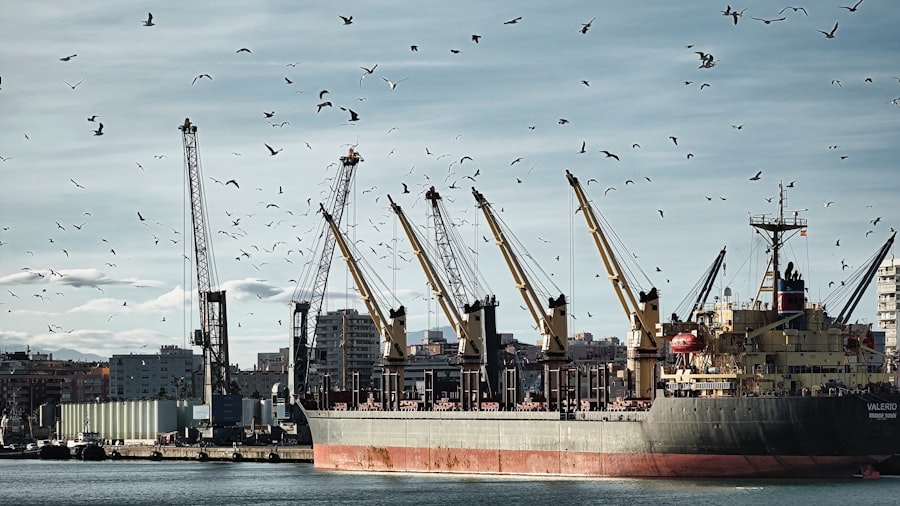
Beyond cost and environment, the practicalities of how grain is moved – its speed, the volume it can carry, and where it can go – are decisive factors.
Rail’s Prowess: Speed and Inland Reach
Rail offers a compelling balance of speed and broad inland accessibility. It can move grain relatively quickly across vast distances and access a wider network of inland destinations than barge.
Transit Times: Averaging the Miles
Rail transport offers reasonably fast transit times, allowing for more predictable delivery schedules than some other modes. While not as fast as expedited trucking, it significantly outperforms barge for intercontinental journeys over land. The ability to maintain consistent speeds on dedicated tracks is a key advantage.
Origin and Destination Capabilities: Connecting the Heartland
The rail network provides extensive reach into agricultural heartlands, connecting producers to processors and distribution hubs not located on navigable waterways. This makes it an indispensable component of the grain supply chain in many regions.
Barge’s Dominance: Unmatched Capacity and Specialized Routes
Barge transport’s strength lies in its unparalleled capacity and its dominance on established waterway systems. However, its routes are geographically constrained.
Volume and Bulk: The Giants of the Water
The sheer volume of grain that can be transported by barge is its most significant advantage. A single tow can carry as much grain as hundreds of railcars, making it the most economical choice for moving massive quantities. This allows for economies of scale that are difficult to achieve with other modes.
Geographic Limitations: The Water’s Edge
The primary limitation of barge transport is its dependence on navigable waterways. This means that grain must be located relatively close to a port or terminal on a river, canal, or lake for this mode to be viable. Many grain-producing regions lack direct access to such infrastructure.
When considering the most efficient methods for transporting grain, the debate between rail and barge transport is often highlighted. Each mode has its advantages and disadvantages, making the choice dependent on various factors such as distance, cost, and environmental impact. For a deeper understanding of this topic, you can explore a related article that discusses the nuances of rail versus barge transport in detail. This insightful piece can be found here, providing valuable information for those interested in the logistics of grain transportation.
The Strategic Marriage: Making the Right Choice
| Metric | Rail Transport | Barge Transport |
|---|---|---|
| Typical Capacity (tons per shipment) | 3,000 – 4,000 | 15,000 – 20,000 |
| Cost per Ton-Mile | 0.03 – 0.05 | 0.01 – 0.02 |
| Average Speed (miles per hour) | 25 – 35 | 5 – 10 |
| Fuel Efficiency (ton-miles per gallon) | 400 – 500 | 700 – 1,000 |
| Environmental Impact (CO2 emissions per ton-mile) | 0.15 – 0.20 lbs | 0.05 – 0.10 lbs |
| Infrastructure Requirements | Extensive rail network, terminals | Waterways, ports, locks |
| Reliability | High, less weather dependent | Moderate, affected by water levels and weather |
| Typical Use Cases | Long-distance, time-sensitive shipments | Bulk shipments, cost-sensitive, non-urgent |
The decision of whether to utilize rail or barge for grain transport is rarely a simple one. It involves a multifaceted evaluation of the specific needs of the shipment, considering the economic landscape, environmental goals, and operational realities.
The Shipper’s Dilemma: Balancing the Scales
Shippers of grain must act as strategic navigators, charting a course that optimizes for cost, speed, reliability, and their own unique logistical challenges. This often involves a complex interplay of factors, where the “best” choice can shift depending on the market, the season, and the specific origin and destination points.
Origin and Destination Keys: The Map’s Critical Points
The geographical location of the grain’s origin and its ultimate destination are often the most significant drivers in selecting rail or barge. If a farm is situated near a major river port, barge transport becomes a strong contender. If it is deep inland with no waterway access, rail is likely the primary option.
Market Demands and Time Sensitivity: The Urgency Factor
The time sensitivity of the grain shipment plays a crucial role. If the market demands immediate delivery to a distant processing plant, rail’s faster transit times may outweigh the per-ton-mile cost advantage of barge. Conversely, for long-term storage and bulk export where time is less of a constraint, the cost savings of barge become paramount.
Infrastructure Availability and Capacity: The Lanes of Opportunity
The availability and capacity of rail lines and barge terminals at both the origin and destination are critical considerations. A robust rail network might offer more flexibility, while a limited number of barge terminals could create bottlenecks. The existence of intermodal facilities, where seamless transitions between different modes can occur, is also a key factor.
The Future of Grain Logistics: An Evolving Landscape
The future of grain transport will likely see a continued reliance on both rail and barge, with increasing emphasis on intermodal solutions and technological advancements to enhance efficiency and sustainability. The ongoing development of inland waterway infrastructure, alongside investments in modernizing rail networks, will shape the evolving landscape of grain logistics. Furthermore, the growing adoption of data analytics and smart technologies promises to optimize routing, scheduling, and overall supply chain management. The harmonious integration of these two powerful modes, each with its unique strengths, will remain essential for feeding a growing global population.
WATCH NOW ▶️ SHOCKING: The $12 Trillion Lie Starving The World
FAQs
What are the main differences between rail and barge transport for grain?
Rail transport uses trains running on tracks to move grain, offering faster transit times and more direct routes. Barge transport involves moving grain via waterways on barges, which is generally slower but can handle larger volumes at once and is often more fuel-efficient.
Which mode of transport is more cost-effective for grain shipping?
Barge transport is typically more cost-effective for large volumes of grain over long distances due to lower fuel consumption and the ability to carry bulk loads. Rail can be more expensive but offers faster delivery and greater flexibility in routing.
How does the environmental impact of rail compare to barge transport for grain?
Barge transport generally has a lower environmental impact per ton-mile because it is more fuel-efficient and produces fewer emissions. Rail transport, while faster, tends to have higher emissions but can still be more environmentally friendly than truck transport.
What factors influence the choice between rail and barge for grain transport?
Key factors include distance to market, volume of grain, availability of infrastructure (rail lines or navigable waterways), cost considerations, delivery speed requirements, and seasonal conditions affecting waterway navigability.
Are there limitations to using barges for grain transport?
Yes, barges are limited to regions with navigable waterways and can be affected by seasonal water levels, weather conditions, and slower transit times. Additionally, barges may require additional handling when transferring grain to and from rail or truck for final delivery.