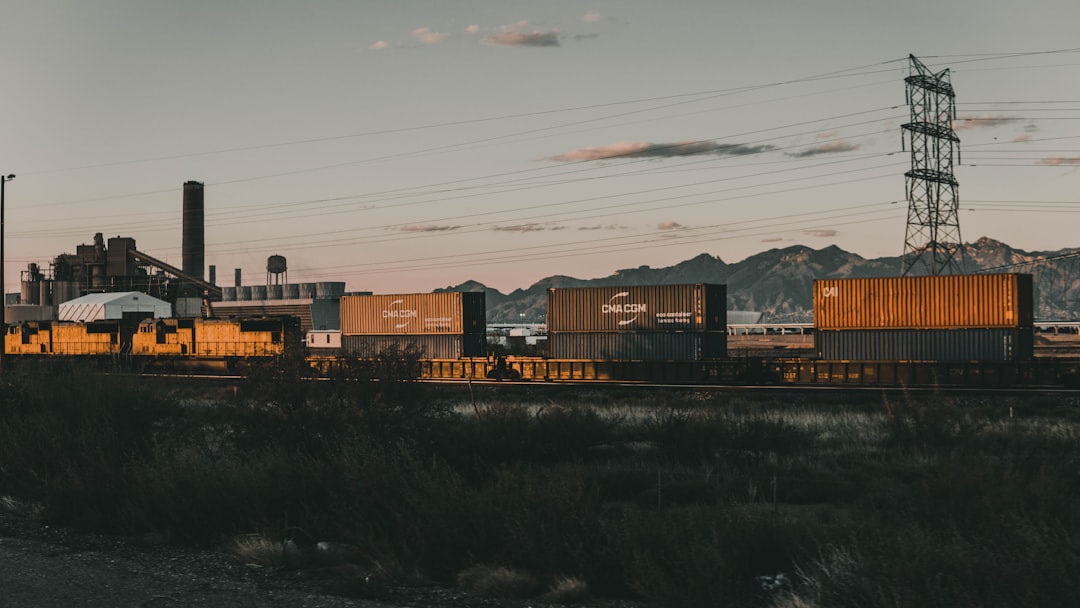
Bulk cargo, defined as unpackaged, unpackaged goods transported in large quantities, forms the backbone of global trade. This category encompasses a wide array of commodities, from agricultural products like grain and soybeans to raw materials such as coal, iron ore, and cement, as well as liquids like oil and chemicals. The efficient and cost-effective movement of these goods is crucial for industries reliant on their supply chains and, consequently, for the global economy. Two primary modes of terrestrial and intermodal bulk cargo transportation that are frequently compared for their economic and operational efficiencies are water transport (via barges and ships) and rail transport. Each offers distinct advantages and disadvantages depending on the nature of the cargo, the distances involved, the available infrastructure, and the time sensitivity of the shipment. Understanding these differences is vital for businesses to optimize their logistics and minimize transportation expenditures.
Understanding the Economics of Bulk Cargo Freight
The cost of transporting bulk cargo is a multifaceted equation, influenced by a variety of factors that extend beyond the simple per-mile rate. These costs are typically broken down into several key components that stakeholders must consider when evaluating different transport modalities.
Direct Transportation Costs
These are the most immediately apparent costs associated with moving goods.
Fuel Costs
Fuel is a significant operational expense for any transportation mode. For water transport, this includes the diesel or bunker fuel consumed by tugboats and barges, or the fuel for the engines of larger ocean-going vessels. Rail transport also relies heavily on diesel or electric power, with diesel engines being prevalent for freight locomotives. Fluctuations in global energy prices directly impact the profitability and competitiveness of both modes.
Labor Costs
The cost of employing crews for vessels and train operators, engineers, and other essential personnel constitutes a substantial portion of operating expenses. The size of the crew required for a particular shipment, union agreements, and wage rates all contribute to this factor.
Equipment Costs and Depreciation
The capital expenditure involved in acquiring and maintaining barges, ships, locomotives, and railcars is considerable. This includes depreciation, maintenance, repairs, and insurance expenses. The lifespan and operational efficiency of the equipment also play a role in long-term cost considerations.
Indirect and Ancillary Costs
Beyond the direct costs of moving the cargo, several other expenses can significantly influence the overall expense of bulk freight.
Infrastructure Usage Fees
Waterways often involve tolls or port fees, particularly for commercial canals or heavily trafficked shipping lanes. Similarly, rail companies pay track access fees to infrastructure owners, which can be complex and vary by region.
Loading and Unloading Costs
The process of transferring bulk cargo between its origin and the transport vessel or railcar is a critical cost center. Specialized equipment, such as cranes, conveyors, and loaders, is required, along with the labor to operate them. Terminal operations, including storage and handling of the cargo before or after transit, also add to these costs.
Insurance and Risk Management
The inherent risks associated with transporting large quantities of valuable commodities necessitate comprehensive insurance coverage. Premiums are influenced by the value of the cargo, the distances traveled, and the potential for accidents or damage. Risk management strategies, including security measures and emergency response planning, also contribute to overall costs.
In exploring the dynamics of bulk cargo freight costs, a related article that provides valuable insights is available at MyGeoQuest. This resource delves into the comparative advantages and disadvantages of water versus rail transport, highlighting factors such as cost efficiency, transit times, and environmental impact. By examining these elements, shippers can make informed decisions about the most suitable mode of transport for their bulk cargo needs.
Water Transportation: A Deep Dive into Costs and Capabilities
Water transport, primarily through barges on inland waterways and ships on oceans, has historically served as a cornerstone for bulk cargo movement due to its inherent capacity and cost-effectiveness for certain types of shipments.
The Advantages of Scale
One of the most significant economic advantages of water transport lies in its immense carrying capacity. A single barge can carry the equivalent of multiple railcars, and a large ocean-going vessel can transport thousands of tons of cargo.
Barge Capacities and Costs
Inland waterways, such as rivers and canals, are typically utilized by barges. A standard inland barge can carry approximately 1,500 tons of cargo. A tow, consisting of multiple barges pushed or pulled by a single tugboat, can transport 30,000 tons or more. This sheer volume allows for significant economies of scale, particularly when compared to individual railcars. The cost per ton-mile for barge transport is often lower than for rail, especially for long-haul, non-time-sensitive goods.
Ocean-Going Vessel Capacities and Costs
For international trade and intercontinental shipments of bulk commodities, ocean-going vessels are indispensable. Capesize bulk carriers, for instance, can carry over 150,000 tons of cargo, and ultra-large container vessels (ULCVs), while primarily for containerized goods, also handle a considerable amount of bulk when converted or partially filled. The cost per ton-mile on international shipping routes can be exceptionally low, making it the preferred mode for global sourcing of raw materials.
Operational Considerations and Associated Expenses
While offering cost advantages, water transport is subject to specific operational constraints and associated costs.
Speed and Transit Times
Water transport is inherently slower than rail. The speed of barges on inland waterways is typically limited by current and navigational restrictions, often in the range of 5-10 miles per hour. Ocean vessels are faster but still considerably slower than trains. This lower speed translates into longer transit times, which can be a significant disadvantage for time-sensitive goods.
Infrastructure Dependency and Port Costs
Water transport is entirely dependent on navigable waterways and port infrastructure. The construction and maintenance of canals, locks, and harbors are massive public and private investments. Port fees, including dockage, wharfage, and cargo handling charges, can be substantial. Congestion at ports, especially in busy maritime regions, can lead to significant delays and additional demurrage charges.
Weather and Environmental Factors
Waterways are susceptible to weather conditions. Flooding, droughts, ice, and storms can disrupt traffic, cause delays, and even make navigation impossible. Environmental regulations related to emissions, ballast water management, and pollution control also add to the operational complexity and cost of water transport.
Rail Transportation: Efficiency and Reach
Rail transport offers a compelling alternative for bulk cargo, characterized by its speed relative to water, its ability to access inland locations, and its perceived reliability.
The Strengths of Rail Networks
Railways form an extensive and integrated network, providing access to a wide range of origins and destinations that may not be accessible by water.
Speed and Throughput
A freight train typically travels at speeds ranging from 30 to 60 miles per hour, significantly faster than barges. This higher speed translates into shorter transit times, which is a critical factor for many industries. Furthermore, a single train can carry thousands of tons of cargo, albeit typically less per unit than a barge tow or large vessel. The ability to run trains on schedules and the efficiency of modern switching yards allow for high throughput of bulk commodities.
Inland Accessibility and Intermodal Capabilities
Rail networks extend far beyond navigable waterways, connecting mines, agricultural regions, industrial centers, and major consumption markets. This inland reach is a key differentiator for rail transport. Moreover, rail is a crucial component of intermodal transportation, seamlessly connecting to ports and trucking networks for last-mile delivery.
Operational Dynamics and Cost Structures
The operational costs of rail transport are influenced by factors distinct from those affecting water transport.
Track Infrastructure and Maintenance
Railways themselves represent a significant infrastructure investment. While freight railroads often own and maintain their own tracks, they may also pay access fees to third-party infrastructure owners. Maintenance of tracks, signals, and bridges is an ongoing and substantial expense.
Locomotive Power and Train Configurations
The power of locomotives and the length and weight of a train, known as its configuration, are critical determinants of hauling capacity and operational efficiency. Longer, heavier trains can carry more cargo efficiently, but they require more powerful locomotives and may be subject to track limitations. The energy consumption per ton-mile can be competitive, particularly for long, heavy hauls.
Terminal Operations and Yard Congestion
Rail freight also involves significant terminal operations, including the marshalling of cars into trains and the creation of unit trains (trains dedicated to a single commodity from origin to destination). Yard congestion and the efficiency of switching operations can impact transit times and overall costs.
Direct Cost Comparison: Water vs. Rail
A direct comparison of the per-ton-mile cost between water and rail transport reveals the fundamental economic differences that drive modal choice.
The Per-Ton-Mile Advantage of Water
In general, for long-haul movements of large volumes of non-time-sensitive bulk cargo, water transport (especially via barge) exhibits a lower per-ton-mile cost compared to rail. This is primarily due to the greater carrying capacity of water vessels.
Barges vs. Railcars
A single barge can carry the equivalent of approximately 10-12 standard 70-ton railcars. When considering a tow of multiple barges, the cumulative carrying capacity is immense. This allows for significant economies of scale, meaning that the cost per ton decreases as the volume of cargo increases. For commodities like coal, grain, and aggregates that are moved in vast quantities over long distances, the cost savings offered by barge transport can be substantial.
Ocean Shipping Cost Effectiveness
On international routes, the cost per ton-mile for bulk cargo carried by ocean-going vessels is often significantly lower than for any land-based alternative. The sheer scale of these vessels and the efficiency of high-volume commodity trading on global markets make ocean shipping the most cost-effective option for moving raw materials across continents.
When Rail Becomes More Competitive
Despite the general advantage of water for bulk, rail transport can become more cost-competitive under specific circumstances.
Shorter to Medium Distances
For shorter to medium-distance hauls, the faster transit times of rail may offset its potentially higher per-ton-mile cost. The fixed costs associated with loading and unloading at multiple ports or the delays inherent in frequent barge movements can erode the cost advantage of water transport over shorter routes.
High-Value or Time-Sensitive Bulk Cargo
While bulk cargo is often perceived as less time-sensitive, certain commodities, such as perishable agricultural products or time-critical industrial feedstocks, may justify the higher cost of rail transport to ensure timely delivery.
Inland Origin or Destination
If both the origin and destination of the bulk cargo are far from navigable waterways, rail transport becomes the more practical and often more cost-effective option, avoiding the additional drayage costs to and from ports.
When considering the efficiency and cost-effectiveness of transporting bulk cargo, it’s essential to explore various modes of transport, particularly water and rail. A related article that delves deeper into this topic can be found at this link, where you can discover insights on how these two methods compare in terms of freight costs and environmental impact. Understanding these differences can significantly influence logistics decisions for businesses involved in bulk shipping.
Factors Influencing Modal Choice Beyond Direct Costs
While direct cost is a primary driver, businesses must consider a broader spectrum of factors when making modal decisions for bulk cargo transportation.
Transit Time and Reliability
The speed at which cargo arrives is a critical consideration for inventory management, production schedules, and market responsiveness.
Meeting Production Schedules
Industries that rely on a just-in-time inventory system or operate with tight production schedules may find the faster transit times of rail essential. Delays in receiving raw materials can lead to costly production stoppages.
Supply Chain Predictability
The reliability of a transportation mode, meaning its ability to adhere to scheduled delivery times, is equally important. While both water and rail can experience delays due to weather or operational issues, the predictability of rail transit can be a significant advantage for many supply chains.
Cargo Characteristics and Handling Requirements
The physical properties and handling needs of the bulk cargo itself play a crucial role in modal selection.
Commodity Type and Destination
The nature of the commodity dictates its suitability for different modes. For example, highly corrosive liquids might have specific handling and containment requirements that influence the choice between specialized barges or tankers versus rail tank cars. Similarly, the availability of specialized loading and unloading equipment at the origin and destination can heavily favor one mode over another.
Product Integrity and Risk of Damage
While bulk cargo is designed for large-scale transport, some commodities are more susceptible to damage from handling, vibration, or exposure to the elements. The design of specialized railcars or containers for certain bulk goods may offer superior protection compared to open barges or general cargo ships.
Infrastructure Availability and Connectivity
The existence and quality of transport infrastructure at the origin, transit points, and destination are fundamental prerequisites for modal choice.
Waterway Access and Port Facilities
The availability of deep-water ports, navigable inland waterways, and efficient terminal operations is essential for water transport. If these facilities are limited or underdeveloped, rail may become the only viable option.
Rail Network Reach and Intermodal Hubs
Conversely, the reach of the rail network dictates its accessibility. Key intermodal hubs that facilitate seamless transfers between rail, truck, and vessel are vital for optimizing complex supply chains. The density and condition of the rail network in a particular region will significantly influence its attractiveness for bulk cargo movements.
Environmental Considerations and Regulatory Compliance
Increasingly, environmental impact and regulatory compliance are becoming significant factors in transportation logistics.
Emissions and Carbon Footprint
Water transport, particularly large vessels, can have a substantial carbon footprint. While regulations are evolving, the emissions per ton-mile are often debated. Rail, especially electrified lines, can offer a lower carbon footprint. Businesses are increasingly scrutinizing the environmental performance of their logistics partners.
Regulatory Frameworks and Permitting
Different modes are subject to varying regulatory frameworks. Compliance with maritime regulations, environmental permits for operations, and safety standards for rail transport all add to the complexity and cost of choosing a particular mode. Businesses must ensure that their chosen method of transport aligns with all relevant legal and environmental requirements.
By meticulously evaluating these multifaceted factors, businesses can make informed decisions that optimize both the cost and the efficiency of their bulk cargo transportation operations, ensuring the reliable and economical movement of essential goods across diverse supply chains.
FAQs
1. What are the main differences between water and rail transport for bulk cargo freight?
Water transport, typically using ships or barges, is often preferred for long-distance transport of bulk cargo due to its lower cost per ton-mile compared to rail transport. Rail transport, on the other hand, is more suitable for shorter distances and offers faster transit times.
2. What are the advantages of water transport for bulk cargo freight?
Water transport is cost-effective for transporting large volumes of bulk cargo over long distances. It also has a lower environmental impact compared to rail transport, as ships produce fewer emissions per ton of cargo transported.
3. What are the advantages of rail transport for bulk cargo freight?
Rail transport is well-suited for transporting bulk cargo over shorter distances and offers faster transit times compared to water transport. It also provides greater flexibility in terms of accessing inland destinations and intermodal connections.
4. What are the main factors that influence the choice between water and rail transport for bulk cargo freight?
The choice between water and rail transport for bulk cargo freight is influenced by factors such as the distance of the transport route, the volume of cargo to be transported, the cost of transportation, transit time requirements, and the accessibility of the destination.
5. Are there any specific types of bulk cargo that are more suitable for water transport over rail transport?
Bulk commodities such as coal, iron ore, grain, and petroleum products are often transported by water due to their high volume and the cost-effectiveness of water transport for long-distance hauls. However, certain specialized bulk cargoes, such as perishable goods or high-value commodities, may be better suited for rail transport.