
The Colorado River, a lifeblood for millions across the American West, is currently experiencing a profound and escalating water shortage. This vital artery, stretching over 1,450 miles from the Rocky Mountains to the Gulf of California, is the sole water source for over 40 million people and irrigates millions of acres of farmland. However, for decades, the river has been operating on a deficit, with more water being allocated and consumed than is naturally replenished. This imbalance, exacerbated by a prolonged and intensifying drought, has pushed the Colorado River system to a critical juncture, igniting widespread concerns about its future sustainability and the profound implications for the region’s economy, environment, and way of life.
The current predicament of the Colorado River is not a sudden shock but rather the predictable outcome of a system built on optimistic projections and historical agreements that have outlived their effectiveness. The cornerstone of water management for the Colorado River is the Colorado River Compact of 1922. This seminal agreement, signed by seven Western states – Colorado, Wyoming, Utah, New Mexico (the Upper Basin states), Arizona, Nevada, and California (the Lower Basin states) – divided the river’s water between the two basins. It was signed during a period of relatively wet years, leading to an overestimation of the river’s average annual flow.
The Myth of the “Full” River: Historical Flow Rates and Their Deception
The projections made in 1922 were based on an estimated average annual flow of approximately 17.5 million acre-feet (MAF). However, subsequent hydrological analysis has revealed that this figure was significantly inflated. Studies examining tree rings and other paleoclimate data indicate that the long-term average flow of the Colorado River is closer to 13.5 to 15 million acre-feet. This inherent over-allocation, a foundational flaw in the system, has been a slow-burning fuse, gradually leading to the current crisis. The river was essentially promised more water than it could reliably deliver, a situation akin to a bank approving loans for more money than it actually has in its vaults.
The Unraveling of Prior Appropriation: “First in Time, First in Right” Under Strain
The water rights along the Colorado River are governed by the doctrine of Prior Appropriation, often summarized as “first in time, first in right.” This means that the earliest water rights holders have the first claim to the water, regardless of their location or the current needs of others. While this system has governed water allocation for over a century, it is now facing unprecedented strain. The escalating shortages are forcing difficult conversations about how this doctrine will function when there simply isn’t enough water to go around.
The Seniority Principle: A Double-Edged Sword in Times of Scarcity
This seniority principle, while historically crucial for establishing water rights, becomes a significant challenge during shortages. Senior water rights holders, often in states like California and Arizona with large agricultural sectors that have been utilizing water for generations, are entitled to their allocated amounts even as junior rights holders face severe cutbacks. This creates an inherent tension and raises questions about fairness and the equitable distribution of a dwindling resource. It means that even if a new community or a growing urban area has a dire need, their rights are subordinate to those established long ago.
The Role of the Bureau of Reclamation: The Steward of the System
The Bureau of Reclamation plays a pivotal role in managing the Colorado River. Responsible for the operation of major dams like Hoover Dam and Glen Canyon Dam, as well as the allocation and delivery of water, the Bureau is on the front lines of this crisis. Their decisions regarding releases from reservoirs, drought contingency plans, and negotiations between the states are critical to navigating the current challenges. The Bureau essentially acts as the conductor of a complex orchestra, but the instruments are becoming increasingly discordant.
The ongoing water shortage in the Colorado River has raised significant concerns regarding water management and sustainability in the region. For a deeper understanding of the implications and potential solutions to this crisis, you can read a related article that explores the challenges and strategies being implemented to address the water scarcity issues. Check it out here: My Geo Quest.
The Relentless Grip of Drought: A Climate Change Amplifier
While the system’s inherent over-allocation is a significant factor, the current crisis has been undeniably amplified by a prolonged and severe drought. The Western United States has been experiencing a megadrought, a multi-decadal period of below-average precipitation, for the past two decades. This drought has significantly reduced the amount of snowpack in the Rocky Mountains, the primary source of the Colorado River’s water.
Diminishing Snowpack: The River’s Unreliable Snow Globe
The snowpack in the headwaters of the Colorado River acts as a natural reservoir, storing water during the winter months and releasing it gradually through snowmelt in the spring and summer. However, in recent years, this snow globe has been running on empty. Warmer temperatures mean that more precipitation is falling as rain rather than snow, and when it does snow, it melts earlier and faster, leading to reduced downstream flow. This direct reduction in inflow is the most tangible manifestation of the drought’s impact.
Evaporation and Evapotranspiration: The Silent Thirst of the Landscape
Beyond reduced precipitation, evaporation from reservoirs and evapotranspiration (the process by which plants release water vapor into the atmosphere) are significant factors contributing to water loss. Large reservoirs like Lake Mead and Lake Powell are vast, open bodies of water exposed to the sun and wind, leading to substantial evaporation. Similarly, thirsty agricultural landscapes and natural vegetation contribute to this constant, unseen drain on the river’s supply. The sun’s relentless gaze, coupled with the natural processes of nature, are continuously siphoning away precious water.
The Feedback Loop: How Climate Change Worsens the Drought
The intensifying drought is intrinsically linked to climate change. Rising global temperatures are altering precipitation patterns and increasing the frequency and intensity of heatwaves. This creates a dangerous feedback loop where a warmer climate leads to drier conditions, which in turn can further exacerbate warming. Scientists are increasingly confident that the current drought conditions are more severe and prolonged than would be expected without anthropogenic climate change.
Declining Reservoir Levels: The Visible Symptoms of Stress

The most dramatic and visually evident symptom of the Colorado River crisis is the precipitous decline in the levels of its major reservoirs, primarily Lake Mead and Lake Powell. These massive man-made lakes, created by Hoover Dam and Glen Canyon Dam respectively, serve as the primary storage for the river’s water and are crucial for its management and distribution. Their shrinking waters are a stark visual testament to the river’s struggle.
Lake Mead: A Cautionary Tale of Falling Tides
Lake Mead, the nation’s largest reservoir by volume, has seen its water levels plummet to historic lows. At its peak, the lake held over 32 million acre-feet of water. Now, its levels have fallen so significantly that they are threatening the operational capacity of the Hoover Dam’s hydroelectric generators and impacting water deliveries to Arizona, Nevada, and California. The receding waterline around Lake Mead exposes the bathtub rings, a grim reminder of its former abundance.
The Katrina-Level Shock: Impacts on Power Generation
The declining levels of Lake Mead have reached a point where they threaten the ability of Hoover Dam to generate hydroelectric power. The turbines at the dam are designed to operate within a specific range of water levels. As the water recedes, the dam’s capacity to produce electricity diminishes, impacting the power supply for millions of people and businesses. This is a significant consequence, as hydropower from Hoover Dam is a critical source of clean, renewable energy for the region.
Lake Powell: The Shadow of Glen Canyon Dam
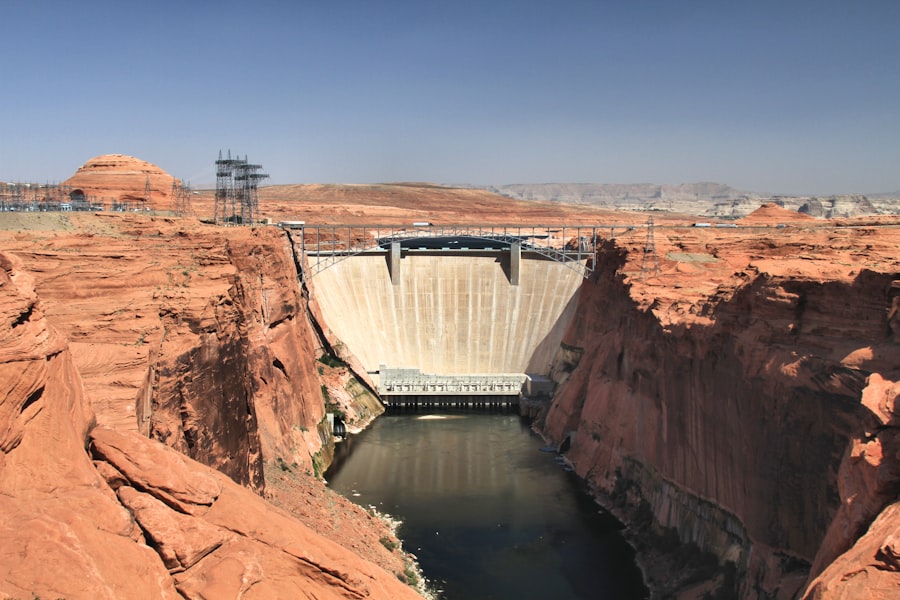
Similarly, Lake Powell, located upstream of Lake Mead, has also experienced dramatic declines. This has implications for water management further downstream, particularly for the Upper Basin states, and for the environmental health of the Grand Canyon. The shrinking of Lake Powell also impacts the generation of hydroelectric power at Glen Canyon Dam. The serene surface of Lake Powell now belies the critical water levels it holds for the entire basin.
The Stress on the “System of Systems”: Interconnectedness of Reservoirs
It is crucial to understand that Lake Mead and Lake Powell are not isolated entities. They are part of a connected reservoir system, and the water level in one directly impacts the other. Drought and reduced inflows affect both reservoirs, and their interdependency means that challenges in one spill over into the other, creating a complex cascade of problems. This interconnectedness means that the health of the entire “system of systems” is compromised.
Impacts on Agriculture: The Thirsty Fields of the West
The agricultural sector, a major water consumer in the Colorado River Basin, is disproportionately affected by the ongoing water shortage. Millions of acres of farmland rely on the river for irrigation, and any reduction in water availability has direct and significant consequences for crop production, livestock, and the livelihoods of farmers and ranchers.
The Irrigation Lifeline: Paramount to Food Production
Agriculture in states like California, Arizona, and parts of Colorado is a cornerstone of the nation’s food supply. Fruits, vegetables, cotton, and livestock are produced in vast quantities and depend heavily on the consistent availability of water from the Colorado River. The river acts as the lifeblood for these agricultural enterprises, nourishing crops and sustaining economies.
Cutbacks and Fallowing: The Painful Realities for Farmers
As water allocations are reduced, farmers are forced to make difficult decisions. This often involves fallowing land – leaving fields uncultivated – or switching to less water-intensive crops. These measures lead to reduced yields, economic hardship, and the potential loss of farmland. The decision to let land lie dormant, once a source of great pride and sustenance, is now a harsh necessity.
The Economic Ripple Effect: Beyond the Farm Gate
The impact of water shortages extends far beyond the farm gate. Reduced agricultural output can lead to higher food prices, job losses in related industries like food processing and transportation, and a decline in the economic vitality of rural communities that depend on agriculture. The entire economic ecosystem of the West is closely tied to the health of its agricultural sector, which in turn is tethered to the Colorado River.
The ongoing water shortage in the Colorado River has raised significant concerns about the future of water supply in the southwestern United States. As states grapple with the implications of dwindling resources, a related article discusses the various strategies being implemented to address this critical issue. For more insights on this topic, you can read the full article here. The challenges posed by climate change and increasing demand for water make it essential for policymakers to find sustainable solutions that will benefit both the environment and local communities.
Urban Water Challenges: Balancing Growth and Scarcity
| Trigger Level | Lake Mead Elevation (feet) | Water Shortage Declaration | Impact on Arizona | Impact on Nevada | Impact on Mexico |
|---|---|---|---|---|---|
| Tier 1 | 1,075 – 1,049 | Declared | Reduction of 320,000 acre-feet | Reduction of 13,000 acre-feet | Reduction of 80,000 acre-feet |
| Tier 2 | 1,050 – 1,025 | Declared | Additional reduction of 192,000 acre-feet | Additional reduction of 0 acre-feet | Additional reduction of 0 acre-feet |
| Tier 3 | Below 1,025 | Declared | Additional reduction of 192,000 acre-feet | Additional reduction of 0 acre-feet | Additional reduction of 0 acre-feet |
While agriculture is a significant user, urban areas within the Colorado River Basin are also facing mounting pressure to conserve water and find new solutions. Cities like Las Vegas, Phoenix, Denver, and Los Angeles rely on the river for their water supply, and their growing populations are placing ever-increasing demands on a diminishing resource.
Municipal Water Demands: A Growing Thirst in the Desert
The populations of many cities in the Southwest have grown exponentially over the past several decades. This growth, coupled with the historical reliance on Colorado River water, has created a significant challenge in meeting the increasing municipal water demands. Even in arid regions, the urban landscape has a voracious appetite for water, fueling everything from residential lawns to industrial processes.
Conservation Efforts: A Collective Responsibility
In response to the water shortage, many municipalities have implemented stringent water conservation measures. These include restrictions on outdoor watering, incentives for drought-tolerant landscaping, and public awareness campaigns encouraging reduced indoor water use. The success of these measures hinges on the collective responsibility of every resident to use water wisely.
The Threat to Development: Growth Stalled by Water Limits
The availability of water is a fundamental constraint on future development in the West. As the Colorado River’s supply becomes more uncertain, cities and developers are facing increasing scrutiny and potential limitations on new projects. The dream of continued growth in these arid regions is being tempered by the stark reality of water scarcity. Water, once an assumed given, is now becoming a significant impediment to expansion.
Inter-basin Transfers and Desalination: Future, Yet Uncertain, Solutions
Looking ahead, discussions are ongoing about potential long-term solutions, including inter-basin transfers of water from other regions and the development of desalination technologies. However, these solutions are often expensive, environmentally complex, and face significant political hurdles. The search for a sustainable water future for the Colorado River Basin is a multifaceted and ongoing endeavor. These are not silver bullets but rather potential tools to be carefully considered and implemented. The future of the Colorado River is a testament to humanity’s ingenuity in managing its most precious resources, but also a stark reminder of our responsibility to live within the Earth’s natural limits.

The $5 Trillion Collapse: The Hidden Law That Guaranteed America’s West Would Run Dry
FAQs
What is causing the Colorado River water shortage?
The Colorado River water shortage is primarily caused by prolonged drought conditions, increased water demand from growing populations, and climate change reducing snowpack and river flow.
How does the water shortage affect states relying on the Colorado River?
The shortage leads to reduced water allocations for states like Arizona, California, Nevada, Colorado, Utah, New Mexico, and Wyoming, impacting agriculture, urban water supplies, and hydroelectric power generation.
What measures are being taken to address the Colorado River water shortage?
Measures include water conservation efforts, renegotiation of water-sharing agreements, investment in water-efficient technologies, and initiatives to reduce water use in agriculture and urban areas.
How does the shortage impact the environment and wildlife?
Reduced river flows harm aquatic habitats, decrease water quality, and threaten fish and wildlife species dependent on the river ecosystem.
What role does climate change play in the Colorado River water shortage?
Climate change contributes to higher temperatures, altered precipitation patterns, and reduced snowpack in the Rocky Mountains, all of which decrease the river’s overall water supply.