Belgium, a nation often characterized by its linguistic divisions, has navigated its complex multilingual landscape through a foundational principle: territoriality. This approach, deeply embedded in the country’s constitution and subsequent legislation, assigns specific languages to designated regions, aiming to create a framework for co-existence and national unity. While seemingly straightforward, the territorial language principle is a nuanced and dynamic system that has shaped Belgium’s identity, its political structures, and the lives of its citizens. Understanding this principle is crucial to grasping the unique dynamics of this European nation.
The linguistic map of Belgium is not a random creation; it is the product of centuries of historical evolution, demographic shifts, and political maneuvering. The current territorial language principle is a direct consequence of this rich and often contentious past.
The Influence of Roman Gaul and Germanic Invasions
Long before the formation of modern Belgium, the region was a crossroads of cultures and languages. The southern part of what is now Belgium was historically part of Roman Gaul, where Vulgar Latin, the precursor to Romance languages, took root. This laid the foundation for the Walloon and French dialects that would later evolve. Conversely, the northern territories, closer to the Germanic heartlands, were influenced by Germanic tribes, particularly the Franks. This Germanic presence led to the development of Old Dutch dialects, which would eventually form the basis of modern Dutch spoken in Flanders.
The Medieval Period: The Rise of Dutch and French
During the medieval period, the economic and political power of cities in Flanders, largely Dutch-speaking, contributed to the prestige and spread of the Dutch language. However, the French language, associated with the nobility, administration, and burgeoning universities, also gained significant influence, particularly in the southern regions and among the elite across the entire territory. This created a complex linguistic tapestry where different languages coexisted, often with a hierarchy of social prestige.
The Dutch Revolt and French Hegemony
The eventual unification of the Low Countries under various rulers, and later the Napoleonic era, saw significant shifts. The French Revolution and subsequent Napoleonic occupation imposed French as the language of administration and law across the region. This period of French linguistic dominance, while relatively short-lived, left a lasting impact, fostering resentment among the Dutch-speaking population and solidifying the perception of French as the language of power and opportunity.
The Belgian Revolution and Early Language Policies
The Belgian Revolution of 1830, which led to the secession from the United Kingdom of the Netherlands, was driven by a complex mix of political, economic, and cultural grievances. While independence was achieved, the initial government was heavily dominated by French speakers, and French remained the sole official language. This exclusionary policy fueled a growing Flemish movement, advocating for the recognition and equality of the Dutch language. The early decades of independent Belgium were thus marked by a linguistic struggle, with the Flemish population demanding linguistic rights and cultural autonomy.
The territorial language principle in Belgium is a fascinating topic that highlights the country’s complex linguistic landscape and its implications for governance and identity. For a deeper understanding of this principle and its impact on Belgium’s regions, you can read a related article that explores the nuances of language policy and regional autonomy. To learn more, visit this article.
Codifying the Divide: The Territorial Language Principle in Law
The realization that forced linguistic assimilation was unsustainable and counterproductive led to a gradual shift in Belgian language policy. The territorial language principle, formally enshrined in law, emerged as a compromise to manage these deep-seated linguistic divisions.
The First Language Laws and the Recognition of Dutch
The mid-20th century witnessed a series of pivotal language laws that began to formally recognize the territorial distribution of languages. The law of 1938 was a significant step, officially demarcating the linguistic frontier and establishing French and Dutch as official languages within their respective territories. This was a crucial acknowledgement of the demographic reality and a departure from the previous French-centric approach.
The Constitutional Amendments and Federalization
The linguistic tensions persisted, leading to further constitutional reforms and the eventual federalization of Belgium in the 1970s and 1980s. These reforms fundamentally restructured the Belgian state, dividing it into three linguistic communities (Flemish, French, and German-speaking) and three regions (Flanders, Wallonia, and Brussels-Capital). The territorial language principle became a cornerstone of this federal structure, with each region primarily designated to its dominant language. Flanders became the Dutch-speaking region, Wallonia the French-speaking region (with a small German-speaking minority in the east), and Brussels-Capital a bilingual region.
The Brussels-Capital Region: A Unique Case
The Brussels-Capital Region presents a significant challenge and a unique manifestation of the territorial language principle. Historically, Brussels was a predominantly Dutch-speaking city. However, due to migration and the increasing prominence of French as a language of administration and international affairs, it became increasingly bilingual and, for many practical purposes, French-speaking. The territorial principle in Brussels is characterized by a complex system of bilingualism, where both French and Dutch have official status. This ensures that administrative services and public life are accessible in both languages, reflecting the city’s unique demographic and historical trajectory.
The Language Decree of Flanders and Wallonia
Following federalization, both Flanders and Wallonia enacted their own specific language decrees to govern the use of languages within their territories. The Flemish Language Decree, for instance, reinforces the primacy of Dutch in Flanders, setting regulations for education, public administration, and business. Similarly, Wallonia has legislation governing the use of French and, importantly, the rights of the German-speaking minority in its eastern cantons. These decrees, while aiming to uphold the territorial principle, are subject to ongoing debate and adjustments based on evolving societal needs and political dynamics.
The Pillars of the Principle: Regions, Communities, and Rights
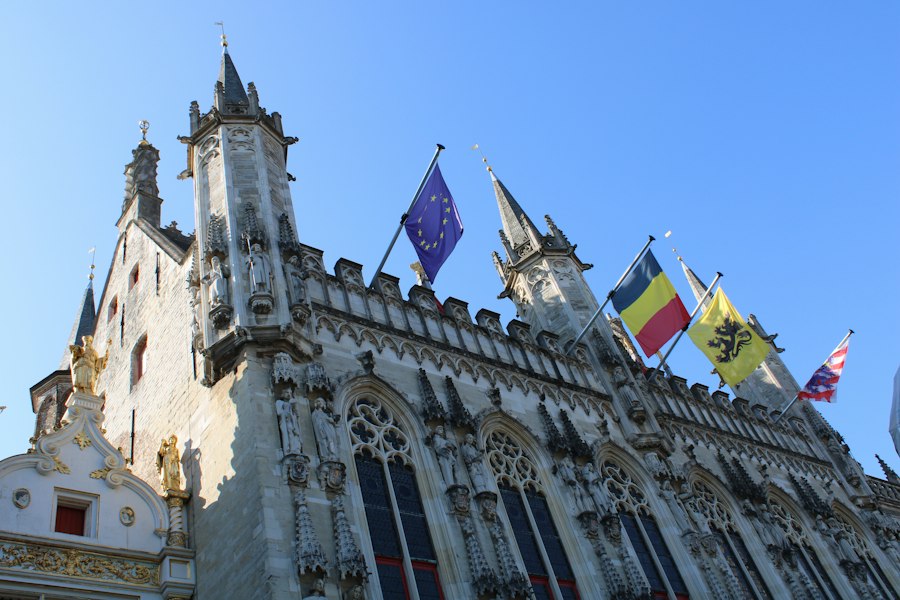
The territorial language principle is not merely a geographical demarcation; it is interwoven with the very fabric of Belgium’s governmental and administrative structures, ensuring the rights and recognition of its linguistic groups.
The Flemish Region: A Dutch-Speaking Bastion
The Flemish Region, encompassing the northern half of the country, is unequivocally the Dutch-speaking territory. The Flemish government has a mandate to promote and protect the Dutch language within its borders. This translates into policies that prioritize Dutch in education, public services, and cultural initiatives. While Flanders is predominantly Dutch-speaking, there is a French-speaking minority, particularly in the municipalities along the border with Wallonia and in the Brussels periphery. The territorial principle here means that public services in Flanders are predominantly offered in Dutch, with provisions for minority language speakers in specific circumstances.
The Walloon Region: A French-Speaking Core with a German-Speaking Enclave
The Walloon Region, in the south, is primarily French-speaking. The Walloon government oversees the use of French in its administrative and public spheres. However, the eastern part of Wallonia is home to a German-speaking community, whose rights are constitutionally protected. This community has its own cultural institutions and a degree of autonomy in managing its affairs related to language and education. The territorial principle in Wallonia thus accommodates this distinct linguistic minority, ensuring their language and culture are preserved.
The German-Speaking Community: Autonomy within the Walloon Region
The German-speaking community, though geographically situated within the Walloon Region, possesses its own dedicated community parliament and government. This grants them significant autonomy in areas such as education, culture, and social affairs, with a focus on the German language. The existence and recognition of this community exemplify how the territorial language principle, while often focused on the larger Dutch-French divide, can also accommodate and protect smaller linguistic groups, ensuring their voice and identity are not submerged.
The Brussels-Capital Region: A Bilingual Nexus
As mentioned earlier, Brussels is a unique case. The territorial language principle in Brussels recognizes its bilingual nature. While French is spoken by the majority, Dutch is also an official language, and all administrative services must be provided in both. This dual status is crucial for maintaining social cohesion and ensuring access to public services for all residents, regardless of their primary language. The complexities of Brussels’ linguistic landscape continue to be a focal point of Belgian political discourse.
Challenges and Tensions: Navigating the Nuances

Despite its foundational role, the territorial language principle is not without its challenges. The strict adherence to territoriality can sometimes create rigidities and lead to tensions, particularly in areas where linguistic borders are blurred or where demographic shifts occur.
The “Facility Municipalities” and Borderland Tensions
The municipalities situated along the linguistic border, particularly those in Flanders with a significant French-speaking population (and vice-versa), have often been a source of contention. These “facility municipalities” were granted specific linguistic concessions, allowing for administrative services to be provided in the minority language. However, the extent and nature of these facilities remain a recurring point of political debate, with some advocating for stricter adherence to the dominant regional language and others seeking to protect the rights of linguistic minorities.
Language in Education: A Contentious Arena
Education is a particularly sensitive area governed by the territorial language principle. In Flanders, education is predominantly in Dutch, while in Wallonia, it is in French. However, the choice of language of instruction for parents, particularly in Brussels and the surrounding areas, can lead to friction. The principle dictates that educational institutions should primarily align with the territorial language of the region, but exceptions and debates surrounding parental choice and linguistic integration are constant.
The Brussels Question: A Persistent Dilemma
The status of Brussels and its relationship with the surrounding Flemish region continues to be a persistent dilemma. While Brussels is officially bilingual, its growing influence and the presence of many French speakers have led to debates about its linguistic identity and its territorial connection. The principle of territoriality, when applied to Brussels, has to constantly adapt to its evolving demographic and functional reality.
Integration vs. Assimilation: The Fine Line
A core tension surrounding the territorial language principle is the fine line between linguistic integration and forced assimilation. While the principle aims to ensure that individuals can live and work in their own language within a designated territory, there are concerns that it can inadvertently lead to segregation or hinder social mobility for those who do not master the dominant language of the region. Striking a balance between respecting linguistic identity and promoting cross-linguistic understanding remains a continuous challenge.
The territorial language principle in Belgium plays a crucial role in the country’s linguistic landscape, ensuring that language rights are respected according to the region’s demographics. This principle is particularly significant in areas where multiple languages coexist, leading to ongoing discussions about cultural identity and governance. For a deeper understanding of how these dynamics unfold, you can explore a related article that delves into the complexities of Belgium’s language policies and their implications for society. To read more about this topic, visit this insightful article.
Towards a More Inclusive Future: Evolving Interpretations
| Region | Official Language(s) | Language Principle | Population Percentage Speaking Official Language | Notes |
|---|---|---|---|---|
| Flanders | Dutch | Territorial language principle | 60% | All official matters conducted in Dutch |
| Wallonia | French (and German in some areas) | Territorial language principle | 40% French, 1% German | German official in East Cantons |
| Brussels-Capital Region | French and Dutch (bilingual) | Special bilingual status | 80% French, 20% Dutch | Both languages have official status |
| German-speaking Community | German | Territorial language principle | 0.7% | Smallest official language community |
The territorial language principle in Belgium is not a static dogma but an evolving framework that adapts to the changing realities of society. While its core tenets remain, there is a growing recognition of the need for flexibility, pragmatism, and a more nuanced approach to ensure continued national unity.
The Role of Bilingualism and Multilingualism
While the principle emphasizes territoriality, there is an increasing acknowledgement of the value of bilingualism and multilingualism. Efforts are being made to promote language learning across linguistic communities, fostering greater understanding and reducing barriers. This shift recognizes that while territoriality provides a stable framework, individual and societal multilingualism can be a strength.
Federal Cooperation and Inter-Community Dialogue
The federal structure of Belgium necessitates constant cooperation and dialogue between its communities and regions. This inter-community dialogue is crucial for addressing linguistic issues, resolving disputes, and ensuring that the territorial language principle serves the broader goal of national cohesion rather than division. Collaborative efforts in areas like education and cultural exchange are vital.
The Influence of European Integration
Belgium’s membership in the European Union has also had an impact on its linguistic landscape. The presence of EU institutions in Brussels, with their diverse linguistic makeup, has reinforced the city’s international character and highlighted the importance of multilingualism. This broader European context can influence how Belgians perceive and manage their own linguistic diversity.
Continuous Re-evaluation and Adaptation
The ongoing political and social evolution in Belgium means that the territorial language principle is subject to continuous re-evaluation and adaptation. As demographics shift and societal attitudes evolve, the laws and regulations governing language use may need to be adjusted to ensure they remain relevant and effective in fostering a united and harmonious nation. The Belgian experience demonstrates that managing linguistic diversity is a continuous process, requiring a commitment to dialogue, compromise, and a shared vision of national identity.
In conclusion, Belgium’s territorial language principle is a complex and enduring mechanism that has, for decades, provided a framework for managing its deeply ingrained linguistic divisions. By assigning languages to specific territories, the principle has sought to create zones of linguistic security and recognition. However, its implementation has been a continuous negotiation, marked by historical legacies, political compromises, and ongoing societal shifts. While challenges persist, the principle’s evolution towards greater inclusivity and the recognition of multilingualism offer a promising path towards a future where Belgium’s linguistic diversity is not a source of division, but a testament to its unique and resilient national identity.

Belgium Has a Border With No Wall — Here’s Why
FAQs
What is the territorial language principle in Belgium?
The territorial language principle in Belgium states that the official language(s) used in a specific region of the country should correspond to the linguistic majority of that region.
How many official languages does Belgium have?
Belgium has three official languages: Dutch, French, and German. Dutch is spoken by the majority of the population in Flanders, French in Wallonia, and German in the German-speaking Community.
How does the territorial language principle affect government services in Belgium?
Government services in Belgium are provided in the official language(s) of the region where they are located. This means that in Flanders, services are primarily in Dutch, in Wallonia in French, and in the German-speaking Community in German.
Are there any exceptions to the territorial language principle in Belgium?
There are some exceptions to the territorial language principle in Belgium, particularly in the capital city of Brussels. Brussels is officially bilingual, with both Dutch and French recognized as official languages due to its diverse population.
How does the territorial language principle impact education in Belgium?
Education in Belgium is also influenced by the territorial language principle, with schools in Flanders primarily teaching in Dutch, schools in Wallonia in French, and schools in the German-speaking Community in German.