
Bangladesh, a nation cradled by the Bay of Bengal and crisscrossed by mighty rivers, has long been intimately intertwined with its environment. This intimate relationship, however, has also made it acutely vulnerable to the escalating impacts of climate change. For decades, Bangladesh has been a bellwether for climate-induced displacement, a phenomenon deeply embedded in its history and posing formidable challenges for its future. Understanding this complex interplay requires delving into the historical roots of vulnerability, examining the diverse drivers of displacement, and confronting the multifaceted obstacles to adaptation and resilience.
The Historical Roots of Vulnerability
The geographical endowments of Bangladesh, while fostering a rich and fertile landscape, have simultaneously laid the groundwork for persistent vulnerability. The low-lying deltaic plain, formed by the confluence of the Ganges, Brahmaputra, and Meghna rivers, makes the country exceptionally susceptible to inundation, erosion, and the impacts of extreme weather events. This inherent geographical predisposition has shaped the nation’s history, influencing settlement patterns, agricultural practices, and the very fabric of its society.
Centuries of Riverine Dynamics and Coastal Exposure
From time immemorial, the lives and livelihoods of Bangladesh’s people have been dictated by the ebb and flow of its mighty rivers and the constant threat of the sea. The alluvial plains, replenished by annual floods, have historically provided fertile ground for agriculture, supporting a large agrarian population. However, these same rivers, prone to overflowing their banks during monsoon seasons, have also been agents of destruction, causing widespread flooding and land erosion. Coastal communities, in particular, have faced the relentless onslaught of tidal surges, cyclones, and saline intrusion, forcing periodic migrations inland. These historical patterns of displacement, though often localized and incremental, have created a deep-seated understanding of environmental fragility within the national consciousness. The memory of past disasters, passed down through generations, serves as a constant reminder of the precarious balance between human existence and the power of nature. This historical context is crucial for understanding why Bangladesh has become such a focal point in the global discourse on climate displacement. It is not a new phenomenon, but rather an intensification and exacerbation of pre-existing vulnerabilities amplified by anthropogenic climate change.
Early Warning Systems and Traditional Coping Mechanisms
Even before the advent of modern meteorology, communities in Bangladesh developed ingenious ways to anticipate and respond to natural hazards. Traditional knowledge systems, honed over centuries of living with floods and cyclones, provided early warning signals. These included observing changes in animal behavior, the direction of the wind, and the characteristics of cloud formations. Communities also developed adaptive strategies for housing, such as building homes on raised platforms or using flexible materials that could withstand strong winds. Cooperative efforts, like mutual assistance during flood evacuations or rebuilding efforts, were integral to community resilience. While these traditional mechanisms offered a degree of protection, their efficacy was often overwhelmed by the scale and intensity of larger-scale disasters. The cyclone of 1970, for instance, a catastrophic event that claimed hundreds of thousands of lives, underscored the limitations of existing coping mechanisms in the face of unprecedented natural fury. This historical experience, while tragic, also served as a catalyst for developing more robust and organized disaster management systems, laying the groundwork for the more sophisticated approaches employed today.
The history of climate displacement in Bangladesh, particularly concerning the vulnerable char regions, is a pressing issue that has garnered significant attention in recent years. An insightful article that delves into this topic is available at this link, which explores the challenges faced by communities living in these low-lying areas and the impact of rising sea levels and extreme weather events on their livelihoods. Understanding the dynamics of climate displacement in Bangladesh is crucial for developing effective strategies to support affected populations and enhance their resilience.
The Multifaceted Drivers of Displacement

While historical vulnerability provides a backdrop, the contemporary phenomenon of climate displacement in Bangladesh is driven by a complex interplay of direct climate impacts and the socio-economic factors that mediate their consequences. These drivers are not mutually exclusive but often reinforce each other, creating a vicious cycle of vulnerability.
The Escalating Threat of Sea-Level Rise and Salinity Intrusion
Bangladesh’s extensive coastline and low elevation render it exceptionally vulnerable to sea-level rise, a direct consequence of global warming. As ice caps melt and ocean water expands, the sea encroaches further inland, inundating coastal lands and threatening the very existence of communities. This inundation is not merely a matter of permanent submergence; it also leads to increased frequency and intensity of tidal flooding, making coastal agriculture increasingly unsustainable. A more insidious threat, however, is salinity intrusion. As the sea level rises, saltwater pushes further into freshwater sources, contaminating drinking water and rendering agricultural land infertile. Millions of people in coastal districts rely on agriculture for their livelihoods, and the increasing salinity makes it impossible to grow staple crops like rice. This forces farmers to abandon their ancestral lands, leading to a loss of income, food security, and cultural heritage. The economic impact is profound, as agricultural productivity plummets, and communities are forced to seek alternative, often less secure, livelihoods. The psychological toll of losing one’s home and way of life to an invisible, inexorable force is also immense, contributing to a sense of hopelessness and despair.
Extreme Weather Events: Cyclones, Floods, and Droughts
Beyond the slow creep of sea-level rise, Bangladesh is also experiencing a dramatic increase in the frequency and intensity of extreme weather events. Powerful cyclones, such as Sidr (2007) and Aila (2009), have devastated coastal regions, causing widespread destruction of homes, infrastructure, and livelihoods. These cyclones are often accompanied by storm surges that inundate vast areas, displacing hundreds of thousands of people. Riverine floods, exacerbated by increased rainfall intensity in the Himalayas and upstream deforestation, are also a recurrent menace. These floods can submerge entire villages for weeks or months, forcing residents to flee to higher ground and often destroying their homes and possessions. In contrast to the watery threats, parts of the country also grapple with increasingly severe droughts, particularly in the northwest. Prolonged periods of little rainfall deplete water sources, damage crops, and lead to agricultural failure, forcing those dependent on farming to migrate in search of work. The unpredictable nature of these events makes long-term planning and investment extremely challenging, trapping communities in a cycle of recurring disaster and displacement. The cumulative impact of these extreme weather events, occurring with greater regularity and severity, places immense strain on national resources and humanitarian aid efforts.
Riverbank Erosion and Loss of Agricultural Land
The dynamic nature of Bangladesh’s river systems, already a historical factor, is being amplified by climate change. Increased rainfall intensity and glacial melt in the Himalayas contribute to higher river flows, leading to more aggressive erosion of riverbanks. Vast tracts of fertile land, the lifeblood of the nation’s agrarian economy, are literally disappearing into the churning waters. This erosion is not a gradual process; it can happen suddenly and dramatically, swallowing entire villages and displacing thousands overnight. The loss of agricultural land has a ripple effect, impacting food security, rural employment, and contributing to poverty. As land becomes scarce, competition for remaining resources intensifies, potentially leading to social tensions. Families who lose their land often face a stark choice: migrate to overcrowded urban centers in search of work, or attempt to eke out an existence on marginal, often unproductive, land. This erosion-induced displacement is a particularly insidious form of climate migration, as it represents a permanent loss of ancestral territory and a fundamental disruption of community structures. The economic consequences are devastating, as displaced farmers lose not only their land but also their means of production and their traditional way of life.
The Human Cost of Displacement

Climate displacement in Bangladesh is not merely an abstract statistic; it represents a profound human tragedy affecting millions of individuals and families. The consequences extend far beyond the immediate loss of shelter, impacting social structures, mental health, and economic well-being.
Internal Migration and Urbanization Pressures
The most significant pattern of climate displacement in Bangladesh is internal migration. As environmental conditions deteriorate in vulnerable areas, people are forced to move to safer regions within the country, predominantly to urban centers like Dhaka. This mass migration, often undertaken by individuals or families with limited resources, places immense pressure on already strained urban infrastructure. Slums and informal settlements proliferate, characterized by inadequate housing, poor sanitation, and limited access to essential services like clean water and healthcare. The influx of displaced persons can also lead to increased competition for jobs, wages, and social services, potentially creating social friction and marginalization. Furthermore, the cultural and social dislocation experienced by migrants, moving from rural to urban environments, can be profound. They often lose their traditional support networks and face challenges in adapting to new social norms and economic realities. This rapid and often unplanned urbanization poses significant governance challenges, requiring robust urban planning and social support systems to manage the growing populations and ensure basic living standards. The strain on public services, from transportation to education and healthcare, becomes acute, necessitating innovative solutions and substantial investment.
Vulnerable Populations and Gendered Impacts
Climate displacement disproportionately affects the most vulnerable segments of the population. Women, children, the elderly, and persons with disabilities often face greater risks and challenges during and after displacement. Women, in particular, bear a heavy burden. They are often responsible for the daily survival of their families, and during displacement, they face increased workloads, risks of sexual violence, and limited access to resources. In patriarchal societies, women may have less control over decision-making regarding migration, and their needs can be overlooked in relief and rehabilitation efforts. Children, especially those from impoverished backgrounds, are susceptible to malnutrition, disease, and lack of educational opportunities when their families are forced to relocate. The elderly, often with limited mobility and fewer financial resources, can find it extremely difficult to cope with the trauma and disruption of displacement. These gendered and age-specific vulnerabilities highlight the need for targeted interventions and a rights-based approach to climate adaptation and displacement management, ensuring that the specific needs and protections of these groups are addressed.
Loss of Livelihoods and Economic Vulnerability
The displacement of communities due to climate impacts invariably leads to the loss of traditional livelihoods. Farmers lose their land, fishermen lose their fishing grounds due to changing ocean conditions or freshwater scarcity, and small business owners see their enterprises destroyed. This loss of economic base forces individuals and families into precarious employment, often in low-wage, informal sectors. The transition from a stable, albeit sometimes modest, rural livelihood to the uncertainty of urban survival is fraught with difficulty. The lack of skills and education can further trap displaced persons in cycles of poverty. The economic vulnerability is not just individual; it has broader implications for the national economy, reducing agricultural output and placing a greater demand on social welfare systems. The informal labor market, often the only option for displaced individuals, can be exploitative, with long working hours and poor working conditions. This economic precariousness can have long-term consequences for the social mobility and overall well-being of displaced populations, perpetuating intergenerational poverty.
National and International Responses and Challenges
Addressing climate displacement in Bangladesh requires a multi-pronged approach, encompassing national adaptation strategies, robust disaster management, and international cooperation. However, significant challenges remain in effectively implementing these responses.
Adaptation and Mitigation Strategies within Bangladesh
Bangladesh has been at the forefront of developing and implementing adaptation strategies to cope with the impacts of climate change. These include constructing multi-purpose cyclone shelters, building embankments to protect coastal areas from tidal surges, promoting climate-resilient agriculture, and developing early warning systems. The government has also initiated programs to improve water management, invest in renewable energy, and implement coastal afforestation projects. Furthermore, national policies are increasingly acknowledging the need to address climate-induced displacement, with efforts to resettle displaced communities and provide them with alternative livelihood opportunities. However, the scale of the challenge often outstrips available resources, and the effectiveness of these strategies can be hampered by funding limitations, implementation gaps, and the sheer pace of climate change. The ongoing development of robust national plans, such as the National Adaptation Plan (NAP), signals a commitment to long-term resilience building.
The Role of International Aid and Climate Finance
International aid and climate finance play a crucial role in supporting Bangladesh’s efforts to combat climate change and manage displacement. Developed nations, historically responsible for the bulk of greenhouse gas emissions, have a moral and ethical obligation to assist vulnerable countries like Bangladesh. Funding is needed for adaptation projects, disaster relief, and the development of resilient infrastructure. Climate finance can also support research and development of innovative solutions, capacity building for local communities, and the establishment of effective social protection mechanisms. However, access to adequate and predictable climate finance remains a significant challenge. The disbursement of funds can be slow and bureaucratic, and the allocation often does not match the urgent needs on the ground. Furthermore, the debate over loss and damage, the irreversible impacts of climate change that cannot be adapted to, continues to be a contentious issue in international climate negotiations, with developing nations calling for greater financial support to address these unavoidable consequences.
Governance, Policy Gaps, and Legal Frameworks
Effective governance and robust policy frameworks are essential for managing climate displacement. This includes developing comprehensive legal frameworks that recognize and protect the rights of climate-displaced persons, establishing clear responsibilities for different government agencies, and fostering coordination among national and local authorities. However, there are often policy gaps and implementation challenges in Bangladesh. The legal status of climate-displaced persons is not always clearly defined, and existing land laws and resettlement policies may not adequately address their unique circumstances. Ensuring equitable access to resources, services, and legal recourse for displaced populations remains a critical challenge. Furthermore, the decentralized nature of some adaptation efforts requires strong local governance structures and community participation to ensure that interventions are appropriate and sustainable. The absence of a clear international legal framework for climate refugees also complicates efforts to address cross-border displacement, should it arise.
Bangladesh has a long history of climate displacement, particularly in its char regions, where rising sea levels and extreme weather events have forced many communities to relocate. A related article that delves deeper into this issue can be found on MyGeoQuest, which explores the challenges faced by these vulnerable populations and the strategies they employ to adapt to their changing environment. For more insights, you can read the article here. Understanding the complexities of climate displacement in Bangladesh is crucial for addressing the broader implications of climate change on human migration.
The Future of Climate Displacement in Bangladesh
| Year | Event | Location (Chars) | Estimated Displaced Population | Primary Cause | Notes |
|---|---|---|---|---|---|
| 1988 | Severe Flooding | Jamuna River Chars | Approx. 50,000 | Riverbank Erosion and Flood | Major riverbank erosion led to displacement of char dwellers |
| 1998 | Monsoon Floods | Padma River Chars | Approx. 70,000 | Flooding and Erosion | Floodwaters submerged chars causing mass displacement |
| 2007 | Severe Riverbank Erosion | Meghna River Chars | Approx. 40,000 | Riverbank Erosion | Loss of land forced residents to relocate |
| 2014 | Flash Floods | Jamuna and Padma Chars | Approx. 60,000 | Flooding | Rapid onset floods displaced many families |
| 2020 | Climate-Induced Displacement | Various Chars across Northern Bangladesh | Approx. 80,000 | Flooding, Erosion, and Salinity Intrusion | Increased frequency of climate events causing chronic displacement |
The trajectory of climate displacement in Bangladesh in the coming decades will be shaped by a complex interplay of global climate action, national resilience efforts, and the adaptive capacity of its people. The challenges are immense, but so too are the opportunities for innovation and collective action.
Projections and Emerging Trends
Scientific projections indicate that Bangladesh will continue to face escalating climate risks, with sea-level rise, increased frequency of extreme weather events, and associated displacement likely to intensify. The country is expected to experience significant population displacement, with millions potentially on the move by mid-century. Emerging trends suggest that displacement will become more complex, involving both distress migration and planned relocation. There is also a growing recognition of the potential for internal displacement to spill over into cross-border migration, although this remains a highly sensitive issue. The intertwined nature of climate impacts and socio-economic vulnerabilities will likely exacerbate existing inequalities and create new marginalized communities. The long-term sustainability of current adaptation strategies will depend on their ability to keep pace with the accelerating impacts of climate change.
Innovative Solutions for Resilience and Adaptation
Addressing climate displacement requires a shift towards more innovative and proactive solutions. This includes investing in nature-based solutions, such as mangrove restoration to protect coastlines, developing climate-resilient infrastructure that can withstand extreme weather, and promoting sustainable and diversified livelihood options that are less vulnerable to climate shocks. Community-based adaptation planning, where local communities are empowered to identify their own vulnerabilities and develop tailored solutions, is crucial. Technology can also play a significant role, from advanced early warning systems and climate modeling to the use of digital platforms for information dissemination and disaster response coordination. Furthermore, exploring innovative financing mechanisms, such as climate bonds and diaspora remittances, can help mobilize the resources needed for comprehensive adaptation efforts. The focus must be on building not just physical resilience but also social and economic resilience, empowering communities to adapt and thrive in a changing climate.
The Global Imperative for Climate Justice
The experience of Bangladesh serves as a stark reminder of the profound injustice inherent in climate change, where the countries least responsible for emissions bear the brunt of its impacts. Addressing climate displacement effectively necessitates a global commitment to climate justice. This involves ambitious emissions reductions by major polluting nations, adequate and accessible climate finance for adaptation and loss and damage, and the development of international frameworks that recognize and protect the rights of climate-displaced persons. Learning from Bangladesh’s extensive experience in adaptation and displacement management can offer valuable lessons for other vulnerable nations. Ultimately, mitigating the future scale of climate displacement requires a collective global effort to transition to a low-carbon economy and ensure a more equitable and sustainable future for all. The world watches Bangladesh as it navigates these complex challenges, a critical test case for global climate action and human resilience.
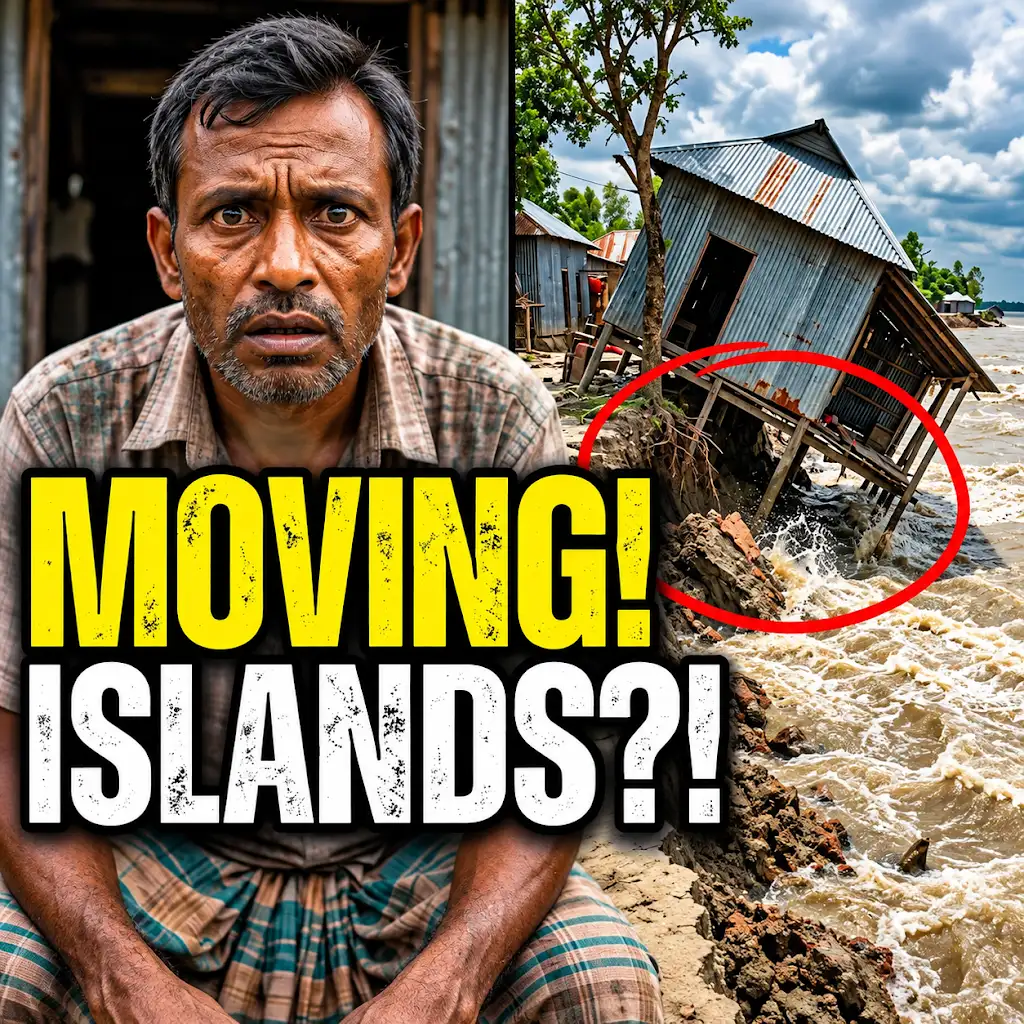
This River is Literally Erasing Islands
FAQs
What are chars in Bangladesh and how are they related to climate displacement?
Chars are temporary islands that form in the riverbeds of Bangladesh due to sediment deposition. These low-lying areas are highly vulnerable to flooding and erosion, leading to frequent displacement of communities living on them as a result of climate change impacts.
How has climate change affected the frequency of displacement in Bangladesh chars?
Climate change has intensified the frequency and severity of natural disasters like cyclones, floods, and riverbank erosion in Bangladesh. This has led to more frequent displacement of char dwellers as their land becomes uninhabitable due to these environmental challenges.
What is the historical context of climate displacement in Bangladesh chars?
The history of climate displacement in Bangladesh chars dates back several decades, with communities being forced to move multiple times due to recurring natural disasters. This has created a cycle of displacement and resettlement, impacting the lives and livelihoods of char dwellers.
How do char dwellers cope with climate displacement and its impacts?
Char dwellers in Bangladesh often rely on traditional coping mechanisms such as temporary shelters, community support, and migration to urban areas in search of livelihood opportunities. However, these strategies are often insufficient in the face of repeated displacement events.
What are the long-term solutions to address climate displacement in Bangladesh chars?
Long-term solutions to address climate displacement in Bangladesh chars include sustainable land management practices, early warning systems for natural disasters, infrastructure development, and community-based adaptation strategies. These measures aim to build resilience and reduce the vulnerability of char communities to climate change impacts.