
The Unseen Sculptors: Avalanche Entrained Moraine and Its Monumental Influence
Mountain landscapes, often perceived as static and enduring, are in reality dynamic canvases constantly reshaped by powerful natural forces. Among these forces, avalanches, while often feared for their destructive potential, play a significant role in the subtle yet profound sculpting of alpine environments. One particularly impactful process driven by avalanches is the formation of avalanche entrained moraine. This phenomenon involves the transportation and deposition of rock and debris by snow avalanches, leading to the creation of distinct landforms that tell a story of glacial history and ongoing erosional processes. Understanding how these moraines form and their subsequent impact is crucial for comprehending the evolution of mountain topography, influencing ecological succession, and even impacting human infrastructure.
Avalanche entrained moraine is a fascinating topic that explores the interaction between avalanches and glacial processes. For those interested in understanding the dynamics of how avalanches can transport and deposit sediment, a related article can provide valuable insights. You can read more about this subject in the article available at My Geo Quest, which delves into the geological implications and environmental significance of these unique formations.
Understanding the Mechanism of Avalanche Entrainment
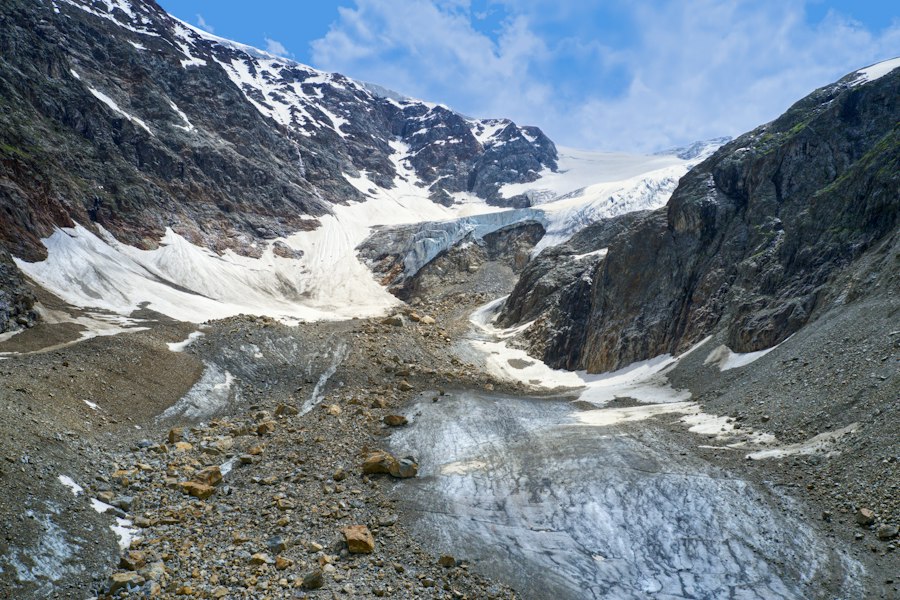
The creation of avalanche entrained moraine is a multi-stage process, beginning with the initial trigger of the avalanche and culminating in the deposition of its entrained load. This complex interplay of snow, ice, rock, and gravity results in the transport of material that can range from fine sediment to large boulders. The efficiency of this transport is directly linked to the avalanche’s characteristics, such as its speed, volume, and the nature of the terrain it traverses.
The Trigger and Avalanche Runout
Avalanches are initiated by various factors, including heavy snowfall, rapid warming, seismic activity, or human disturbance. Once the snowpack becomes unstable, a cascade of snow and ice begins to move downslope. The initial stages involve the detachment of a slab of snow, which then accelerates rapidly. The force of this acceleration, coupled with the inherent erosive power of moving snow and ice, begins to dislodge and entrain material from the underlying ground surface. This can include loose soil, vegetation, and fractured rock. The further the avalanche travels, the greater its potential to entrain more debris.
The runout zone of an avalanche is a critical area for moraine formation. This is where the avalanche loses momentum and deposits its accumulated load. The distance of the runout is influenced by factors such as the angle of the slope, the presence of obstacles, and the volume and density of the avalanche. Large, fast-moving avalanches tend to have extensive runout paths, allowing them to transport debris far from their source. The deposition patterns within the runout zone are often characterized by distinct lobes or fans of material, indicative of the spreading flow of the avalanche.
Debris Entrainment and Transport Dynamics
The process of debris entrainment by avalanches is a multifaceted phenomenon. In the initial stages of detachment, the shear forces exerted by the moving snowpack can dislodge loose surficial materials. As the avalanche accelerates, it can also carve into the slope, picking up larger rocks and soil. The presence of pre-existing scree slopes, weathered rock faces, or even glacial debris from past events can provide a ready source of material for entrainment. The snow itself acts as a viscous fluid, carrying and suspending the entrained debris.
The transport dynamics within an avalanche are complex and depend on the type of avalanche. Dry, powder snow avalanches, for example, tend to be highly mobile and can carry fine sediment and small rocks suspended within a turbulent cloud. Wet, dense avalanches, on the other hand, move more like a viscous fluid and can exert significant drag forces, enabling them to transport larger boulders and more cohesive debris. The interaction between the moving snow and the underlying terrain can also lead to abrasion, further breaking down larger fragments into smaller particles that can be more easily transported. The repeated passage of avalanches over the same path can lead to a significant accumulation of entrained material over time.
The Genesis of Avalanche Entrained Moraine Deposits

Avalanche entrained moraines are not formed in a single event but rather through the cumulative effect of numerous avalanches over extended periods. The characteristic features of these moraine deposits are a direct result of the unique entrainment and deposition processes associated with avalanches. Distinguishing them from other types of moraines, such as those formed by glaciers, requires careful observation of their morphology and composition.
Morphological Characteristics of Avalanche Moraines
Avalanche entrained moraines typically exhibit distinct morphological characteristics that differentiate them from glacial moraines. They are often found in the runout paths of frequent avalanche paths, appearing as lobate or fan-shaped accumulations of debris. Unlike the typically linear or arcuate ridges of glacial moraines, avalanche moraines can be more irregular and spread out, reflecting the diffuse nature of avalanche deposition. The surface of these moraines is often strewn with angular, unsorted rock fragments, ranging in size from cobbles to boulders, interspersed with finer sediment. The lack of significant striations or polish on the rock surfaces, which are common features of glacial erratics, is another key indicator. The slopes of avalanche moraines can be steep and unstable, reflecting the haphazard deposition of material. Vegetation colonization on older avalanche moraines can be sparse and patchy, indicating the relatively recent and disturbed nature of the substrate.
Compositional Clues and Provenance
The composition of avalanche entrained moraine provides valuable insights into the geological makeup of the slopes above the avalanche path. The debris consists of rock fragments that are lithologically similar to the bedrock exposed in the source areas of the avalanches. This allows geologists to trace the provenance of the material and understand the geological history of the mountainside. The sorting of the debris is generally poor, meaning that a wide range of particle sizes, from fine dust to large boulders, is found mixed together. This unsorted nature is a hallmark of rapid deposition by a powerful force like an avalanche. The angularity of the rock fragments, with sharp edges and corners, is another important characteristic, as it indicates that the material has not undergone extensive weathering or prolonged transport in a fluvial or glacial environment where rounding would occur. The presence of vegetation, if any, also offers clues. Pioneer species adapted to unstable and nutrient-poor substrates often colonize the surfaces of younger avalanche moraines, while more established plant communities may be found on older, more stabilized deposits.
Impact on Mountain Ecosystems and Geomorphology
The formation and presence of avalanche entrained moraines have a significant and multifaceted impact on mountain landscapes. They not only alter the physical topography but also influence the biodiversity and ecological dynamics of the alpine environment. Their role as depositional features creates new habitats and influences the flow of water and sediment.
Reshaping Topography and Hydrology
Avalanche entrained moraines are powerful agents of geomorphic change, actively reshaping the contours of mountain slopes. By accumulating large volumes of debris, they create distinct hummocks, ridges, and depositional fans that can alter drainage patterns. Watercourses that previously flowed unimpeded may be rerouted or dammed by these deposits, leading to the formation of ephemeral or permanent ponds and wetlands. This alteration of hydrology can have cascading effects on downstream environments, influencing sediment transport and water availability. The unstable nature of freshly deposited moraine material can also contribute to further erosion and mass wasting events, perpetuating a cycle of landscape modification. The sheer volume of material deposited can also create significant topographic relief, effectively building new landforms within the mountain environment. Over geological timescales, the accumulation of these moraines can lead to significant changes in valley morphology, influencing the overall basin structure.
Influencing Biodiversity and Ecological Succession
The impact of avalanche entrained moraines on biodiversity is profound, creating unique and often challenging habitats. The unsorted, unstable, and often nutrient-poor substrate of fresh moraines is a difficult environment for plant colonization. However, it favors specialized pioneer species that are adapted to these harsh conditions, such as certain grasses, sedges, and hardy alpine wildflowers. As these pioneer species establish themselves, they begin to stabilize the substrate and introduce organic matter, paving the way for more complex plant communities. Over time, as the moraine ages and weathers, a diverse range of plant species can colonize, leading to the development of unique alpine meadows and habitats. These habitats, in turn, support a specialized fauna, including insects, rodents, and birds adapted to the alpine environment. The mosaics of different successional stages, from recently disturbed moraines to mature alpine vegetation, create a rich tapestry of biodiversity within the mountain landscape. Furthermore, the physical structure of the moraine, with its hummocks and depressions, can create microhabitats that are exploited by various species. The presence of rocks and crevices provides shelter and nesting sites for small mammals and birds. The water retention capacity of the finer material within the moraine can also create conditions favorable for certain plant species that may not thrive on drier slopes.
Avalanche entrained moraine is a fascinating topic that explores how avalanches can transport and deposit debris, shaping the landscape in unique ways. For those interested in learning more about this phenomenon, a related article can be found on MyGeoQuest, which delves into the intricate processes of glacial movement and sediment transport. This resource provides valuable insights into the geological implications of such moraines and their role in the environment. You can read more about it in the article here.
Distinguishing from Glacial Features
| Metric | Description | Typical Values | Units |
|---|---|---|---|
| Avalanche Volume | Estimated volume of snow and debris involved in the avalanche | 10³ – 10⁶ | m³ |
| Moraine Thickness | Thickness of the entrained moraine material deposited by the avalanche | 0.1 – 5 | m |
| Runout Distance | Distance traveled by the avalanche carrying moraine material | 100 – 3000 | m |
| Debris Concentration | Proportion of moraine debris within the avalanche mass | 10 – 60 | % by volume |
| Velocity | Speed of the avalanche during entrainment and transport of moraine | 10 – 40 | m/s |
| Deposit Area | Area covered by the avalanche entrained moraine deposit | 500 – 50000 | m² |
While both avalanches and glaciers transport and deposit rock debris, there are fundamental differences in their formation processes and the resulting landforms. Recognizing these distinctions is crucial for accurate geomorphological interpretation and for understanding the specific processes shaping a mountain landscape. Avalanche entrained moraines possess unique characteristics that set them apart from their glacial counterparts.
Lithological and Textural Differences
The lithological composition of avalanche entrained moraine often reflects the immediate bedrock geology of the avalanche path. The rock fragments are typically angular and unsorted, indicative of rapid entrainment and deposition. In contrast, glacial moraines often contain a wider range of lithologies, reflecting the much larger area a glacier can scour and transport material from. Glacial debris, particularly in areas of high glacial activity, often exhibits signs of abrasion, such as striations and polished surfaces, due to the grinding action of ice and entrained sediment. Avalanche debris, on the other hand, is typically characterized by its sharp edges and lack of such abrasions. The textural differences are also pronounced: avalanche moraines are generally characterized by a heterogeneous mix of particle sizes, from fine silts to large boulders, with very little discernible sorting. Glacial till, a common type of glacial deposit, can also be poorly sorted, but often contains a higher proportion of fine-grained material (fines) and exhibits a more characteristic “crushed rock” texture due to the prolonged grinding and crushing action of the ice. Furthermore, the presence of glacial erratics, rocks that are geologically foreign to the immediate area and transported over long distances by glaciers, is a strong indicator of glacial activity, whereas such features are generally absent in avalanche entrained moraines.
Morphological Signatures of Deposition
The distinctive morphology of avalanche entrained moraines is a key differentiator from glacial features. While glacial moraines often form linear ridges (lateral, medial) or arcuate belts (terminal, recessional) that clearly delineate the former extent of ice, avalanche moraines are typically more irregular and diffuse. They often manifest as lobate deposits or fans extending outwards from avalanche chutes. The absence of distinct moraine ridges that track the margins of a former ice mass is a strong indicator against glacial origin. Instead, avalanche moraines can appear as chaotic accumulations of debris. Furthermore, glacial landforms like drumlins, eskers, and kames, which are directly shaped by ice flow and meltwater processes, are entirely absent in areas dominated by avalanche activity. The surfaces of avalanche moraines may show evidence of repeated avalanche events, with superimposed layers of debris, while glacial moraines tend to exhibit more continuous and uniform depositional features related to the overall advance and retreat of an ice sheet or glacier. The scale can also be different; while large glaciers can form massive moraine systems, avalanche moraines are generally confined to the immediate runout zones of avalanche paths.
Implications for Geoconservation and Hazard Assessment
The understanding of avalanche entrained moraine formation has direct and critical implications for both geoconservation efforts and the assessment of natural hazards in mountainous regions. Recognizing these features helps in preserving unique alpine environments and in mitigating risks to human populations and infrastructure.
Preserving Unique Alpine Habitats
The distinct ecological communities that develop on avalanche entrained moraines represent a significant aspect of alpine biodiversity. These habitats, characterized by specialized flora and fauna adapted to unstable and nutrient-poor conditions, are valuable for scientific research and for their intrinsic ecological worth. Geoconservation efforts should aim to identify and protect areas with significant avalanche moraine development, ensuring that these unique ecosystems are not disturbed by inappropriate land use or development. Understanding the natural disturbance regime of avalanches is crucial for managing these areas effectively. In some cases, maintaining the natural processes of avalanche activity might be necessary to preserve the ecological integrity of these moraine-associated habitats. This could involve managing vegetation in a way that doesn’t impede natural avalanche initiation or maintaining buffer zones around known avalanche paths. Conservation strategies must also consider the long-term geomorphological evolution of these moraines and the habitats they support, recognizing that these are dynamic landscapes shaped by ongoing natural processes.
Informing Hazard Mitigation Strategies
The presence and characteristics of avalanche entrained moraines provide crucial information for assessing avalanche hazards. Areas with a history of significant avalanche activity, evidenced by the development of moraine deposits, are inherently prone to future avalanches. This knowledge is vital for planning infrastructure, such as roads, buildings, and ski resorts, in mountain regions. Understanding the extent and frequency of past avalanche events, as inferred from the moraine deposits, can help in delineating hazard zones and implementing appropriate mitigation measures. These measures might include avalanche control structures, such as snow nets and sheds, or land-use restrictions in high-risk areas. Furthermore, the erosional potential of avalanche entrained moraines, particularly their contribution to debris flows and sediment loading in downstream rivers, needs to be considered in
The Social Security Mistake At 62 That Could Ruin Your Spouse’s Retirement
FAQs
What is an avalanche entrained moraine?
An avalanche entrained moraine is a mass of rock, soil, and debris that is picked up and carried by an avalanche as it moves downhill.
How is an avalanche entrained moraine formed?
An avalanche entrained moraine is formed when an avalanche picks up loose material from the sides of the mountain as it travels downhill, incorporating it into the moving mass of snow and ice.
What are the characteristics of an avalanche entrained moraine?
An avalanche entrained moraine typically consists of a mixture of different-sized rocks, soil, and debris that have been transported by the avalanche. It can vary in size and composition depending on the terrain and the strength of the avalanche.
What are the dangers associated with avalanche entrained moraines?
Avalanche entrained moraines can pose significant risks to anyone caught in their path. The heavy mass of debris can cause injury or burial, and the unpredictable nature of their movement makes them hazardous to navigate.
How can one reduce the risk of encountering an avalanche entrained moraine?
To reduce the risk of encountering an avalanche entrained moraine, it is important to be aware of avalanche-prone areas, practice safe backcountry travel techniques, and carry appropriate avalanche safety gear such as beacons, shovels, and probes.