
The often-cited figure of $50 trillion, representing the potential value of Arctic oil and gas reserves, is a compelling number. It conjures images of vast, untapped wealth, a glittering prize waiting to be claimed from the frozen north. However, a critical examination of this assertion reveals it to be a deeply flawed calculation, a mirage shimmering on the horizon of our energy future. This article delves into the precarious reality behind the $50 trillion lie, dissecting the assumptions, the immense challenges, and the profound environmental risks associated with extracting these resources.
The origin of the $50 trillion figure is not rooted in definitive geological surveys but rather in a series of estimations and extrapolations, often amplified by industry interests and geopolitical ambitions. Understanding its roots is crucial to deconstructing its validity.
The U.S. Geological Survey’s Role
The primary source that provided a scientific basis, albeit with significant caveats, for substantial Arctic resource estimates was the United States Geological Survey (USGS). In 2008, the USGS released a report assessing undiscovered oil and gas resources in the Arctic. This report, “Circum-Arctic Resource Appraisal: Estimates of Undiscovered Oil and Gas,” offered probabilistic estimates of potential reserves. It’s important to note that these were undiscovered resources, meaning they were identified geologically as likely to exist but had not yet been proven through exploration and drilling.
Industry and Media Amplification
The USGS report, while scientifically sound in its methodology for estimating undiscovered resources, was subsequently interpreted and disseminated in ways that painted a picture of certainty and accessibility. The sheer magnitude of the numbers, when combined with the concept of potential economic value, naturally attracted attention. Industry stakeholders, eager to promote investment and exploration, found the $50 trillion figure a potent tool. Media outlets, often reporting on major resource finds, readily adopted this headline-grabbing number, sometimes without fully conveying the inherent uncertainties and the substantial hurdles to extraction. This is akin to a treasure map showing the potential location of buried gold, but ignoring the treacherous jungles and booby traps that lie between the mapmaker and the prize.
The Implicit Assumption of Accessibility
A core flaw in the simplistic recitation of the $50 trillion figure is the implicit assumption that these reserves are readily and economically accessible. The figure represents a theoretical maximum potential value, not a guaranteed or even probable outcome. It assumes that extraction technologies are sufficient, that the economic climate is favorable, and that environmental considerations can be managed to allow for widespread exploitation. Each of these assumptions, as will be explored, is demonstrably challenged by the realities of the Arctic.
The debate surrounding Arctic oil and gas reserves has intensified, particularly in light of claims that these resources could be worth up to $50 trillion. Critics argue that such estimates are misleading and may contribute to environmental degradation and climate change. For a deeper understanding of the implications of Arctic resource extraction, you can read a related article that explores the economic and environmental aspects of this issue at My Geo Quest.
The Geological Realities: More Than Just a Hot Drink
While the Arctic landscape might evoke images of barren ice, the geological formations beneath the surface hold significant hydrocarbon potential. However, the very nature of these formations and their location presents unique challenges to extraction.
Untapped Potential vs. Proven Reserves
It is critical to distinguish between undiscovered resources and proven reserves. The USGS estimates, and the $50 trillion figure that emanates from them, primarily refer to undiscovered or technically recoverable resources. Proven reserves, on the other hand, are quantities of oil and gas that geological and engineering data demonstrate with reasonable certainty to be recoverable in future production from known reservoirs under existing economic and operating conditions. The jump from an estimated undiscovered resource to a proven, economically viable reserve is a colossal one, requiring extensive seismic surveys, exploration drilling, appraisal, and development. This transition is far from guaranteed.
Diverse Geological Play Types
The Arctic basin encompasses a variety of geological settings, from passive continental margins to active rift zones. These diverse environments have the potential to host different types of hydrocarbon accumulations, including conventional oil and gas fields, as well as unconventional resources like shale oil and gas. The USGS report identified numerous plays, each with its own associated uncertainties regarding the size and commercial viability of potential deposits. For instance, some areas might hold vast quantities of gas but very little oil, or vice versa, impacting the overall economic value.
The Subsalt Play and Its Challenges
A significant portion of the estimated Arctic hydrocarbon potential lies beneath thick layers of salt (subsalt plays). While subsalt reservoirs can contain significant reserves, they are notoriously difficult and expensive to explore and produce. Seismic imaging through salt is complex, and drilling operations require advanced technologies and significant capital investment. The presence of these subsalt targets adds a substantial layer of technical and financial risk to any Arctic exploration endeavor. Imagine trying to find a needle in a haystack, but the hay is a thick, opaque blanket and the needle is hidden within it.
The Herculean Task of Extraction: A Race Against Extreme Conditions
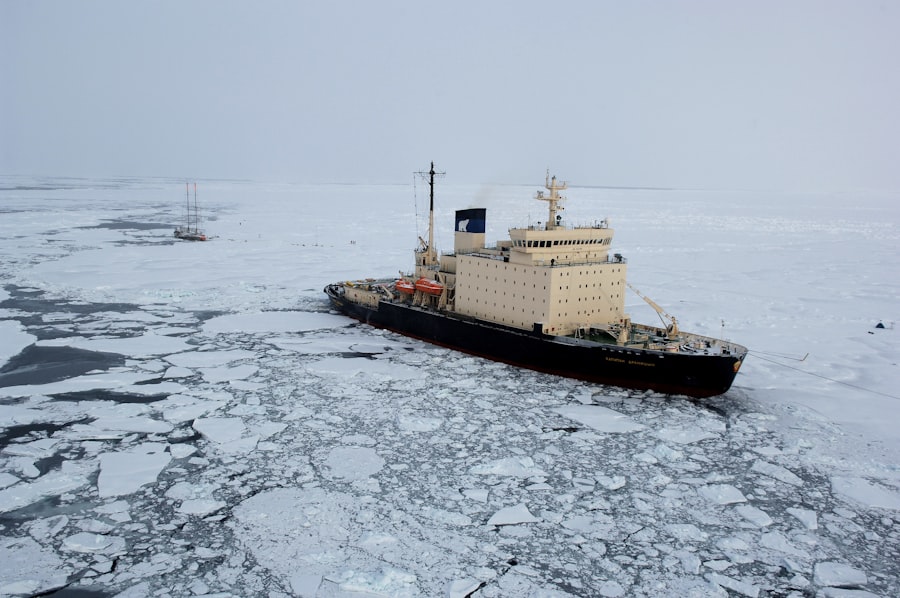
The Arctic is not a placid frontier; it is one of the Earth’s most formidable environments. The logistical, technological, and operational hurdles to extracting oil and gas in this region are immense and costly.
Extreme Temperatures and Ice
The most obvious challenge is the harsh climate. Temperatures can plummet to -40°C (-40°F) and below, with sustained periods of darkness during the polar winter. Ice, in its various forms – sea ice, icebergs, permafrost – presents a constant and dynamic threat.
Sea Ice Dynamics and Shipping Routes
The presence of seasonal and multi-year sea ice significantly complicates offshore operations. Platforms and vessels must be designed to withstand ice impacts or to operate within ice-free windows, which are becoming longer due to climate change but remain unpredictable. Even with receding ice, dynamic ice floes can pose risks to infrastructure and transportation. Naval architects and engineers are in a perpetual arms race with the Arctic’s frozen armor.
Permafrost Instability
Onshore, thawing permafrost presents a unique challenge. Infrastructure built on permafrost can become unstable as the ground thaws, leading to subsidence, structural damage, and potential leaks of hydrocarbons. This requires specialized construction techniques and ongoing monitoring, adding significant cost and complexity to any development. Building on a foundation that is literally melting beneath your feet is a precarious undertaking.
Remoteness and Lack of Infrastructure
The Arctic is characterized by vast distances and a severe lack of existing infrastructure. Ports, roads, pipelines, and established supply chains are largely absent. Developing these essential components for oil and gas extraction requires colossal investment and time.
Logistical Nightmares and Supply Chain Deficiencies
Getting equipment, personnel, and supplies to remote Arctic locations is extraordinarily complex and expensive. Operations often rely on seasonal shipping or costly airlifts. The lack of nearby support facilities means that any equipment failure or emergency requires extensive and time-consuming mitigation efforts. This isolation amplifies the risks and the cost of every operation.
High Cost of Operations
The combination of extreme conditions, remoteness, and the need for specialized equipment and logistics drives up the operational costs of Arctic oil and gas exploration and production to levels far exceeding those in more temperate regions. This makes projects economically marginal, even with high oil prices.
The Environmental Cataclysm: A High-Stakes Gamble

The potential for environmental damage in the Arctic is unparalleled, given the slow recovery rates of ecosystems and the inherent fragility of the region. Exploiting these reserves carries an immense environmental burden.
The Arctic’s Fragile Ecosystems
The Arctic is home to unique and highly specialized ecosystems. Polar bears, seals, walruses, and vast populations of migratory birds depend on the health of this environment for their survival. These species are already facing significant threats from climate change.
Impact on Marine Life
Oil spills in the Arctic would be catastrophic. The thick sea ice can trap oil, making cleanup incredibly difficult or impossible for extended periods. Dispersants, often used in temperate waters, may be less effective and could have their own toxic effects on marine life in cold, nutrient-poor waters. The potential for long-term contamination of food webs is a grave concern.
Vulnerability of Terrestrial Wildlife
Onshore developments, including roads, pipelines, and drilling sites, can fragment habitats, disrupt migration routes, and lead to increased human-wildlife conflict. The impacts of noise and industrial activity on sensitive Arctic wildlife are also a significant concern.
The Unfulfilled Promise of Cleanup Technology
The technologies available for cleaning up oil spills in icy Arctic waters are rudimentary at best and largely untested under real-world Arctic conditions. Existing cleanup methods are often designed for open water and can be rendered ineffective by ice, extreme cold, and remoteness. The idea of rapidly containing and cleaning up a major spill in the face of these challenges is largely a fantasy.
The Paradox of Climate Change and Fossil Fuels
Perhaps the most profound contradiction lies in the pursuit of Arctic fossil fuels at a time when the melting of Arctic ice is a stark, visible symptom of climate change caused by the burning of those very fossil fuels. Extracting more oil and gas from the Arctic would directly exacerbate the problem that is, ironically, making some of these reserves more accessible. This is akin to trying to quench a wildfire with gasoline.
The debate surrounding Arctic oil and gas reserves has intensified, with some experts labeling the $50 trillion valuation as a misleading exaggeration. This topic is explored in greater detail in a related article that discusses the environmental implications and economic realities of Arctic drilling. For those interested in understanding the complexities of this issue, you can read more about it in the article found here. The potential for vast wealth in the Arctic raises questions about sustainability and the future of energy resources.
The Economic Equation: Profitability vs. Investment Risk
| Category | Estimated Value (Trillions) | Details |
|---|---|---|
| Oil Reserves | 35 | Proven and probable oil reserves in the Arctic region |
| Natural Gas Reserves | 15 | Estimated natural gas reserves in the Arctic |
| Total Estimated Reserves | 50 | Combined value of oil and gas reserves in the Arctic |
| Percentage of Global Reserves | 13% | Share of Arctic oil and gas reserves compared to global totals |
| Exploration Status | N/A | Many reserves remain unexplored or underexplored |
The economic viability of Arctic oil and gas is not a simple matter of multiplying estimated volumes by current market prices. A complex interplay of costs, market volatility, and policy decisions determines profitability.
Volatile Energy Markets
The global energy market is notoriously volatile. Oil and gas prices are subject to geopolitical events, economic cycles, and the fluctuating balance of supply and demand. A project with a projected lifespan of decades must contend with the possibility of sustained periods of low prices, which could render it uneconomic.
Subsidies and Government Support
Many large-scale resource extraction projects, particularly in challenging environments, rely on significant government subsidies and tax incentives to attract investors. The $50 trillion figure often implicitly assumes a favorable economic and policy climate that may not materialize or endure. Without such support, the economics of many Arctic projects would be significantly less attractive.
The Rise of Renewable Energy
The accelerating global transition towards renewable energy sources presents a long-term challenge to the demand for fossil fuels. As solar, wind, and other clean energy technologies become more efficient and cost-competitive, the future market for oil and gas becomes increasingly uncertain. Investing billions in infrastructure for a resource whose demand may dwindle is a high-risk gamble.
The Opportunity Cost of Capital
The immense capital required for Arctic oil and gas exploration and production represents a significant opportunity cost. These funds could be invested in renewable energy infrastructure, energy efficiency technologies, or other sectors that may offer more sustainable and less environmentally damaging returns. The $50 trillion lure can divert vital resources from a cleaner future.
The $50 Trillion Lie Deconstructed: A Matter of Perspective
The $50 trillion figure, as commonly presented, is a misleading oversimplification. It is a speculative number based on optimistic assumptions that largely ignore the stark realities of the Arctic.
The Difference Between Potential and Practicality
The difference between a geological potential and a practical, economically viable extraction is vast. The $50 trillion number speaks to the former, while ignoring the latter. It is a promise whispered by the rocks, not a guarantee of profit in the bank. To focus solely on this figure without acknowledging the immense challenges is to be willfully blind to the complexities of the undertaking.
The Influences Behind the Narrative
It is important to recognize that the narrative surrounding the $50 trillion figure is not neutral. It is often shaped by the vested interests of energy companies, governments seeking to secure energy independence, and those who see Arctic resources as a strategic asset. Understanding these influences helps to contextualize the pronouncements about Arctic wealth.
The True Cost: Beyond the Price Tag
The “true cost” of Arctic oil and gas includes not only the immense capital investment and operational expenditures but also the immeasurable costs of environmental degradation, the risk of catastrophic spills, and the long-term consequences for Arctic ecosystems and indigenous communities. These are costs that cannot be easily quantified in a simple dollar figure, yet they are the most significant.
In conclusion, the $50 trillion figure for Arctic oil and gas reserves, while a powerful rhetorical tool, is a dangerous oversimplification that masks a web of formidable challenges and profound risks. It is a mirage created by the confluence of hopeful geology, ambitious industry, and the potent allure of immense wealth. A sober assessment reveals that the real prize may not be the $50 trillion itself, but rather the wisdom to recognize its illusory nature and to pivot towards more sustainable and responsible energy futures, leaving the Arctic’s fragile beauty largely untouched.
FAQs
What is the estimated value of the Arctic oil and gas reserves?
The Arctic oil and gas reserves are estimated to be worth approximately $50 trillion.
Why are the Arctic oil and gas reserves significant?
The Arctic region holds a substantial portion of the world’s untapped oil and natural gas resources, making it a critical area for future energy supplies.
What challenges exist in extracting oil and gas from the Arctic?
Extraction in the Arctic faces challenges such as extreme weather conditions, ice coverage, environmental concerns, and high operational costs.
Which countries have territorial claims over the Arctic oil and gas reserves?
Countries with Arctic coastlines, including Russia, the United States, Canada, Norway, and Denmark (via Greenland), have territorial claims and interests in the region’s resources.
How does Arctic oil and gas development impact the environment?
Development can lead to risks such as oil spills, disruption of fragile ecosystems, and increased greenhouse gas emissions, raising concerns among environmentalists and indigenous communities.