
The United States Navy operates at the forefront of electronic warfare (EW) capabilities, a domain critical for maintaining information superiority and safeguarding its assets in a contested electromagnetic spectrum. This vast and complex field encompasses a spectrum of technologies designed to detect, identify, deceive, and disrupt enemy electronic systems, while simultaneously protecting friendly forces from similar threats. The Navy’s commitment to advancing these systems is a continuous process, driven by an evolving threat landscape and the imperative to maintain a decisive technological edge.
Electronic warfare is broadly categorized into three main pillars: Electronic Attack (EA), Electronic Protection (EP), and Electronic Support (ES). Each pillar plays a distinct yet interconnected role in the overall EW strategy, enabling naval platforms to operate effectively even in heavily jammed environments.
Electronic Attack (EA): Disrupting the Adversary
Electronic Attack is primarily concerned with offensive actions designed to prevent or reduce an adversary’s effective use of the electromagnetic spectrum. This involves the active use of electromagnetic energy to jam, deceive, or destroy enemy electronic systems.
Jamming Techniques
Jamming encompasses a range of methods to saturate or disrupt enemy radar, communication, and navigation systems. This can involve:
Barrage Jamming
This technique floods a wide range of frequencies with noise, making it difficult for enemy receivers to isolate specific signals. While broad, it is less efficient than more targeted approaches.
Spot Jamming
Spot jamming focuses jamming energy on specific enemy frequencies that are known to be critical or are identified as a threat. This allows for more efficient use of jamming power.
Deceptive Jamming
Deceptive jamming involves emitting signals that mimic friendly or legitimate signals, leading the adversary to misinterpret or misidentify targets. This can include generating false targets, spoofing navigation systems, or creating ghost signals.
Decoys and Deception Measures
Beyond direct jamming, the Navy employs sophisticated decoy systems. These are designed to lure enemy weapons systems, particularly radar-guided missiles, away from their intended targets.
Expendable Decoys
These are typically small, expendable devices deployed from aircraft or ships that emit signals designed to attract incoming threats. They are often used in large numbers to overwhelm an adversary’s targeting capabilities.
Active Decoys
More advanced active decoys can emulate the electronic signature of specific platforms, such as ships or aircraft, creating a more convincing illusion for sophisticated enemy sensors. These can be towed or air-launched and are capable of more complex deception maneuvers.
Electronic Protection (EP): Shielding Friendly Forces
Electronic Protection focuses on measures taken to ensure friendly use of the electromagnetic spectrum despite the presence of enemy EW. This involves making friendly systems resilient to jamming and other forms of interference.
Frequency Agility and Spread Spectrum
Many modern Navy systems incorporate frequency agility, meaning they can rapidly change their operating frequencies. This makes it difficult for jammers to maintain a lock. Spread spectrum techniques, which distribute signals across a wide range of frequencies, also enhance resilience.
Signal Processing and Filtering
Advanced signal processing algorithms are employed to extract legitimate signals from jamming noise. This involves sophisticated filtering techniques that can identify and isolate desired signals based on their characteristics.
Directional Antennas and Stealth Technologies
The use of highly directional antennas minimizes the radiation of signals in unwanted directions, making them harder to intercept or jam. Stealth technologies, while primarily focused on reducing radar cross-section, also have implications for electronic emissions, making platforms less detectable.
Electronic Support (ES): Understanding the Electromagnetic Environment
Electronic Support involves the passive detection, identification, and location of potential threats or sources of intelligence within the electromagnetic spectrum. It provides essential situational awareness to commanders.
Radar Warning Receivers (RWRs)
RWRs are designed to detect and identify radar emissions from enemy air defense systems, aircraft, and ships. They alert aircrews and naval personnel to potential threats.
Electronic Intelligence (ELINT) Collection
ELINT systems are used to collect and analyze enemy radar and communication signals. This intelligence is crucial for understanding enemy capabilities, tactics, and intentions.
Communications Intelligence (COMINT)
COMINT involves the interception and analysis of enemy communications, providing valuable intelligence on operational plans, command and control, and personnel movements.
The advancements in the US Navy’s electronic warfare and decoy systems are crucial for maintaining naval superiority in modern combat scenarios. A related article that delves into these technologies and their implications for naval operations can be found at My Geo Quest. This resource provides insights into the latest developments and strategic applications of electronic warfare systems, highlighting their importance in countering emerging threats on the battlefield.
Advanced Decoy Systems in Naval Operations
The proliferation of sophisticated anti-ship missiles has made advanced decoy systems indispensable for the survival of naval vessels. These systems are designed to present a false target to incoming threats, thereby diverting them from the actual platform.
Chaff and Flares: Traditional Countermeasures
Chaff and flares represent the foundational elements of expendable decoy systems.
Chaff
Chaff consists of small particles of metal or plastic, typically aluminum or fiberglass, dispersed into the air. These particles reflect radar signals, creating a large “cloud” that can confuse radar-guided missiles by presenting a multitude of false targets. The distribution pattern and density of chaff are critical to its effectiveness.
Flares
Flares are pyrotechnic devices that emit intense heat and light. They are primarily effective against infrared (IR)-guided missiles, which home in on heat signatures. By ejecting flares, a vessel can introduce a more attractive heat source than its own engines, thereby diverting the missile.
Sophisticated Decoy Launching Systems
Modern naval platforms employ advanced decoy launching systems that can deploy a variety of countermeasures in a coordinated and effective manner.
Multi-Threat Decoy Systems
These integrated systems are capable of launching both chaff and flares, as well as more advanced decoys, in rapid succession. They are often programmed to respond automatically to detected threats, providing a rapid defensive response.
Directional Decoys
Some advanced decoys are designed to be directional, meaning they can emit signals that mimic the specific emission characteristics of a particular ship or aircraft. This increased sophistication makes them more effective against modern, multi-sensor targeting systems.
Evolving Decoy Signatures
The Navy continuously researches and develops new decoy signatures. This involves emulating not only the radar and IR signatures but also other electromagnetic emissions that enemy systems might track, such as electronic warfare signals or even acoustic signatures.
Electronic Warfare Suites: Integrated Defense Networks

Modern naval vessels are equipped with comprehensive Electronic Warfare (EW) suites. These are not simply collections of individual systems but rather integrated networks that provide a unified approach to electronic warfare.
Sensor Fusion and Situational Awareness
A key aspect of modern EW suites is sensor fusion, where data from various sensors (radar, ESM, infrared, etc.) is combined and analyzed. This provides a comprehensive and accurate picture of the electromagnetic environment, identifying potential threats and their characteristics with greater precision.
Integrated EW Command and Control
The EW suite includes a sophisticated command and control system that allows operators to manage all aspects of electronic warfare. This includes:
Threat Prioritization
The system can automatically prioritize incoming threats based on their perceived danger and the platform’s capabilities.
Countermeasure Allocation
Based on the threat assessment, the system can autonomously or semi-autonomously select and deploy the most appropriate countermeasures.
Tactical Decision Support
The EW suite provides commanders with critical information to support tactical decision-making in the electromagnetic domain.
Communications and Data Links
Effective operation of EW suites relies on robust internal and external communication systems. Data links allow the sharing of EW information with other units, enhancing the collective defense posture of the fleet.
The Role of Electronic Warfare in Information Superiority
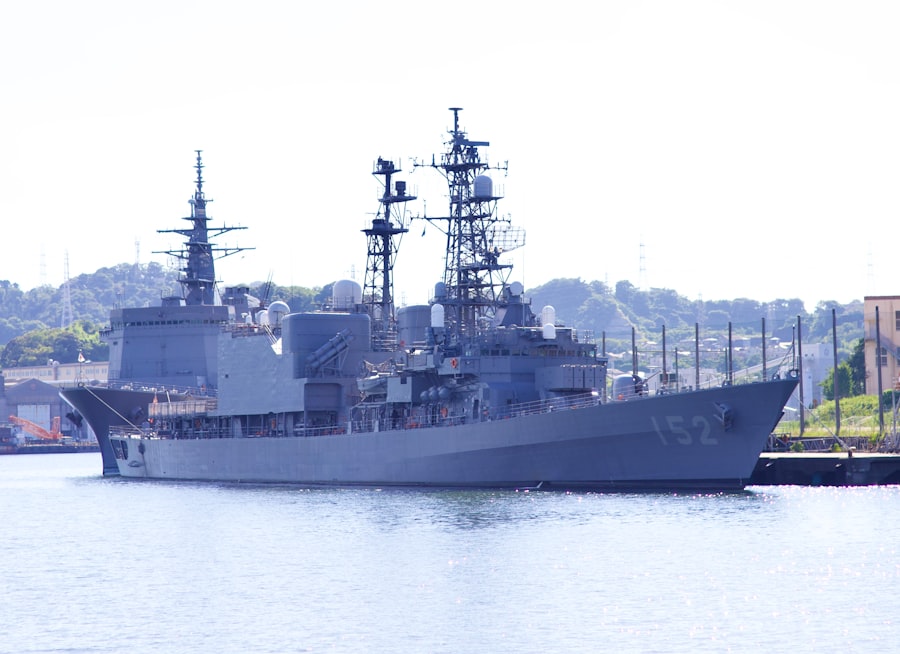
Electronic warfare is fundamentally about achieving and maintaining information superiority. By controlling the electromagnetic spectrum, the Navy can effectively deny the enemy the ability to communicate, navigate, and employ their weapons systems, while ensuring its own forces can operate unimpeded.
Denying Adversary C2 and ISR
EW capabilities are crucial for disrupting enemy command and control (C2) networks and intelligence, surveillance, and reconnaissance (ISR) assets. Jamming enemy communications and radar can blind them and isolate their forces.
Protecting Naval Platforms
The primary objective of EP and EA is to protect naval platforms from enemy attack. By deceiving or jamming enemy weapons systems, the Navy can significantly reduce the risk of damage or destruction.
Enabling Offensive Operations
EW is not solely defensive. It can also be used to enable offensive operations by suppressing enemy air defenses, jamming their communications to sow confusion, or creating electromagnetic “holes” for friendly forces to exploit.
The advancements in the US Navy’s electronic warfare and decoy systems have been a topic of significant interest among defense analysts. These systems play a crucial role in enhancing naval capabilities by providing protection against various threats. For a deeper understanding of how these technologies are evolving, you can explore a related article that discusses the latest innovations and strategies in this field. This insightful piece can be found at this link, where you will discover more about the implications of electronic warfare on modern naval operations.
Future Directions in Naval Electronic Warfare
| System Name | Function | Manufacturer |
|---|---|---|
| AN/SLQ-32 | Electronic Warfare System | Raytheon |
| AN/SLQ-49 | Decoy System | BAE Systems |
| AN/ALQ-99 | Electronic Warfare Jamming System | Northrop Grumman |
The field of electronic warfare is in a constant state of evolution, driven by technological advancements and the persistent development of counter-capabilities by potential adversaries. The Navy is actively investing in research and development to stay ahead of these trends.
Artificial Intelligence and Machine Learning
The integration of AI and machine learning into EW systems promises to revolutionize threat detection, identification, and response. These technologies can process vast amounts of data in real-time, adapt to new threats, and provide more sophisticated deception capabilities.
Cognitive Electronic Warfare
This emerging concept involves EW systems that can “learn” and adapt to the environment autonomously. They can analyze enemy tactics and evolve their own electronic attack and protection strategies dynamically, without constant human intervention.
Quantum Technologies and Electronic Warfare
While still in its nascent stages, quantum technology holds the potential to significantly impact EW. This could include quantum sensing for enhanced detection, quantum communications for secure data transfer, and quantum computing for advanced signal processing.
Cyber-Electronic Warfare Integration
The lines between cyber warfare and electronic warfare are increasingly blurring. Future EW systems will likely feature tighter integration with cyber capabilities, allowing for a more comprehensive approach to exploiting and defending against vulnerabilities in electronic and network systems.
The US Navy’s advanced electronic warfare and decoy systems represent a critical component of its operational effectiveness and survivability. From fundamental countermeasures like chaff and flares to highly integrated EW suites and the burgeoning integration of artificial intelligence, the Navy’s commitment to this dynamic field ensures its forces can operate with confidence in the increasingly contested electromagnetic battlespace. The continuous innovation in this domain underscores its vital importance in maintaining maritime superiority in the 21st century.
FAQs
What are electronic warfare and decoy systems used for in the US Navy?
Electronic warfare and decoy systems are used by the US Navy to protect ships and aircraft from enemy electronic attacks, such as radar jamming and missile guidance disruption. These systems help to deceive and confuse enemy sensors and weapons, allowing the Navy to operate more effectively in hostile environments.
What types of electronic warfare and decoy systems are used by the US Navy?
The US Navy utilizes a range of electronic warfare and decoy systems, including electronic countermeasures, electronic support measures, and decoy launchers. These systems are designed to detect, identify, and counter enemy electronic threats, as well as to deploy decoys to divert incoming missiles away from ships and aircraft.
How do electronic warfare and decoy systems enhance the Navy’s capabilities?
Electronic warfare and decoy systems enhance the Navy’s capabilities by providing a layer of defense against electronic attacks, allowing ships and aircraft to operate in contested environments with reduced risk. These systems also contribute to the overall effectiveness of the Navy’s mission by disrupting enemy targeting and communication systems.
What advancements have been made in US Navy electronic warfare and decoy systems?
Advancements in US Navy electronic warfare and decoy systems include improved sensor technology, more sophisticated electronic countermeasures, and enhanced decoy capabilities. These advancements have been driven by the evolving nature of electronic warfare threats and the need to stay ahead of potential adversaries.
How does the US Navy train personnel to operate electronic warfare and decoy systems?
The US Navy provides specialized training for personnel responsible for operating electronic warfare and decoy systems. This training includes instruction on the use of specific equipment, tactics for countering electronic threats, and the deployment of decoys in various combat scenarios. Additionally, ongoing training and exercises are conducted to ensure readiness and proficiency in using these systems.