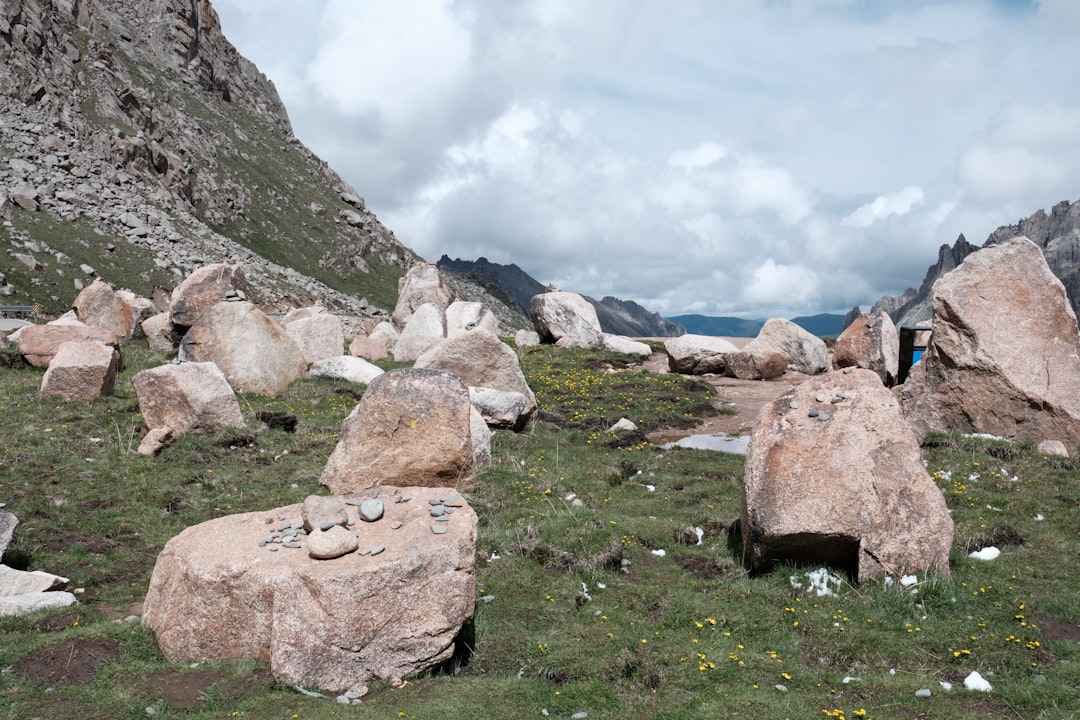
Tibet, often perceived as an isolated plateau on the roof of the world, holds a surprisingly significant, albeit complex and often contentious, position in the grand chessboard of global geopolitics. Its vast terrain, rich cultural heritage, and strategic location have made it a focal point for the aspirations and anxieties of surrounding powers, primarily China and India, while drawing the attention of international actors concerned with human rights, environmental sustainability, and regional stability. Understanding the strategic void that Tibet represents within geopolitical policy requires delving into its historical trajectory, its current geopolitical implications, and the potential future scenarios that could reshape its role.
Tibet’s historical relationship with its neighbors has been a defining factor in its geopolitical standing. For centuries, its unique cultural and political development occurred in relative isolation, shielding it from the direct impingement of major global power struggles. However, this isolation was not absolute, and interactions with neighboring empires, particularly the Chinese dynasties and the nascent Indian states, laid the groundwork for future geopolitical considerations.
Early Dynastic Interactions and Tibetan Autonomy
The early history of Tibet is marked by the rise of Tibetan empires that, at their zenith, exerted considerable influence over Central Asia and parts of China. This period, while not directly about geopolitics in the modern sense, established Tibet as an independent political entity with its own distinct identity and sphere of influence. Subsequent periods saw varying degrees of suzerainty or tributary relationships with Chinese dynasties, often fluctuating based on the strength of the ruling emperor. These interactions were characterized by a complex interplay of tribute, trade, and military maneuvering, hinting at the strategic importance of the plateau even in pre-modern times.
The British Raj and the Scramble for Influence
The advent of the British Raj in India fundamentally altered the geopolitical landscape of the Himalayan region. As Britain consolidated its control over the subcontinent, it viewed the northern frontiers with a mixture of curiosity and apprehension. The so-called “Great Game” played out between Britain and Russia often extended its shadows into the vast expanse of Central Asia, and Tibet, situated at the crossroads of these spheres of influence, became a subject of intense strategic interest. British expeditions, such as those led by Francis Younghusband, aimed to gather intelligence, establish buffer zones, and understand the geopolitical leanings of Tibetan authorities, all while trying to manage China’s growing assertiveness.
The Post-Colonial Era and the Rise of People’s Republic of China
The end of British rule in India and the establishment of the People’s Republic of China in 1949 marked a pivotal shift in Tibet’s geopolitical trajectory. China, with its newly unified and assertive nationalistic agenda, viewed Tibet as an integral, albeit lost, part of its territory. India, on the other hand, inherited the British strategic concerns regarding its northern borders and sought to maintain a stable, buffer state. This period witnessed China’s military intervention in Tibet, its subsequent integration into the PRC, and the subsequent flight of the Dalai Lama and tens of thousands of Tibetans to India, thereby directly placing Tibet at the heart of Sino-Indian relations.
The strategic significance of the Tibetan Plateau has garnered increasing attention in recent years, particularly in the context of regional security and environmental concerns. An insightful article that delves into the implications of the Tibetan Plateau’s strategic void policy can be found at MyGeoQuest. This piece explores how the unique geographical and political landscape of the plateau influences the strategies of neighboring countries and highlights the importance of sustainable development in this sensitive region.
The Strategic Void: Tibet’s Current Geopolitical Manifestations
In the contemporary geopolitical arena, Tibet functions as a strategic void, a territory whose control and influence are fiercely contested, yet whose inherent characteristics present unique challenges and opportunities for the dominant powers. This void is not one of emptiness but rather of contested space, a frontier where national ambitions, security concerns, and ideological narratives collide.
The Sino-Indian Border Dispute and the Shadow of Tibet
The 3,488-kilometer-long Sino-Indian border, much of which traverses the Himalayas, has been a persistent source of tension between the two Asian giants. Tibet forms the entirety of China’s border with India. For India, the control of this vast, sparsely populated plateau by a potentially hostile power represents a significant strategic vulnerability. Any military incursion from Tibet into Indian territory would bypass traditional defensive lines and directly threaten the Indian heartland. Conversely, for China, asserting its control over Tibet is intrinsically linked to its claim of territorial integrity and its ability to project power on its western flank. The unresolved border dispute, punctuated by skirmishes and diplomatic standoffs, underscores Tibet’s role as a geopolitical fault line.
China’s “Geological Arsenal” and Resource Security
Beyond its military implications, Tibet is increasingly recognized for its vast, underexplored natural resources, particularly minerals and water. The plateau holds significant reserves of lithium, copper, chromium, and other critical elements vital for modern industrial economies and renewable energy technologies. However, the extraction and exploitation of these resources are fraught with geopolitical complexities. China’s dominance over Tibet allows it to secure a substantial portion of these globally significant resources, bolstering its economic self-sufficiency and potentially influencing global supply chains. This makes Tibet not just a buffer zone but also a strategic resource base, a hidden treasure chest whose key is held by Beijing.
The Water Tower of Asia and Transnational Water Security
Tibet is the source of thirteen major Asian rivers, including the Yangtze, Mekong, Brahmaputra, and Indus. These rivers irrigate farmlands, power hydroelectric dams, and provide drinking water for billions of people across Asia, from China and India to Southeast Asia and Pakistan. This makes Tibet the “Water Tower of Asia.” China’s control over these headwaters places it in a unique and potent position to influence water availability downstream. Concerns about China’s dam-building projects, water diversion schemes, and potential weaponization of water resources are a growing source of geopolitical anxiety for countries reliant on these transboundary rivers. The strategic imperative of ensuring water security adds another layer of complexity to Tibet’s role in regional policy.
International Dimensions of the Strategic Void

While the primary geopolitical contest for Tibet is between China and India, the international community has also developed a vested interest in the region, albeit through different lenses. Human rights, environmental concerns, and the lingering specter of Tibetan resistance have all contributed to Tibet’s presence on the global stage.
The Human Rights Dimension and Global Advocacy
The ongoing human rights situation in Tibet has galvanized international attention and become a significant component of foreign policy discussions for many Western nations. Reports of religious persecution, cultural assimilation policies, restrictions on freedom of movement and expression, and the suppression of dissent have led to widespread condemnation. International human rights organizations and diaspora Tibetan groups actively lobby governments to address these concerns. This human rights dimension, while not directly a matter of hard power geopolitics, can influence diplomatic relations and trade policies, and serves as a persistent counterpoint to China’s narrative of territorial sovereignty.
Environmental Security and the Climate Change Frontline
Tibet’s high-altitude environment is particularly sensitive to climate change, and its melting glaciers and permafrost have profound implications for regional and global environmental security. The ecological integrity of the plateau is interconnected with the water security and biodiversity of vast swathes of Asia. International bodies and environmental scientists are increasingly focused on the threats posed by climate change in Tibet, including glacial lake outburst floods and desertification. This environmental dimension presents an area for potential international cooperation, but also for further geopolitical friction, as development pressures often clash with conservation imperatives.
The Dalai Lama Factor and Soft Power Dynamics
The spiritual leader of the Tibetan people, the 14th Dalai Lama, has been an enduring symbol of Tibetan identity and resilience. His global travels and advocacy for compassion and non-violence have endeared him to millions worldwide, making him a significant figure in global soft power dynamics. The Dalai Lama’s moral authority and international recognition present a challenge to China’s narrative of Tibetan subjugation. While the Tibetan diaspora has a limited direct impact on geopolitical policy, the enduring global appeal of the Dalai Lama and the Tibetan cause continues to exert a subtle but persistent influence on international perceptions and relationships.
Navigating the Geopolitical Chessboard: China’s Strategic Imperatives

For the People’s Republic of China, the control and management of Tibet are not merely territorial claims but fundamental pillars of its national security and expansionist aspirations. The plateau is viewed as an indispensable component of its strategic depth and its ability to project power westward.
Securing the Western Frontier: A Buffer Against Instability
From Beijing’s perspective, a stable and controlled Tibet is crucial for securing its western frontier. The vast, militarized border with India necessitates a firm grip on the Tibetan plateau to prevent any potential incursions or the emergence of hostile bases. Furthermore, concerns about potential separatism within Xinjiang and other western provinces necessitate a strong hand in Tibet to discourage similar movements elsewhere. Tibet serves as a critical buffer, absorbing an external threat and providing an early warning system for any incursions.
Infrastructure Development and Military Modernization
China’s heavy investment in infrastructure development in Tibet, including extensive road and rail networks, airports, and communication systems, is driven by both economic and military imperatives. These projects facilitate the rapid deployment of troops and equipment, enhance logistical capabilities, and allow for quicker response times in the event of border incidents. The modernization of its military presence in Tibet, including missile deployment and advanced surveillance capabilities, reflects a strategic intent to dominate the region and deter any challenges to its territorial claims.
The Narrative of National Unity and Sovereignty
The Chinese government consistently frames its policies in Tibet through the lens of national unity and historical sovereignty. State propaganda emphasizes the liberation of Tibet from feudalism and the integration of the region into a prosperous and unified China. This narrative is crucial for internal legitimacy and for countering international criticism. Any perceived threat to Tibetan autonomy is interpreted as a direct challenge to China’s territorial integrity and its right to govern its own people, a red line that Beijing is exceptionally unwilling to see crossed.
The Tibetan Plateau has become a focal point for strategic discussions, particularly regarding its role in regional geopolitics. A related article explores the implications of the Tibetan Plateau strategic void policy and its impact on neighboring countries. For further insights, you can read more about this topic in the article available at this link, which delves into the complexities surrounding this critical region and its influence on international relations.
The Shifting Sands: India’s Strategic Considerations
| Metric | Description | Current Status | Strategic Implication |
|---|---|---|---|
| Geographical Area | Size of the Tibetan Plateau region under strategic consideration | ~2.5 million km² | Largest and highest plateau, critical for regional control |
| Altitude | Average elevation of the plateau | ~4,500 meters above sea level | Challenging terrain for military and infrastructure development |
| Military Presence | Number of military installations and personnel | Significant increase over last decade | Enhances border security and strategic depth |
| Infrastructure Development | Roads, railways, and airfields constructed | Multiple new highways and Qinghai-Tibet railway extensions | Improves rapid deployment and logistics |
| Strategic Void Policy | Policy aimed at controlling or denying adversaries’ access | Active implementation with buffer zones | Limits foreign influence and enhances territorial control |
| Environmental Impact | Effect of strategic activities on plateau ecology | Concerns over glacial retreat and biodiversity loss | Potential long-term sustainability challenges |
| Neighboring Countries | Countries sharing borders with the plateau region | India, Nepal, Bhutan | Key players in regional security dynamics |
India, as Tibet’s immediate southern neighbor, views the geopolitical dynamics of the plateau with unwavering strategic focus. For New Delhi, Tibet represents more than just a neighbor; it is a critical element of its own national security architecture.
Threat Perception and the High-Altitude Frontier
India’s primary concern regarding Tibet stems from the existential threat posed by its proximity to a potentially adversarial power. The largely undemarcated border and China’s assertive claims make the Tibetan plateau a perpetual source of concern. Any military buildup or hostile intent emanating from Tibet directly impacts India’s security calculus, demanding constant vigilance and a robust defense posture along its northern border. The ability of China to project power rapidly from Tibet means that India must maintain a consistent and technologically advanced military presence in the Himalayas.
The Role of Tibet as a Strategic Buffer
Historically, Tibet has served as a natural buffer between India and China. However, with China’s asserted control, this buffer has transformed into a potential launchpad for aggression. India seeks to understand and influence the stability of Tibet, ideally maintaining a relationship where a neutral or friendly Tibet would enhance its security. The current reality, however, forces India to constantly prepare for the worst-case scenario, where a hostile Tibet, under Chinese control, poses a direct threat.
The Dilemma of the Tibetan Diaspora and Human Rights
India’s hosting of the Dalai Lama and the Tibetan diaspora presents a delicate balancing act in its relationship with China. While India has historically maintained a policy of non-interference in Tibet’s internal affairs, the presence of a significant Tibetan population on its soil creates a conduit for potential diplomatic friction. India attempts to navigate this by respecting China’s sovereignty while also upholding its commitment to humanitarian principles. This dilemma underlines the multifaceted nature of Tibet’s geopolitical implications, extending beyond territorial disputes to encompass ideological and humanitarian concerns.
Future Scenarios and the Evolving Strategic Void
The future of Tibet’s role in geopolitical policy is far from predetermined, poised as it is at the intersection of burgeoning powers, environmental challenges, and enduring cultural narratives. The actions and reactions of key stakeholders will continue to shape this complex geopolitical landscape.
The Continued Sino-Indian Rivalry and Escalation Risks
The prevailing dynamic suggests a continuation of the Sino-Indian rivalry, with Tibet remaining a primary theater of this competition. Increased military modernization, infrastructure development, and potential border skirmishes could further escalate tensions. The strategic void could deepen into a more pronounced flashpoint, demanding careful diplomacy and de-escalation efforts to prevent wider conflict. Small incidents, magnified by geopolitical pressures, could have far-reaching consequences.
The Impact of Climate Change and Resource Competition
The accelerating impacts of climate change on Tibet, coupled with the global demand for its resources, will undoubtedly introduce new dimensions to its geopolitical significance. Competition for water resources and the exploitation of mineral wealth could lead to heightened regional tensions and international interventions. The management of these resources will require unprecedented levels of cooperation, or risk exacerbating existing rivalries. The melting glaciers are not just an environmental concern; they are a ticking clock for future resource wars.
The Potential for Tibetan Agency and International Diplomacy
While China’s control over Tibet is currently firm, the enduring desire for self-determination within the Tibetan diaspora and the international attention to human rights issues could foster future shifts. A more integrated approach to Tibetan issues, involving dialogue between China, India, and Tibetan representatives, might offer pathways towards a more stable and just resolution. The international community’s continued engagement on human rights and environmental fronts could also play a role in shaping the long-term trajectory of Tibet’s geopolitical position, potentially transforming the strategic void into a space for multilateral engagement. The silent plateau might one day find its voice amplified on the global stage.
FAQs
What is the Tibetan Plateau Strategic Void Policy?
The Tibetan Plateau Strategic Void Policy refers to a geopolitical and military strategy aimed at maintaining a low-profile or minimal presence in the Tibetan Plateau region to avoid direct confrontation or escalation with neighboring countries, particularly in the context of border disputes and regional security.
Why is the Tibetan Plateau considered strategically important?
The Tibetan Plateau is strategically important due to its vast geographic expanse, high altitude, and location bordering several countries including China, India, Nepal, and Bhutan. It serves as a critical buffer zone and has significant implications for military logistics, water resources, and regional influence.
Which countries are primarily involved in the Tibetan Plateau Strategic Void Policy?
The primary countries involved are China and India, both of which have territorial claims and military interests in the region. Other neighboring countries like Nepal and Bhutan also have stakes in the area, but the main strategic considerations revolve around Sino-Indian relations.
How does the Strategic Void Policy affect military deployments in the region?
The policy typically results in limited or cautious military deployments to avoid escalating tensions. It emphasizes surveillance, intelligence gathering, and maintaining a defensive posture rather than aggressive expansion or large-scale troop movements in the Tibetan Plateau.
What are the potential risks or challenges associated with the Strategic Void Policy?
Potential risks include the possibility of misinterpretation or miscalculation by involved parties, leading to unintended conflicts. Additionally, the policy may create security vacuums that could be exploited by non-state actors or lead to increased influence by one country over the region, upsetting the balance of power.