
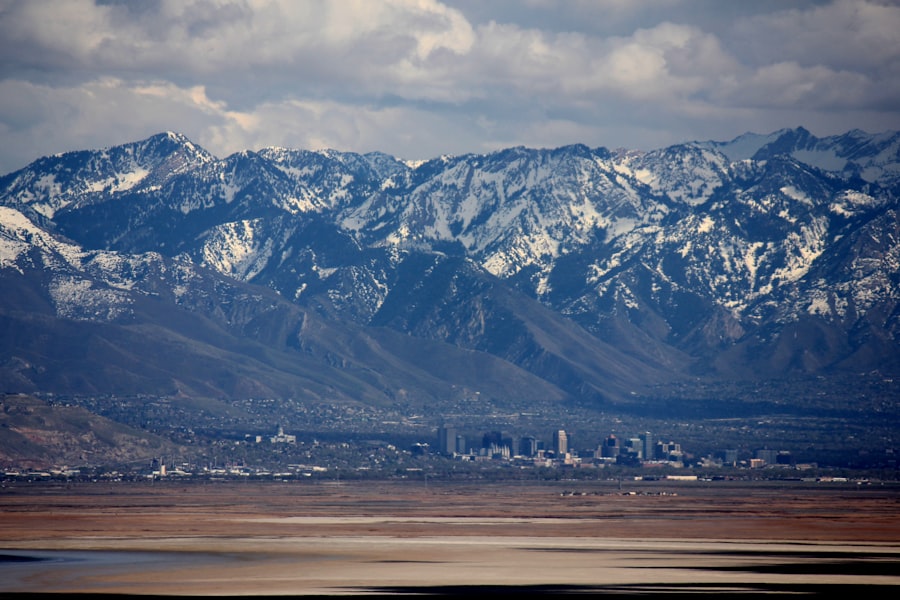
The Great Salt Lake, a vast inland sea in Utah, is a natural wonder and an ecological cornerstone of the arid West. Its shimmering expanse, however, harbors a hidden complexity: the presence of naturally occurring and potentially elevated levels of arsenic, mercury, and selenium. These elements, though vital in trace amounts for life, can become hazardous when concentrated, posing challenges to the lake’s delicate ecosystem and the human activities that depend on it. Understanding the sources, distribution, and potential impacts of these metalloids is crucial for the long-term health and sustainability of this iconic body of water.
The Great Salt Lake’s chemistry is not an arbitrary occurrence; it is deeply intertwined with the geological history of the region and the unique hydrological processes that define it. The Wasatch Range, a prominent geological feature bordering the lake to the east, is a significant source of minerals, including those containing arsenic, mercury, and selenium.
Volcanic Origins and Ore Deposits
Ancient Lake Bonneville Sediments
The Great Salt Lake occupies a remnant of the ancient, much larger Lake Bonneville, which covered a vast area of the Great Basin during the Pleistocene epoch. As Lake Bonneville evaporated over millennia, it left behind extensive deposits of sediments rich in various minerals. These sediments, particularly those originating from the surrounding mountains, act as a vast reservoir of arsenic, mercury, and selenium. When the lake’s water levels fluctuate, these sediments can be resuspended, releasing these elements back into the water column.
Hydrothermal Activity
Weathering and Erosion Processes
The continuous erosion of the mountainous terrain surrounding the Great Salt Lake, driven by wind and water, plays a pivotal role in delivering arsenic, mercury, and selenium to the lake. Precipitation washes minerals from exposed rock faces, and wind can abrade and transport fine particulate matter. These processes are akin to a slow, persistent grinding down of the earth, gradually releasing the bound elements into the watershed that ultimately feeds the Great Salt Lake.
Evaporation and Concentration
The defining characteristic of the Great Salt Lake is its endorheic nature—it has no outlet to the sea. Water enters through rivers and precipitation, but it only leaves through evaporation. This relentless process acts as a natural concentrator for all dissolved substances in the lake, including trace metals like arsenic, mercury, and selenium. As water evaporates, the dissolved minerals are left behind, leading to higher concentrations than would be found in a flowing system. This is like a pot of soup simmering on the stove; the water disappears, but the salt and other ingredients become more intense.
Groundwater Seepage
Groundwater, often interacting with subterranean geological formations, can also carry dissolved metals into the lake. This subsurface flow adds another layer of complexity to the metal budget, as it can introduce elements that are not directly influenced by surface runoff or atmospheric deposition. The permeability of the underlying geology dictates how effectively these metals can be transferred from the earth’s crust to the lake.
Recent studies have highlighted the concerning levels of arsenic, mercury, and selenium in the Great Salt Lake, raising alarms about the potential environmental and health impacts. For a deeper understanding of these elements and their implications for the ecosystem, you can explore a related article that delves into the complexities of these contaminants and their effects on wildlife and human health. To read more, visit this article.
Arsenic: A Natural Legacy and Anthropogenic Contributions
Arsenic is a metalloid that occurs naturally in the Earth’s crust. Its presence in the Great Salt Lake is primarily a function of geological processes, but human activities can also contribute to its concentrations.
Naturally Occurring Arsenic in Rocks and Soils
The rocks and soils in the Great Salt Lake watershed are naturally enriched in arsenic due to the geological history of the region. This enrichment is particularly significant in areas with volcanic activity or where hydrothermal processes have occurred, which are common in the Intermountain West. These natural sources are the bedrock upon which any anthropogenic contributions are layered.
Arsenic in Mineral Deposits
Mineral deposits, such as gold and silver veins, often contain arsenic as a byproduct. The weathering and erosion of these deposits release arsenic into the environment, which eventually finds its way into streams and rivers flowing into the Great Salt Lake. The sheer scale of these ancient geological formations means that they are a persistent source of this element.
Anthropogenic Sources of Arsenic
While natural sources are dominant, human activities can also elevate arsenic levels. Historical mining and smelting operations, even those not directly extracting arsenic, can release it into the environment through dust and wastewater. Additionally, certain agricultural practices, such as the historical use of arsenic-based pesticides, have left a legacy of contamination that can be remobilized over time.
Arsenic Speciation and Bioavailability
The form, or speciation, of arsenic in the lake is critical. Arsenic can exist in various inorganic and organic forms, each with differing levels of toxicity and mobility. Inorganic arsenic, particularly arsenite ({As(III)}) and arsenate ({As(V)}), is generally considered more toxic than organic forms. The lake’s chemical conditions, such as pH and redox potential, influence which arsenic species are prevalent and how readily they can be taken up by organisms. Understanding these transformations is like deciphering a chemical code that dictates the danger posed by the arsenic present.
Mercury: A Persistent Bioaccumulative Toxin
Mercury, a heavy metal, is a pervasive environmental contaminant with a notorious reputation for its toxicity and ability to bioaccumulate in food webs. The Great Salt Lake’s unique environment provides conditions conducive to mercury cycling and magnification.
Natural Mercury Sources
Mercury is naturally present in the Earth’s crust, and geological processes, including volcanic activity and the weathering of mercury-bearing rocks, contribute to its presence in the Great Salt Lake watershed. These natural geological processes act as the initial pour of mercury into the lake’s vast chemical cauldron.
Historical Mining and Smelting
Significant historical mercury mining occurred in the region surrounding the Great Salt Lake, particularly in the Oquirrh Mountains and the Park City mining districts. These operations, along with smelting activities, released substantial amounts of mercury into the environment through direct discharge, atmospheric emissions, and contaminated tailings. This historical industrial activity has left an indelible mark on the lake’s mercury burden.
Atmospheric Deposition
Mercury can be transported long distances through the atmosphere. Volcanic eruptions and the burning of fossil fuels, both globally and regionally, release mercury into the air. This atmospheric mercury can then be deposited onto the surface of the Great Salt Lake, either directly or through precipitation, contributing to its overall mercury load.
Methylmercury Formation and Bioamplification
A key concern with mercury is its potential to be converted into methylmercury ({CH3Hg+}) by microorganisms in aquatic environments. Methylmercury is a highly toxic and bioavailable form of mercury that readily enters the food chain. As it moves up the trophic levels—from algae to small fish, to larger predatory fish, and potentially to birds and mammals that consume these fish—its concentration increases at each step. This process, known as biomagnification, can lead to dangerously high levels of mercury in apex predators, presenting a significant ecological and human health risk. The Great Salt Lake, with its unique salinity and microbial communities, can facilitate these transformations.
Mercury Speciation and Transformation Pathways
The chemical form of mercury dictates its fate and toxicity. Inorganic mercury can be converted to methylmercury through microbial methylation. Conversely, demethylation processes can also occur, converting methylmercury back to less methylated forms. The balance between these reactions is influenced by factors such as oxygen levels, microbial communities, and the presence of other substances in the water. Understanding these intricate chemical dances is crucial for predicting mercury’s behavior.
Selenium: An Essential Nutrient Turned Toxic Contaminant

Selenium is an essential trace element that plays a vital role in the metabolism of many organisms. However, at elevated concentrations, it can become toxic and cause severe health problems for wildlife, particularly birds. The Great Salt Lake watershed exhibits naturally high selenium concentrations due to the underlying geology.
Selenium-Rich Shales and Sediments
The bedrock and ancient lakebed sediments surrounding the Great Salt Lake are naturally rich in selenium. This is particularly true in Cretaceous- and Jurassic-age marine shales, which are known to be selenium-rich geological formations. As these shales weather and erode, selenium is released into the watershed. This geological endowment of selenium is the primary driver of its presence in the lake.
Agricultural Drainage and Irrigation
Agricultural practices in the irrigated lands surrounding the Great Salt Lake have played a significant role in mobilizing and concentrating selenium. Irrigation of selenium-rich soils can leach selenium into drainage systems, which then carry it to rivers and, ultimately, to the Great Salt Lake. This process has been the source of significant ecological damage in other western aquatic systems where selenium has accumulated.
Selenium Mobilization in Aquatic Environments
In aquatic environments, selenium can exist in various oxidation states, including selenate ({SeO4^2-}), selenite ({SeO3^2-}), and organic forms. Microbial processes play a crucial role in transforming selenium from one form to another, influencing its bioavailability and toxicity. Under anaerobic conditions, selenate can be reduced to more toxic forms.
Selenium Toxicity to Aquatic Life
When selenium accumulates in aquatic ecosystems, it can cause severe developmental abnormalities in fish and birds. These abnormalities can include skeletal deformities, reproductive failures, and reduced survival rates. The Great Salt Lake, with its unique ecosystem, is particularly vulnerable to the impacts of selenium, especially on avian populations that rely on the lake’s invertebrates and fish for food. The selenium acts like a hidden poison, subtly wreaking havoc on the developing life within the lake.
Selenium Biomagnification
Similar to mercury, selenium can bioaccumulate and biomagnify in aquatic food webs. Organisms at higher trophic levels can accumulate higher concentrations of selenium by consuming prey that have absorbed it. This biomagnification can lead to selenium poisoning in top predators, although the mechanisms and extent of biomagnification for selenium can differ from those for mercury.
Recent studies have highlighted the concerning levels of arsenic, mercury, and selenium found in the Great Salt Lake, raising questions about the environmental and health impacts of these toxic elements. For a deeper understanding of the implications of these findings, you can explore a related article that discusses the potential risks associated with these contaminants. The article provides valuable insights into how these elements interact within the ecosystem and their effects on wildlife and human health. To read more about this critical issue, visit this informative resource.
Monitoring and Management Challenges
| Element | Concentration Range (µg/L) | Source | Environmental Impact | Notes |
|---|---|---|---|---|
| Arsenic | 5 – 20 | Natural mineral deposits, runoff | Toxic to aquatic life, potential bioaccumulation | Levels vary seasonally and with water inflow |
| Mercury | 0.1 – 0.5 | Atmospheric deposition, mining runoff | Highly toxic, bioaccumulates in fish and birds | Mostly present in methylmercury form in biota |
| Selenium | 2 – 10 | Geological sources, agricultural runoff | Essential nutrient but toxic at high levels | Can cause reproductive issues in birds |
The presence of arsenic, mercury, and selenium in the Great Salt Lake presents ongoing monitoring and management challenges. The inherent variability of natural systems, combined with anthropogenic influences, makes it difficult to establish definitive baseline levels and predict future trends.
Complexity of the Lake Ecosystem
The Great Salt Lake is a hypersaline environment, meaning it has very high salt concentrations. This unique chemistry influences the behavior and bioavailability of metals. The microbial communities in the lake are adapted to these extreme conditions, and their role in the cycling and transformation of metals is complex and not fully understood. The lake is a chemist’s puzzle box, with each dissolved element interacting in unexpected ways.
Fluctuating Water Levels
The Great Salt Lake’s water levels fluctuate significantly due to variations in precipitation, snowmelt, and human water diversions. These fluctuations can expose more lakebed sediments, leading to increased dust generation and mobilization of metals into the water column. Conversely, periods of high water can dilute existing concentrations. This dynamic nature makes long-term trend analysis challenging.
Anthropogenic Influences and Cumulative Impacts
While natural geological sources are significant, understanding the cumulative impact of past and present human activities, such as mining and agriculture, is crucial. Identifying the specific sources and pathways of contamination, and quantifying their contributions relative to natural background levels, is a complex undertaking.
Analytical Challenges
Accurately measuring trace levels of arsenic, mercury, and selenium in a hypersaline matrix like the Great Salt Lake requires sophisticated analytical techniques. Interfering salts can complicate sample analysis, requiring specialized procedures and meticulous laboratory work.
Regulatory Frameworks and Policy Development
Establishing appropriate regulatory limits and management strategies for metals in the Great Salt Lake is a delicate balancing act. These regulations must consider the natural background levels, the potential for bioaccumulation, and the ecological and human health risks. Policy development needs to be informed by robust scientific data and adapt to the evolving understanding of metal behavior in the lake.
Conclusion: A Call for Continued Vigilance
The Great Salt Lake, a jewel of the Utah landscape, is a testament to the intricate interplay between geology, hydrology, and biology. The presence of arsenic, mercury, and selenium within its waters is a persistent reminder of the natural processes at play and the potential for human activities to influence these systems. While these elements are naturally occurring, their elevated concentrations, particularly in the context of bioaccumulation and biomagnification, pose real threats to the lake’s ecosystem and the health of those who depend upon it.
The ongoing monitoring of metal concentrations, coupled with research into biogeochemical cycling and ecological impacts, is paramount. This scientific endeavor is like shining a spotlight into the lake’s chemical depths, revealing its hidden dynamics. Addressing the challenges requires a multi-faceted approach, integrating scientific understanding with effective management practices and forward-thinking policy. The future health of the Great Salt Lake, and its ability to sustain the diverse life it harbors and the human communities it supports, hinges on our continued commitment to understanding and safeguarding it from the subtler dangers that lie within its shimmering surface. The lake’s health is a mirror reflecting our own stewardship of the environment.
FAQs
What are the sources of arsenic, mercury, and selenium in the Great Salt Lake?
Arsenic, mercury, and selenium in the Great Salt Lake primarily originate from natural geological formations, mining activities, industrial discharges, and atmospheric deposition. These elements can enter the lake through runoff, groundwater inflow, and atmospheric deposition.
How do arsenic, mercury, and selenium affect the Great Salt Lake ecosystem?
These elements can be toxic to aquatic life at elevated concentrations. Arsenic and mercury are known to bioaccumulate in organisms, potentially harming fish, birds, and other wildlife. Selenium, while essential in small amounts, can cause reproductive and developmental issues in aquatic species if present in high concentrations.
Are arsenic, mercury, and selenium levels in the Great Salt Lake monitored regularly?
Yes, environmental agencies and research institutions regularly monitor the concentrations of arsenic, mercury, and selenium in the Great Salt Lake to assess water quality and ecological health. Monitoring helps in managing pollution sources and protecting wildlife.
What are the potential human health risks associated with these elements in the Great Salt Lake?
Direct human exposure to arsenic, mercury, and selenium from the Great Salt Lake is generally low due to limited recreational use and consumption of lake organisms. However, elevated levels in the environment can pose risks through bioaccumulation in fish and birds, which may affect people who consume them.
What measures are in place to control arsenic, mercury, and selenium pollution in the Great Salt Lake?
Regulatory frameworks, pollution control technologies, and environmental management practices are implemented to reduce the input of arsenic, mercury, and selenium into the Great Salt Lake. These include controlling industrial discharges, managing mining runoff, and monitoring atmospheric emissions.