Soil salinity, a creeping malady that renders fertile land barren, is a significant agricultural challenge worldwide. While various factors contribute to its development, the insidious process of capillary rise plays a pivotal role, acting like a hidden escalator transporting dissolved salts from deeper soil horizons to the surface, where they accumulate and poison plant life. Understanding this phenomenon is crucial for developing effective strategies to combat and mitigate its detrimental impact on our agricultural landscapes.
The Nature of the Beast: What is Capillary Rise?
To grasp the impact of capillary rise on soil salinity, one must first comprehend the mechanics of this natural process. Capillary rise, also known as capillary action or wicking, is the ability of a liquid to flow in narrow spaces without the assistance of, and even in opposition to, external forces like gravity. This phenomenon is most evident in porous materials like soils, where interconnected pore spaces form tiny conduits. The driving forces behind capillary rise are twofold: adhesion and cohesion.
The Symphony of Forces: Adhesion and Cohesion
- Adhesion: This is the attractive force between molecules of different substances. In the context of soil, adhesion refers to the attraction between water molecules and the solid surfaces of soil particles (minerals and organic matter). Clay minerals, with their charged surfaces, are particularly good at attracting water molecules. This attraction allows water to “stick” to the soil particles and begin its upward journey. Think of how water clings to the side of a glass – that’s adhesion at work.
- Cohesion: This is the attractive force between molecules of the same substance. Water molecules are highly cohesive due to hydrogen bonding between them. This cohesion allows the “sticking” water at the surface of the soil particles to pull up more water molecules behind it, creating a continuous column. It’s like a chain reaction; as one water molecule is held by adhesion, it in turn pulls others along through cohesion.
The interplay of these forces allows water to move against gravity, defying its natural tendency to flow downwards. The narrower the pore spaces, the stronger the capillary rise effect. This is why fine-textured soils, such as silts and clays with smaller pores, exhibit more pronounced capillary action than coarse-textured soils like sands, which have larger, less interconnected pores.
Capillary rise plays a significant role in influencing soil salinity, particularly in arid and semi-arid regions where water evaporation can lead to the accumulation of salts in the upper soil layers. Understanding this phenomenon is crucial for effective agricultural practices and soil management. For more insights on the relationship between capillary rise and soil salinity, you can refer to the article available at this link.
The Salty Depths: Origins of Soluble Salts in Soil
The salts that capillary rise brings to the surface are not conjured from thin air. They originate from various geological and hydrological processes that have enriched the soil profile with dissolved minerals over millennia.
Geological Legacy: Weathering and Parent Material
- Rock Weathering: The very rocks and minerals that form our soils are the primary repositories of soluble salts. Over geological time, rocks are broken down through physical and chemical weathering processes. This breakdown releases inherent mineral compounds, including various salts, into the soil. Imagine rocks as giant salt shakers, slowly crumbling and releasing their contents.
- Parent Material Composition: The type of parent material from which a soil develops significantly influences its initial salt content. Rocks rich in feldspars, micas, and evaporite deposits (like halite or gypsum) will contribute a higher proportion of soluble salts to the resulting soil. Conversely, soils derived from silicate rocks with low soluble mineral content will naturally be less saline.
Hydrological Contributions: Groundwater and Irrigation Waters
- Groundwater Dissolution: Deep within the earth, groundwater often percolates through rock formations and dissolves soluble minerals. This groundwater can be naturally saline, especially in arid and semi-arid regions where evaporation rates are high, leading to the concentration of salts in groundwater reservoirs. When this saline groundwater comes into contact with the soil profile, it becomes a source of salts.
- Irrigation Water Quality: A critical factor in modern agriculture is the quality of irrigation water. Water sources, whether from rivers, lakes, or wells, can contain varying levels of dissolved salts. If irrigation water is saline and applied repeatedly without adequate drainage, it can incrementally increase the salt content of the soil. This is a human-induced acceleration of the natural salinization process.
The Ascent of the Poison: Capillary Rise in Action
Capillary rise acts as the engine that transports these dissolved salts from the deeper, often more saline, layers of the soil profile to the surface. The process is most active under conditions that favor evaporation.
The Evaporative Pull: A Constant Draw
- Surface Evaporation: When the soil surface is exposed to the sun and wind, water evaporates. This evaporation creates a negative pressure, a sort of “vacuum,” in the soil pores at the surface. To fill this void, water from deeper within the soil is drawn upwards through capillary action. This is akin to a sponge absorbing water from a wet surface; the dried parts of the sponge pull moisture from the wetter areas.
- Transpiration’s Role: While evaporation directly pulls water from the soil surface, plant transpiration also contributes to water movement within the soil. Plants absorb water from the root zone and release it as vapor through their leaves. This continuous water uptake by plants also creates a downward gradient in soil moisture, which can indirectly enhance capillary rise from saline substrata to recharge the root zone.
The Salt Buffet: Concentration at the Surface
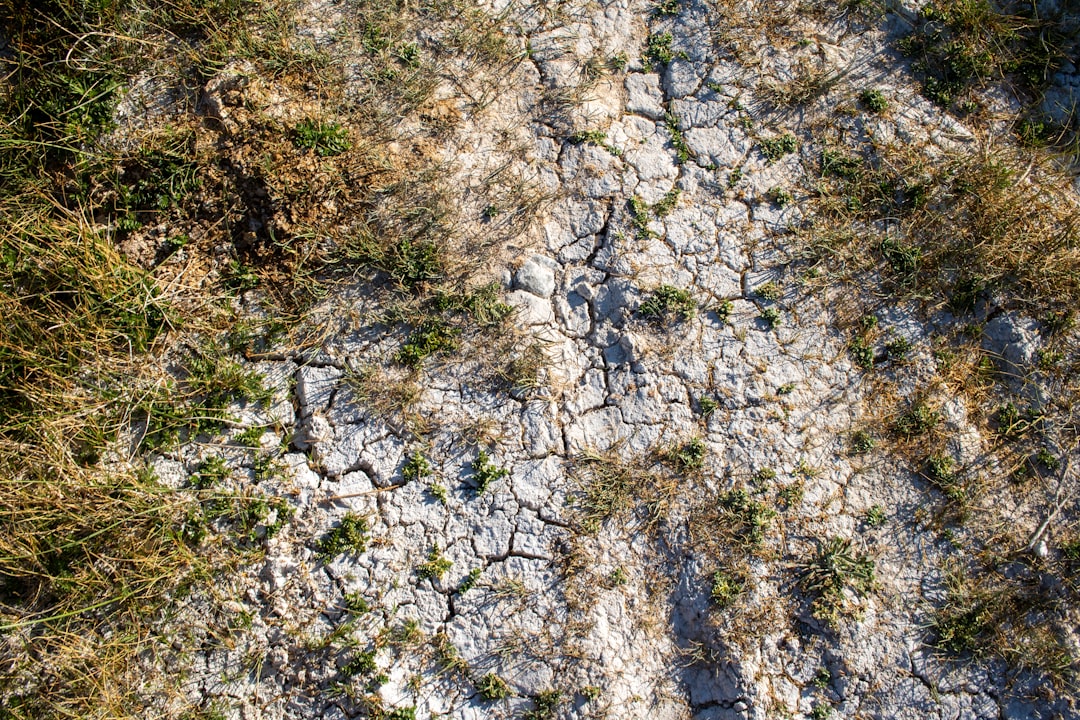
- Water Departs, Salts Remain: As water is drawn upwards by capillary action and then evaporates from the soil surface, the dissolved salts are left behind. The water molecules escape into the atmosphere, but the salt ions are too heavy to evaporate. Consequently, with each cycle of wetting and drying, the concentration of salts at the soil surface increases. This accumulation creates a saline crust or a layer of high salt concentration just beneath the surface.
- The Depth of the Source: The effectiveness of capillary rise in salinizing the surface is directly related to the depth of the saline water table or saline soil horizons. If a saline water table is relatively shallow (within a few meters of the surface), capillary rise can efficiently bring these salts to the surface. If the saline zone is very deep, the capillary fringe may not reach it, and the upward transport of salts will be less significant.
Ecological and Agricultural Consequences: The Price of Salinity
The accumulation of salts at the soil surface due to capillary rise has profound negative impacts on both natural ecosystems and agricultural productivity. Plants, which are finicky about their environment, suffer immensely.
The Thirsty Plant: Physiological Stress
- Osmotic Stress: High salt concentrations in the soil solution create an osmotic imbalance. Plant root cells typically have a lower salt concentration than the surrounding soil solution in saline conditions. This causes water to move out of the root cells and into the soil via osmosis, effectively dehydrating the plant. It’s like a person trying to drink saltwater – it only makes them thirstier. Plants become stunted, wilted, and unable to absorb enough water to survive.
- Ion Toxicity: Beyond osmotic stress, specific ions present in saline soils can become toxic to plants when absorbed in excessive amounts. Chloride (Cl⁻), sodium (Na⁺), and boron (B) are particularly problematic. These ions can interfere with essential metabolic processes, damage cell membranes, and disrupt enzyme activity, leading to leaf burn, reduced growth, and ultimately, plant death.
Declining Yields and Land Degradation
- Reduced Crop Yields: Salinity is a major limiting factor for crop production. As salinity levels increase, crop yields decrease dramatically. Many staple crops have a low tolerance to salt and will fail entirely in moderately to highly saline soils. This leads to significant economic losses for farmers and can threaten food security in affected regions.
- Loss of Arable Land: Prolonged and unchecked salinization can render land completely unusable for agriculture. The accumulation of salts can alter soil structure, making it cloddy, impermeable, and prone to waterlogging. This degradation of the soil resource is a serious long-term environmental problem, diminishing the land’s capacity to support life.
- Biodiversity Loss: In natural ecosystems, increased soil salinity can alter plant communities, favoring salt-tolerant species and leading to the displacement of less tolerant ones. This reduction in plant diversity can have cascading effects on the associated animal populations and the overall health of the ecosystem.
Capillary rise plays a significant role in influencing soil salinity, particularly in arid and semi-arid regions where water evaporation can lead to the accumulation of salts in the soil. Understanding this process is crucial for effective agricultural practices and land management. For a deeper insight into the relationship between capillary rise and soil salinity, you can explore a related article that discusses various factors affecting soil health and salinity levels. This informative piece can be found here.
Mitigation and Management: Reclaiming the Saline Land
Combating the impact of capillary rise on soil salinity requires a multi-pronged approach, focusing on reducing salt sources, managing water tables, and improving soil and water management practices.
Water Management Strategies: Controlling the Flow
- Drainage Systems: Installing effective subsurface drainage systems is paramount in areas prone to capillary rise. Drainage lowers the groundwater table, reducing the proximity of saline water to the capillary fringe. This physically disrupts the upward movement of salts. Imagine installing a sump pump to keep a basement dry; drainage systems do a similar job for the soil.
- Irrigation Water Management: Using irrigation water with low salt content is crucial. If only saline irrigation water is available, strategies like leaching can be employed. Leaching involves applying excess water to flush accumulated salts deeper into the soil profile, below the root zone, provided there is adequate drainage. However, this requires careful management to avoid raising the water table.
- Water Conservation Techniques: Employing water-efficient irrigation methods like drip irrigation can reduce the overall amount of water applied, thereby minimizing the potential for salt accumulation. Mulching can also help reduce surface evaporation, thus lessening the driving force for capillary rise.
Soil Amendments and Crop Selection: Building Resilience
- Gypsum Application: In soils with high sodium content (sodic soils), applying gypsum can help improve soil structure and reduce sodium hazards. Gypsum replaces sodium ions on the soil exchange sites with calcium ions, which are less detrimental to soil structure and plant growth.
- Salt-Tolerant Crops: Selecting and cultivating crops that are naturally tolerant to saline conditions is a vital strategy. Many grass species, certain vegetables, and some fruit trees demonstrate varying degrees of salt tolerance. Research and development of new salt-tolerant crop varieties through breeding and genetic engineering offer promising avenues for reclaiming saline lands.
- Reclamation Techniques: For severely salinized lands, more intensive reclamation efforts may be necessary. These can include deep plowing, the use of specific soil amendments, and the establishment of salt-tolerant vegetation to gradually improve soil conditions over time.
In conclusion, capillary rise is a formidable force in the process of soil salinization. By understanding its mechanisms, the origins of the salts it transports, and its detrimental consequences, we can develop and implement effective strategies to manage and mitigate its impact, thereby preserving our valuable agricultural lands and ensuring sustainable food production for future generations. The battle against soil salinity is an ongoing one, and mastering the forces of capillary rise is a critical weapon in our arsenal.
▶️ STOP: The Middle Corridor Is A Death Trap
FAQs
What is capillary rise in soil?
Capillary rise in soil refers to the upward movement of water from the groundwater table or moist soil layers into the drier upper soil layers through small pores or capillaries. This process occurs due to surface tension and adhesion forces between water and soil particles.
How does capillary rise contribute to soil salinity?
Capillary rise can bring dissolved salts from deeper soil layers or groundwater to the surface. When the water evaporates from the soil surface, it leaves behind these salts, leading to an accumulation of salts in the root zone, which increases soil salinity.
What factors influence the rate of capillary rise in soils?
The rate of capillary rise depends on soil texture, pore size distribution, soil moisture content, and the depth of the water table. Fine-textured soils like clays have smaller pores and typically exhibit higher capillary rise compared to coarse-textured soils like sand.
Why is soil salinity a concern for agriculture?
High soil salinity can reduce soil fertility by affecting the availability of water and nutrients to plants. It can cause osmotic stress, leading to reduced crop growth, lower yields, and in severe cases, plant death.
How can soil salinity caused by capillary rise be managed?
Management practices include improving drainage to lower the water table, applying gypsum or other soil amendments to displace sodium ions, using salt-tolerant crops, and implementing proper irrigation techniques to prevent excessive evaporation and salt accumulation.