The Panama Canal stands as one of the most significant engineering feats in human history, a vital waterway that connects the Atlantic and Pacific Oceans. Completed in 1914, this artificial canal has transformed global maritime trade by drastically reducing the travel distance for ships, eliminating the need for the perilous journey around the southern tip of South America. The canal stretches approximately 50 miles across the Isthmus of Panama, featuring a series of locks that raise and lower vessels as they traverse the varying elevations of the land.
Its strategic location and operational efficiency have made it an indispensable asset for international shipping, facilitating the movement of goods between major markets. Over the years, the Panama Canal has evolved into a critical hub for global commerce, with thousands of vessels passing through its locks annually. The canal not only serves as a shortcut for shipping routes but also plays a pivotal role in the economies of countries that rely on maritime trade.
As global trade patterns shift and evolve, the importance of the Panama Canal continues to grow, making it a focal point for discussions about international trade dynamics and economic development.
Key Takeaways
- The Panama Canal is a key waterway that connects the Atlantic and Pacific Oceans, facilitating global trade and transportation.
- The Panama Canal’s revenue reached a record high in recent years, driven by increased shipping traffic and toll rates.
- Factors contributing to the record high revenue include the expansion of the canal, increased trade between Asia and the Americas, and the canal’s strategic location.
- The COVID-19 pandemic had a temporary impact on Panama Canal revenue, but the waterway quickly rebounded as global trade resumed.
- The Panama Canal’s revenue has consistently grown over the years, reflecting its importance in global trade and transportation.
Overview of the Panama Canal’s Revenue
The revenue generated by the Panama Canal is a reflection of its significance in global trade. In recent years, the canal has reported record high revenues, underscoring its role as a key player in maritime logistics. The income derived from tolls charged to vessels using the canal is a primary source of revenue, with fees varying based on factors such as vessel size, cargo type, and the specific route taken.
This revenue is crucial not only for maintaining and operating the canal but also for contributing to the Panamanian economy. In 2022, the Panama Canal reported revenues exceeding $4 billion, marking a substantial increase compared to previous years. This financial success is indicative of the canal’s ability to adapt to changing market conditions and its ongoing relevance in facilitating international trade.
The revenue generated is reinvested into infrastructure improvements and maintenance, ensuring that the canal remains efficient and capable of handling increasing shipping traffic.
Factors Contributing to the Record High Revenue

Several factors have contributed to the record high revenue generated by the Panama Canal in recent years. One significant element is the expansion of the canal, completed in 2016, which allowed for larger vessels known as “New Panamax” ships to transit through its locks. This expansion not only increased the capacity of the canal but also attracted more shipping companies seeking to optimize their routes and reduce transportation costs.
As a result, more vessels are utilizing the canal, leading to higher toll revenues. Additionally, global trade dynamics have played a crucial role in boosting canal revenues. The rise of e-commerce and increased demand for goods have led to a surge in container shipping.
This trend has been further amplified by geopolitical factors that have disrupted traditional shipping lanes, making the canal an even more attractive option for international shipping companies.
Impact of the COVID-19 Pandemic on Panama Canal Revenue
| Year | Revenue (in millions) | Change from Previous Year |
|---|---|---|
| 2019 | 3,365 | N/A |
| 2020 | 3,002 | -10.8% |
| 2021 | 3,258 | +8.5% |
The COVID-19 pandemic brought unprecedented challenges to global trade, and the Panama Canal was not immune to its effects. Initially, there were concerns about reduced shipping traffic due to lockdowns and supply chain disruptions. However, as economies began to recover and adapt to new realities, the canal experienced a resurgence in traffic.
Despite initial setbacks, the Panama Canal managed to maintain a steady flow of traffic during the pandemic. The adaptability of shipping companies and their willingness to adjust routes contributed to this resilience.
As global demand for goods surged during recovery phases, particularly in sectors such as technology and consumer goods, the canal saw an increase in vessel transits, ultimately leading to higher revenue figures than anticipated.
Comparison with Previous Years’ Revenue
When comparing recent revenue figures from the Panama Canal with those from previous years, it becomes evident that there has been a significant upward trend. For instance, in 2020, revenues were approximately $3.2 billion, reflecting a challenging year due to pandemic-related disruptions. However, by 2021, revenues rebounded to around $3.8 billion as global trade began to recover.
The following year saw an even more remarkable increase, with revenues surpassing $4 billion. This consistent growth trajectory highlights not only the resilience of the Panama Canal but also its ability to capitalize on emerging trends in global trade. The increase in revenue can be attributed to various factors, including higher toll rates for larger vessels and an increase in overall shipping traffic.
As businesses continue to seek efficient transportation solutions, it is likely that this upward trend will persist in the coming years.
Importance of the Panama Canal to Global Trade
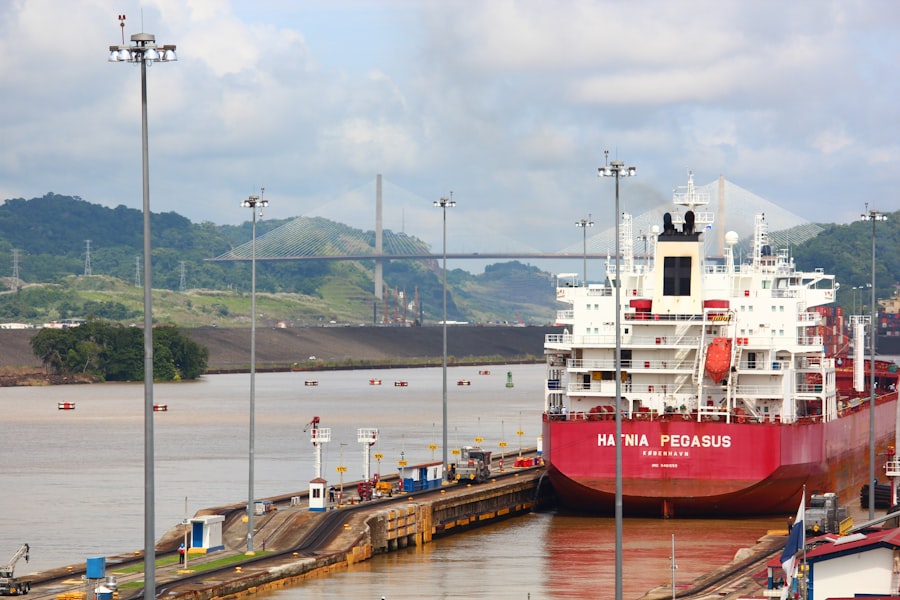
The Panama Canal’s importance to global trade cannot be overstated. It serves as a critical artery for maritime commerce, facilitating the movement of goods between major markets in North America, Europe, and Asia. By significantly reducing travel time and distance for vessels, the canal enhances supply chain efficiency and lowers transportation costs for businesses engaged in international trade.
Moreover, the canal plays a vital role in supporting economic growth in various regions. Countries that rely on exports benefit from reduced shipping times and costs, making their products more competitive in global markets. The canal’s strategic location also allows it to serve as a transit point for goods moving between different continents, further solidifying its status as a key player in international logistics.
Investments and Upgrades in the Panama Canal
To maintain its competitive edge and accommodate increasing shipping traffic, ongoing investments and upgrades are essential for the Panama Canal’s future success. The expansion project completed in 2016 was a significant milestone that allowed larger vessels to transit through its locks. However, continuous improvements are necessary to ensure that infrastructure remains modern and capable of handling evolving maritime demands.
Recent investments have focused on enhancing operational efficiency and sustainability within the canal’s operations. Upgrades to navigation systems, lock maintenance facilities, and environmental management practices are all part of a broader strategy aimed at ensuring that the canal remains a reliable and efficient route for global shipping. These investments not only support revenue generation but also contribute to long-term sustainability goals.
Future Projections for Panama Canal Revenue
Looking ahead, projections for Panama Canal revenue appear optimistic. Analysts anticipate continued growth driven by several factors, including increasing global trade volumes and ongoing investments in infrastructure improvements. As economies around the world recover from pandemic-related disruptions, demand for efficient shipping routes is expected to rise.
Furthermore, trends such as digitalization in logistics and advancements in shipping technology may further enhance the canal’s appeal to shipping companies. As vessels become larger and more efficient, the Panama Canal is well-positioned to accommodate these changes while continuing to generate substantial revenue. With strategic planning and investment, it is likely that future revenue figures will reflect this positive trajectory.
Environmental and Social Responsibility of the Panama Canal
In recent years, there has been an increasing focus on environmental sustainability and social responsibility within the operations of the Panama Canal. Recognizing its impact on local ecosystems and communities, efforts have been made to implement environmentally friendly practices throughout its operations. This includes initiatives aimed at reducing emissions from vessels transiting through the canal and promoting biodiversity conservation in surrounding areas.
Social responsibility is also a key consideration for the Panama Canal Authority (ACP). The canal provides employment opportunities for thousands of Panamanians and contributes significantly to local economies. By investing in community development programs and supporting education initiatives, the ACP aims to ensure that local communities benefit from the economic opportunities generated by canal operations.
Challenges and Risks for the Panama Canal’s Revenue
Despite its successes, the Panama Canal faces several challenges and risks that could impact future revenue generation. One significant concern is competition from alternative shipping routes, such as those emerging from Arctic passages due to climate change or other canals being developed globally. As shipping companies seek cost-effective solutions, any shift in trade patterns could pose risks to canal traffic.
Additionally, environmental concerns related to climate change may affect operations at the canal. Rising sea levels and changing weather patterns could impact water availability for lock operations or disrupt shipping schedules. Addressing these challenges will require proactive planning and investment in adaptive measures to ensure that the canal remains resilient in an evolving global landscape.
Conclusion and Implications of the Record High Revenue
In conclusion, the record high revenue generated by the Panama Canal reflects its enduring significance in global trade dynamics. As an essential conduit for maritime commerce, it has adapted successfully to changing market conditions while continuing to attract shipping traffic from around the world. The factors contributing to this success include strategic investments in infrastructure upgrades, responsiveness to global trade trends, and a commitment to environmental sustainability.
Looking forward, it is crucial for stakeholders involved with the Panama Canal to remain vigilant about potential challenges while capitalizing on opportunities for growth. By prioritizing innovation and sustainability alongside economic objectives, they can ensure that this vital waterway continues to thrive as a cornerstone of international trade for years to come. The implications of record high revenue extend beyond financial metrics; they signify a robust future for both the canal itself and the broader economic landscape it supports.
The Panama Canal has long been a critical artery for global maritime trade, significantly impacting the economies of numerous countries by facilitating the swift movement of goods between the Atlantic and Pacific Oceans. Recent statistics on the canal’s revenue highlight its continued importance in international shipping, with tolls and associated services generating substantial income for Panama. For a deeper understanding of the canal’s economic impact and its role in global trade, you can explore a related article on the topic by visiting MyGeoQuest. This resource provides valuable insights into the canal’s operations and its influence on global commerce.
😨 WATCH THIS! 🚢 The Panama Canal Is a Ticking Time Bomb: What Happens If It Fails?
FAQs
What are the Panama Canal revenue statistics?
The Panama Canal generated $2.6 billion in revenue in 2020, despite the challenges posed by the COVID-19 pandemic. This was a decrease from the $3.4 billion in revenue generated in 2019.
How is the revenue from the Panama Canal generated?
The revenue from the Panama Canal is primarily generated through tolls paid by ships transiting the canal. The tolls are based on the size and type of the vessel, as well as the cargo it is carrying.
What are the main expenses associated with operating the Panama Canal?
The main expenses associated with operating the Panama Canal include maintenance and operation costs, as well as investments in infrastructure and technology to ensure the safe and efficient passage of ships through the canal.
How does the Panama Canal’s revenue impact the economy of Panama?
The revenue generated by the Panama Canal plays a significant role in the economy of Panama, contributing to government revenue, infrastructure development, and job creation. It is a key driver of economic growth and development in the country.
What are the projections for the Panama Canal’s revenue in the coming years?
The Panama Canal Authority has projected a gradual recovery in revenue in the coming years, as global trade and shipping activity continue to rebound from the impact of the COVID-19 pandemic. The authority is also investing in expansion projects to increase the canal’s capacity and attract more traffic, which is expected to contribute to future revenue growth.