The Panama Canal stands as one of the most significant engineering feats in human history, a monumental project that transformed global trade routes. Its inception can be traced back to the early 16th century when explorers first recognized the potential of a waterway connecting the Atlantic and Pacific Oceans. However, it wasn’t until the late 19th century that serious efforts were made to construct the canal.
The French initiated the project in 1881 under Ferdinand de Lesseps, who had successfully overseen the construction of the Suez Canal. Unfortunately, due to engineering challenges, tropical diseases, and financial mismanagement, the French endeavor ended in failure by 1889. The United States took over the project in 1904, driven by strategic military interests and the desire to facilitate maritime trade.
Under the leadership of President Theodore Roosevelt, the U.S. implemented significant advancements in engineering and public health measures, which ultimately led to the successful completion of the canal in 1914. The Panama Canal officially opened its doors to shipping traffic on August 15, 1914, revolutionizing maritime trade by drastically reducing travel time between the two oceans.
Over the decades, the canal has undergone various modifications and improvements, culminating in a major expansion project that began in 2007 and was completed in 2016.
Key Takeaways
- The Panama Canal has a rich history, from its inception to its recent expansion, which has transformed global trade.
- The need for expansion was driven by increasing traffic and the desire to maximize efficiency in global shipping.
- The engineering marvel of the expansion project involved innovative techniques and massive construction efforts.
- The economic impact of the expansion will benefit global trade by reducing shipping costs and transit times.
- Environmental concerns were carefully considered in the expansion project to balance progress with conservation efforts.
The Need for Expansion: Increasing Traffic and Maximizing Efficiency
As global trade expanded in the 21st century, the Panama Canal faced mounting pressure to accommodate larger vessels and increased traffic. The original locks were designed to handle ships known as Panamax vessels, which have a maximum width of 32.3 meters. However, with the advent of larger ships, known as New Panamax or Neo-Panamax vessels, which can be up to 49 meters wide, it became evident that the canal’s capacity was insufficient to meet modern shipping demands.
By the early 2000s, it was clear that an expansion was not just desirable but necessary to maintain the canal’s relevance in global trade. The expansion project aimed to double the canal’s capacity and enhance its efficiency. By adding a new set of locks and widening existing channels, the Panama Canal would be able to accommodate larger vessels, thereby reducing shipping costs and transit times.
This strategic move was essential for maintaining competitiveness against other global shipping routes, particularly as trade volumes continued to rise. The expansion was not merely a response to current demands but a proactive measure to future-proof the canal against anticipated growth in global shipping traffic.
The Engineering Marvel: How the Expansion Project Was Executed
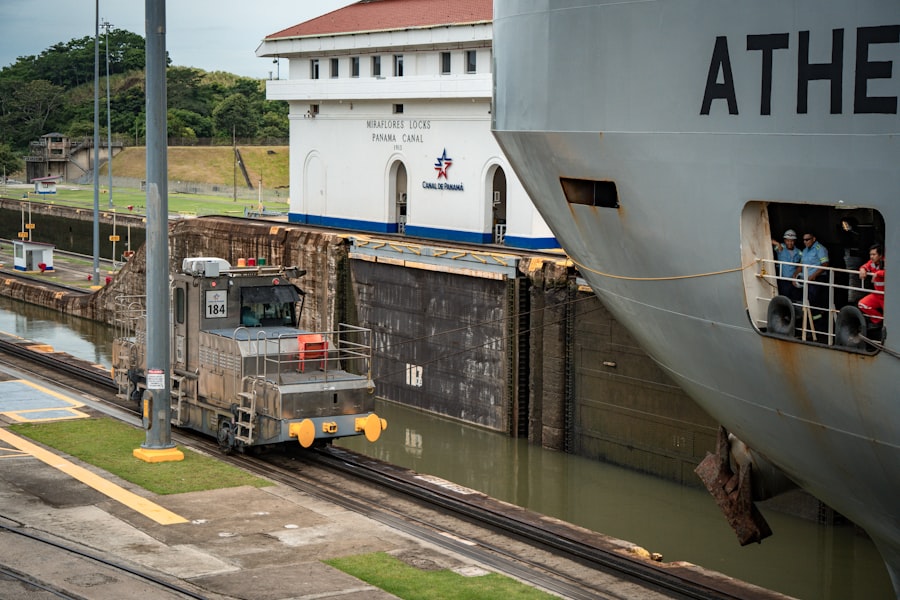
The execution of the Panama Canal expansion project was nothing short of an engineering marvel. The project involved constructing a new set of locks at both the Atlantic and Pacific ends of the canal, each designed to handle larger vessels while maintaining operational efficiency. The new locks are significantly wider and deeper than their predecessors, allowing for a more substantial increase in vessel capacity.
The construction process required innovative engineering solutions to address challenges such as water supply management and soil stability. One of the most remarkable aspects of the expansion was the use of advanced technology and materials. Engineers employed a system of rolling gates and water-saving basins that allowed for efficient water management during lock operations.
This innovative approach not only reduced water consumption but also ensured that vessels could transit through the locks more quickly. The project also involved extensive dredging and excavation work to widen existing channels and deepen navigation routes, further enhancing the canal’s capacity. Ultimately, the successful completion of this ambitious project showcased human ingenuity and determination in overcoming formidable challenges.
The Economic Impact: How the Expansion Will Benefit Global Trade
| Metrics | Data |
|---|---|
| Increased Trade Volume | Projected to increase by 2.7% |
| Job Creation | Expected to create 15,000 new jobs |
| Revenue Growth | Anticipated revenue growth of 4.5% |
| Market Expansion | Access to new markets for goods and services |
The economic implications of the Panama Canal expansion are profound and far-reaching. By accommodating larger vessels, the canal has positioned itself as a critical artery for global trade, facilitating more efficient transportation of goods between major markets. The ability to handle New Panamax vessels means that shipping companies can transport larger quantities of cargo in a single trip, significantly reducing per-unit shipping costs.
This cost efficiency is expected to translate into lower prices for consumers and increased competitiveness for businesses relying on international trade. Moreover, the expansion is anticipated to stimulate economic growth not only in Panama but also across various sectors globally. As shipping routes become more efficient, businesses can optimize their supply chains, leading to increased productivity and profitability.
The enhanced capacity of the canal is likely to attract more shipping traffic, resulting in higher toll revenues for Panama and investments in infrastructure development. This influx of revenue can be reinvested into public services and infrastructure improvements, further bolstering Panama’s economy.
Environmental Concerns: Balancing Progress with Conservation
While the expansion of the Panama Canal has brought numerous economic benefits, it has also raised significant environmental concerns. The construction process itself posed risks to local ecosystems, particularly in sensitive areas surrounding the canal. Deforestation, habitat disruption, and potential pollution from construction activities were critical issues that environmentalists highlighted during the planning stages of the expansion.
To address these concerns, extensive environmental assessments were conducted prior to initiating construction. Measures were implemented to mitigate negative impacts on local wildlife and ecosystems. For instance, efforts were made to preserve critical habitats and implement sustainable practices throughout the construction process.
Additionally, ongoing monitoring programs have been established to assess environmental impacts post-expansion and ensure compliance with conservation standards. Striking a balance between economic development and environmental stewardship remains a challenge that requires continuous attention.
The Future of Shipping: How the Expansion Will Shape Global Trade Routes
The completion of the Panama Canal expansion marks a pivotal moment in the evolution of global shipping routes. As larger vessels can now transit through the canal, shipping companies are likely to reevaluate their logistics strategies and routing decisions. The ability to transport goods more efficiently between Asia and Europe via the canal will reshape traditional trade patterns, potentially reducing reliance on longer routes around South America.
This shift could lead to increased competition among ports along both coasts of North America as they vie for business from shipping lines seeking efficient transit options. Ports that invest in infrastructure improvements to accommodate larger vessels will likely see significant growth in cargo volumes.
The Role of Panama: How the Expansion Will Impact the Country’s Economy and Infrastructure
The expansion of the Panama Canal is poised to have a transformative impact on Panama’s economy and infrastructure. As a key player in global trade, Panama stands to benefit from increased toll revenues generated by heightened shipping traffic through the canal. This influx of revenue can be reinvested into critical infrastructure projects such as roads, bridges, and public services, enhancing overall quality of life for Panamanians.
Moreover, the expansion is expected to attract foreign investment into various sectors within Panama, including logistics, tourism, and manufacturing. As businesses recognize Panama’s strategic location as a gateway for international trade, they may establish operations within the country to capitalize on its advantageous position. This influx of investment can create jobs and stimulate economic growth across multiple sectors.
The Competition: How Other Trade Routes Will Be Affected by the Expansion
The expansion of the Panama Canal is likely to have significant implications for competing trade routes around the world. As shipping companies increasingly opt for routes that utilize the expanded canal’s capabilities, alternative pathways may experience shifts in traffic patterns. For instance, routes around Cape Horn or through other canals may see reduced demand as vessels take advantage of shorter transit times through Panama.
This shift could lead to increased competition among ports globally as they adapt to changing shipping patterns. Ports that are well-positioned geographically or have invested in infrastructure improvements may benefit from increased cargo volumes as shipping lines seek efficient transit options. Conversely, ports that fail to adapt may face challenges as they lose business to more strategically located competitors.
The Benefits for Shipping Companies: Increased Efficiency and Cost Savings
Shipping companies stand to gain significantly from the expansion of the Panama Canal through increased efficiency and cost savings. By accommodating larger vessels capable of carrying more cargo per trip, companies can reduce their overall shipping costs while maximizing their operational capacity. This efficiency translates into lower freight rates for customers and improved profit margins for shipping lines.
Additionally, shorter transit times through an expanded canal mean that goods can reach their destinations more quickly, enhancing supply chain reliability. As businesses increasingly prioritize speed and efficiency in logistics operations, shipping companies that leverage the expanded canal will likely gain a competitive edge in an increasingly crowded marketplace.
The Impact on Ports and Infrastructure: How the Expansion Will Affect Port Operations Worldwide
The expansion of the Panama Canal will have far-reaching effects on ports and infrastructure worldwide. As larger vessels begin transiting through the canal, ports must adapt their facilities and operations to accommodate these ships effectively. This may involve investing in deeper berths, larger cranes capable of handling bigger containers, and improved logistics systems to manage increased cargo volumes.
Ports that successfully adapt will likely see significant growth in cargo traffic as they become preferred destinations for shipping lines utilizing expanded canal routes. Conversely, ports that struggle to keep pace with these changes may experience declines in business as shipping companies seek more efficient alternatives for their operations.
The Implications for Global Supply Chains: How the Expansion Will Reshape Logistics and Distribution
The implications of the Panama Canal expansion extend beyond immediate economic benefits; they also promise to reshape global supply chains fundamentally. As shipping routes become more efficient with larger vessels transiting through Panama, businesses will need to reevaluate their logistics strategies accordingly. This may involve rethinking distribution networks and sourcing strategies as companies seek to optimize their supply chains for speed and cost-effectiveness.
Furthermore, enhanced connectivity between major markets will likely lead to increased collaboration among businesses across borders as they leverage improved access to goods and services.
In conclusion, while challenges remain regarding environmental concerns and competition among global trade routes, it is clear that the expansion of the Panama Canal represents a significant milestone in maritime history with far-reaching implications for economies worldwide.
The Panama Canal has long been a critical artery for global maritime trade, and recent expansion plans aim to further enhance its capacity and efficiency. These plans are crucial for accommodating the increasing size of modern cargo ships and meeting the growing demands of international trade. An insightful article discussing the implications of these expansion plans can be found on MyGeoQuest. This article delves into the strategic importance of the canal’s expansion and its potential impact on global shipping routes. For more detailed information, you can read the full article by visiting MyGeoQuest.
😨 WATCH THIS! 🚢 The Panama Canal Is a Ticking Time Bomb: What Happens If It Fails?
FAQs
What is the Panama Canal expansion plan?
The Panama Canal expansion plan refers to the project to build a new set of locks that will allow larger ships to pass through the canal. This expansion aims to increase the canal’s capacity and accommodate the growing demand for larger vessels.
Why is the Panama Canal expansion necessary?
The expansion of the Panama Canal is necessary to accommodate the increasing size of ships and meet the growing demand for global trade. The current locks are too small to accommodate the largest modern vessels, limiting the canal’s capacity and efficiency.
When did the Panama Canal expansion plan begin?
The construction of the Panama Canal expansion began in 2007, and the new locks were officially inaugurated in 2016. The project took nearly a decade to complete and involved significant engineering and construction efforts.
How much did the Panama Canal expansion plan cost?
The total cost of the Panama Canal expansion plan was approximately $5.25 billion. The project was funded through a combination of public and private financing, including loans and bonds issued by the Panama Canal Authority.
What are the benefits of the Panama Canal expansion?
The expansion of the Panama Canal has several benefits, including increased capacity to accommodate larger ships, reduced transit times, and lower transportation costs for goods. It also allows for greater flexibility in global trade routes and enhances the canal’s competitiveness in the shipping industry.