
The history of the Panama Canal is a tale of ambition, conflict, and engineering prowess that spans over a century. The idea of a canal across the Isthmus of Panama dates back to the early 16th century when Spanish explorers first recognized the potential for a shortcut between the Atlantic and Pacific Oceans. However, it wasn’t until the late 19th century that serious efforts were made to construct the canal.
The French, under the leadership of Ferdinand de Lesseps, who had successfully overseen the construction of the Suez Canal, initiated the first attempt in 1881. Unfortunately, this endeavor was plagued by mismanagement, disease, and harsh working conditions, leading to its eventual failure in 1889. Following the French debacle, the United States took up the mantle in 1904 after negotiating a treaty with Panama, which had recently gained independence from Colombia.
The U.S. commitment to completing the canal was driven by strategic military interests and economic considerations. Over the next decade, American engineers and laborers worked tirelessly to overcome the challenges left by their predecessors.
The canal was finally completed and opened on August 15, 1914, marking a significant milestone in maritime history and altering global trade routes forever.
Key Takeaways
- The Panama Canal was first attempted by the French in the late 1800s, but it was completed by the United States in 1914.
- The Panama Canal is a vital waterway that connects the Atlantic and Pacific Oceans, saving ships from having to travel around the southern tip of South America.
- The construction of the Panama Canal was a massive undertaking that involved digging through mountains and creating the largest man-made lake at the time.
- Building the Panama Canal presented numerous engineering challenges, including controlling the flow of water, preventing landslides, and dealing with tropical diseases.
- The modernization and expansion of the Panama Canal have allowed for larger ships to pass through, increasing its capacity and efficiency.
The Importance of the Panama Canal
The Panama Canal holds immense importance in global trade and maritime navigation. By providing a shortcut between the Atlantic and Pacific Oceans, it significantly reduces travel time for ships, allowing for more efficient transportation of goods. Prior to its construction, vessels had to navigate around the treacherous Cape Horn at the southern tip of South America, a journey that could take weeks.
The canal has since become a vital artery for international shipping, facilitating trade between countries and continents. Moreover, the canal has played a crucial role in shaping economic relationships between nations. It has enabled countries to engage in trade more effectively by reducing shipping costs and transit times.
This has not only benefited large economies but has also provided smaller nations with access to global markets. The strategic location of the canal has made it a focal point for maritime commerce, underscoring its significance in the interconnected world of trade.
The Construction of the Panama Canal
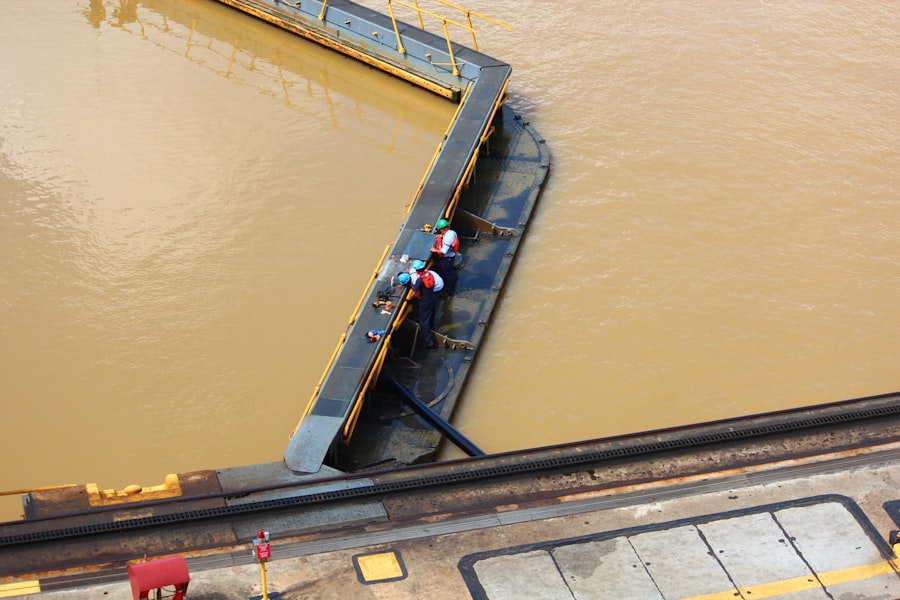
The construction of the Panama Canal was an extraordinary feat that required innovative engineering solutions and immense human effort. After taking over from the French, American engineers implemented new techniques and technologies to tackle the daunting task ahead. One of the most significant advancements was the use of steam shovels and dredges, which allowed for more efficient excavation of the canal’s path through the rugged terrain.
The construction process involved extensive earthmoving, as workers had to dig through mountains and create artificial lakes to facilitate navigation.
Thousands of workers from various backgrounds were recruited, including many from the Caribbean who were drawn by the promise of employment.
However, working conditions were often harsh, with many laborers facing long hours, dangerous environments, and outbreaks of diseases such as malaria and yellow fever. Despite these challenges, the determination and resilience of the workforce contributed significantly to the successful completion of this monumental project.
The Engineering Challenges of Building the Panama Canal
| Engineering Challenge | Description |
|---|---|
| Geological Obstacles | The Panama Canal had to be built through a mountainous region with unstable soil and frequent landslides. |
| Climate | The region’s tropical climate brought heavy rainfall, high temperatures, and humidity, making construction difficult. |
| Water Management | Managing the flow of water from the Atlantic to the Pacific while preventing flooding and maintaining a stable water level was a major challenge. |
| Lock System | Designing and building a system of locks to raise and lower ships through the canal while conserving water was a significant engineering feat. |
| Disease | Malaria and yellow fever were widespread in the region, posing a significant health risk to workers and engineers. |
Building the Panama Canal presented numerous engineering challenges that tested the limits of contemporary technology and human ingenuity. One of the most formidable obstacles was the geography of the region itself. The isthmus is characterized by mountainous terrain and dense jungles, making excavation a daunting task.
Engineers had to devise innovative solutions to navigate these natural barriers while ensuring that the canal would be both functional and safe for maritime traffic. Another significant challenge was managing water levels within the canal system. The construction team had to create a series of locks that would raise and lower ships as they traversed different elevations along the canal route.
This required precise engineering to ensure that water could be efficiently controlled and that ships could pass through without incident. The successful implementation of these locks remains one of the most impressive achievements in civil engineering history.
The Modernization of the Panama Canal
In recent years, modernization efforts have been undertaken to enhance the efficiency and capacity of the Panama Canal. As global trade continues to evolve, so too does the need for infrastructure that can accommodate larger vessels and increased shipping traffic. The introduction of advanced technologies has played a pivotal role in this modernization process.
Additionally, modernization efforts have focused on environmental sustainability. Recognizing the ecological significance of the surrounding areas, authorities have implemented measures to minimize environmental impact while maximizing operational efficiency.
These initiatives reflect a growing awareness of the need to balance economic growth with environmental stewardship in an increasingly interconnected world.
The Expansion of the Panama Canal
The expansion of the Panama Canal, completed in June 2016, marked a transformative moment in its history. This ambitious project aimed to accommodate larger vessels known as “New Panamax” ships, which are significantly bigger than those that could previously navigate through the canal. The expansion involved constructing a new set of locks that would allow these larger ships to transit through the canal more efficiently.
The expansion project not only increased capacity but also enhanced global shipping routes by enabling larger cargo vessels to access key markets more easily. This development has had far-reaching implications for international trade dynamics, as it has allowed shipping companies to optimize their operations and reduce costs associated with transporting goods across oceans.
The Impact of the Panama Canal on Global Trade
The impact of the Panama Canal on global trade cannot be overstated. By providing a crucial shortcut for maritime traffic, it has fundamentally altered shipping routes and trade patterns across continents. The canal has facilitated increased trade between North America and Asia, allowing goods to move more swiftly between these regions.
This has led to greater economic interdependence among nations and has contributed to globalization. Furthermore, the canal’s influence extends beyond mere transportation efficiency; it has also shaped economic policies and strategies for countries involved in international trade. Nations have adjusted their trade agreements and logistics operations in response to the advantages offered by this vital waterway.
As a result, the Panama Canal continues to play a pivotal role in shaping global commerce.
The Environmental Impact of the Panama Canal
While the Panama Canal has brought significant economic benefits, it has also raised important environmental concerns. The construction and expansion of the canal have had profound effects on local ecosystems and biodiversity. Deforestation and habitat destruction occurred during construction phases, leading to disruptions in wildlife populations and natural habitats.
In response to these challenges, efforts have been made to mitigate environmental impacts through conservation initiatives and sustainable practices. Authorities have recognized the importance of preserving biodiversity in surrounding areas while maintaining operational efficiency within the canal itself. Balancing economic growth with environmental stewardship remains an ongoing challenge as global trade continues to evolve.
The Future of the Panama Canal
Looking ahead, the future of the Panama Canal appears promising yet complex. As global trade patterns shift and new technologies emerge, there will be ongoing challenges and opportunities for this vital waterway. Continued investment in infrastructure modernization will be essential to ensure that it remains competitive in an ever-changing maritime landscape.
Moreover, addressing environmental concerns will be crucial for maintaining public support and ensuring sustainable operations. As climate change poses new challenges for coastal regions worldwide, adapting to these changes will require innovative solutions that prioritize both economic growth and ecological preservation.
The Technology Behind the Panama Canal
The technology behind the Panama Canal is a testament to human ingenuity and innovation in engineering. From its inception to modern-day operations, advancements in technology have played a critical role in enhancing its functionality and efficiency. Modern navigation systems utilize sophisticated satellite technology to provide real-time data on vessel movements, weather conditions, and water levels within the canal.
Additionally, automation has become increasingly prevalent in canal operations. Automated systems help manage lock operations more efficiently while reducing human error risks. These technological advancements not only streamline processes but also contribute to improved safety measures for vessels transiting through this busy waterway.
The Panama Canal as a Symbol of Human Ingenuity
Ultimately, the Panama Canal stands as a symbol of human ingenuity and determination in overcoming seemingly insurmountable challenges. Its construction required not only advanced engineering skills but also immense perseverance from those who worked tirelessly to bring this vision to life. The canal represents humanity’s ability to transform landscapes and create infrastructure that connects people across vast distances.
As it continues to evolve with modernization efforts and expansions, the Panama Canal remains an enduring testament to what can be achieved when ambition meets innovation. It serves as a reminder that even in an era marked by rapid technological advancements, there are still monumental feats waiting to be accomplished through collaboration and creativity on a global scale.
The Panama Canal is often celebrated as one of the greatest engineering marvels of the modern world, a testament to human ingenuity and perseverance. This monumental project, completed in 1914, revolutionized global trade by providing a shortcut between the Atlantic and Pacific Oceans, significantly reducing the travel time for ships. For those interested in exploring more about the engineering feats that have shaped our world, an insightful article can be found on MyGeoQuest. This resource delves into various geographical and engineering wonders, offering a broader perspective on how such projects have impacted global connectivity and commerce.
😨 WATCH THIS! 🚢 The Panama Canal Is a Ticking Time Bomb: What Happens If It Fails?
FAQs
What is the Panama Canal?
The Panama Canal is a man-made waterway that connects the Atlantic Ocean to the Pacific Ocean. It cuts across the Isthmus of Panama and allows ships to avoid the long and treacherous journey around the southern tip of South America.
When was the Panama Canal built?
The construction of the Panama Canal began in 1904 and was completed in 1914. It was one of the most challenging engineering projects of its time.
Who built the Panama Canal?
The Panama Canal was built by the United States, which took over the project from the French in 1904. The construction was overseen by the American engineer John Frank Stevens and later by George Washington Goethals.
What engineering challenges were faced during the construction of the Panama Canal?
The construction of the Panama Canal presented several engineering challenges, including the need to excavate a large amount of earth and rock, control the flow of water from the Chagres River, and create a system of locks to raise and lower ships as they passed through the canal.
How long is the Panama Canal?
The Panama Canal is approximately 50 miles (80 kilometers) long.
How does the Panama Canal work?
The Panama Canal operates using a system of locks that raise and lower ships as they pass through the canal. The locks use a series of chambers that are filled with water to raise ships to the level of the next section of the canal, and then drained to lower them to the next level.
What impact has the Panama Canal had on global trade?
The Panama Canal has had a significant impact on global trade by reducing the time and cost of shipping goods between the Atlantic and Pacific Oceans. It has also had a major influence on international shipping routes and the development of global trade patterns.