
Solar storms, also known as geomagnetic storms, are disturbances in the Earth’s magnetosphere caused by solar wind and solar flares. These phenomena can unleash a torrent of charged particles that interact with the Earth’s magnetic field, leading to various effects on technology and infrastructure. One of the critical areas affected by solar storms is satellite operations, particularly in terms of timing accuracy.
Satellite timing jitter refers to the small, rapid variations in the timing of signals transmitted from satellites, which can be exacerbated during solar storm events. Understanding the relationship between solar storms and satellite timing jitter is essential for ensuring the reliability of satellite systems. The impact of solar storms on satellite timing jitter can be profound.
When charged particles from a solar storm collide with the Earth’s atmosphere, they can create electromagnetic interference that disrupts the signals sent from satellites. This interference can lead to timing errors, which may affect navigation systems, communication networks, and data transmission.
Therefore, comprehending the mechanisms behind solar storms and their effects on satellite timing is crucial for developing effective mitigation strategies.
Key Takeaways
- Solar storms cause significant timing jitter in satellites, affecting their accuracy and reliability.
- Managing timing jitter involves advanced signal processing, redundant systems, and ground-based monitoring.
- Accurate satellite timing during solar storms is critical for navigation, communication, and data integrity.
- Predictive strategies and collaborative efforts enhance resilience against solar storm-induced timing disruptions.
- Future developments focus on improved monitoring, innovative mitigation techniques, and successful case study implementations.
Impact of Solar Storms on Satellite Timing
The impact of solar storms on satellite timing is multifaceted and can lead to a range of operational challenges. One of the most immediate effects is the degradation of Global Navigation Satellite Systems (GNSS), which are heavily reliant on precise timing for accurate positioning. During a solar storm, the ionosphere can become disturbed, leading to delays in signal transmission and increased noise levels.
This disruption can result in positioning errors that may affect everything from personal navigation devices to critical military operations. Moreover, communication satellites are not immune to the effects of solar storms. The interference caused by charged particles can lead to signal degradation, increased bit error rates, and even temporary outages.
For industries that depend on real-time data transmission, such as finance and emergency services, these disruptions can have severe implications. The cumulative effect of these challenges underscores the importance of understanding how solar storms influence satellite timing and the need for robust systems to manage these impacts.
Techniques for Managing Satellite Timing Jitter During Solar Storms

To mitigate the effects of satellite timing jitter during solar storms, several techniques have been developed. One approach involves enhancing the robustness of satellite systems through improved hardware design. By incorporating shielding materials that can withstand electromagnetic interference, satellites can better protect their onboard systems from the adverse effects of solar storms.
Additionally, redundancy in critical components can ensure that if one system fails due to timing jitter, another can take over seamlessly.
These algorithms can analyze incoming signals in real-time and adjust for any detected timing discrepancies caused by solar storm activity.
By employing adaptive filtering techniques, satellite systems can dynamically compensate for jitter, maintaining accurate timing even in adverse conditions. This proactive approach not only enhances reliability but also ensures that satellite operations remain uninterrupted during solar storm events.
Importance of Accurate Satellite Timing During Solar Storms
| Metric | Normal Conditions | During Solar Storms | Impact on Satellite Timing |
|---|---|---|---|
| Timing Accuracy (nanoseconds) | 1-5 ns | Up to 100 ns | Degradation causes errors in navigation and communication |
| Signal Delay Variability (microseconds) | 0.1 – 0.5 µs | 5 – 20 µs | Increased delay affects synchronization and data integrity |
| GPS Signal Loss Incidents (per hour) | 0-1 | 5-10 | Frequent loss disrupts timing and positioning services |
| Satellite Clock Drift (nanoseconds/hour) | 10-20 ns/hr | 50-200 ns/hr | Higher drift requires more frequent corrections |
| Geomagnetic Induced Currents (GIC) (Amperes) | 0-5 A | 20-100 A | Can cause hardware malfunctions affecting timing systems |
Accurate satellite timing is paramount during solar storms for several reasons. First and foremost, many critical applications depend on precise timing for their functionality. For instance, financial transactions often rely on synchronized timestamps to ensure accuracy and prevent fraud.
In aviation and maritime navigation, precise timing is essential for safe operations and collision avoidance. Any disruption in satellite timing can lead to significant operational risks and financial losses. Furthermore, accurate satellite timing is crucial for scientific research and data collection.
Many Earth observation satellites rely on precise timing to capture data at specific intervals, which is vital for monitoring climate change, natural disasters, and other environmental phenomena. Inaccurate timing can compromise the integrity of this data, leading to flawed analyses and misguided policy decisions. Thus, maintaining accurate satellite timing during solar storms is not just a technical challenge; it has far-reaching implications for safety, security, and scientific advancement.
Role of Ground-Based Monitoring Systems in Managing Satellite Timing Jitter
Ground-based monitoring systems play a pivotal role in managing satellite timing jitter during solar storms. These systems are equipped with advanced sensors that continuously monitor space weather conditions and provide real-time data on solar activity. By analyzing this data, ground-based systems can predict potential solar storm events and their likely impact on satellite operations.
This information is invaluable for satellite operators who need to prepare for impending disruptions. In addition to monitoring solar activity, ground-based systems can also assist in calibrating satellite signals. By comparing satellite signals with ground-based reference clocks, operators can detect any discrepancies caused by solar storms and make necessary adjustments.
This calibration process helps maintain accurate timing across satellite networks, ensuring that even during periods of heightened solar activity, operations remain stable and reliable.
Strategies for Predicting and Monitoring Solar Storms
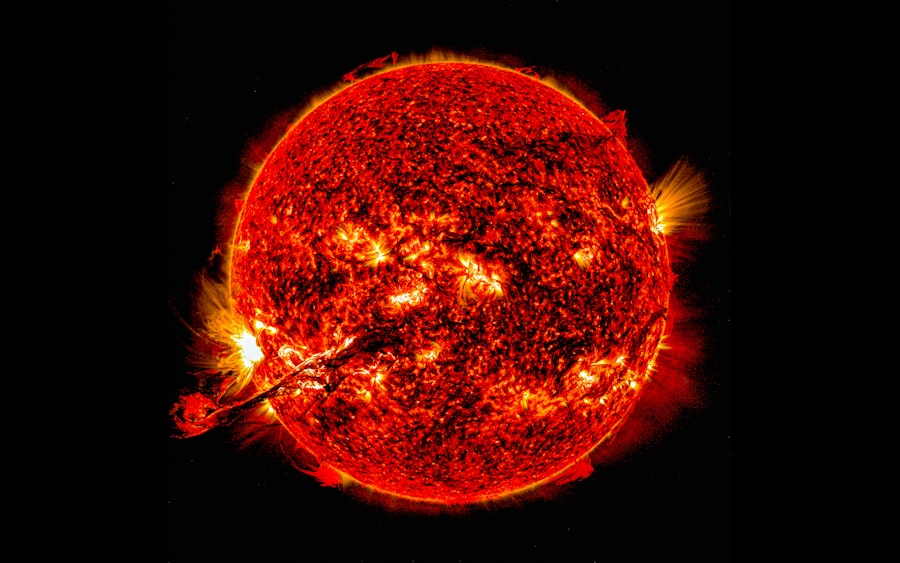
Effective prediction and monitoring of solar storms are essential for minimizing their impact on satellite timing jitter. Various strategies have been developed to enhance forecasting capabilities. One such strategy involves utilizing advanced space weather models that simulate solar activity based on historical data and real-time observations.
These models can provide insights into potential storm intensity and duration, allowing satellite operators to prepare accordingly. Another important strategy is the collaboration between space agencies and research institutions worldwide. By sharing data and expertise, these organizations can improve the accuracy of solar storm predictions.
Collaborative efforts have led to the establishment of global monitoring networks that track solar activity and disseminate information rapidly to stakeholders. This collective approach not only enhances predictive capabilities but also fosters a culture of preparedness within the satellite industry.
Implementing Redundant Timing Systems for Satellite Resilience
Implementing redundant timing systems is a critical strategy for enhancing satellite resilience against timing jitter caused by solar storms. Redundancy involves having multiple independent systems that can take over if one fails or experiences significant jitter. For instance, satellites can be equipped with multiple atomic clocks or alternative timing sources that provide backup signals in case of disruption.
This redundancy ensures that even if one system is affected by a solar storm’s electromagnetic interference, others can maintain accurate timing. Additionally, these backup systems can be designed to operate in different frequency bands or utilize different technologies to minimize the risk of simultaneous failure due to similar environmental factors. By investing in redundant timing systems, satellite operators can significantly enhance their resilience against the unpredictable nature of solar storms.
Utilizing Advanced Signal Processing Techniques to Mitigate Timing Jitter
Advanced signal processing techniques offer promising solutions for mitigating timing jitter during solar storms. These techniques involve sophisticated algorithms that analyze incoming signals to identify patterns associated with jitter caused by solar activity. By employing machine learning models trained on historical data, these algorithms can predict potential disruptions and adjust signal processing parameters accordingly.
One effective approach is the use of Kalman filtering, which allows for real-time estimation of signal parameters while accounting for noise and interference. This technique enables satellites to maintain accurate timing even when faced with significant jitter caused by solar storms. Furthermore, adaptive signal processing techniques can dynamically adjust filtering parameters based on current conditions, ensuring optimal performance under varying levels of interference.
Collaborative Efforts to Improve Satellite Timing Resilience
Collaboration among various stakeholders is essential for improving satellite timing resilience against solar storm-induced jitter. Space agencies, private companies, and academic institutions must work together to share knowledge, resources, and best practices in managing satellite operations during adverse space weather conditions. Collaborative research initiatives can lead to innovative solutions that enhance the overall resilience of satellite systems.
Moreover, joint exercises and simulations involving multiple organizations can help identify vulnerabilities in current systems and develop effective response strategies. By fostering a culture of collaboration within the satellite industry, stakeholders can collectively address the challenges posed by solar storms and ensure that satellite operations remain reliable even in the face of unpredictable space weather events.
Future Developments in Satellite Timing Jitter Management
The future of satellite timing jitter management looks promising as advancements in technology continue to evolve. Emerging technologies such as quantum clocks hold great potential for enhancing timing accuracy beyond current capabilities. These clocks leverage quantum mechanics principles to achieve unprecedented precision in timekeeping, making them ideal candidates for next-generation satellites.
Additionally, ongoing research into novel materials and shielding techniques may lead to more resilient satellite designs capable of withstanding the effects of solar storms more effectively. As understanding of space weather improves through enhanced monitoring systems and predictive models, satellite operators will be better equipped to anticipate disruptions and implement timely countermeasures.
Case Studies of Successful Satellite Timing Jitter Management During Solar Storms
Several case studies illustrate successful management of satellite timing jitter during solar storms, showcasing effective strategies employed by various organizations. One notable example involved a GNSS provider that implemented real-time monitoring systems capable of detecting ionospheric disturbances caused by a significant solar storm event. By quickly adjusting signal parameters based on real-time data analysis, they were able to maintain accurate positioning services throughout the storm’s duration.
Another case study highlights a communication satellite operator that utilized advanced signal processing techniques to mitigate timing jitter during a severe geomagnetic storm. By employing adaptive filtering algorithms that adjusted dynamically based on incoming signal conditions, they successfully minimized disruptions and maintained service continuity for critical applications such as emergency communications. These case studies demonstrate that with proactive measures and innovative solutions, it is possible to effectively manage satellite timing jitter during solar storms, ensuring that vital services remain operational even in challenging conditions.
Recent studies on solar storm impacts have highlighted the importance of precise satellite timing, particularly in relation to timing jitter caused by geomagnetic disturbances. For a deeper understanding of this phenomenon and its implications for satellite operations, you can read more in this related article: